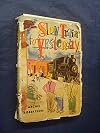
Slow train to yesterday, a last glance at the local
by Archibald Thomas Robertson
On This Page
Tags
Recommendations














Member Reviews
Robertson’s book is a personal salute to the institution of the branch line railroad. These railroads flourished in the period before the Second World War as a means of moving people and goods to and from all of the small towns in America whose size/location did not warrant Class I railroad connections. Their decline began with the advent of the automobile and the explosive growth of highways and private car ownership in the post WWII period quickly drove the vast majority of them out of business.
Because of their size and the vagaries of the geographical areas they served, the branch line railroads, far more than the big Class I railroads, had to adapt to and accommodate their surroundings. As a result no two were alike which meant show more that each one provided the passenger with a unique railroading experience.
Mr. Robertson provides the reader with descriptions of many of these now vanished railroads, the people they served, the individuals who worked on them, and first-hand accounts of what it was like to ride them. His writing style is conversational. He crafts excellent word pictures and his prose brings the branch line experience to life for the reader. See Common Knowledge for an example of the writing style. (Text length - 178 pages, Total length - 189 pages, includes appendix and index). show less
Because of their size and the vagaries of the geographical areas they served, the branch line railroads, far more than the big Class I railroads, had to adapt to and accommodate their surroundings. As a result no two were alike which meant show more that each one provided the passenger with a unique railroading experience.
Mr. Robertson provides the reader with descriptions of many of these now vanished railroads, the people they served, the individuals who worked on them, and first-hand accounts of what it was like to ride them. His writing style is conversational. He crafts excellent word pictures and his prose brings the branch line experience to life for the reader. See Common Knowledge for an example of the writing style. (Text length - 178 pages, Total length - 189 pages, includes appendix and index). show less
Ratings
Members
- Recently Added By
Author Information

76 Works 6,910 Members
A.T. Robertson (1863-1943) is well known for his thorough scholarship in New Testament studies. He served forty-six years (1888-1934) as professor of New Testament Interpretation at the Southern Baptist Seminary in Louisville, KY.
Common Knowledge
- First words
- During the philosophical pause which overtook pleasure-drivers after Pearl Harbor, it was natural that some of us should have reflected seriously upon the virtues of the vanishing local train.
- Quotations
- The memory of the distinctively smoking-car conversation has all but disappeared. The language was simple and forthright. The predominant tone, if I remember, was a sort of dry wit directed at the expense of everything on and... (show all) about a railroad above all, and, continually, the slowness and lateness of trains. It was a drummer who told it upon himself that he had promised the branch-line engineer a box of cigars if only once he brought his train into the junction on time. Thereafter, on hearing the train whistle around the bend just as it was due, he hurried to the cigar-stand, bought their best Havanas, and presented it to the man in the cab. Admiring onlookers cheered, but the modest engineer declined. "I don't guess I can rightly take it," he explained. "This here is yesterday's train." It was a similar train which the native ran after as it disappeared down the track, finally returning out of breath to the station platform. "Too bad," said the bystander. "You almost caught it." "Wasn't trying to catch it," he replied. "I was just chasing it out of the yard." Said one passenger to another on the local, "The train is running easier now." "Yes, I think we must be off the track." As we slowed going up a steep grade and the engine chuffed and the train shuddered and creaked with its stupendous effort, it was inevitable that somebody would call out, "First-class passengers, keep your seats; second -class passengers, get out and walk; third-class passengers, get out and push." We had all heard this before, but it was the thing to say. It came, of course, from the paper-bound work which the train-butcher had for sale, On a Slow Train Through Arkansas. "Haven't seen one of these since I was a boy," my father said thirty years ago on a rural Kentucky train as he bought a copy for our mutual entertainment.
- Last words
- (Click to show. Warning: May contain spoilers.)Yet both seem to make a promise we can neither quite believe nor quite ignore, both tell us not to wait, to hurry on our journey to the place where we will find the answers.
Classifications
Statistics
- Members
- 23
- Popularity
- 1,148,859
- Reviews
- 1
- Rating
- (4.00)
- Languages
- English
- Media
- Paper
- ISBNs
- 1
- ASINs
- 1