
My Autobiography
by Charlie Chaplin
On This Page
Description
This autobiography of Charles Chaplin offers a detailed account of his early life, career, and the socio-cultural environment of his time. Born into a modest upbringing in Kennington Road, London, Chaplin recounts his childhood experiences, the vibrant atmosphere of music halls, and his rise to fame in the film industry. The narrative captures the transformation of his neighborhood and his personal struggles and successes. The book provides insights into Chaplin's personal life, including show more his family dynamics and the challenges he faced in his career. Intended for readers interested in film history, biography enthusiasts, and fans of Chaplin's work, this book offers a comprehensive look at the life of one of cinema's most iconic figures. show lessTags
Recommendations





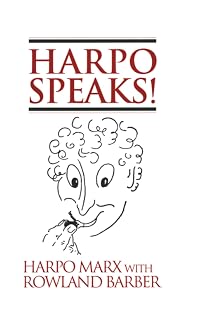


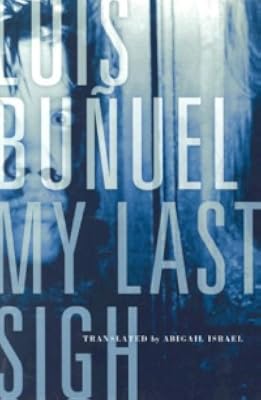

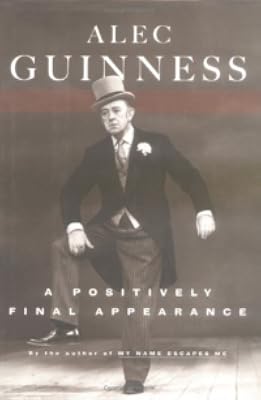

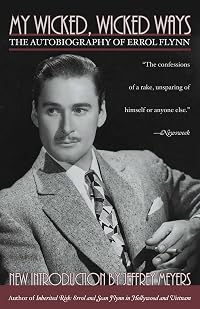

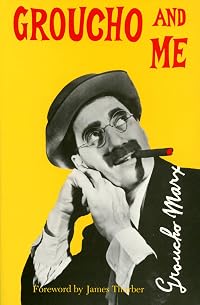


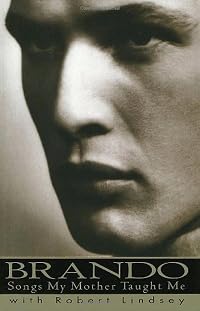

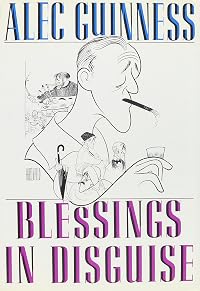
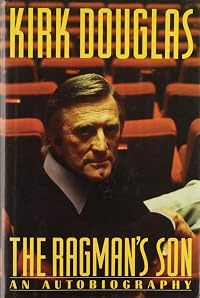








Member Recommendations

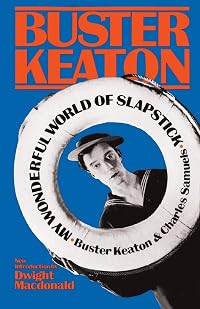
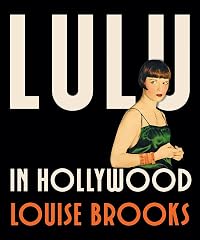
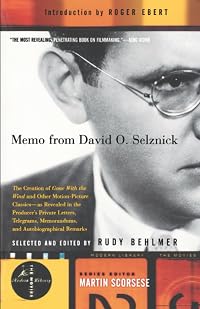
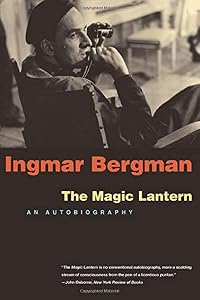
kanadani If interested in Charlie Chaplin's life, read his autobiography, "My Autobiography," first, then read "Chaplin: His Life and Art" by David Robinson. They compliment each other well and serve to create a good foundation to understanding the actor's background.

anonymous user The natural companion volume. Lavishly illustrated record of Charlie's incredible life, with captions by himself mostly copied from the autobiography but with some new additions. Wonderful introduction by Francis Wyndham and a useful filmography.
Member Reviews
This is one of the best non-fiction books I’ve ever read. The narrative gripped me from start to finish.
Chaplin’s story is one of rags to riches in the truest sense. I was drawn into his hard-fought world of London in the 1890s through to the early 1900s. He shared this time with his mother and older brother, who were a close-knit trio. Times grew so bad that at one stage Charlie’s mother was hospitalized with malnutrition. The poor woman also spent three stints in hospitals because of bouts of insanity.
When Charlie became famous, however, this close family splintered. It felt strange at first, as I’d grown so used to these three people striving to survive from one day to the next, yet suddenly Charlie’s raking in the money show more whilst the other two, particularly the mother, are rarely mentioned.
His rise to success is phenomenal. I enjoyed reading through his film career and what went on behind the scenes. Glad he mentioned incidents with my favourite actress Mary Pickford, plus several more with another favourite, namely Marion Davies.
The hope of his recalling his time with Mary was one of the reasons that made me read this. I’m not a huge fan of Charlie’s comedies – some I love, but others, such as one where he’s forever trying to climb a flight of stairs whilst drunk, tend to annoy rather than amuse, whereas a few others made no impact on me. I don’t consider him as funny as his contemporaries Oliver Hardy, Stan Laurel, Harold Lloyd, Harry Langdon, or Buster Keaton, though I respect his achievements and feel he deserves his lasting fame. Therefore, I wasn’t sure how much I’d like this book. Well, despite my mixed views about his films, I have only praise for his autobiography.
Towards the end of the book, when films were few and far between, Charlie relates his travels, his politics, and times spent with other notable people. I see some reviewers dislike this, but I enjoyed it. The way it’s written kept me engaged throughout.
Not much to criticise. Too many adverbs, perhaps, though I find this trait less annoying in non-fiction. Otherwise, it’s all to the good.
Heartily recommended. show less
Chaplin’s story is one of rags to riches in the truest sense. I was drawn into his hard-fought world of London in the 1890s through to the early 1900s. He shared this time with his mother and older brother, who were a close-knit trio. Times grew so bad that at one stage Charlie’s mother was hospitalized with malnutrition. The poor woman also spent three stints in hospitals because of bouts of insanity.
When Charlie became famous, however, this close family splintered. It felt strange at first, as I’d grown so used to these three people striving to survive from one day to the next, yet suddenly Charlie’s raking in the money show more whilst the other two, particularly the mother, are rarely mentioned.
His rise to success is phenomenal. I enjoyed reading through his film career and what went on behind the scenes. Glad he mentioned incidents with my favourite actress Mary Pickford, plus several more with another favourite, namely Marion Davies.
The hope of his recalling his time with Mary was one of the reasons that made me read this. I’m not a huge fan of Charlie’s comedies – some I love, but others, such as one where he’s forever trying to climb a flight of stairs whilst drunk, tend to annoy rather than amuse, whereas a few others made no impact on me. I don’t consider him as funny as his contemporaries Oliver Hardy, Stan Laurel, Harold Lloyd, Harry Langdon, or Buster Keaton, though I respect his achievements and feel he deserves his lasting fame. Therefore, I wasn’t sure how much I’d like this book. Well, despite my mixed views about his films, I have only praise for his autobiography.
Towards the end of the book, when films were few and far between, Charlie relates his travels, his politics, and times spent with other notable people. I see some reviewers dislike this, but I enjoyed it. The way it’s written kept me engaged throughout.
Not much to criticise. Too many adverbs, perhaps, though I find this trait less annoying in non-fiction. Otherwise, it’s all to the good.
Heartily recommended. show less
What a fantastic book! All you 20-something wannabes (Kerry, Chantelle, I mean you) take note – this is how an autobiography SHOULD be written: at the end of a long, fulfilling and fascinating life, not after a normal childhood and ten minutes on a reality TV show.
This is a sweeping and beautifully written story covering the entire span of Chaplin’s life as it stood at the time of writing, from his poverty-stricken London childhood and his early theatrical career, through the evolution of Hollywood and the development of his most famous and well-loved character, the ‘Little Tramp’, to his dazzling rise to fame and fortune, his brushes with the harsh face of American politics, and his final escape to Switzerland with his wife show more Oona and their large family, where he remained until his death in 1977.
Not only is this a wonderful journey through the world of theatre and the development of the film industry, it is also overflowing with interesting people, places and anecdotes. His was a golden era of sparkling society in which the aristocracy and the intellectual elite mixed on equal terms and travelled frequently. Thus Chaplin can legitimately name-drop a veritable wealth of friends, acquaintances and casual meetings, from Albert Einstein to Winston Churchill, Lord and Lady Mountbatten to John Steinbeck, Rachmaninov to Picasso. On top of all that there is a meandering thread of personal philosophy, politics and considered opinion, all of which come together to form a rounded picture of someone whose genius could otherwise have become buried under his comedy.
I picked up the book on the strength of the film ‘Chaplin’ (starring Robert Downey Jr.), which I fell to watching on television one day and watched to the end, finding myself captivated by the life of this unique, intelligent little man and his consuming interest in entertaining the masses with his films, of which he was writer, director, composer, actor and everything in between. I have never seen a Chaplin film in its entirety, but after reading his autobiography I have a list of movies to see and enough knowledge to fully appreciate them. I didn’t want the book to end, long though it may be, and as I closed its pages I was reminded of Truman Capote’s famous remark about finishing a book being like you’ve taken a child out in the yard and shot it. That feeling of looking at your bookshelf, wondering what on earth could top that? Oh, and in case you were wondering – Capote gets a name-drop too… show less
This is a sweeping and beautifully written story covering the entire span of Chaplin’s life as it stood at the time of writing, from his poverty-stricken London childhood and his early theatrical career, through the evolution of Hollywood and the development of his most famous and well-loved character, the ‘Little Tramp’, to his dazzling rise to fame and fortune, his brushes with the harsh face of American politics, and his final escape to Switzerland with his wife show more Oona and their large family, where he remained until his death in 1977.
Not only is this a wonderful journey through the world of theatre and the development of the film industry, it is also overflowing with interesting people, places and anecdotes. His was a golden era of sparkling society in which the aristocracy and the intellectual elite mixed on equal terms and travelled frequently. Thus Chaplin can legitimately name-drop a veritable wealth of friends, acquaintances and casual meetings, from Albert Einstein to Winston Churchill, Lord and Lady Mountbatten to John Steinbeck, Rachmaninov to Picasso. On top of all that there is a meandering thread of personal philosophy, politics and considered opinion, all of which come together to form a rounded picture of someone whose genius could otherwise have become buried under his comedy.
I picked up the book on the strength of the film ‘Chaplin’ (starring Robert Downey Jr.), which I fell to watching on television one day and watched to the end, finding myself captivated by the life of this unique, intelligent little man and his consuming interest in entertaining the masses with his films, of which he was writer, director, composer, actor and everything in between. I have never seen a Chaplin film in its entirety, but after reading his autobiography I have a list of movies to see and enough knowledge to fully appreciate them. I didn’t want the book to end, long though it may be, and as I closed its pages I was reminded of Truman Capote’s famous remark about finishing a book being like you’ve taken a child out in the yard and shot it. That feeling of looking at your bookshelf, wondering what on earth could top that? Oh, and in case you were wondering – Capote gets a name-drop too… show less
The closeness of "no speech" and "dumb" is so near, that in conjunction with the image of the silliness of the characters, prortrayed by Charles Chaplin it is easy to believe that Chaplin was a simpleton. The autobiography proves any such believer wrong.
The epithet Dickensian is sometimes applied to the autobiography of Charles Chaplin as Chaplin, born in 1889, was born in, and therefore considered belonging to, the Victorian Age, and because his childhood in London of poverty and hardship so closely resembled that of some characters in Dickens' novels. Born into a family of actors, Charles Chaplin soon started his career on the stage, with limited success, initially, in London and Paris.
The "birth" of the classical character "the show more tramp" does not happen until p. 145, where it is described as a purely coincidental result of improvisation. The largest part of My autobiography deals with the spectacular career Chaplin made in the United States, from being an actor, improvising and personalizing typical gigs to the development of his own film studios. The history of many of Chaplin's movies is described in detail in the context of both the historical background and the cinematographic inventions.
Towards the end of his life, Charles Chaplin was a respected man, and on close terms with the jet-set of all continents. He could not stay in the United States, because of his sympathies for socialism, and his escape, securing his assets is one of the most exciting parts of the autobiography.
My autobiography is a fascinating time document, chronicling the life of a film icon we all know. At nearly 500 pages, it is an extremely well-written piece of history, which is never dry or boring, although a certain interest in film and the business of film and film studios helps. I was never bothered by Chaplin's language, and felt his prose style was entirely natural, and appropriate. As the author of his own screen plays, a fact not often highlighted, My autobiography is another text which is well worth reading, allowing readers a peek into Chaplin's life and a wonderful reading experience of an autobiography belonging to the best pieces of autobiographical writing in the Twentieth Century. show less
The epithet Dickensian is sometimes applied to the autobiography of Charles Chaplin as Chaplin, born in 1889, was born in, and therefore considered belonging to, the Victorian Age, and because his childhood in London of poverty and hardship so closely resembled that of some characters in Dickens' novels. Born into a family of actors, Charles Chaplin soon started his career on the stage, with limited success, initially, in London and Paris.
The "birth" of the classical character "the show more tramp" does not happen until p. 145, where it is described as a purely coincidental result of improvisation. The largest part of My autobiography deals with the spectacular career Chaplin made in the United States, from being an actor, improvising and personalizing typical gigs to the development of his own film studios. The history of many of Chaplin's movies is described in detail in the context of both the historical background and the cinematographic inventions.
Towards the end of his life, Charles Chaplin was a respected man, and on close terms with the jet-set of all continents. He could not stay in the United States, because of his sympathies for socialism, and his escape, securing his assets is one of the most exciting parts of the autobiography.
My autobiography is a fascinating time document, chronicling the life of a film icon we all know. At nearly 500 pages, it is an extremely well-written piece of history, which is never dry or boring, although a certain interest in film and the business of film and film studios helps. I was never bothered by Chaplin's language, and felt his prose style was entirely natural, and appropriate. As the author of his own screen plays, a fact not often highlighted, My autobiography is another text which is well worth reading, allowing readers a peek into Chaplin's life and a wonderful reading experience of an autobiography belonging to the best pieces of autobiographical writing in the Twentieth Century. show less
I have read a lot of books, but none of them grabbed me like this one. Eventhough Mr Chaplin used quite a lot of 'big words' in his autobiography (he taught himself to be more eloquent) it's still a very easy read. His style is simple and honest. His emotions show through everything he wrote.
And that's this book's greatest strength.
After reading it I feel I almost know the man and that is quite a feat. Often I found myself laughing out loud (very embarrassing in a busy train) and sometimes I had a lump in my throat or tears in my eyes.
I now see him as a very emotional man, a bit soft, but persistant, honest and open (which got him into trouble sometimes) who never forgot his origins. Overall the book is quite positive.
Others have show more complained about the lack of technicalities in this autobiography. Charlie should have explained how he made his films. Nonsense! This book is exactly what it should be: an autobiography, not a manual. This is about the man and that's exactly what I wanted to know.
It's a fantastic read and I would recommend it to anyone. show less
And that's this book's greatest strength.
After reading it I feel I almost know the man and that is quite a feat. Often I found myself laughing out loud (very embarrassing in a busy train) and sometimes I had a lump in my throat or tears in my eyes.
I now see him as a very emotional man, a bit soft, but persistant, honest and open (which got him into trouble sometimes) who never forgot his origins. Overall the book is quite positive.
Others have show more complained about the lack of technicalities in this autobiography. Charlie should have explained how he made his films. Nonsense! This book is exactly what it should be: an autobiography, not a manual. This is about the man and that's exactly what I wanted to know.
It's a fantastic read and I would recommend it to anyone. show less
Charlie Chaplin... A travers son personnage légendaire de Charlot, il a tout donné au public les émotions les plus pures, rires et pleurs mélangés, les plus folles, les plus déconcertantes ! Ici c'est lui-même qu'il livre dans une autobiographie riche de surprises et de découvertes sur cet homme dont on croyait tout connaître ! Son enfance à la Dickens dans les faubourgs londoniens, ses débuts parisiens, sa lumineuse carrière mêlée à l'âge d'or d'Hollywood, ses découvertes géniales de mise en scène, ses fabuleuses rencontres : Einstein, Wells, Cocteau, Churchill... Une vie virevoltante, une confession tendre et vraie où Charlot nous ravit plus que jamais, car ici il joue son plus beau rôle : celui d'un homme fort et show more fragile qui se dévoile avec la pudeur des grands. show less
OK autobiography, but I could tell he was hiding things. Better to read a more accurate biography.
Definitely worth a read whether you only have a passing interest in Chaplin or silent movies in general or you know the films well. Do we really get to know the man here?erhaps not by but what is surprising is just how well he writes. Great stuff.
Members
- Recently Added By
Lists


Author Information

241+ Works 3,201 Members
Some Editions
Awards and Honors
Distinctions
Work Relationships
Has the adaptation
Common Knowledge
- Canonical title*
- My Autobiography
- Original title
- My Autobiography
- Original publication date
- 1964-10-01
- People/Characters
- Charlie Chaplin; Louise Brooks; Geraldine Chaplin; Oona Chaplin; Jackie Coogan; Douglas Fairbanks Sr. (show all 12); Douglas Fairbanks Jr.; Albert Einstein; Paulette Goddard; D. W. Griffith; J. Edgar Hoover; Mary Pickford
- Important places
- United Kingdom; USA; California, USA; England, UK; Hollywood, Los Angeles, California, USA; Lambeth, London, England, UK (show all 10); London, England, UK; Los Angeles, California, USA; Switzerland; Vevey, Vaud, Switzerland
- Related movies
- Chaplin (1992 | IMDb)
- Epigraph*
- Van een armoedige jeugd tot een roem zonder weerga....
- Dedication
- To Oona
- First words
- I was born on 16 April 1889, at 8 o'clock at night, in East Lane, Walworth. Soon after, we moved to West Square, St George's Road, Lambeth. According to Mother my world was a happy one. Our circumstances were moderately comfo... (show all)rtable; we lived in three tastefully furnished rooms.
- Last words
- (Click to show. Warning: May contain spoilers.)With such happiness, I somtimes sit out on our terrace at sunset and look over a vast green lawn to the lake in the distance, and beyond the lake to the reassuring mountains, and in this mood think of nothing but enjoy their magnificent serenity.
*Some information comes from Common Knowledge in other languages. Click "Edit" for more information.
Classifications
- Genres
- Biography & Memoir, Nonfiction, General Nonfiction, History
- DDC/MDS
- 791.43028092 — Arts & recreation Recreation, sports, and performing arts Public performances Motion pictures, radio, television, podcasting Motion pictures Standard subdivisions Acting and performance Standard subdivisions History, geographic treatment, biography Biography
- LCC
- PN2287 .C5 .A32 — Language and Literature Literature (General) Literature (General) Drama Dramatic representation. The theater Special regions or countries
- BISAC
Statistics
- Members
- 1,276
- Popularity
- 19,150
- Reviews
- 14
- Rating
- (4.06)
- Languages
- 21 — Chinese, Czech, Danish, Dutch, English, Estonian, Finnish, French, German, Greek, Hungarian, Italian, Norwegian (Bokmål), Norwegian, Polish, Portuguese, Russian, Slovak, Spanish, Swedish, Ukrainian
- Media
- Paper, Audiobook, Ebook
- ISBNs
- 56
- UPCs
- 1
- ASINs
- 44