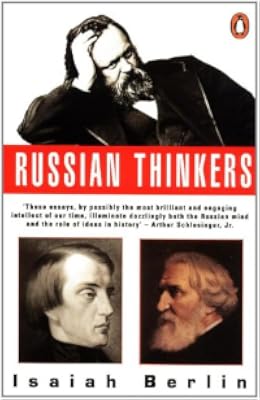
Russian Thinkers
by Isaiah Berlin
On This Page
Description
Isaiah Berlin's 'Russian Thinkers' explores the intellectual history and moral dilemmas of 19th-century Russian intelligentsia. Through essays and lectures, Berlin examines the philosophical ideas and political movements that shaped Russian society, focusing on figures like Herzen, Bakunin, and Tolstoy. The book highlights their influence on the Russian Revolution and their struggles with concepts of individual liberty, social justice, and moral responsibility. Berlin critically analyzes the show more tension between absolute values and pluralism, emphasizing the dangers of monist ideologies that seek universal solutions. Intended for scholars and readers interested in political philosophy, intellectual history, and Russian culture, the work combines Berlin's liberal perspective with his fascination for ideas and their societal impact. show lessTags
Recommendations
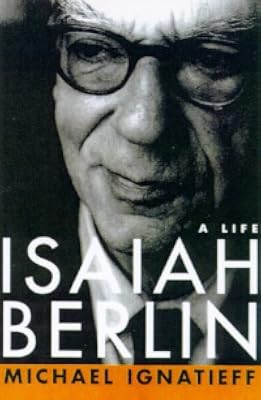


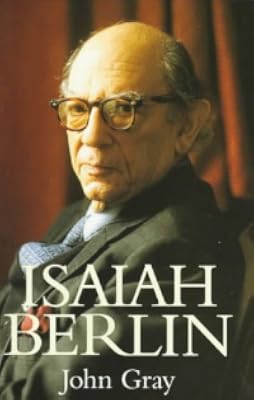





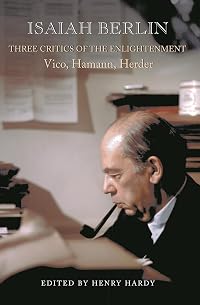
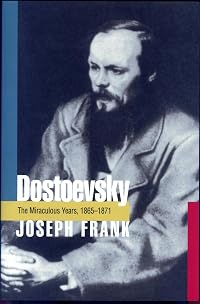
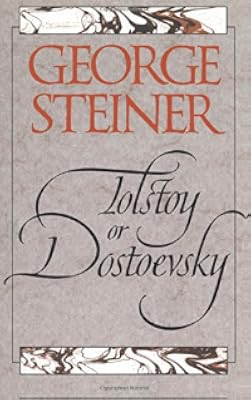


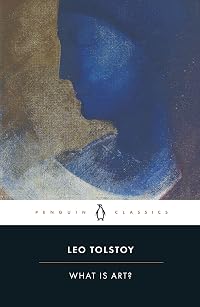
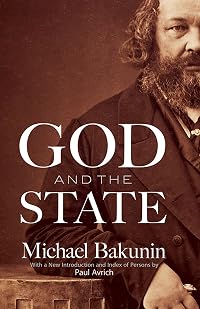
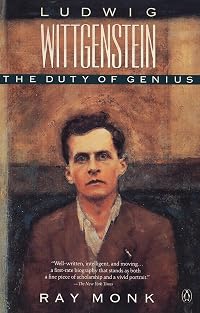

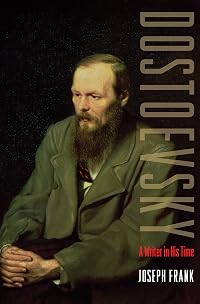
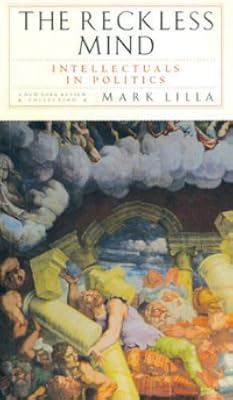
Member Recommendations


Member Reviews
A classic collection of Berlin's essays on nineteenth-century Russian writers, which has suffered a bit from being too much on student reading-lists: the current Penguin edition has expanded so far that the poor little text is almost completely swallowed up in notes and editorial material. But it is worth fighting your way in thought the thickets of forewords and glossaries to get to grips with Berlin's alarmingly concise summaries of what was important in Russian intellectual life, and how the currents of European thought and the concrete events of Russian history influenced the way it developed.
Berlin's big idea, of course, is his repugnance, developed out of his experience of the first half of the 20th century in Europe, for any idea show more of history or politics that is founded on aggregated utilitarian principles of a common good, or on some sort of promise of future good in exchange for present sacrifice. The primacy of the rights of the individual is always central for him, and that comes through in his choice of heroes: he approves of the social thinker Alexander Herzen and the critic Vissarion Belinsky, who were always ready to dismiss an abstract idea if they didn't like it, but doesn't have much time for dogmatic opportunists like Lenin and Bakunin. Similarly, in literature his preference is for Tolstoy and Turgenev, who let their human characters drive the stories, even if it comes at the expense of the theories they are trying to promote. Poor old Dostoyevsky doesn't even get an essay to himself, although Berlin does approve of the fact that he was arrested for reading out Belinsky's "Letter to Gogol".
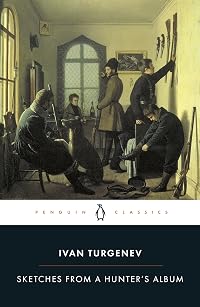
I loved Berlin's self-confident, offhand put-downs of things he doesn't like — for instance when he compares the Russian reception of Turgenev's A sportsman's sketches to that in America of Uncle Tom's cabin "from which it differed principally in being a work of genius". He's a critic who bores down to the essentials with great precision, but also someone who doesn't mind telling us about the simple pleasure he takes in a text.
Slightly tough going, and written from a very clear political standpoint, but it makes for a useful overview of who was who: I'll probably come back to it when I've read more Russians.
(I read this in the Penguin edition as a Kobo e-book, which had all sorts of odd formatting errors, most bizarrely the way that all the acute accents in French quotations got turned into grave accents: "èmigrè" — do publishers never read the books they produce?) show less
Berlin's big idea, of course, is his repugnance, developed out of his experience of the first half of the 20th century in Europe, for any idea show more of history or politics that is founded on aggregated utilitarian principles of a common good, or on some sort of promise of future good in exchange for present sacrifice. The primacy of the rights of the individual is always central for him, and that comes through in his choice of heroes: he approves of the social thinker Alexander Herzen and the critic Vissarion Belinsky, who were always ready to dismiss an abstract idea if they didn't like it, but doesn't have much time for dogmatic opportunists like Lenin and Bakunin. Similarly, in literature his preference is for Tolstoy and Turgenev, who let their human characters drive the stories, even if it comes at the expense of the theories they are trying to promote. Poor old Dostoyevsky doesn't even get an essay to himself, although Berlin does approve of the fact that he was arrested for reading out Belinsky's "Letter to Gogol".
I loved Berlin's self-confident, offhand put-downs of things he doesn't like — for instance when he compares the Russian reception of Turgenev's A sportsman's sketches to that in America of Uncle Tom's cabin "from which it differed principally in being a work of genius". He's a critic who bores down to the essentials with great precision, but also someone who doesn't mind telling us about the simple pleasure he takes in a text.
Slightly tough going, and written from a very clear political standpoint, but it makes for a useful overview of who was who: I'll probably come back to it when I've read more Russians.
(I read this in the Penguin edition as a Kobo e-book, which had all sorts of odd formatting errors, most bizarrely the way that all the acute accents in French quotations got turned into grave accents: "èmigrè" — do publishers never read the books they produce?) show less
"Describe, don't explain". Though Wittgenstein perhaps wrote those words while discussing the epistemological value of science, one has to read Isaiah Berlin in order to see their true expository demonstration. This is no ordinary achievement. In more than one way, its an indispensable text; that is, its a marvel of literary criticism, a classical description of the inner-most structures of Russian thought, introduction to some of the brilliant minds and intellectual giants of 19th century Russia, and most importantly, an exquisite commentary on the history of ideas that made the modern world. But while trying to achieve these goals, Berlin does not try to supply judgements, leaving reader with a lot to chew.
As I said, its the show more description that is perhaps far important that explanation; the latter has the tendency to eject the enquirer out of the domain of possibility, which in a way brings the creative process to a terminus.
On a different note, would anyone believe that a collection of essays about Russian literature and thought can prove to be a page turner? Well, to tell you the truth, it might not be unless the reader is at least familiar with major trends of Russian literature. For instance, two essays included in the volume -'The Hedgehog and the Fox' and 'Fathers and Children' - may fail to inspire a sense of awe without a decent familiarization with Tolstoy and Turgenev and if you have read 'War and Peace' and 'Fathers and Sons', its a bonus. However, if you are not familiar with Herzen, Belinsky or Bakunin, Berlin makes a point to generally characterize these trends of liberal intelligentsia before taking the reader finally to the outliers of the whole liberal spectrum.
Besides lucidity of prose, the greatest aspect of Berlin's exposition is fine categorization of social and political trends in literature, and how he supplies archetypes of thought for an informed as well as uninformed reader. His point, for instance in the starting essay, that Tolstoy could neither be characterized as a Fox or Hedgehog and his ultimate conclusion that he was a Fox trying to portray as a Hedgehog is so illuminating and potentially powerful that one is forced to place intellectuals in these relative compartments for the rest of one's life. Then there are subtleties such as Turgenev being an archetype for liberal predicament which are expounded with such force that now we have a way to describe various ideological movements of 21st century through the models of Russian thought.
An illuminate experience, a gripping read and a force to make you fall in love with Russia. show less
As I said, its the show more description that is perhaps far important that explanation; the latter has the tendency to eject the enquirer out of the domain of possibility, which in a way brings the creative process to a terminus.
On a different note, would anyone believe that a collection of essays about Russian literature and thought can prove to be a page turner? Well, to tell you the truth, it might not be unless the reader is at least familiar with major trends of Russian literature. For instance, two essays included in the volume -'The Hedgehog and the Fox' and 'Fathers and Children' - may fail to inspire a sense of awe without a decent familiarization with Tolstoy and Turgenev and if you have read 'War and Peace' and 'Fathers and Sons', its a bonus. However, if you are not familiar with Herzen, Belinsky or Bakunin, Berlin makes a point to generally characterize these trends of liberal intelligentsia before taking the reader finally to the outliers of the whole liberal spectrum.
Besides lucidity of prose, the greatest aspect of Berlin's exposition is fine categorization of social and political trends in literature, and how he supplies archetypes of thought for an informed as well as uninformed reader. His point, for instance in the starting essay, that Tolstoy could neither be characterized as a Fox or Hedgehog and his ultimate conclusion that he was a Fox trying to portray as a Hedgehog is so illuminating and potentially powerful that one is forced to place intellectuals in these relative compartments for the rest of one's life. Then there are subtleties such as Turgenev being an archetype for liberal predicament which are expounded with such force that now we have a way to describe various ideological movements of 21st century through the models of Russian thought.
An illuminate experience, a gripping read and a force to make you fall in love with Russia. show less
An amazing set of essays on prominent Russian writers, including the famous Hedgehog and Fox article. Covers Herzen, Turgenev, Belinsky, Tolstoy, and many more. The pieces about Turgenev are (to me) heartening and reassuring, as he is the writer who appeals to me the most, and Berlin's account enlightens me on why I respond so positively to this particular writer (in fact I am writing a special paper on this very writer for my MA in Russian). The analysis of Tolstoy is an eye-opener, as we tend to see him as a mystic, almost a Yogi, and close to Gandhi; but Berlin assures us that Tolstoy did not tolerate mysticism. A great book, that has converted me from a critic of Isaiah Berlin as a windbag, to a fan!
This edition is particularly good show more value for money, at the way prices of print books are rising. show less
This edition is particularly good show more value for money, at the way prices of print books are rising. show less
My current standard for critical writing. Berlin is just masterly in his command of his subject, and he's able to convey that mastery to the reader. While for my own sake, I could wish he didn't use such complex syntax -- it can be a little too easy to get lost in his dense sentences -- I can easily understand why such complicated, nuanced concepts demand such writing. The essay on Tolstoy's historiography is fascinating, and has probably made me think more about my own attitudes and assumptions toward writing and history than any other single piece of writing.
A classic, but at this distance I found it overly vivid and viewpointy. Probably because I didn’t see eye to eye with his portraits, or (want to) recognise his Turgenev, his Dostoevsky.
Funnily, Aileen M. Kelly sent me to Isaiah Berlin, of whom she is follower in Russian intellectual history; and she explains his great importance in the historiography, as a solitary figure against the tides of his day – yet she didn’t mention how different, in the end, her understandings of these thinkers are. Her portraits (Toward Another Shore: Russian Thinkers Between Necessity and Chance) were more persuasive to me, and weighed, I think, with more balance. Perhaps she also learnt to value prose style from Berlin, because his is splendid, and I show more had been struck by hers. show less
Funnily, Aileen M. Kelly sent me to Isaiah Berlin, of whom she is follower in Russian intellectual history; and she explains his great importance in the historiography, as a solitary figure against the tides of his day – yet she didn’t mention how different, in the end, her understandings of these thinkers are. Her portraits (Toward Another Shore: Russian Thinkers Between Necessity and Chance) were more persuasive to me, and weighed, I think, with more balance. Perhaps she also learnt to value prose style from Berlin, because his is splendid, and I show more had been struck by hers. show less
In these ten essays Isiah Berlin explains the political thought and philosophy of several prominent thinkers of 19th Century Russia, while illuminating the historical context necessary for their appreciation. Among these thinkers are the great Russian novelists Tolstoy and Turgenev, as well as more overtly political figures such as Bakunin, Belinsky, and Alexander Herzen, who receive an essay each.
Russia over this period was involved right through with discontent at current social situations, with inequality, poor governance, and revolutionary thought and action in response to this.
This situation is reflected in the literature of the time from multiple angles: by those writing and thinking at the time about their own personal political show more philosophy in their correspondance, novels, and other forms of literature; secondly by the shaping of such literature by the censorship of government and publishers on the one hand, and by the contemporary currents of thought in society on the other.
Berlin makes it clear that there was quite a variety of opinions among the intellectuals of the time, with major disagreements over the influence that Russia should tolerate from the West, with its advancements of philosophy, art, science and technology, over the sort of society that they desired to create, the nature and desirability of liberty and individuality, and the methods that ought to be used to obtain change. Many of these topics are still relevant to politics and political philosophy today, as well as being interesting from an historical point of view.
Reading this volume served a useful and engaging introduction to Russian thought in the 19th Century, for someone who had not previously read much in this area. Particularly, the writings of Alexander Herzen and Turgenev stand out as being of interest, not only for their literary quality but for their philosophical approach to political questions that requires a more nuanced understanding of human nature and society than is provided by those further to the left such as Marx. show less
Russia over this period was involved right through with discontent at current social situations, with inequality, poor governance, and revolutionary thought and action in response to this.
This situation is reflected in the literature of the time from multiple angles: by those writing and thinking at the time about their own personal political show more philosophy in their correspondance, novels, and other forms of literature; secondly by the shaping of such literature by the censorship of government and publishers on the one hand, and by the contemporary currents of thought in society on the other.
Berlin makes it clear that there was quite a variety of opinions among the intellectuals of the time, with major disagreements over the influence that Russia should tolerate from the West, with its advancements of philosophy, art, science and technology, over the sort of society that they desired to create, the nature and desirability of liberty and individuality, and the methods that ought to be used to obtain change. Many of these topics are still relevant to politics and political philosophy today, as well as being interesting from an historical point of view.
Reading this volume served a useful and engaging introduction to Russian thought in the 19th Century, for someone who had not previously read much in this area. Particularly, the writings of Alexander Herzen and Turgenev stand out as being of interest, not only for their literary quality but for their philosophical approach to political questions that requires a more nuanced understanding of human nature and society than is provided by those further to the left such as Marx. show less
Classic work on Russian literature and ideas. Included in his excellent collection of essays, Russian Thinkers, Isaiah Berlin has a fascinating essay, The Hedgehog and the Fox. In this essay Berlin uses the distinction found in a fragment of the poet Archilocus that argues that there are two types of thinkers: Hedgehogs, who know one big thing and foxes, who know many things. Berlin goes on to categorize the great thinkers of the ages into groups based on this distinction. Hedgehogs like Dante, Plato, Lucretius, Pascal and Dostoevsky versus foxes like Shakespeare, Herodotus, Aristotle, Goethe and Balzac. He goes on to attempt to classify Tolstoy and analyze his view of history. It is a worthy task and I will recommend to all that they show more read the essay and decide for themselves what Berlin succeeds in accomplishing with all his analysis. It is essays like this one that document the seriousness of the thought of Isaiah Berlin. His insight into Russian authors like Turgenev is magnificent. This is a delightful collection of essays. show less
Members
- Recently Added By
Lists

Jewish Books
367 works; 24 members
Author Information

86+ Works 9,180 Members
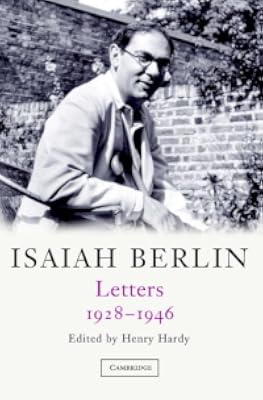
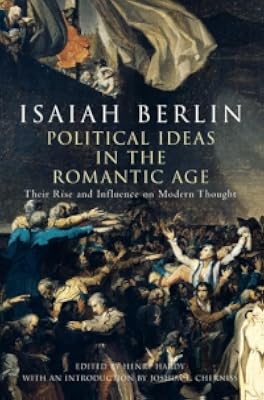
Philosopher, political theorist, and essayist, Isaiah Berlin was born in 1909 to Russian-speaking Jewish parents in Latvia. Reared in Latvia and later in Russia, Berlin developed a strong Russian-Jewish identity, having witnessed both the Social-Democratic and the Bolshevik Revolutions. At the age of 12, Berlin moved with his family to England, show more where he attended prep school and then St. Paul's. In 1928, he went up as a scholar to Corpus Christi College in Oxford. After an unsuccessful attempt at the Manchester Guardian, Berlin was offered a position as lecturer in philosophy at New College. Almost immediately, he was elected to a fellowship at All Souls. During this time at All Souls, Berlin wrote his brilliant biographical study of Marx, titled Karl Marx: His Life and Environment (1939), for the Home University Library. Berlin continued to teach through early World War II, and was then sent to New York by the Ministry of Information, and subsequently to the Foreign Office in Washington, D.C. It was during these years that he drafted several fine works regarding the changing political mood of the United States, collected in Washington Despatches 1941-1945 (1981). By the end of the war, Berlin had shifted his focus from philosophy to the history of ideas, and in 1950 he returned to All Souls. In 1957, he was elected to the Chichele Chair of Social and Political Theory, delivering his influential and best-known inaugural lecture, Two Concepts of Liberty. Some of his works include Liberty, The Soviet Mind: Russian Culture under Communism, Flourishing: Selected Letters 1928 - 1946, Political Ideas in the Romantic Age: Their Rise and Influence on Modern Thought, and Unfinished Dialogue, Prometheus. Berlin died in Oxford on November 5, 1997. (Bowker Author Biography) show less
Some Editions
Awards and Honors
Notable Lists
Work Relationships
Common Knowledge
- Canonical title
- Russian Thinkers
- Original title
- Russian Thinkers
- Original publication date
- 1978; 2008 (2nd) (2nd)
- People/Characters
- Vissarion Belinsky; Alexander Herzen; Leo Tolstoy; Fyodor Dostoevsky; Mikhail Bakunin
- Important places
- Russia
- First words
- The year 1848 is not usually considered to be a landmark in Russian history.
- Original language
- English
Classifications
- Genres
- Nonfiction, Philosophy, History, General Nonfiction, Literature Studies and Criticism
- DDC/MDS
- 947.07 — History & geography History of Europe Eastern European Counties and Russia Russian & Slavic History by Period Paul I - Nicholas I 1796-1855
- LCC
- DK189.2 .B47 — History of Europe, Asia, Africa and Oceania Russia. Soviet Union. Former Soviet Republics – Poland History of Russia. Soviet Union. Former Soviet Republics History
- BISAC
Statistics
- Members
- 792
- Popularity
- 35,219
- Reviews
- 9
- Rating
- (4.27)
- Languages
- 8 — Dutch, English, German, Italian, Polish, Portuguese, Slovenian, Spanish
- Media
- Paper, Ebook
- ISBNs
- 19
- ASINs
- 7