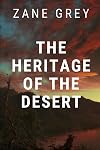
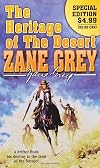
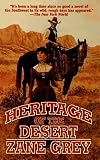
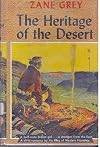
The Heritage of the Desert
by Zane Grey
On This Page
Description
Zane Grey, renowned as an author for his portrayals of the rugged Wild West, completed his first Western, The Heritage of the Desert, in just four months in 1910. This compelling work which deals powerfully with Mormon culture in Utah in 1890 rapidly became a bestseller..
Tags
Recommendations























Member Reviews
I have always been interested in reading a Zane Grey book, and someone said this one of his had a dog in it. The dog doesn't really had a big part in the book, but still enjoyed the book. The main thing about his writing is his vivid colorful dramatic style of writing. I will add some quotes so you know what I mean.
The story is of a cowboy, Hare' almost all played out with illness, but a Mormon rancher, 'August Naab' and an Indian lady 'Mescal', pull him out of it. They are beset by two foes, one a murdering cattle rustler, and the other a land robber. Very much a slow burn western with short skirmishes before the big finish. When our Indian princess has to escape the Mormon's son into the desert, our cowboy has to follow to find her. show more
While the overall treatment of the Native American's I think are ok, there is some dialogue that make you go 'ugh!', like when one of the Indians says 'ugh.' But that was written in 1910 and people's attitudes about things were a might different.
So let's start with a nice description with the dog Wolf:
'Nimble, alert, the big white dog was not still a moment. His duty was to keep the flock compact, to head the stragglers and turn them back; and he knew his part perfectly. There was dash and fire in his work. He never barked. As he circled the flock the small Navajo sheep, edging ever toward forbidden ground, bleated their way back to the fold, the larger ones wheeled reluctantly, and the old belled rams squared themselves, lowering their massive horns as if to butt him. Never, however, did they stand their ground when he reached them, for there was a decision about Wolf which brooked no opposition. At times when he was working on one side a crafty sheep on the other would steal out into the thicket. Then Mescal called and Wolf flashed back to her, lifting his proud head, eager, spirited, ready to take his order. A word, a wave of her whip sufficed for the dog to rout out the recalcitrant sheep and send him bleating to his fellows.'
Here is a nice example of how Zane Grey can add color to the Mormon's land they go to:
'August Naab’S oasis was an oval valley, level as a floor, green with leaf and white with blossom, enclosed by a circle of colossal cliffs of vivid vermilion hue. At its western curve the Colorado River split the red walls from north to south. When the wind was west a sullen roar, remote as of some far-off driving mill, filled the valley; when it was east a dreamy hollow hum, a somnolent song, murmured through the cottonwoods; when no wind stirred, silence reigned, a silence not of serene plain or mountain fastness, but shut in, compressed, strange, and breathless. Safe from the storms of the elements as well as of the world was this Garden of Eschtah.'
The whole book is flowing with all the nice imagery. But where author really works at his words is when he is writing of the love Hare has for Mescal.
'Mescal halted on a promontory. She, with her wind blown hair, the gleam of white band about her head and a dash of red along the fringed leggings, gave inexpressible life and beauty to that wild, jagged point of rock, sharp against the glaring sky.'
'Any other reply from her would not have been consistent, with the impression she was making on him. As yet he had hardly regarded her as a young girl; she had been part of this beautiful desert-land. But he began to see in her a responsive being, influenced by his presence. If the situation was wonderful to him what must it be for her? Like a shy, illusive creature, unused to men, she was troubled by questions, fearful of the sound of her own voice. Yet in repose, as she watched the lights and shadows, she was serene, unconscious; her dark, quiet glance was dreamy and sad, and in it was the sombre, brooding strength of the desert. '
'For Mescal was there. Far away she must be, a mere grain of sand in all that world of drifting sands, perhaps ill, perhaps hurt, but alive, waiting for him, calling for him, crying out with a voice that no distance could silence. He did not see the sharp peaks as pitiless barriers, nor the mesas and domes as black-faced death, nor the moisture-drinking sands as life-sucking foes to plant and beast and man. That painted wonderland had sheltered Mescal for a year. He had loved it for its color, its change, its secrecy; he loved it now because it had not been a grave for Mescal, but a home. ‘Therefore he laughed at the deceiving yellow distances in the foreground of glistening mesas, at the deceiving purple distances of the far-off horizon, The wind blew a song in his ears; the dry desert odors were fragrance in his nostrils; the sand tasted sweet between his teeth, and the quivering heat-waves, veiling the desert in transparent haze, framed beautiful pictures for his eyes. '
'“Mescal, do you love me?”
The trembling of her fingers and the heaving of her bosom lent his hope conviction. “ Mescal,” he went on, “these past months have been years, years of toiling, thinking, changing, but always loving. I’m not the man you knew. I’m wild—I’m starved for a sight of you. I love you Mescal, my desert flower!”'
Amazing writing. Most books I have to search for beautiful prose worthy of picking out to save and to share, but in a Zane Grey book seems every paragraph has that dramatic beauty to it. So even though there could have been more writing about the dog in it, (my focus is still on dog books after all), it does make me want to read more of his books. show less
The story is of a cowboy, Hare' almost all played out with illness, but a Mormon rancher, 'August Naab' and an Indian lady 'Mescal', pull him out of it. They are beset by two foes, one a murdering cattle rustler, and the other a land robber. Very much a slow burn western with short skirmishes before the big finish. When our Indian princess has to escape the Mormon's son into the desert, our cowboy has to follow to find her. show more
While the overall treatment of the Native American's I think are ok, there is some dialogue that make you go 'ugh!', like when one of the Indians says 'ugh.' But that was written in 1910 and people's attitudes about things were a might different.
So let's start with a nice description with the dog Wolf:
'Nimble, alert, the big white dog was not still a moment. His duty was to keep the flock compact, to head the stragglers and turn them back; and he knew his part perfectly. There was dash and fire in his work. He never barked. As he circled the flock the small Navajo sheep, edging ever toward forbidden ground, bleated their way back to the fold, the larger ones wheeled reluctantly, and the old belled rams squared themselves, lowering their massive horns as if to butt him. Never, however, did they stand their ground when he reached them, for there was a decision about Wolf which brooked no opposition. At times when he was working on one side a crafty sheep on the other would steal out into the thicket. Then Mescal called and Wolf flashed back to her, lifting his proud head, eager, spirited, ready to take his order. A word, a wave of her whip sufficed for the dog to rout out the recalcitrant sheep and send him bleating to his fellows.'
Here is a nice example of how Zane Grey can add color to the Mormon's land they go to:
'August Naab’S oasis was an oval valley, level as a floor, green with leaf and white with blossom, enclosed by a circle of colossal cliffs of vivid vermilion hue. At its western curve the Colorado River split the red walls from north to south. When the wind was west a sullen roar, remote as of some far-off driving mill, filled the valley; when it was east a dreamy hollow hum, a somnolent song, murmured through the cottonwoods; when no wind stirred, silence reigned, a silence not of serene plain or mountain fastness, but shut in, compressed, strange, and breathless. Safe from the storms of the elements as well as of the world was this Garden of Eschtah.'
The whole book is flowing with all the nice imagery. But where author really works at his words is when he is writing of the love Hare has for Mescal.
'Mescal halted on a promontory. She, with her wind blown hair, the gleam of white band about her head and a dash of red along the fringed leggings, gave inexpressible life and beauty to that wild, jagged point of rock, sharp against the glaring sky.'
'Any other reply from her would not have been consistent, with the impression she was making on him. As yet he had hardly regarded her as a young girl; she had been part of this beautiful desert-land. But he began to see in her a responsive being, influenced by his presence. If the situation was wonderful to him what must it be for her? Like a shy, illusive creature, unused to men, she was troubled by questions, fearful of the sound of her own voice. Yet in repose, as she watched the lights and shadows, she was serene, unconscious; her dark, quiet glance was dreamy and sad, and in it was the sombre, brooding strength of the desert. '
'For Mescal was there. Far away she must be, a mere grain of sand in all that world of drifting sands, perhaps ill, perhaps hurt, but alive, waiting for him, calling for him, crying out with a voice that no distance could silence. He did not see the sharp peaks as pitiless barriers, nor the mesas and domes as black-faced death, nor the moisture-drinking sands as life-sucking foes to plant and beast and man. That painted wonderland had sheltered Mescal for a year. He had loved it for its color, its change, its secrecy; he loved it now because it had not been a grave for Mescal, but a home. ‘Therefore he laughed at the deceiving yellow distances in the foreground of glistening mesas, at the deceiving purple distances of the far-off horizon, The wind blew a song in his ears; the dry desert odors were fragrance in his nostrils; the sand tasted sweet between his teeth, and the quivering heat-waves, veiling the desert in transparent haze, framed beautiful pictures for his eyes. '
'“Mescal, do you love me?”
The trembling of her fingers and the heaving of her bosom lent his hope conviction. “ Mescal,” he went on, “these past months have been years, years of toiling, thinking, changing, but always loving. I’m not the man you knew. I’m wild—I’m starved for a sight of you. I love you Mescal, my desert flower!”'
Amazing writing. Most books I have to search for beautiful prose worthy of picking out to save and to share, but in a Zane Grey book seems every paragraph has that dramatic beauty to it. So even though there could have been more writing about the dog in it, (my focus is still on dog books after all), it does make me want to read more of his books. show less
“August Naab’s oasis was an oval valley, level as a floor, green with leaf and white with blossom, enclosed by a circle of colossal cliffs of vivid vermilion hue. At its western curve the Colorado River split the red walls from north to south. When the wind was west a sullen roar, remote as of some far-off driving mill, filled the valley; when it was east a dreamy hollow hum, a somnolent song, murmured through the cottonwoods; when no wind stirred, silence reigned, a silence not of serene plain or mountain fastness, but shut in, compressed, strange, and breathless. Safe from the storms of the elements as well as of the world was this Garden of Eschtah.”
“They say I fell among thieves….I’ve fallen among saints as show more well.”
Seriously ill, John Hare is on the brink of death in the desert until he is discovered and saved by the kind Morman rancher, August Naab. While Hare is being nursed back to health on Naab’s ranch, he finds himself attracted to Naab’s adopted Navajo daughter, Mescal. But Mescal has been promised as a wife for Naab’s scumbag son, Snap. At the same time, the evil rustler, Holderness, has designs on the girl as well. Hare is soon drawn into a web of adventure where he must fight for what he has grown to love, Mescal, Naab, and the beautiful land of old west Utah.
This wonderful novel was Grey’s first real success in publishing. It became a best seller in 1910, the year of its publication. It has all the ingredients of what Grey’s readers would come to love in his later work. The majestic descriptions are not as elaborate here as they would later be in such a classic as Riders of the Purple Sage, but that may be more of a positive for the modern reader, most of whom don’t seem to appreciate a full-blown fiesta of a paragraph, which Grey was famous for. show less
“They say I fell among thieves….I’ve fallen among saints as show more well.”
Seriously ill, John Hare is on the brink of death in the desert until he is discovered and saved by the kind Morman rancher, August Naab. While Hare is being nursed back to health on Naab’s ranch, he finds himself attracted to Naab’s adopted Navajo daughter, Mescal. But Mescal has been promised as a wife for Naab’s scumbag son, Snap. At the same time, the evil rustler, Holderness, has designs on the girl as well. Hare is soon drawn into a web of adventure where he must fight for what he has grown to love, Mescal, Naab, and the beautiful land of old west Utah.
This wonderful novel was Grey’s first real success in publishing. It became a best seller in 1910, the year of its publication. It has all the ingredients of what Grey’s readers would come to love in his later work. The majestic descriptions are not as elaborate here as they would later be in such a classic as Riders of the Purple Sage, but that may be more of a positive for the modern reader, most of whom don’t seem to appreciate a full-blown fiesta of a paragraph, which Grey was famous for. show less
Finally! A Zane Grey novel that I found exciting and interesting.
Jack Hare is found in the desert by August Naab, a Mormon, and some of his family. Naab is warned by fellow Mormon, Martin Cole, that he must stand up to local strong man, Holderness. Naab prefers to believe God will protect him and his family as long as he doesn't kill. Eventually Naab nurses Hare who is suffering from tuberculosis back to health and by hard work makes him strong and healthy as well as deadly with a gun.
Hare falls in love with Naab's ward who is promised to Naab's oldest son. She flees because she doesn't wish to marry the son. Later Hare searches for her and saves her from starvation. He brings her home where the wayward son has joined the rustlers show more and is now his father's enemy. The son is killed by Holderness and Hare kills Holderness. There is a nice touch where Hare saves a couple of the rustlers from hanging because they were kind to his fiance when she was a prisoner of the son.
In the novel, Grey seems sympathetic to the Mormons although his hero Hare refuses to join the church at the novel's conclusion because of the way Mormons treat their women which based on the story's plot would mean polygamy and abuse. show less
Jack Hare is found in the desert by August Naab, a Mormon, and some of his family. Naab is warned by fellow Mormon, Martin Cole, that he must stand up to local strong man, Holderness. Naab prefers to believe God will protect him and his family as long as he doesn't kill. Eventually Naab nurses Hare who is suffering from tuberculosis back to health and by hard work makes him strong and healthy as well as deadly with a gun.
Hare falls in love with Naab's ward who is promised to Naab's oldest son. She flees because she doesn't wish to marry the son. Later Hare searches for her and saves her from starvation. He brings her home where the wayward son has joined the rustlers show more and is now his father's enemy. The son is killed by Holderness and Hare kills Holderness. There is a nice touch where Hare saves a couple of the rustlers from hanging because they were kind to his fiance when she was a prisoner of the son.
In the novel, Grey seems sympathetic to the Mormons although his hero Hare refuses to join the church at the novel's conclusion because of the way Mormons treat their women which based on the story's plot would mean polygamy and abuse. show less
I have always been interested in reading a Zane Grey book, and someone said this one of his had a dog in it. The dog doesn't really had a big part in the book, but still enjoyed the book. The main thing about his writing is his vivid colorful dramatic style of writing. I will add some quotes so you know what I mean.
The story is of a cowboy, Hare' almost all played out with illness, but a Mormon rancher, 'August Naab' and an Indian lady 'Mescal', pull him out of it. They are beset by two foes, one a murdering cattle rustler, and the other a land robber. Very much a slow burn western with short skirmishes before the big finish. When our Indian princess has to escape the Mormon's son into the desert, our cowboy has to follow to find her. show more
While the overall treatment of the Native American's I think are ok, there is some dialogue that make you go 'ugh!', like when one of the Indians says 'ugh.' But that was written in 1910 and people's attitudes about things were a might different.
So let's start with a nice description with the dog Wolf:
'Nimble, alert, the big white dog was not still a moment. His duty was to keep the flock compact, to head the stragglers and turn them back; and he knew his part perfectly. There was dash and fire in his work. He never barked. As he circled the flock the small Navajo sheep, edging ever toward forbidden ground, bleated their way back to the fold, the larger ones wheeled reluctantly, and the old belled rams squared themselves, lowering their massive horns as if to butt him. Never, however, did they stand their ground when he reached them, for there was a decision about Wolf which brooked no opposition. At times when he was working on one side a crafty sheep on the other would steal out into the thicket. Then Mescal called and Wolf flashed back to her, lifting his proud head, eager, spirited, ready to take his order. A word, a wave of her whip sufficed for the dog to rout out the recalcitrant sheep and send him bleating to his fellows.'
Here is a nice example of how Zane Grey can add color to the Mormon's land they go to:
'August Naab’S oasis was an oval valley, level as a floor, green with leaf and white with blossom, enclosed by a circle of colossal cliffs of vivid vermilion hue. At its western curve the Colorado River split the red walls from north to south. When the wind was west a sullen roar, remote as of some far-off driving mill, filled the valley; when it was east a dreamy hollow hum, a somnolent song, murmured through the cottonwoods; when no wind stirred, silence reigned, a silence not of serene plain or mountain fastness, but shut in, compressed, strange, and breathless. Safe from the storms of the elements as well as of the world was this Garden of Eschtah.'
The whole book is flowing with all the nice imagery. But where author really works at his words is when he is writing of the love Hare has for Mescal.
'Mescal halted on a promontory. She, with her wind blown hair, the gleam of white band about her head and a dash of red along the fringed leggings, gave inexpressible life and beauty to that wild, jagged point of rock, sharp against the glaring sky.'
'Any other reply from her would not have been consistent, with the impression she was making on him. As yet he had hardly regarded her as a young girl; she had been part of this beautiful desert-land. But he began to see in her a responsive being, influenced by his presence. If the situation was wonderful to him what must it be for her? Like a shy, illusive creature, unused to men, she was troubled by questions, fearful of the sound of her own voice. Yet in repose, as she watched the lights and shadows, she was serene, unconscious; her dark, quiet glance was dreamy and sad, and in it was the sombre, brooding strength of the desert. '
'For Mescal was there. Far away she must be, a mere grain of sand in all that world of drifting sands, perhaps ill, perhaps hurt, but alive, waiting for him, calling for him, crying out with a voice that no distance could silence. He did not see the sharp peaks as pitiless barriers, nor the mesas and domes as black-faced death, nor the moisture-drinking sands as life-sucking foes to plant and beast and man. That painted wonderland had sheltered Mescal for a year. He had loved it for its color, its change, its secrecy; he loved it now because it had not been a grave for Mescal, but a home. ‘Therefore he laughed at the deceiving yellow distances in the foreground of glistening mesas, at the deceiving purple distances of the far-off horizon, The wind blew a song in his ears; the dry desert odors were fragrance in his nostrils; the sand tasted sweet between his teeth, and the quivering heat-waves, veiling the desert in transparent haze, framed beautiful pictures for his eyes. '
'“Mescal, do you love me?”
The trembling of her fingers and the heaving of her bosom lent his hope conviction. “ Mescal,” he went on, “these past months have been years, years of toiling, thinking, changing, but always loving. I’m not the man you knew. I’m wild—I’m starved for a sight of you. I love you Mescal, my desert flower!”'
Amazing writing. Most books I have to search for beautiful prose worthy of picking out to save and to share, but in a Zane Grey book seems every paragraph has that dramatic beauty to it. So even though there could have been more writing about the dog in it, (my focus is still on dog books after all), it does make me want to read more of his books. show less
The story is of a cowboy, Hare' almost all played out with illness, but a Mormon rancher, 'August Naab' and an Indian lady 'Mescal', pull him out of it. They are beset by two foes, one a murdering cattle rustler, and the other a land robber. Very much a slow burn western with short skirmishes before the big finish. When our Indian princess has to escape the Mormon's son into the desert, our cowboy has to follow to find her. show more
While the overall treatment of the Native American's I think are ok, there is some dialogue that make you go 'ugh!', like when one of the Indians says 'ugh.' But that was written in 1910 and people's attitudes about things were a might different.
So let's start with a nice description with the dog Wolf:
'Nimble, alert, the big white dog was not still a moment. His duty was to keep the flock compact, to head the stragglers and turn them back; and he knew his part perfectly. There was dash and fire in his work. He never barked. As he circled the flock the small Navajo sheep, edging ever toward forbidden ground, bleated their way back to the fold, the larger ones wheeled reluctantly, and the old belled rams squared themselves, lowering their massive horns as if to butt him. Never, however, did they stand their ground when he reached them, for there was a decision about Wolf which brooked no opposition. At times when he was working on one side a crafty sheep on the other would steal out into the thicket. Then Mescal called and Wolf flashed back to her, lifting his proud head, eager, spirited, ready to take his order. A word, a wave of her whip sufficed for the dog to rout out the recalcitrant sheep and send him bleating to his fellows.'
Here is a nice example of how Zane Grey can add color to the Mormon's land they go to:
'August Naab’S oasis was an oval valley, level as a floor, green with leaf and white with blossom, enclosed by a circle of colossal cliffs of vivid vermilion hue. At its western curve the Colorado River split the red walls from north to south. When the wind was west a sullen roar, remote as of some far-off driving mill, filled the valley; when it was east a dreamy hollow hum, a somnolent song, murmured through the cottonwoods; when no wind stirred, silence reigned, a silence not of serene plain or mountain fastness, but shut in, compressed, strange, and breathless. Safe from the storms of the elements as well as of the world was this Garden of Eschtah.'
The whole book is flowing with all the nice imagery. But where author really works at his words is when he is writing of the love Hare has for Mescal.
'Mescal halted on a promontory. She, with her wind blown hair, the gleam of white band about her head and a dash of red along the fringed leggings, gave inexpressible life and beauty to that wild, jagged point of rock, sharp against the glaring sky.'
'Any other reply from her would not have been consistent, with the impression she was making on him. As yet he had hardly regarded her as a young girl; she had been part of this beautiful desert-land. But he began to see in her a responsive being, influenced by his presence. If the situation was wonderful to him what must it be for her? Like a shy, illusive creature, unused to men, she was troubled by questions, fearful of the sound of her own voice. Yet in repose, as she watched the lights and shadows, she was serene, unconscious; her dark, quiet glance was dreamy and sad, and in it was the sombre, brooding strength of the desert. '
'For Mescal was there. Far away she must be, a mere grain of sand in all that world of drifting sands, perhaps ill, perhaps hurt, but alive, waiting for him, calling for him, crying out with a voice that no distance could silence. He did not see the sharp peaks as pitiless barriers, nor the mesas and domes as black-faced death, nor the moisture-drinking sands as life-sucking foes to plant and beast and man. That painted wonderland had sheltered Mescal for a year. He had loved it for its color, its change, its secrecy; he loved it now because it had not been a grave for Mescal, but a home. ‘Therefore he laughed at the deceiving yellow distances in the foreground of glistening mesas, at the deceiving purple distances of the far-off horizon, The wind blew a song in his ears; the dry desert odors were fragrance in his nostrils; the sand tasted sweet between his teeth, and the quivering heat-waves, veiling the desert in transparent haze, framed beautiful pictures for his eyes. '
'“Mescal, do you love me?”
The trembling of her fingers and the heaving of her bosom lent his hope conviction. “ Mescal,” he went on, “these past months have been years, years of toiling, thinking, changing, but always loving. I’m not the man you knew. I’m wild—I’m starved for a sight of you. I love you Mescal, my desert flower!”'
Amazing writing. Most books I have to search for beautiful prose worthy of picking out to save and to share, but in a Zane Grey book seems every paragraph has that dramatic beauty to it. So even though there could have been more writing about the dog in it, (my focus is still on dog books after all), it does make me want to read more of his books. show less
You'll find heartfelt descriptions of the harsh, alluring deserts and canyons of Utah and Arizona. Originally published in 1915 the images still spring up with a vivid, crisp style that could only have been written by someone who had been there to be captivated by the stark beauty of it. The story is wrapped in the romance of the western tale of its time that gives glimpses of the goodness and perfidy of the people who lived there. Grey was a gifted author.
In the upper half of Grey's stories, emphasizing the spiritual and natural elements of the West.
Ratings
Members
- Recently Added By
Lists

Books Read in 2015
3,299 works; 129 members
Author Information

438+ Works 20,892 Members
Zane Grey was born Pearl Zane Gray in 1872, in Zanesville, Ohio. He studied dentistry at the University of Pennsylvania, married Lina Elise Roth in 1905, then moved his family west where he began to write novels. The author of 86 books, he is today considered the father of the Western genre, with its heady romances and mysterious outlaws. Riders show more of the Purple Sage (1912) brought Grey his greatest popular acclaim. Other notable titles include The Light of Western Stars (1914) and The Vanishing American (1925). An extremely prolific writer, he often completed three novels a year, while his publisher would issue only one at a time. Twenty-five of his novels were published posthumously. His last, The Reef Girl, was published in 1977. Zane Grey died of heart failure on October 23 in Altadena, California, in 1939. (Bowker Author Biography) show less
Series
Belongs to Publisher Series
Riksin sarja (55)
Work Relationships
Is contained in
Has the adaptation
Common Knowledge
- Original title
- The Heritage of the Desert
- Original publication date
- 1910
- First words
- "But the man's almost dead."
- Last words
- (Click to show. Warning: May contain spoilers.)The white stars blinked out of the blue and the night breeze whispered softly among the cedars.
Classifications
Statistics
- Members
- 381
- Popularity
- 82,199
- Reviews
- 6
- Rating
- (3.89)
- Languages
- 5 — English, Finnish, French, Russian, Spanish
- Media
- Paper, Audiobook, Ebook
- ISBNs
- 108
- ASINs
- 38