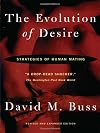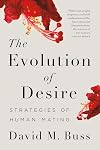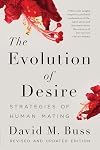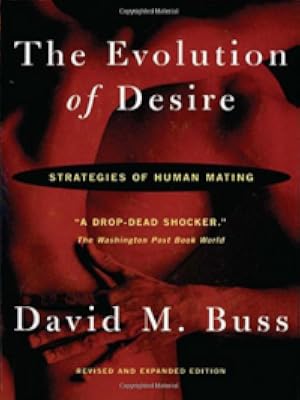
The Evolution of Desire: Strategies of Human Mating
by David M. Buss
On This Page
Description
A "drop-dead shocker" (Washington Post Book World) that uses evolutionary psychology to explain human mating and the mysteries of loveIf we all want love, why is there so much conflict in our most cherished relationships? To answer this question, we must look into our evolutionary past, argues prominent psychologist David M. Buss. Based one of the largest studies of human mating ever undertaken, encompassing more than 10,000 people of all ages from thirty-seven cultures worldwide, The show more Evolution of Desire is the first work to present a unified theory of human mating behavior. Drawing on a wide range of examples of mating behavior—from lovebugs to elephant seals, from the Yanomamö tribe of Venezuela to online dating apps—Buss reveals what women want, what men want, and why their desires radically differ. Love has a central place in human sexual psychology, but conflict, competition, and manipulation also pervade human mating—something we must confront in order to control our own mating destiny.
Updated to reflect recent scientific research on human mating, this definitive edition of this classic work of evolutionary psychology explains the powerful forces that shape our most intimate desires. show less
Tags
Recommendations
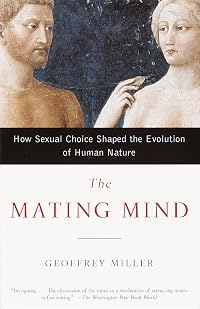
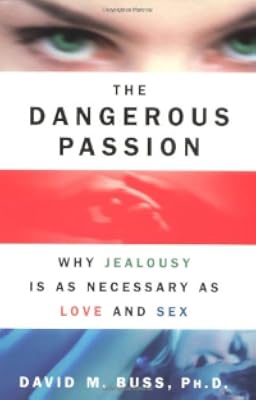

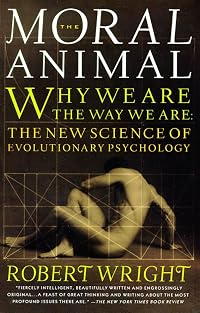


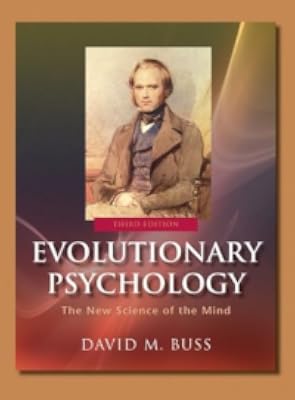















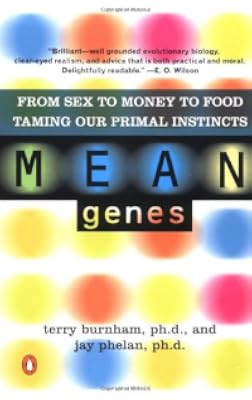
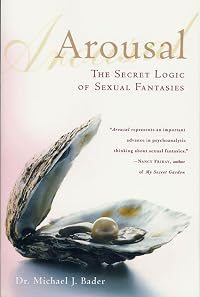
Member Recommendations

Member Reviews
Buss makes a case for evolutionary explanations to human mating. The overall idea is that men and women have evolved to have two different strategies to maximize their number of offspring. The strategies is not conscious, calculated strategies, but is rather developed as different desires and behavior in men and women with regards to mating. In short, men want to have sex with as many women as possible and in the end settle with a woman while women would prefer to find one man with lot of resources to settle down with straight away.
It is of course quite a controversial area of research so I can see how one group hails it as a courageous explaining how the world really is while another group hates it a sees it perpetuating old myths and show more disregarding counter examples.
The second group can certainly point to some unconvincing parts of the book. Buss offers no explanation to homosexuality, which you would think would be the one thing evolution would make impossible since homosexual relations doesn't result in children, but simply confesses that it is a big unsolved paradox for evolutionary biology. Critics would likely also point out that a lot of these studies is quite small and done with American college students (and very often done by Buss himself) which raises the question about how generalizable the results really are. Some of the hypothesis he gives is also quite unconvincing. Like when he claims women are moody to test men's commitment to the relationship. Or that a woman showing signs of submissiveness in bars is a sign to men they can approach without fearing hostility.
For some the above mentioned will be enough to dismiss the book. But for me it isn't. While some of his claims are a bit out there, I find most of them plausible and the big picture they give shape to quite convincing. It is not an area of study that lends itself to experimental research, but a lot of the data fits very neatly. One example is how divorce rates go down in society with a surplus of men, while they go up in a society with a surplus of women. Or how men gives premium status to the physical attractiveness of women, while women gives much more weight to the general status of a man. One study found college women would find it much more annoying if a low status man continually asked for dates when he was turned down than if a high status man would do it.
Evolutionary psychology is quite a new area of research still. While, as said, if find the overall picture in the book quite convincing I expect more research and studies will make some of the explanations and data in the book obsolete. But I expect the general direction this book points to will be confirmed. And it is quite an enjoyable read (even though it certainly goes into some of the darker sides of human psychology and behavior). show less
It is of course quite a controversial area of research so I can see how one group hails it as a courageous explaining how the world really is while another group hates it a sees it perpetuating old myths and show more disregarding counter examples.
The second group can certainly point to some unconvincing parts of the book. Buss offers no explanation to homosexuality, which you would think would be the one thing evolution would make impossible since homosexual relations doesn't result in children, but simply confesses that it is a big unsolved paradox for evolutionary biology. Critics would likely also point out that a lot of these studies is quite small and done with American college students (and very often done by Buss himself) which raises the question about how generalizable the results really are. Some of the hypothesis he gives is also quite unconvincing. Like when he claims women are moody to test men's commitment to the relationship. Or that a woman showing signs of submissiveness in bars is a sign to men they can approach without fearing hostility.
For some the above mentioned will be enough to dismiss the book. But for me it isn't. While some of his claims are a bit out there, I find most of them plausible and the big picture they give shape to quite convincing. It is not an area of study that lends itself to experimental research, but a lot of the data fits very neatly. One example is how divorce rates go down in society with a surplus of men, while they go up in a society with a surplus of women. Or how men gives premium status to the physical attractiveness of women, while women gives much more weight to the general status of a man. One study found college women would find it much more annoying if a low status man continually asked for dates when he was turned down than if a high status man would do it.
Evolutionary psychology is quite a new area of research still. While, as said, if find the overall picture in the book quite convincing I expect more research and studies will make some of the explanations and data in the book obsolete. But I expect the general direction this book points to will be confirmed. And it is quite an enjoyable read (even though it certainly goes into some of the darker sides of human psychology and behavior). show less
I read this book at a fairly busy point in life, so it took me about two months to get through it. I was glad to finish the last page, but at the same time I wanted to know more. I know that by taking so long to read the book, I've forgotten some of the stuff that happened earlier, but I DO know that I really enjoyed it. It's that weird part of me that enjoys studying human sexuality.
This book is considerably less complicated than Buss and Malamuths SEX, POWER, CONFLICT. Even though Buss is an apparent fountain of knowledge about this topic, he is able to pare it down into language that even a person unschooled in the realm of psychology can understand. He's clear and straightforward, and does not seem to have any huge biases--his show more major beef seems to be with those who hold with the feminist perspective, which is, I believe, totally understandable. All in all, a good read. show less
This book is considerably less complicated than Buss and Malamuths SEX, POWER, CONFLICT. Even though Buss is an apparent fountain of knowledge about this topic, he is able to pare it down into language that even a person unschooled in the realm of psychology can understand. He's clear and straightforward, and does not seem to have any huge biases--his show more major beef seems to be with those who hold with the feminist perspective, which is, I believe, totally understandable. All in all, a good read. show less
Seems about right. Evolution of desire hasn't stopped but evolution is not as fast as the culture change - hence the strange mismatch of actual strategies versus our claimed ethical stances.
Ratings
Members
- Recently Added By
Lists

Books Read in 2006
421 works; 8 members

Ryan Holiday's Books To Base Your Life On
97 works; 2 members

Read in 2006
140 works; 1 member
Author Information

18+ Works 1,466 Members
David M. Buss received his Ph.D. from the University of California at Berkeley in 1981. He began at Harvard, later moving to the University of Michigan before accepting his current position as Professor of Psychology at the University of Texas. His primary research interests include human sexuality, mating strategies, conflict between the sexes, show more homicide, stalking, and sexual victimization. The first edition of Evolutionary Psychology: The New Science of the Mind won the Robert W. Hamilton Book Award (2000). show less
Awards and Honors
Notable Lists
Common Knowledge
- Canonical title*
- L'evoluzione del desiderio: comportamenti sessuali e strategie di coppia
- Original title
- The Evolution of Desire: Strategies of Human Mating
- Original publication date
- 1994
- Dedication
- For Cindy
- First words
- Chapter 1 -- Origins of Mating Behavior -- Human mating behavior delights and amuses us and galvanizes our gossip, but it is also deeply disturbing. Few domains of human activity generate as much discussion, as many laws, or ... (show all)such elaborate rituals in all cultures. Yet the elements of human mating seem to defy understanding. Women and men sometimes find themselves choosing mates who abuse them psychologically and physically. Efforts to attract mates often backfire. Conflicts erupt between couples, producing downward spirals of blame and despair. Despite their best intentions and vows of lifelong love, half of all married couples end up divorcing.
- Last words
- (Click to show. Warning: May contain spoilers.)We are the first species in the known history of three and a half billion years of life on earth with the capacity to control our own destiny. The prospect of designing our destiny remains excellent to the degree we understand our evolutionary past. Only by examining the complex repertoire of human sexual strategies can we know where we came from. Only by understanding why these human strategies have evolved can we control where we are going.
- Blurbers
- Fisher, Helen E.; Tooby, John; Cosmides, Leda; Pinker, Steven
*Some information comes from Common Knowledge in other languages. Click "Edit" for more information.
Classifications
- Genres
- Science & Nature, Nonfiction, Anthropology, General Nonfiction
- DDC/MDS
- 306.7 — Society, government, & culture Social sciences, sociology & anthropology Social Behavior - Dating, Marriage, Divorce Sexual relations
- LCC
- HQ21 .B95 — Social sciences The family. Marriage, Women and Sexuality The Family. Marriage. Women Sexual life Sexual behavior and attitudes. Sexuality
- BISAC
Statistics
- Members
- 541
- Popularity
- 55,067
- Reviews
- 3
- Rating
- (4.00)
- Languages
- 9 — Chinese, English, Finnish, French, German, Italian, Russian, Spanish, Swedish
- Media
- Paper, Audiobook, Ebook
- ISBNs
- 19
- ASINs
- 6