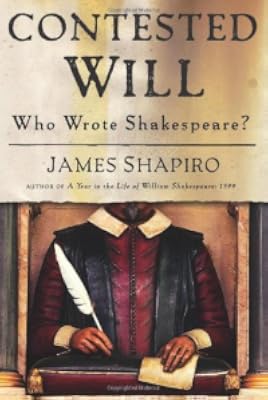
Contested Will: Who Wrote Shakespeare?
by James Shapiro
On This Page
Description
Shakespeare scholar James Shapiro explains when and why so many people began to question whether Shakespeare wrote his plays.Tags
Recommendations
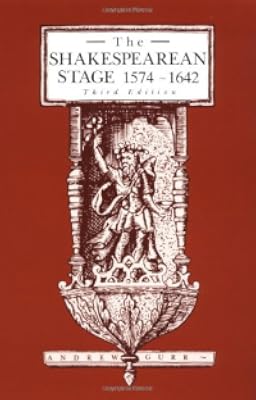
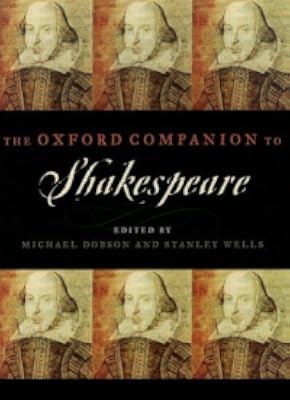
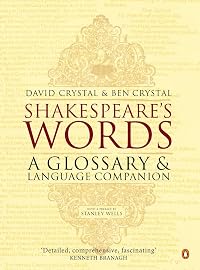
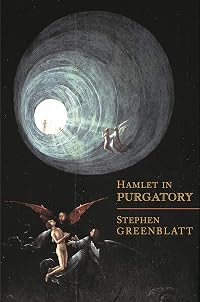





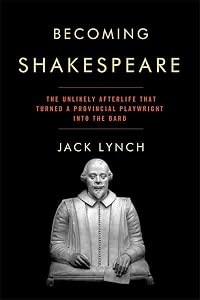
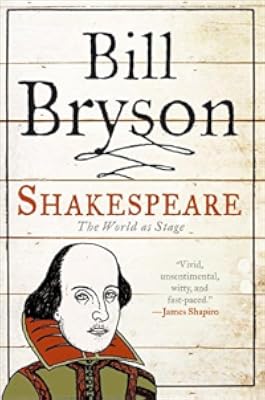
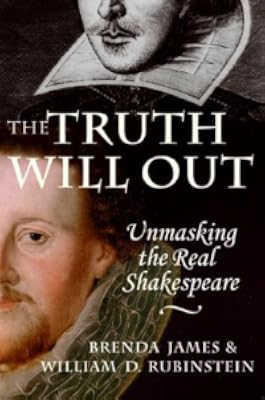
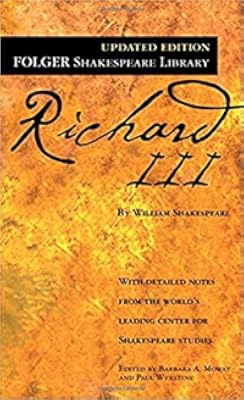
Member Recommendations

Member Reviews
If you read one book about the Shakespeare authorship controversy, make it this one! Fascinating, highly informative overview of the Shakespeare authorship controversy from its genesis (as far back as the 1700s!) to today, by a noted Shakespearian scholar who knows how to spin an entertaining and compelling story.
What you'll enjoy about this book (or at least what I enjoyed!):
* Thorough review of what we definitely know about Shakespeare's life (he wasn't "uneducated," folks - even sons of glovemakers went to school), what we can logically infer about Shakespeare's life (for instance, evidence suggests he was a formidable businessman), and what we definitely don't know about Shakespeare's life, no matter what other so-called "scholars" show more may state to the contrary. (There's no evidence he had an affair with his patron, and no positive proof as to the identity of the dark lady.)
* A detailed discussion of pretty much every single piece of paper or evidence unearthed over the last 500 years by Shakespeare, referencing Shakespeare, or discussing Shakespeare - what little of it there is.
* Informative overview of era in which Shakespeare wrote, with emphasis on daily life, cultural/social norms, theater, and playwriting - extremely helpful in interpreting in context the information we do have.
* Unbiased presentation of the two most serious contenders for the Bard's throne (Bacon & Oxford): the genesis and evolution of each claim, the main actors promoting each, the evidence cited by each camp, a detailed discussion of the pros/cons of each camp's arguments, and an update on where each contender "stands" in popular opinion today.
* An in-depth exploration of other controversies that have surrounded Shakespeare's life, to include:
- which plays did Shakespeare actually write? (Author presents compelling evidence that many of the plays were co-authored)
- what was Shakespeare's source material?
- why did he suddenly retire from playwriting and move back to the country to become moneylender and seller of malt?
- why did Shakespeare leave his wife only his "second best bed"?
* An entertaining exploration of Shakespeare-related forgeries, impersonations, and other frauds perpetrated over the years. (Will we ever find out who forged the Cowell manuscript?)
* Perspectives on how opinions of Shakespeare and his works have evolved over time
* A fascinating look into the world "Bardolotry" - how an actor and playwright from Stratford-on-Avon came to be regarded as the greatest author of all times.
This is by far the best, most thorough, least biased discussion of the controversy I've ever laid hands on. Having said that, the author does definitely have a bias (though he goes to some pains in the prologue to convince us he doesn't): he believes that the bulk of the primary source material supports Shakespeare's authorship, and that Oxfordians and Baconians rely overmuch on dubious "textual evidence" and inference to make their case. But this does not appear to taint the completeness or reliability of the information he has presented here.
Best of all, Shapiro presents his discussion in so organized and thorough a fashion, it didn't matter that I approached this with little background knowledge of Shakespeare studies, 16th/17th century history, or textual analysis: everything I needed to access his discussions was thoughtfully embedded in the text. Lucky for us, Shapiro's not only a scholar but an excellent communicator who knows how to present even the driest information in a way that most readers should find engaging and thought-provoking.
Highly recommended - I hope others will enjoy this as much as I did! show less
What you'll enjoy about this book (or at least what I enjoyed!):
* Thorough review of what we definitely know about Shakespeare's life (he wasn't "uneducated," folks - even sons of glovemakers went to school), what we can logically infer about Shakespeare's life (for instance, evidence suggests he was a formidable businessman), and what we definitely don't know about Shakespeare's life, no matter what other so-called "scholars" show more may state to the contrary. (There's no evidence he had an affair with his patron, and no positive proof as to the identity of the dark lady.)
* A detailed discussion of pretty much every single piece of paper or evidence unearthed over the last 500 years by Shakespeare, referencing Shakespeare, or discussing Shakespeare - what little of it there is.
* Informative overview of era in which Shakespeare wrote, with emphasis on daily life, cultural/social norms, theater, and playwriting - extremely helpful in interpreting in context the information we do have.
* Unbiased presentation of the two most serious contenders for the Bard's throne (Bacon & Oxford): the genesis and evolution of each claim, the main actors promoting each, the evidence cited by each camp, a detailed discussion of the pros/cons of each camp's arguments, and an update on where each contender "stands" in popular opinion today.
* An in-depth exploration of other controversies that have surrounded Shakespeare's life, to include:
- which plays did Shakespeare actually write? (Author presents compelling evidence that many of the plays were co-authored)
- what was Shakespeare's source material?
- why did he suddenly retire from playwriting and move back to the country to become moneylender and seller of malt?
- why did Shakespeare leave his wife only his "second best bed"?
* An entertaining exploration of Shakespeare-related forgeries, impersonations, and other frauds perpetrated over the years. (Will we ever find out who forged the Cowell manuscript?)
* Perspectives on how opinions of Shakespeare and his works have evolved over time
* A fascinating look into the world "Bardolotry" - how an actor and playwright from Stratford-on-Avon came to be regarded as the greatest author of all times.
This is by far the best, most thorough, least biased discussion of the controversy I've ever laid hands on. Having said that, the author does definitely have a bias (though he goes to some pains in the prologue to convince us he doesn't): he believes that the bulk of the primary source material supports Shakespeare's authorship, and that Oxfordians and Baconians rely overmuch on dubious "textual evidence" and inference to make their case. But this does not appear to taint the completeness or reliability of the information he has presented here.
Best of all, Shapiro presents his discussion in so organized and thorough a fashion, it didn't matter that I approached this with little background knowledge of Shakespeare studies, 16th/17th century history, or textual analysis: everything I needed to access his discussions was thoughtfully embedded in the text. Lucky for us, Shapiro's not only a scholar but an excellent communicator who knows how to present even the driest information in a way that most readers should find engaging and thought-provoking.
Highly recommended - I hope others will enjoy this as much as I did! show less
http://nwhyte.livejournal.com/1692015.html
An excellent book about the Shakespeare authorship controversy. Shapiro is not really writing about the balance of evidence on either side, though he makes it clear that his sympathies are with the Stratford man rather than with Francis Bacon or the Earl of Oxford. His subject is more an attempt to work out why various highly regarded intellects (Mark Twain and Helen Keller for Bacon, Sigmund Freud for Oxford) should be attracted by such peculiar theories. His answer is that, for Twain and Freud in particular, it was emotionally important to see the plays and sonnets as autobiographical and revealing of their author's state of mind, even though this is completely anachronistic in terms of how show more Shakespeare and his contemporaries wrote and thought about writing.
The grand Oxford conspiracy theory (which in its wilder variations has the Earl as both son and lover of Queen Elizabeth, as well as being the author of the works of Shakespeare, Marlowe and many more) then happened to hit the Zeitgeist of the last few decades, when we have learned that governments often do lie to us about more important issues than who wrote a play, and questioning received wisdom has become habitual.
Finally, Shapiro points out that Shakespeare's claim to sole authorship of all the plays is no longer accepted by mainstream scholars, in that several of the plays are in fact collaborations (with Fletcher, Middleton, Wilkins and Peele; and he omits Kyd and Edward III). The idea that even a small part of Shakespeare might not be by Shakespeare was heretical until surprisingly recently. But real research, unlike Oxfordianism or Baconianism, moves on.
A good book to read as I crystallize my own biographical endeavours. show less
An excellent book about the Shakespeare authorship controversy. Shapiro is not really writing about the balance of evidence on either side, though he makes it clear that his sympathies are with the Stratford man rather than with Francis Bacon or the Earl of Oxford. His subject is more an attempt to work out why various highly regarded intellects (Mark Twain and Helen Keller for Bacon, Sigmund Freud for Oxford) should be attracted by such peculiar theories. His answer is that, for Twain and Freud in particular, it was emotionally important to see the plays and sonnets as autobiographical and revealing of their author's state of mind, even though this is completely anachronistic in terms of how show more Shakespeare and his contemporaries wrote and thought about writing.
The grand Oxford conspiracy theory (which in its wilder variations has the Earl as both son and lover of Queen Elizabeth, as well as being the author of the works of Shakespeare, Marlowe and many more) then happened to hit the Zeitgeist of the last few decades, when we have learned that governments often do lie to us about more important issues than who wrote a play, and questioning received wisdom has become habitual.
Finally, Shapiro points out that Shakespeare's claim to sole authorship of all the plays is no longer accepted by mainstream scholars, in that several of the plays are in fact collaborations (with Fletcher, Middleton, Wilkins and Peele; and he omits Kyd and Edward III). The idea that even a small part of Shakespeare might not be by Shakespeare was heretical until surprisingly recently. But real research, unlike Oxfordianism or Baconianism, moves on.
A good book to read as I crystallize my own biographical endeavours. show less
A hugely important book. The silliness over allegations that other people wrote Shakespeare's plays and poems continues into the 21st century, with no good reason. The great thing about Shapiro's book is that he analyses the history of such claims, as well as the stories of the two most common claimants - Francis Bacon and Edward De Vere, Earl of Oxford - from an academic point-of-view, allowing us to see the reasons why these traditions arose, and the motivations behind those who were doing it. Shapiro manages to explain that there was plenty of cause for doubt, largely owing to lack of information, and misinformation, about Shakespeare's time.
Ultimately, the conclusion that Shapiro reaches is perfectly reasonable: the original show more supporters of Bacon and Oxford had their own reasons, and can at least be forgiven for inventive thinking. However, no new evidence has come to light in the last hundred years, and indeed evidence only points further to the futility of the argument, and the fact that Shakespeare is still the most likely candidate to have written his plays. (One of the most delightful ironies of the case, Shapiro points out, is that only a secret of truly shocking order - for instance, that Oxford was the lover and/or brother of Queen Elizabeth - could have caused a conspiracy so elaborate as to be almost impossible, yet such a secret would surely lead to someone doing otherwise with their life than writing luxuriously pointless comedies like "Much Ado About Nothing" and cheekily hiding obvious clues to their identity in the poems - while also having the foresight to anticipate that 20th century literary analysis would be able to pick up on them!)
Shapiro's book is the best of its kind in elaborating on the theories of Bacon and Oxford. However, there are better books on the case FOR Shakespeare, as this section is surprisingly short, which perhaps just evidences that Shapiro spent all of his research time on the claimants. Still, that's acceptable. Shapiro touches the basics of what we now know about Shakespeare, and pulls out a number of interesting facts (such as that the 'k' and 's' of a typesetter's kit could easily become entangled if pressed together, hence why a hyphen or 'e' was often included in "Shakespeare". It's not, as some nuts would have you believe, yet another hilariously unsubtle reference from Oxford that "Shake-speare" was a pseudonym.)
Oxfordians are probably very interesting people: they have rich imaginations, a refusal to subscribe to mainstream thought without questioning, and a love of good drama. Unfortunately, they also subscribe to a thought from over a hundred years ago that is thoroughly outdated. It's a thought that ignores the realities of playmaking, typesetting, copyright, and beliefs of the age, as well as imagining a kind of English writer's circle that could hold such a secret. (As a member of such a writing circle in another city, we ALL know each other: I doubt anyone in the theatre could fake their identity for three decades). Beyond this, their assumptions are based primarily on the idea that someone of less-than-aristocratic birth couldn't be a genius. As Shapiro notes, one of the old claims was that Shakespeare's aristocrats are so complex that they could only be written by an aristocrat. Even putting aside the simplistic retorts to that (do the murderers, teenage girls, and prostitutes of Shakespeare's plays come from another writer too?), one must wonder about the vast number of peasants and lower-born figures who are just as richly drawn.
It's a shame that an incredibly fringe theory (one that was almost obliterated until the rise of the internet, as Shapiro notes) has crept into the popular imagination of late. It does disservice to a long-dead great, makes inaccurate and ridiculous assumptions about Elizabethan life, and promotes the idea that we should all just "stay in our place". Rubbish. Read this book! show less
Ultimately, the conclusion that Shapiro reaches is perfectly reasonable: the original show more supporters of Bacon and Oxford had their own reasons, and can at least be forgiven for inventive thinking. However, no new evidence has come to light in the last hundred years, and indeed evidence only points further to the futility of the argument, and the fact that Shakespeare is still the most likely candidate to have written his plays. (One of the most delightful ironies of the case, Shapiro points out, is that only a secret of truly shocking order - for instance, that Oxford was the lover and/or brother of Queen Elizabeth - could have caused a conspiracy so elaborate as to be almost impossible, yet such a secret would surely lead to someone doing otherwise with their life than writing luxuriously pointless comedies like "Much Ado About Nothing" and cheekily hiding obvious clues to their identity in the poems - while also having the foresight to anticipate that 20th century literary analysis would be able to pick up on them!)
Shapiro's book is the best of its kind in elaborating on the theories of Bacon and Oxford. However, there are better books on the case FOR Shakespeare, as this section is surprisingly short, which perhaps just evidences that Shapiro spent all of his research time on the claimants. Still, that's acceptable. Shapiro touches the basics of what we now know about Shakespeare, and pulls out a number of interesting facts (such as that the 'k' and 's' of a typesetter's kit could easily become entangled if pressed together, hence why a hyphen or 'e' was often included in "Shakespeare". It's not, as some nuts would have you believe, yet another hilariously unsubtle reference from Oxford that "Shake-speare" was a pseudonym.)
Oxfordians are probably very interesting people: they have rich imaginations, a refusal to subscribe to mainstream thought without questioning, and a love of good drama. Unfortunately, they also subscribe to a thought from over a hundred years ago that is thoroughly outdated. It's a thought that ignores the realities of playmaking, typesetting, copyright, and beliefs of the age, as well as imagining a kind of English writer's circle that could hold such a secret. (As a member of such a writing circle in another city, we ALL know each other: I doubt anyone in the theatre could fake their identity for three decades). Beyond this, their assumptions are based primarily on the idea that someone of less-than-aristocratic birth couldn't be a genius. As Shapiro notes, one of the old claims was that Shakespeare's aristocrats are so complex that they could only be written by an aristocrat. Even putting aside the simplistic retorts to that (do the murderers, teenage girls, and prostitutes of Shakespeare's plays come from another writer too?), one must wonder about the vast number of peasants and lower-born figures who are just as richly drawn.
It's a shame that an incredibly fringe theory (one that was almost obliterated until the rise of the internet, as Shapiro notes) has crept into the popular imagination of late. It does disservice to a long-dead great, makes inaccurate and ridiculous assumptions about Elizabethan life, and promotes the idea that we should all just "stay in our place". Rubbish. Read this book! show less
Acclaimed Shakespeare scholar James Shapiro grabs the third rail of Shakespeare studies and doesn't let go in Contested Will: Who Wrote Shakespeare? (Simon & Schuster, 2010). Shapiro's book is a well-executed, carefully-reasoned refutation of the "authorship controversy" - that is, the "debate" over whether William Shakespeare actually was "William Shakespeare."
Shapiro makes clear from the start that he believes in the traditional narrative, that Shakespeare of Stratford wrote the plays attributed to him (though, he points out, we must make room in that narrative for recent findings about collaboration and co-authorship in the case of several of the canonical works). The book is partly a defense of the Stratfordian position, but it is show more also a trenchant examination of how there got to be a debate in the first place. Shapiro delves deep down into the roots of the authorship controversy; these are, we learn, surprisingly shallow - when forgeries are removed from the picture, it's not until the middle of the 19th century that questions about Shakespeare's identity began to percolate ... a trend that's gained much steam with the rise of the Internet.
But there was an interpretive groundwork on which the authorship questions were founded, which Shapiro argues began with scholar Edmond Malone (known to us as the refuter of the Ireland forgeries, which also come into Shapiro's story). Malone's belief that Shakespeare's plays and poems should be read autobiographically is the foundation on which the entire authorship house of cards has been erected, Shapiro argues - it is this that has enable the proponents of other candidates to claim that their chosen author is a better fit (Shakespeare couldn't possibly have written so eloquently about the law because he wasn't a law, or Venice because he'd never been, &c. &c.). Shapiro warns that this is a false premise - that to read the works as if they are autobiography, we discredit Shakespeare's literary imagination, (and we fail to grasp the nature of Elizabethan and Jacobean writing styles, to boot). He finds a quote in the 1593 poem Licia that proves his point: "A man may write of love, and not be in love, as well as of husbandry, and not go to plough, or of witches and be none."
Even as he carefully, even patiently, takes apart their claims, however, Shapiro explores many of the various branches of the controversy and their proponents - Delia Bacon's near-maniacal support of Francis Bacon as the author (which came to attract the attention, among others, of Mark Twain and Helen Keller), and John Thomas Looney's advocacy of Edward de Vere, the seventh Earl of Oxford (considered by many the leading "alternative candidate" at this point). Shapiro traces the lines of argument for the Oxfordian position right up to the present, noting that while it continues to attract high-profile interest (including Sigmund Freud and prominent actor Sir Derek Jacobi, among others), the cause has failed to actually produce a single shred of hard evidence for the conspiracy they insist had to have taken place (that Will Shakespeare was de Vere's "front man"). Nothing in the contemporary literature or biographical treatments of the time suggests this, as Shapiro points out, forcing opponents of the traditional Shakespeare into linguistic and historical contortions to explain them away.
As fine and fair a survey of the authorship debate as we're ever likely to see, which comes to the only conclusion possible given the evidence we have.
http://philobiblos.blogspot.com/2010/04/book-review-contested-will.html show less
Shapiro makes clear from the start that he believes in the traditional narrative, that Shakespeare of Stratford wrote the plays attributed to him (though, he points out, we must make room in that narrative for recent findings about collaboration and co-authorship in the case of several of the canonical works). The book is partly a defense of the Stratfordian position, but it is show more also a trenchant examination of how there got to be a debate in the first place. Shapiro delves deep down into the roots of the authorship controversy; these are, we learn, surprisingly shallow - when forgeries are removed from the picture, it's not until the middle of the 19th century that questions about Shakespeare's identity began to percolate ... a trend that's gained much steam with the rise of the Internet.
But there was an interpretive groundwork on which the authorship questions were founded, which Shapiro argues began with scholar Edmond Malone (known to us as the refuter of the Ireland forgeries, which also come into Shapiro's story). Malone's belief that Shakespeare's plays and poems should be read autobiographically is the foundation on which the entire authorship house of cards has been erected, Shapiro argues - it is this that has enable the proponents of other candidates to claim that their chosen author is a better fit (Shakespeare couldn't possibly have written so eloquently about the law because he wasn't a law, or Venice because he'd never been, &c. &c.). Shapiro warns that this is a false premise - that to read the works as if they are autobiography, we discredit Shakespeare's literary imagination, (and we fail to grasp the nature of Elizabethan and Jacobean writing styles, to boot). He finds a quote in the 1593 poem Licia that proves his point: "A man may write of love, and not be in love, as well as of husbandry, and not go to plough, or of witches and be none."
Even as he carefully, even patiently, takes apart their claims, however, Shapiro explores many of the various branches of the controversy and their proponents - Delia Bacon's near-maniacal support of Francis Bacon as the author (which came to attract the attention, among others, of Mark Twain and Helen Keller), and John Thomas Looney's advocacy of Edward de Vere, the seventh Earl of Oxford (considered by many the leading "alternative candidate" at this point). Shapiro traces the lines of argument for the Oxfordian position right up to the present, noting that while it continues to attract high-profile interest (including Sigmund Freud and prominent actor Sir Derek Jacobi, among others), the cause has failed to actually produce a single shred of hard evidence for the conspiracy they insist had to have taken place (that Will Shakespeare was de Vere's "front man"). Nothing in the contemporary literature or biographical treatments of the time suggests this, as Shapiro points out, forcing opponents of the traditional Shakespeare into linguistic and historical contortions to explain them away.
As fine and fair a survey of the authorship debate as we're ever likely to see, which comes to the only conclusion possible given the evidence we have.
http://philobiblos.blogspot.com/2010/04/book-review-contested-will.html show less
A work that is simultaneously a solid work of scholarship and a compulsive read – a veritable rara avis indeed (a black swan of Avon, perhaps?) It's worth noting that the cover (of the UK hardback, at least) and the title are both a little misleading: Shapiro doesn't investigate every possible non-Stratfordian author, but (as he points out) his detailed refutation of the proponents of Bacon and Oxford function just as well to refute other claims.
This is the best book on the Shakespeare authorship controversy that one can own. This is because this book is not just a explanation of the controversy, but a historiography of the controversy. For instance, Shapiro explains why people first thought William Shakespeare the actor could not be William Shakespeare the author. He then ties the two prime candidates, Bacon and Oxford, two trends of their time, such as Oxford's reliance on Freudian thought, making it a product of the early twentieth century. The chapter on Shakespeare as author is devastating in its critique of conspiracy theorists, Shakespeare enthusiasts, and even Shakespearean scholars themselves, all while proving, to my satisfaction, that Shakespeare the actor was indeed show more Shakespeare the Bard. A must for all Shakespearean bookshelves. show less
"Masterpiece" is a word usually applied to works of art rather than scholarship, but would fit here. We learn so much about human folly, the creative process, real history, research methods, the changes of literary fashion, the true love of art - and human greatness.
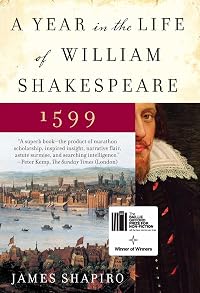
Piquant is how Shapiro points out how the fantasists' reflect and project their own lives onto the empty space of WS's life story. He deftly shows how the cases made for authorship tell more about the advocates than they do about WS or his works. Freud, who should have been "analysing" the nut-cases, fell victim himself. Shapiro also points out the quasi-religious style of the arguers: the cases are faith-based, not evidence-based, much like the creationist style. The finale show more demonstrates how much detail we do in fact now possess about WS's life (as his 1599 also showed.
The book has deep patient humanity: no mocking of the anti-WS brigade, heartfelt and shared delight in WS and his work. The last words, on imagination, are moving, uplifting. show less
Piquant is how Shapiro points out how the fantasists' reflect and project their own lives onto the empty space of WS's life story. He deftly shows how the cases made for authorship tell more about the advocates than they do about WS or his works. Freud, who should have been "analysing" the nut-cases, fell victim himself. Shapiro also points out the quasi-religious style of the arguers: the cases are faith-based, not evidence-based, much like the creationist style. The finale show more demonstrates how much detail we do in fact now possess about WS's life (as his 1599 also showed.
The book has deep patient humanity: no mocking of the anti-WS brigade, heartfelt and shared delight in WS and his work. The last words, on imagination, are moving, uplifting. show less
Members
- Recently Added By
Published Reviews
ThingScore 75
"It is authoritative, lucid and devastatingly funny, and its brief concluding statement of the case for Shakespeare is masterly."
added by bookfitz
"Shapiro does not waste words on the preposterous, but he does uncover the mechanism of fantasy and projection that go to make up much of the case against Shakespeare. His book lays bare, too, assumptions about the writing life that come to us from the 18th-century romantics."
added by bookfitz
Lists

Top Five Books of 2013
1,562 works; 715 members

Works concerning William Shakespeare
75 works; 4 members
Author Information

10+ Works 4,012 Members
Awards and Honors
Common Knowledge
- Original title
- Contested Will: Who Wrote Shakespeare?
- Original publication date
- 2010
- People/Characters
- William Shakespeare; Edward de Vere, 17th Earl of Oxford; Bacon, Francis, 1561-1626; Edmund Malone; Delia Bacon; J. Thomas Looney (show all 12); Helen Keller; Mark Twain; Henry James; Elizabeth I, Queen of England; James VI and I, King of Scots and King of England; Derek Jacobi
- Important places
- London, England, UK
- Epigraph
- "I gyve vnto my wief my second best bed"
from Shakespeare's will - Dedication
- For Luke
- First words
- This is a book about when and why many people began to question whether William Shakespeare wrote the plays long attributed to him, and, if he didn't write them, who did.
- Last words
- (Click to show. Warning: May contain spoilers.)We can believe that Shakespeare himself thought that poets could give to "airy nothing" a "local habitation and a name." Or we can conclude that this "airy nothing" turns out to be a disguised something that needs to be decoded, and that Shakespeare couldn't imagine "the form of things unknown" without having experienced it firsthand. It's a stark and consequential choice.
Classifications
- Genres
- Literature Studies and Criticism, Nonfiction, Poetry, Biography & Memoir
- DDC/MDS
- 822.33 — Literature & rhetoric English & Old English literatures English drama 1558-1625 Elizabethan period William Shakespeare
- LCC
- PR2937 .S47 — Language and Literature English English Literature English renaissance (1500-1640)
- BISAC
Statistics
- Members
- 700
- Popularity
- 40,826
- Reviews
- 31
- Rating
- (4.09)
- Languages
- English, Portuguese, Spanish
- Media
- Paper, Audiobook, Ebook
- ISBNs
- 14
- ASINs
- 7