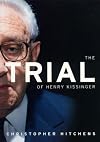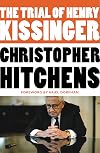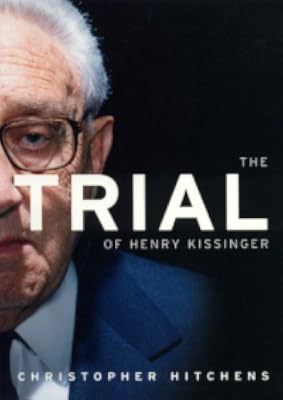
The Trial of Henry Kissinger
by Christopher Hitchens
On This Page
Description
"If the courts and lawyers of this country will not do their duty, we shall watch as the victims and survivors of this man pursue justice and vindication in their own dignified and painstaking way, and at their own expense, and we shall be put to shame." Forget Pinochet, Milosevic, Hussein, Kim Jong-il, or Gaddafi: America need look no further than its own lauded leaders for a war criminal whose offenses rival those of the most heinous dictators in recent history-Henry Kissinger. Employing show more evidence based on firsthand testimony, unpublished documents, and new information uncovered by the Freedom of Information Act, and using only what would hold up in international courts of law, THE TRIAL OF HENRY KISSINGER outlines atrocities authorized by the former secretary of state in Indochina, Bangladesh, Chile, Cyprus, East Timor, and in the plight of the Iraqi Kurds, "including conspiracy to commit murder, kidnap, and torture." With the precision and tenacity of a prosecutor, Hitchens offers an unrepentant portrait of a felonious diplomat who "maintained that laws were like cobwebs," and implores governments around the world, including our own, to bring him swiftly to justice. show lessTags
Recommendations








Member Reviews
What is most damning for Henry Kissinger in this book is that Christopher Hitchens does not indulge salaciousness. No doubt Hitchens could launch an able historical critique of Kissinger's 'depraved realpolitik' (pg. xxiii), or he could make for some racier prose by attacking the man's personality, but as a comprehensive condemnation of the man Hitchens picked the perfect strategy by focusing solely on what could be legally proven by the documentary evidence. He all but mocks Kissinger and his shadowy clique of lawyers and influencers, for if they sue him he can back up everything he writes, and Kissinger would have the day in court that he has spent decades so shamelessly avoiding.
The bill of indictment is a long one, even in this show more short book. Hitchens explains Kissinger's undermining of the Vietnam peace process, which led to further years of war and tens of thousands more unnecessary deaths. He discusses atrocities and war-mongering in Cambodia – at one point mentioning how one of the judges who tried the Nazis at Nuremberg believed Kissinger would be hanged if he was tried to the same standard (pg. 25) – and the instigation of genocides, assassinations and coup attempts in places like Bangladesh, Chile, Cyprus and East Timor. In the process, Hitchens gives the lie to lazy historical judgments such as the one that Vietnam was a 'quagmire' that America inadvertently stumbled into, or the idea that the United States, at least post-war, remains a democracy of the people, by the people and for the people. Such a view does not chime with the documentary evidence of a sitting Secretary of State sending out caustic memos and doing business with multinational corporations and their string of Congressional lobbyists.
Indeed, it is sometimes hard to believe it is all true, that "the pudgy man standing in black tie at the Vogue party is… the [same] man who ordered and sanctioned the destruction of civilian populations, the assassination of inconvenient politicians, the kidnapping and disappearance of soldiers and journalists and clerics who got in his way" (pg. 5). But it is, and it is all studiously fact-checked and delivered white-hot. It is a fine reminder of what journalism used to be, at its best; lucid, concise, non-partisan and conscience-clear.
It is a stark and sobering book, and the case could not be stated more baldly. A common theme is that those Kissinger backed, either publicly or privately, or whom he had business dealings with, are now in prison, often for the most heinous of crimes. Writing in 2001, Hitchens says that "magistrates in three democratic nations are seeking – and are being refused – his [Kissinger's] testimony on grave crimes against humanity" (pg. xxi). Reading in 2019, it can unfortunately be said that Kissinger will die a free and uncondemned man, even lauded as an elder statesman in some quarters, and we must brace ourselves for the fawning obituaries that must surely come soon, hopefully followed by a belated slew of criminal revelations that had a use-by date of 1975. If "the subject [still] awaits its magistrate" (pg. 126), there is a tiny shred of victory in knowing that, in Hitchens, Kissinger at least knows that he has been served papers. show less
The bill of indictment is a long one, even in this show more short book. Hitchens explains Kissinger's undermining of the Vietnam peace process, which led to further years of war and tens of thousands more unnecessary deaths. He discusses atrocities and war-mongering in Cambodia – at one point mentioning how one of the judges who tried the Nazis at Nuremberg believed Kissinger would be hanged if he was tried to the same standard (pg. 25) – and the instigation of genocides, assassinations and coup attempts in places like Bangladesh, Chile, Cyprus and East Timor. In the process, Hitchens gives the lie to lazy historical judgments such as the one that Vietnam was a 'quagmire' that America inadvertently stumbled into, or the idea that the United States, at least post-war, remains a democracy of the people, by the people and for the people. Such a view does not chime with the documentary evidence of a sitting Secretary of State sending out caustic memos and doing business with multinational corporations and their string of Congressional lobbyists.
Indeed, it is sometimes hard to believe it is all true, that "the pudgy man standing in black tie at the Vogue party is… the [same] man who ordered and sanctioned the destruction of civilian populations, the assassination of inconvenient politicians, the kidnapping and disappearance of soldiers and journalists and clerics who got in his way" (pg. 5). But it is, and it is all studiously fact-checked and delivered white-hot. It is a fine reminder of what journalism used to be, at its best; lucid, concise, non-partisan and conscience-clear.
It is a stark and sobering book, and the case could not be stated more baldly. A common theme is that those Kissinger backed, either publicly or privately, or whom he had business dealings with, are now in prison, often for the most heinous of crimes. Writing in 2001, Hitchens says that "magistrates in three democratic nations are seeking – and are being refused – his [Kissinger's] testimony on grave crimes against humanity" (pg. xxi). Reading in 2019, it can unfortunately be said that Kissinger will die a free and uncondemned man, even lauded as an elder statesman in some quarters, and we must brace ourselves for the fawning obituaries that must surely come soon, hopefully followed by a belated slew of criminal revelations that had a use-by date of 1975. If "the subject [still] awaits its magistrate" (pg. 126), there is a tiny shred of victory in knowing that, in Hitchens, Kissinger at least knows that he has been served papers. show less
Sickening. I waited until Kissinger died to read this because I don't think I could handle it while I had to share air with this sentient pond scum. Christopher Hitchens is a good writer, which makes the whole experience ten times worse.
And you thought Dick Cheney was evil? Well, I still think Cheney is evil, but Kissinger was whispering in his ear. I realize that Hitch would disagree and he'd probably be right. Someday I am going to fully reconcile Hitch and the Bush White House. This is not that day.
Good, polemic read about the Nixon White House and on Kissinger. It's especially thought provoking for people who lived through the era, but whose knowledge of the misdeeds relied solely upon the mainstream press of the day.
Good, polemic read about the Nixon White House and on Kissinger. It's especially thought provoking for people who lived through the era, but whose knowledge of the misdeeds relied solely upon the mainstream press of the day.
Celebrated journalest Christopher Hitchens has spent the better part of the last few decades making a case that former Secretary of State Henry Kissinger should be tried for war crimes in light of atrocities committed during his role as custodian of US foreign policy. Events in Cypress, Greece, Chile, East Timor, Cambodia, Vietnam, China, Japan, and others are cited in this updated volume of Hitchen's 2002 case study. It speaks volumes that threats by Kissinger to sue Hitchens for defamation were withdrawn in light of evidence that credits Hitchen's contentions.
There is an undercurrent in recent American political history -- particularly under the watch of Republican presidents -- that we are a nation of the wealthy, for the wealthy, show more and the interests of these select few outweigh the national interests of the ideal we like to think is the United States. The CIA is brandished as a weapon to fulfill the desires of people such as Kissinger, and that includes kidnapping and murder. When Indonesia slaughtered hundreds of thousands of East Timorese, Kissinger throws up his arms, saying we can't be responsible for what others do with the weapons we sell. Then he continues courting relations with Indonesia, shrugging off the atrocity as a "domestic affair."
There's a reason so many countries around the world hate us now, and Henry Kissinger can be traced to much of that animosity. I don't think putting him in front a firing squad would undo all of the damage he created...it isn't a personal problem he created, but his crimes were committed on behalf of the United States, incriminating us all. Sadly, I don't think we'll even get the satisfaction of seeing him imprisoned for life...not when so many people still in power are continuing his despotic work. show less
There is an undercurrent in recent American political history -- particularly under the watch of Republican presidents -- that we are a nation of the wealthy, for the wealthy, show more and the interests of these select few outweigh the national interests of the ideal we like to think is the United States. The CIA is brandished as a weapon to fulfill the desires of people such as Kissinger, and that includes kidnapping and murder. When Indonesia slaughtered hundreds of thousands of East Timorese, Kissinger throws up his arms, saying we can't be responsible for what others do with the weapons we sell. Then he continues courting relations with Indonesia, shrugging off the atrocity as a "domestic affair."
There's a reason so many countries around the world hate us now, and Henry Kissinger can be traced to much of that animosity. I don't think putting him in front a firing squad would undo all of the damage he created...it isn't a personal problem he created, but his crimes were committed on behalf of the United States, incriminating us all. Sadly, I don't think we'll even get the satisfaction of seeing him imprisoned for life...not when so many people still in power are continuing his despotic work. show less
Really this one’s Hitchens shooting one very large fish in a tiny barrel. Hitchens had a reputation for being a professional puppy kicker, taking down idols such as Mother Teresa and Bill Clinton. Here he turns his attention to the most notorious recipient of a Nobel Prize, a man to whom history has not been kind but capitalism has.
Hitchens doesn’t stint simply because his subject provides him with so much subject matter. It’s to his eternal credit that he’s as thorough as ever, not simply raging inarticulately. Not that Hitchens would ever have let himself be inarticulate. If anything Kissinger’s actions intensify his cold fury, particularly when he investigates how Kissinger may have been complicit in an assassination show more attempt on a foreign national in Washington DC itself. It’s a thorough shredding of Kissinger’s actions and motivations, detailing how he essentially abused his office for personal gain. Whilst it’s a polemic Hitchens always backs up his assertions with evidence, if anything understating his case at times. Even allowing for that it still leaves the reader sharing Hitch’s fury. show less
Hitchens doesn’t stint simply because his subject provides him with so much subject matter. It’s to his eternal credit that he’s as thorough as ever, not simply raging inarticulately. Not that Hitchens would ever have let himself be inarticulate. If anything Kissinger’s actions intensify his cold fury, particularly when he investigates how Kissinger may have been complicit in an assassination show more attempt on a foreign national in Washington DC itself. It’s a thorough shredding of Kissinger’s actions and motivations, detailing how he essentially abused his office for personal gain. Whilst it’s a polemic Hitchens always backs up his assertions with evidence, if anything understating his case at times. Even allowing for that it still leaves the reader sharing Hitch’s fury. show less
I really appreciate this type of book, where a relentless focus on one small topic allows you to feel like an issue has actually been settled—I felt the same way about [b:The Mismeasure of Man|54218|The Mismeasure of Man|Stephen Jay Gould|https://i.gr-assets.com/images/S/compressed.photo.goodreads.com/books/1386924672l/54218._SY75_.jpg|1235400]. However, where Gould was just laying out the best case he could in the clearest language possible, Hitchens was more of a cat toying with its prey. Unfortunately, he's so convinced that he's right (which, to be fair, he is) that his language gets a bit pompous at times, but, in the end, I'm not going to begrudge him a few rhetorical flourishes.
In 2002, I had the opportunity to ask Christopher Hitchens what he would say to the conservatives who had a "strange new respect" for him based on his support for anti-terrorist activities by the USA. In response, he said that they should read The Trial of Henry Kissinger. I'm finally getting around to fulfilling that request.
Page 25: Hitchens points out that Telford Taylor, who represented the United States at the Nuremberg trials, said that by the standards of those trials the prosecutors of the war against North Vietnam would be found guilty of war crimes. (Hitchens hasn't said it yet, but Taylor specified that its not just the architects of the bombing campaign against North Vietnam but individual American aviators who would be war show more criminals.)
It seems to me that in order for Taylor's judgement to be meaningful, there must have *been* some coherent, objective standards used to prosecute war crimes in the wake of World War II. I am not so sure that there were. Representatives of the Soviet Union sat in judgement of German leaders at Nuremberg, but no Soviet leaders were (for example) held to account for the Katyn massacre. It will be interesting to see how (if he does so) Hitchens indicts Kissinger for the carpet bombing of Vietnam without also indicting Bomber Harris for the carpet bombing of Germany and FDR and Truman for, respectively, the firebombing and atomic bombing of Japan.
Page 34: Hitchens says: "In the period after the Second World War . . . the United States had denied even its closest allies the right to invade countries that allegedly gave shelter to their antagonists." Well, on 9/11, President Bush said: "We will make no distinction between the terrorists who committed these acts and those who harbor them". Didn't Hitchens agree with Bush then?
Page 47: In the middle of decrying U.S. cooperation with despots, the only descriptor Hitchens has for Chou En Lai is "serious person". Is the word for this "tendentious"?
Page 99: Kissinger likened the Indonesian invasion of East Timor to the Indian invasion of Goa. Hitchens says the comparison is inapt because (1) Goa was not a bloodbath and (2) the invasion of Goa completed the *decolonization* of India, while the invasion of East Timor completed the *colonization* of Indonesia. It's true that the invasion of Goa resulted in only slightly more than 100 casualties, while the invasion of East Timor resulted in somewhere around 100,000. While that certainly indicates a difference in magnitude, does it indicate a difference in type? There were (very) roughly the same number of deaths in the invasion of Grenada as in the invasion of Goa, but that didn't stop Hitchens from condemning the former. I don't know what Hitchens is getting at in distinguishing between colonizing and decolonizing invasions, and he doesn't elaborate on the point.
I think Hitchens succeeds in showing that Kissinger was involved in some ugly business. I had anticipated, though, that his case would be more extensive than it, in the event, turned out to be. show less
Page 25: Hitchens points out that Telford Taylor, who represented the United States at the Nuremberg trials, said that by the standards of those trials the prosecutors of the war against North Vietnam would be found guilty of war crimes. (Hitchens hasn't said it yet, but Taylor specified that its not just the architects of the bombing campaign against North Vietnam but individual American aviators who would be war show more criminals.)
It seems to me that in order for Taylor's judgement to be meaningful, there must have *been* some coherent, objective standards used to prosecute war crimes in the wake of World War II. I am not so sure that there were. Representatives of the Soviet Union sat in judgement of German leaders at Nuremberg, but no Soviet leaders were (for example) held to account for the Katyn massacre. It will be interesting to see how (if he does so) Hitchens indicts Kissinger for the carpet bombing of Vietnam without also indicting Bomber Harris for the carpet bombing of Germany and FDR and Truman for, respectively, the firebombing and atomic bombing of Japan.
Page 34: Hitchens says: "In the period after the Second World War . . . the United States had denied even its closest allies the right to invade countries that allegedly gave shelter to their antagonists." Well, on 9/11, President Bush said: "We will make no distinction between the terrorists who committed these acts and those who harbor them". Didn't Hitchens agree with Bush then?
Page 47: In the middle of decrying U.S. cooperation with despots, the only descriptor Hitchens has for Chou En Lai is "serious person". Is the word for this "tendentious"?
Page 99: Kissinger likened the Indonesian invasion of East Timor to the Indian invasion of Goa. Hitchens says the comparison is inapt because (1) Goa was not a bloodbath and (2) the invasion of Goa completed the *decolonization* of India, while the invasion of East Timor completed the *colonization* of Indonesia. It's true that the invasion of Goa resulted in only slightly more than 100 casualties, while the invasion of East Timor resulted in somewhere around 100,000. While that certainly indicates a difference in magnitude, does it indicate a difference in type? There were (very) roughly the same number of deaths in the invasion of Grenada as in the invasion of Goa, but that didn't stop Hitchens from condemning the former. I don't know what Hitchens is getting at in distinguishing between colonizing and decolonizing invasions, and he doesn't elaborate on the point.
I think Hitchens succeeds in showing that Kissinger was involved in some ugly business. I had anticipated, though, that his case would be more extensive than it, in the event, turned out to be. show less
Members
- Recently Added By
Lists

David Bowie's Top 100
97 works; 23 members

David Bowie's List of Top 100 Books
94 works; 6 members
David Bowie’s Top 100 Favourite Reads
100 works; 3 members

Books in the Bibliography of The Cold War by John Lewis Gaddis
192 works; 1 member
Author Information

88+ Works 29,824 Members
Christopher Hitchens was born in Portsmouth, England on April 13, 1949. He was a contributing editor to Vanity Fair and wrote for numerous other publications throughout his lifetime. He was the author of numerous books including No One Left to Lie To, For the Sake of Argument, Prepared for the Worst, God Is Not Great, Hitch-22: A Memoir, and show more Arguably. He died due to complication from esophageal cancer on December 15, 2011 at the age of 62. (Bowker Author Biography) show less
Some Editions
Awards and Honors
Notable Lists
Work Relationships
Common Knowledge
- People/Characters
- Henry Kissinger; Richard M. Nixon
- Important places
- East Timor; Tiananmen Square, Beijing, China
- Important events
- Vietnam War; Chilean Coup (1973); Indonesian Invasion of East Timor (1975); Turkish invasion of Cyprus
- Dedication
- For the brave victims of Henry Kissinger , whose example will easily outlive him, and his "reputation." And for Joseph Heller, who saw it early and saw it whole.
In Gold's conservative opinion, Kissinger would not be recalled in history as a Bismarck, Metternich or Castlereagh but as an odious schlump who made war gladly. (Good as Gold, 1976) - First words
- IT WILL BECOME clear, and may as well be stated at the outset, that this book is written by a political opponent of Henry Kissinger.
- Last words
- (Click to show. Warning: May contain spoilers.)I later became a friend of Joe Heller, whose death in 1999 was a calamity for so many of us, and my last acknowledgement is to the invigorating effect of his warm, broad-minded, hilarious, serious, and unquenchable indignation.
Classifications
- Genres
- Nonfiction, General Nonfiction, History, Politics and Government, Biography & Memoir
- DDC/MDS
- 973.924092 — History & geography History of North America United States 1901- Cold War, Vietnam War, Digital Age (1953-2001) Richard Nixon (1969-1974) Watergate Scandal, U.S. withdrawal from Vietnam Biography
- LCC
- E840.8 .K58 .H58 — History of the United States United States Later twentieth century, 1961-2000 Biography (General)
- BISAC
Statistics
- Members
- 980
- Popularity
- 26,819
- Reviews
- 18
- Rating
- (3.92)
- Languages
- 10 — Dutch, English, French, German, Greek, Italian, Portuguese, Spanish, Swedish, Turkish
- Media
- Paper, Audiobook, Ebook
- ISBNs
- 28
- ASINs
- 8