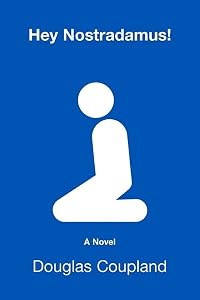
Hey Nostradamus!
by Douglas Coupland
On This Page
Description
In 1988, a catastrophic episode of teen violence shatters a suburban community. Hey Nostradamus! follows the aftermath in various voices across two decades: the teenage victims whose ordinary preoccupations with sex and spirituality will never evolve past that moment; the parents whose exposure to their children's underground world threatens their deepest convictions; and those who come to know the survivors only later in life, unable to fully realize what really transpired. Hey Nostradamus! show more wrestles with religion and nihilism, sorrow and acceptance. It will take you to a place you didn't know existed. show lessTags
Recommendations



Member Recommendations
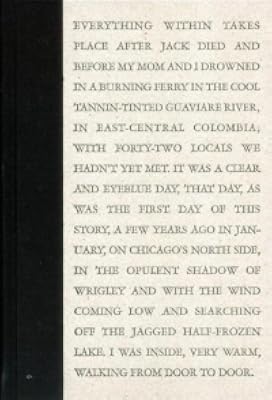
hippietrail Contemporary "literary fiction" novels with references to school shootings.
verenka Both books deal with the aftermath of school shootings but from different perspectives.
22
Member Reviews
The best thing about this novel is that it gets progressively more interesting. The themes are enriched with each change of narrator; Coupland layers faith, murder, personal insight and growth into something multifaceted and thought-provoking.
Cheryl, a teenage girl, has been cut down by a school shooting, and will never grow past the newly-ascribed role of martyr; Jason, her high-school sweetheart and husband, spends his early twenties not talking to anyone, buried in work or drinking with an assortment of friends and associates, some of whom he has only met during blackouts. We meet, also, his new girlfriend, the wonderful Heather who brings him out of his spiral, only to have her lose him. And finally, Reg; Jason’s devout and show more embittered father who has changed from the religion-defining monster that Jason knew growing up to a man capable of introspection, who refuses to accept that this change has arrived too late to benefit his son.
No, I’ve changed my mind – the best thing about this novel is the unexpectedness of each event. Hey, Nostradamus! might be written in the wake of a school shooting, but it doesn’t suggest that life – or death – stop there. Things keep happening, unexpected things, some connected to Cheryl, some entirely random. I love Coupland’s writing – he’s hardly there at all, he hands it all over to his characters – but I love, more, the way he portrays life, change, growth as unstoppable.
Also, he made my jaw drop at one point, for the most entirely unexpected murder I’ve ever read. Most authors barely manage a blink, I’m so inured to fictional death. Coupland got in under the radar and impressed the hell out of me. show less
Cheryl, a teenage girl, has been cut down by a school shooting, and will never grow past the newly-ascribed role of martyr; Jason, her high-school sweetheart and husband, spends his early twenties not talking to anyone, buried in work or drinking with an assortment of friends and associates, some of whom he has only met during blackouts. We meet, also, his new girlfriend, the wonderful Heather who brings him out of his spiral, only to have her lose him. And finally, Reg; Jason’s devout and show more embittered father who has changed from the religion-defining monster that Jason knew growing up to a man capable of introspection, who refuses to accept that this change has arrived too late to benefit his son.
No, I’ve changed my mind – the best thing about this novel is the unexpectedness of each event. Hey, Nostradamus! might be written in the wake of a school shooting, but it doesn’t suggest that life – or death – stop there. Things keep happening, unexpected things, some connected to Cheryl, some entirely random. I love Coupland’s writing – he’s hardly there at all, he hands it all over to his characters – but I love, more, the way he portrays life, change, growth as unstoppable.
Also, he made my jaw drop at one point, for the most entirely unexpected murder I’ve ever read. Most authors barely manage a blink, I’m so inured to fictional death. Coupland got in under the radar and impressed the hell out of me. show less
The blurb really didn’t ‘sell’ this book to me. It states that a 17 year old girl, secretly married and pregnant and heavily into God, is shot dead. Sad, obviously, but this barely sounds like a story. The fact that the publishers had prioritised lengthy praise from critics over a decent blurb also left me cold. Here’s what might have interested me, had someone told me: Coupland took a fictional high school massacre and used it (partly) to explore the impact on the victims. According to interviews he gave regarding the novel, he wanted to focus on this rather than on the motives and stories of the killers themselves. Apparently, he felt that the killers had received plenty of attention and that his interest lay in the victims. show more Now, that would have made me want to read the story. As it was, I was anticipating a teen love drama, (judging from the limited blurb and image on the cover of two young lovebirds,) and I was ready to be underwhelmed. The novel is separated into four distinct parts with four very different narrators, to which I had surprisingly distinct responses.
Cheryl
Cheryl is our first narrator. She is 17, secretly married and pregnant. This created my first problem. Why on earth was she secretly married? There did not appear to be any Romeo and Juliet style situation going on; she hadn’t been pregnant before they got married. It seemed to come down to sex: having undergone a conversion to Christianity in order to sink her claws into fellow teen Jason, Cheryl insists that they marry before ‘doing the dirty’. I felt that this was a rather ridiculous plotline, but perhaps my resistance was more due to my lack of contact with genuine religious conviction in my day to day life than a flaw in Coupland’s storytelling. I imagine that there are areas in America, and indeed elsewhere, where this would seem perfectly feasible.
My second issue was even more personal: she’s dead. Gradually, interspersed with an account of an otherwise largely ordinary day, Cheryl reveals the events on the day of her death. In 40 odd pages she reflects upon her relationships with family, friends and her husband. Fine. Fair enough. But she also hears prayers, other people struggling to come to terms with the massacre. She is in some nebulous place where she is privileged to hear only prayers and curses. Well, this kind of fiction simply isn’t for me. Cheryl irritated me. Hugely. She was unambitious and manipulative. She accepted death.
And yet. On reflection, she was honest and was looking back over her life critically, examining ‘the big themes’ – love, faith, grief. It may be that other readers, of a more patient disposition than myself, actually find this section of the novel quite interesting. I don’t believe in purgatory and I couldn’t suspend my disbelief, so I felt quite ‘out of touch’ in this section.
Jason
Jason’s narrative is given the most space in the book, running to just over 100 pages. Despite the years that have passed, his opening words refer to the massacre and it quickly becomes apparent why: he has never escaped it. This is a logical and yet sad development; I found it convincing and quite interesting to read about the impact that it had on his life. I quickly felt that his voice was distinctive and that his perspective was more interesting than Cheryl’s.
Jason’s memories of Cheryl, his parents and the massacre are gradually unravelled and paint quite a dark picture of life. I found the characterisation initially convincing, especially in recounting Jason’s relationship with his rather difficult father, who is an exceedingly literal minded Christian. Their arguments are at once surreal and spot on: this is how families wind each other up. This felt like a better section of the novel to me because I could engage realistically with the material.
However. Gradually, it transpires that he is writing a letter to his nephews, which started to feel distinctly odd as the content became more and more unusual, and not the sort of thing one would normally reveal to family. By the close of Jason’s narrative, I was shocked by the ridiculous plot developments, which I felt to be utterly unconvincing, and left rather cold by Jason’s perspective on life. On the one hand, I felt I could see that Coupland wanted to present Jason as damaged and for the reader to empathise with him, but I was unable to do so when his life slid so far out of kilter.
Heather
Heather was the character I identified with the most, which I found interesting because she was most tangentially connected to the massacre and the most ‘normal’ (in so far as that word is ever appropriate). I found Heather to be a very sympathetic character and felt that she had the most engaging ‘voice’ in the collection of voices Coupland develops. I identified in particular with her view on relationships, that the successful ones were based on banter and a shared understanding rather than sex.
Heather has been dating Jason, which seems to imply that he has made progress, but the inner world they create together suggests a desire to disengage with reality altogether and create something they can control. Of course, life doesn’t allow you to do that, and there is a dramatic development in this section of the novel. In fact, events become odder and odder as this narrative progresses and I was left with a lot of questions by the end. Once again, life is presented as harsh and other people as fundamentally untrustworthy.
Reg
In some ways, Reg is the most interesting character of them all. This is Jason’s father, but not quite as he knows him. By closing his novel with Reg, Coupland appears to provide a sense of hope, and yet there is a startling lack of resolution.
Conclusions
I feel obliged to state that I found this novel frustrating. I like stories to be realistic and to have a sense of closure. I felt that this novel did neither. Overall, I found it quite depressing reading. However, this is of course an individual viewpoint and it’s also worth stating that I thought Coupland successfully created four distinct voices and explored important issues surrounding faith, love and the possibility of redemption. The bonus material at the end of the book contains some interesting background information. show less
Cheryl
Cheryl is our first narrator. She is 17, secretly married and pregnant. This created my first problem. Why on earth was she secretly married? There did not appear to be any Romeo and Juliet style situation going on; she hadn’t been pregnant before they got married. It seemed to come down to sex: having undergone a conversion to Christianity in order to sink her claws into fellow teen Jason, Cheryl insists that they marry before ‘doing the dirty’. I felt that this was a rather ridiculous plotline, but perhaps my resistance was more due to my lack of contact with genuine religious conviction in my day to day life than a flaw in Coupland’s storytelling. I imagine that there are areas in America, and indeed elsewhere, where this would seem perfectly feasible.
My second issue was even more personal: she’s dead. Gradually, interspersed with an account of an otherwise largely ordinary day, Cheryl reveals the events on the day of her death. In 40 odd pages she reflects upon her relationships with family, friends and her husband. Fine. Fair enough. But she also hears prayers, other people struggling to come to terms with the massacre. She is in some nebulous place where she is privileged to hear only prayers and curses. Well, this kind of fiction simply isn’t for me. Cheryl irritated me. Hugely. She was unambitious and manipulative. She accepted death.
And yet. On reflection, she was honest and was looking back over her life critically, examining ‘the big themes’ – love, faith, grief. It may be that other readers, of a more patient disposition than myself, actually find this section of the novel quite interesting. I don’t believe in purgatory and I couldn’t suspend my disbelief, so I felt quite ‘out of touch’ in this section.
Jason
Jason’s narrative is given the most space in the book, running to just over 100 pages. Despite the years that have passed, his opening words refer to the massacre and it quickly becomes apparent why: he has never escaped it. This is a logical and yet sad development; I found it convincing and quite interesting to read about the impact that it had on his life. I quickly felt that his voice was distinctive and that his perspective was more interesting than Cheryl’s.
Jason’s memories of Cheryl, his parents and the massacre are gradually unravelled and paint quite a dark picture of life. I found the characterisation initially convincing, especially in recounting Jason’s relationship with his rather difficult father, who is an exceedingly literal minded Christian. Their arguments are at once surreal and spot on: this is how families wind each other up. This felt like a better section of the novel to me because I could engage realistically with the material.
However. Gradually, it transpires that he is writing a letter to his nephews, which started to feel distinctly odd as the content became more and more unusual, and not the sort of thing one would normally reveal to family. By the close of Jason’s narrative, I was shocked by the ridiculous plot developments, which I felt to be utterly unconvincing, and left rather cold by Jason’s perspective on life. On the one hand, I felt I could see that Coupland wanted to present Jason as damaged and for the reader to empathise with him, but I was unable to do so when his life slid so far out of kilter.
Heather
Heather was the character I identified with the most, which I found interesting because she was most tangentially connected to the massacre and the most ‘normal’ (in so far as that word is ever appropriate). I found Heather to be a very sympathetic character and felt that she had the most engaging ‘voice’ in the collection of voices Coupland develops. I identified in particular with her view on relationships, that the successful ones were based on banter and a shared understanding rather than sex.
Heather has been dating Jason, which seems to imply that he has made progress, but the inner world they create together suggests a desire to disengage with reality altogether and create something they can control. Of course, life doesn’t allow you to do that, and there is a dramatic development in this section of the novel. In fact, events become odder and odder as this narrative progresses and I was left with a lot of questions by the end. Once again, life is presented as harsh and other people as fundamentally untrustworthy.
Reg
In some ways, Reg is the most interesting character of them all. This is Jason’s father, but not quite as he knows him. By closing his novel with Reg, Coupland appears to provide a sense of hope, and yet there is a startling lack of resolution.
Conclusions
I feel obliged to state that I found this novel frustrating. I like stories to be realistic and to have a sense of closure. I felt that this novel did neither. Overall, I found it quite depressing reading. However, this is of course an individual viewpoint and it’s also worth stating that I thought Coupland successfully created four distinct voices and explored important issues surrounding faith, love and the possibility of redemption. The bonus material at the end of the book contains some interesting background information. show less
Warning: Do not read this while depressed.
My primary coping mechanism whilst depressed is reading. But picking up a random work from the stack of 200 or so unread books isn't gonna do the job. The book has to be undemanding in terms effort to read and preferably plot-driven and gripping. James Blish was my go-to author in this circumstance for many years but I've read all his novels too many times in recent years. Ditto a number of other authors who I know would fit the bill. Which leads back to the unread pile and taking a bit of a risk. Hence Douglas Coupland who has only let me down once in half a dozen or so books and has always been fairly compelling. Now, across all the books I've read by Coupland, the general themes have remained show more constant; how to cope with a modern world that isolates people and offers no automatic purpose in life. The reason this hasn't become boring or tiresome is that he seems to come at the question from an at least slightly different angle each time, his answers aren't always the same (if he gives any in that particular book) and the general tone and mood varies too. So in Generation X we are offered, run away to Mexico, as a solution. In Microserfs, make virtual Lego (or is that Jpod?) or more seriously, work for yourself, not some giant inhuman corporation. In Miss Wyoming, running away doesn't work - so Generation X turns out not to have the right answer after all. And so on. Some of these are post-modern and ironic, even openly comic e.g. Generation X and Jpod. Others are more or less earnest, like Eleanor Rigby and Miss Wyoming. And here's the risk - some are really upbeat and others are not. This one also shows Coupland's great skill with first person voice character-creation.
So Hey Nostradamus! Starts with a school shooting massacre obviously intended to be reminiscent of the Columbine incident and then gallops off into a discussion of religion, redemption, despair, forgiveness and how parents can screw up their children. The plot is gripping but in retrospect completely preposterous and goes off in directions I would never have guessed. The protagonists have various fates and one is left to sift through the aftermath and try to figure out what, if anything, Coupland is saying about Christianity. It's no straightforward thumbs up or thumbs down. And the outcome for some people is optimistic, for others - well - don't read this book if you are depressed. show less
My primary coping mechanism whilst depressed is reading. But picking up a random work from the stack of 200 or so unread books isn't gonna do the job. The book has to be undemanding in terms effort to read and preferably plot-driven and gripping. James Blish was my go-to author in this circumstance for many years but I've read all his novels too many times in recent years. Ditto a number of other authors who I know would fit the bill. Which leads back to the unread pile and taking a bit of a risk. Hence Douglas Coupland who has only let me down once in half a dozen or so books and has always been fairly compelling. Now, across all the books I've read by Coupland, the general themes have remained show more constant; how to cope with a modern world that isolates people and offers no automatic purpose in life. The reason this hasn't become boring or tiresome is that he seems to come at the question from an at least slightly different angle each time, his answers aren't always the same (if he gives any in that particular book) and the general tone and mood varies too. So in Generation X we are offered, run away to Mexico, as a solution. In Microserfs, make virtual Lego (or is that Jpod?) or more seriously, work for yourself, not some giant inhuman corporation. In Miss Wyoming, running away doesn't work - so Generation X turns out not to have the right answer after all. And so on. Some of these are post-modern and ironic, even openly comic e.g. Generation X and Jpod. Others are more or less earnest, like Eleanor Rigby and Miss Wyoming. And here's the risk - some are really upbeat and others are not. This one also shows Coupland's great skill with first person voice character-creation.
So Hey Nostradamus! Starts with a school shooting massacre obviously intended to be reminiscent of the Columbine incident and then gallops off into a discussion of religion, redemption, despair, forgiveness and how parents can screw up their children. The plot is gripping but in retrospect completely preposterous and goes off in directions I would never have guessed. The protagonists have various fates and one is left to sift through the aftermath and try to figure out what, if anything, Coupland is saying about Christianity. It's no straightforward thumbs up or thumbs down. And the outcome for some people is optimistic, for others - well - don't read this book if you are depressed. show less
In Hey Nostradamus! Coupland tells the story of a Columbine like event that take places in an East Vancouver High School and the impact it had on those involved. Told from the point of view of four different characters, Cheryl who was the last of the students killed, Jason her boyfriend, Heather who met Jason over ten years later, and Jason's father Reg. Each person has their own part to tell, but the book clearly centered around Jason and his inability to really move past Cheryl and the tragic events of that day.
I picked this book up at the library on a whim while browsing the stacks. The name grabbed my attention. I am very glad I gave it a chance. The book is heartbreakingly beautiful. Very rarely will I cry while reading a book, show more but I found myself wiping away tears several times over the 244 pages. Coupland has a rare ability to tell a story that should be depressing but instead manages to make it so much more. As a matter of course I rarely reread a book, but I may make an exception in the case of Hey Nostradamus! as I think it will be one of those books where you're constantly finding something new hidden in it's pages. show less
I picked this book up at the library on a whim while browsing the stacks. The name grabbed my attention. I am very glad I gave it a chance. The book is heartbreakingly beautiful. Very rarely will I cry while reading a book, show more but I found myself wiping away tears several times over the 244 pages. Coupland has a rare ability to tell a story that should be depressing but instead manages to make it so much more. As a matter of course I rarely reread a book, but I may make an exception in the case of Hey Nostradamus! as I think it will be one of those books where you're constantly finding something new hidden in it's pages. show less
It’s 1988. On a morning unlike any other at a suburban high school in Vancouver, 3 teens attempt to achieve the highest kill count in the history of school shootings. Flash forward 11 years into the future; the incident has more or less been forgotten by most but remains ingrained in the memories of a select few closest to the tragedy.
I was really enjoying this book; I could go so far as to say I was loving it. However, right up to about the halfway point, something so insane occurred that it took me completely out of the story and nearly ruined the entire novel for me. Coupland spends a decent amount of time building a world in which I bought in to, characters that I truly felt sorry for. He then throws this ridiculously unnecessary show more event that wasn’t even needed! I’ll tag a spoiler at the end so I can complain about it.
That being said, I really did like the characters in this novel. Well, aside from Reg, but you're not supposed to like him anyway. I have this thing with overly self-righteous parent figures that can drive me up the wall. I think it comes from having a few in my family, however, I'm not going to subject you to that.
In terms of writing, it had its fair share of memorable quotes and passages. I can complain all I want about that one problem, but Coupland proved he has some serious writing chops.
It has been drilled into us that to feel fear is to not fully trust God. Whoever made that one up has never been beneath a cafeteria table with a tiny thread of someone else’s blood trickling onto their leg.
Trust me, you spend a much larger part of your life being old, not young. Rules change along the way. The first things to go are those things you thought were eternal.
Those two, especially the latter, really connected with me. Hey, I'm not exactly old (27 years old, here) but I'm starting to get that outlook. I understand exactly where he's coming from.
As iffy as I felt after reading this novel, I’m really excited to try something else of Coupland's. I thoroughly enjoyed his style, I hope that he's bound to impress me. There was enough within these pages to draw me back for another round.
Okay, so I can believe that Jason needed Barb to marry him before he fathered her child(ren). What I have a hard time believing is what followed. For starters, that Barb actually agreed to it and flew to Vegas with Jason to fulfill his wishes. And second, the worst part, is that totally unnecessary murder! I actually said out loud, “What?!” when it occurred. I was so distracted by how ridiculous it was that it nearly ruined the whole thing. I’m still mad about it! It took what could have been a 4.5 to 5 star experience right down to a solid 3. show less
I was really enjoying this book; I could go so far as to say I was loving it. However, right up to about the halfway point, something so insane occurred that it took me completely out of the story and nearly ruined the entire novel for me. Coupland spends a decent amount of time building a world in which I bought in to, characters that I truly felt sorry for. He then throws this ridiculously unnecessary show more event that wasn’t even needed! I’ll tag a spoiler at the end so I can complain about it.
That being said, I really did like the characters in this novel. Well, aside from Reg, but you're not supposed to like him anyway. I have this thing with overly self-righteous parent figures that can drive me up the wall. I think it comes from having a few in my family, however, I'm not going to subject you to that.
In terms of writing, it had its fair share of memorable quotes and passages. I can complain all I want about that one problem, but Coupland proved he has some serious writing chops.
It has been drilled into us that to feel fear is to not fully trust God. Whoever made that one up has never been beneath a cafeteria table with a tiny thread of someone else’s blood trickling onto their leg.
Trust me, you spend a much larger part of your life being old, not young. Rules change along the way. The first things to go are those things you thought were eternal.
Those two, especially the latter, really connected with me. Hey, I'm not exactly old (27 years old, here) but I'm starting to get that outlook. I understand exactly where he's coming from.
As iffy as I felt after reading this novel, I’m really excited to try something else of Coupland's. I thoroughly enjoyed his style, I hope that he's bound to impress me. There was enough within these pages to draw me back for another round.
This story is told from four different points of view over the course of fifteen years, but at the center of it is one person: Jason, who survived a horrific school shooting when he was seventeen. I... really do not know what to make of this book. It is obviously a sort of reaction to Columbine, and more specifically a reaction to the simplistic perception of dead Christian teens as religious martyrs; Coupland's portrayal of religion and religious communities here is complex and far from entirely positive. But beyond that, and beyond the obvious point that experiences like this can mess people up, I'm just not quite sure what Coupland's doing here. It's a weird book. Very well written, very readable, but weird. Mostly it's a quiet show more literary work about religion and dysfunctional families and emotions, except for these odd moments where it suddenly seems to have grafted in a few pages from a melodrama or a crime thriller. And big chunks of the story just seem to be... missing. Things happen. We don't know why. We don't see their beginnings or their ends. We don't know what they mean. Maybe that's the point, I don't know. It's thought-provoking, I suppose. But ultimately it's not a very satisfying read. Interesting, yes. But not satisfying. show less
So who out there hasn’t read Douglas Coupland? Until last week, I hadn’t. Hey Nostradamus! is the ninth novel by the Canadian author and visual artist, with several more released since then, but it is the first work of his that I have read.
The novel manages to explore dark themes while being a page-turner, and proved to be a wonderful introduction to his work.
The beginning of the novel is captivating: in a high school in Vancouver in 1988, three students go on a shooting rampage, killing many of their peers. Seventeen-year-old student Cheryl, recently married and, even more recently, pregnant, is the final victim of the shootings. Her student husband Jason arrives in time to see her die.
A strength of the book for me is that the show more story is told in four sections by four different characters: firstly Cheryl, whose engaging voice and sweet musings on the world provide the background for the initial tragedy. The second part of the story has us meeting up with her husband, Jason, eleven years after the massacre where he leads a sad, unconventional existence. Dealing with both the death of his young wife as well as his tough upbringing under the rule of his religious tyrant father, Jason is struggling to keep his head above water. He conveys his story to us through a letter written to his twin nephews, and as we follow his life we are certainly taken down a few roads we weren’t expecting. In part three we are introduced to Heather, who begins dating Jason twelve years after the massacre. Heather is an endearing character going slowly crazy trying to piece together the puzzle that is Jason. The final, short, section of the book is told by Jason’s father, Reg. He attempts to explain, too late, his religious fanaticism and what was behind the way he treated those close to him. Through each character’s telling of the story we learn more about the other characters too.
Hey Nostradamus! explores in detail the idea of faith, where it can take you and what happens when it unravels. It also explores loneliness, what it’s like to try to be part of life but not quite able to exist in the world as everyone else does. Possibly there are lucky people who can’t relate to this, but I can. Heather’s character particularly reminded me of certain stages of my own life. The characters all rang true for me, and I had tears in my eyes more than once.
I found this book to be well written and an absolute page-turner – the kind of book you can’t wait to get home to read. Judging by this novel, Coupland’s mind works in ways different to most and I look forward to reading more of what he has come up with.
My rating: 4.5 out of 5
Highly recommended show less
The novel manages to explore dark themes while being a page-turner, and proved to be a wonderful introduction to his work.
The beginning of the novel is captivating: in a high school in Vancouver in 1988, three students go on a shooting rampage, killing many of their peers. Seventeen-year-old student Cheryl, recently married and, even more recently, pregnant, is the final victim of the shootings. Her student husband Jason arrives in time to see her die.
A strength of the book for me is that the show more story is told in four sections by four different characters: firstly Cheryl, whose engaging voice and sweet musings on the world provide the background for the initial tragedy. The second part of the story has us meeting up with her husband, Jason, eleven years after the massacre where he leads a sad, unconventional existence. Dealing with both the death of his young wife as well as his tough upbringing under the rule of his religious tyrant father, Jason is struggling to keep his head above water. He conveys his story to us through a letter written to his twin nephews, and as we follow his life we are certainly taken down a few roads we weren’t expecting. In part three we are introduced to Heather, who begins dating Jason twelve years after the massacre. Heather is an endearing character going slowly crazy trying to piece together the puzzle that is Jason. The final, short, section of the book is told by Jason’s father, Reg. He attempts to explain, too late, his religious fanaticism and what was behind the way he treated those close to him. Through each character’s telling of the story we learn more about the other characters too.
Hey Nostradamus! explores in detail the idea of faith, where it can take you and what happens when it unravels. It also explores loneliness, what it’s like to try to be part of life but not quite able to exist in the world as everyone else does. Possibly there are lucky people who can’t relate to this, but I can. Heather’s character particularly reminded me of certain stages of my own life. The characters all rang true for me, and I had tears in my eyes more than once.
I found this book to be well written and an absolute page-turner – the kind of book you can’t wait to get home to read. Judging by this novel, Coupland’s mind works in ways different to most and I look forward to reading more of what he has come up with.
My rating: 4.5 out of 5
Highly recommended show less
Members
- Recently Added By
Published Reviews
ThingScore 75
Hey Nostradamus! is Coupland's first novel to feature a full complement of three-dimensional characters rather than a swarm of exaggerated cartoons. He seems to have reached a new plane of philosophical awareness.
added by Nickelini
Lists

Best Contemporary Literary Fiction (Around the Last 30 Years)
400 works; 124 members
The Best of Canadian Literature
235 works; 33 members

2000s (the decade, not the century)
184 works; 11 members

LibraryThingers' 1001 Books You Must Read Before You Die
442 works; 30 members

Allie's Favourite 150 Books
145 works; 3 members

Main Character is aged 10-19
363 works; 6 members

Favorite Books from the 2000s
35 works; 3 members

Books Read in 2003
261 works; 7 members

Books Read in 2012
816 works; 34 members

Alphabetical Books
211 works; 3 members

Books set in high school
89 works; 7 members
Author Information

44+ Works 38,740 Members
Douglas Coupland was born December 30, 1961 on a Canadian military base in Baden-Soellingen, Germany. He graduated from Sentinel Secondary School in West Vancouver in 1979 and went on to McGill University. He was unhappy there and went on to Emily Carr College of Art and Design. He has said that these were the best four years of his life. He show more graduated in 1984 with a focus on sculpture and moved on to study at the European Design Institute in Milan. He also completed a two-year course in Japanese business science in Hawaii in 1986.He soon began writing for magazines as a means of paying the bills. He soon started work on his first novel Generation X: Tales for an Accelerated Culture which was published in 1991. His second novel Shampoo Planet focused on the generation after Generation X and was published in 1992. This generation was termed "Global Teens". His career has consisted of writing, sculpting, and editing and he also hosted The Search for Generation X, a PBS documentary, 1991. Douglas Coupland has also worked on a magazine called Wired . He wrote a short story about the life of the employees of Mocrosoft Corporation. This short story provided inspiration for his novel Microserfs. (Bowker Author Biography) show less
Some Editions
Awards and Honors
Awards
Distinctions
Common Knowledge
- Canonical title
- Hey Nostradamus!
- Original publication date
- 2003-07-08
- People/Characters
- Cheryl Anway; Chris Anway; Jason; Mitchell Van Waters; Jeremy Kyriakis; Duncan Boyle (show all 9); Heather; Reg; Lloyd Anway
- Important places
- Vancouver, British Columbia, Canada; British Columbia, Canada; North Vancouver, British Columbia, Canada
- First words
- I believe that what separates humanity from everything else in this world - spaghetti, binder paper, deep-sea creatures, edelweiss and Mount McKinley - is that humanity alone has the capacity at any given moment to commit all... (show all) possible sins.
- Quotations
- "In the end, I think the relationships that survive in this world are the ones where two people can finish each other's sentences. Forget drama and torrid sex and the clash of the opposites. Give me banter any day of the week... (show all)."
- Last words
- (Click to show. Warning: May contain spoilers.)I'll pound on every door in the city, and my cry will ring true: "Awake! Everyone listen, there has been a miracle - my son who once was dead is now alive. Rejoice! All of you! Rejoice! You must! My son is coming home!"
- Blurbers
- Goldberg, Whoopi
Classifications
Statistics
- Members
- 2,941
- Popularity
- 6,116
- Reviews
- 42
- Rating
- (3.61)
- Languages
- 9 — Danish, Dutch, English, Finnish, French, Italian, Portuguese, Russian, Swedish
- Media
- Paper, Audiobook, Ebook
- ISBNs
- 25
- UPCs
- 1
- ASINs
- 13