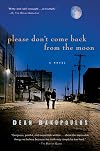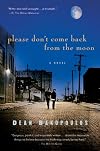
Please Don't Come Back from the Moon
by Dean Bakopoulos
On This Page
Description
This tale of young men growing up in a working-class Michigan town without fathers to guide them is "melancholy, surreal, and funny all at once" (Milwaukee Journal Sentinel).The summer Michael turns seventeen, his father disappears. One by one, other men also vanish from the blue-collar neighborhood outside Detroit where their fathers before them had lived, raised families, and—in a more promising era—worked. One props open the door to his shoe store and leaves a note: "I'm going to show more the moon," it reads. "I took the cash." The wives left behind drink, brawl, and sleep around, gradually settling down to make new lives. And Michael and his friends, stuck in the place where they have been abandoned, stumble through their twenties—until the restlessness of the fathers blooms in them, threatening to carry them away . . .
With "echoes of Alice Hoffman's magic realism" (Booklist), this is a novel suffused with both humor and longing, by an author who has "considerable talent for capturing young-male ennui" (Entertainment Weekly).
. show less
Tags
Recommendations




































Member Recommendations

Member Reviews
Dean Bakopoulos tells us that the title of his debut novel, PLEASE DON'T COME BACK FROM THE MOON, comes from a jazz composition by Charles Mingus, but I was immediately reminded of another song, from the 1960s. Here is the opening verse from it -
"Streets full of people, all alone
Roads full of houses, never home
A church full of singing, out of tune
Everyone's gone to the moon."
(from "Everyone's Gone to the Moon" by Jonathan King)
It fits, because Bakopoulos has given us a strange and moving story which covers a twelve year period in the life of Michael Smolij, whose father drove away and disappeared one day when "Mikey" was sixteen. And Roman Smolij (who, judging from the fragmented memories Mikey has, was probably a manic depressive) show more was only one of many fathers who abandoned their familes in that devastating time of layoffs and downsizing. Fathers demoralized and ashamed that they could not provide for their families. Mikey's friends Nick and Tom were also left fatherless. So many fathers disappeared that year that the sons, left behind on the cusp of manhood, came up with a fantastic theory that they had all gone to the moon. And this is the somewhat surrealistic premise of Bakopoulos's story. A rather shaky basis for a novel, but, after a rather lumbering start, it takes off and engages your attention - it works.
Told in the first person by Mikey Smolij, who loses his virginity to one of the abandoned wives, then moves aimlessly from one relationship to another, working pointless minimum wage jobs and spends his free time drinking with his buddies. It is, I think, an accurate depiction of many rootless young men from that generation the media labeled "X."
There does seem to be an element of the magical and fantastic woven throughout Mikey's tale of teenage and then twenty-something angst, and you know he's headed for a possible repeat of the disappearing fathers act. Finally married with a couple kids, one night, in a nameless panic, he gets into his car and drives -
"My heart pumped away, skipping beats, on the verge of implosion. I drove out of the city, out of Detroit, and up toward Flint, then farther still, toward Alpena. By sunrise, I was very far away from the life I was living."
Mikey does turn around and go back, but this particular passage brought to mind another young man who got in his car and drove and drove, trying to escape his problems. Bakopoulos does not write like John Updike, but Mikey Smolij and his pals often reminded me of Harry Angstrom, who repeatedly panicked and ran from his entanglements and responsibilities. But Smolij is different from the jumpy anti-hero of RABBIT, RUN; he has a conscience and lives more in his mind than just "inside his skin." This redeems him. He comes back and faces up to things. He loves his wife and his children. But he remains afraid. Afraid that things could fall apart, that he would be unable to take care of his family, that he would give up and disappear like his father did.
Another book I thought of while reading Bakopoulos was a memoir by another Detroit area writer, Sven Birkerts' MY BLUE SKY TRADES. Like Mikey Smolij, Birkerts was a reader, worked in a bookstore and had vague aspirations of writing.
Remembering my own scrambling days of college and grad school, already married with a baby, I could relate to Smolij's fears of not succeeding. It's a fear that I suspect many young husbands and fathers share, of not being able to provide, of not measuring up, and especially of the awful responsibilities of marriage and fatherhood. In that sense, PLEASE DON'T COME BACK FROM THE MOON is an Everyman tale.
I may have to try Bakopoulos's new one now. But his book, his first, was very good. I will recommend it highly. show less
"Streets full of people, all alone
Roads full of houses, never home
A church full of singing, out of tune
Everyone's gone to the moon."
(from "Everyone's Gone to the Moon" by Jonathan King)
It fits, because Bakopoulos has given us a strange and moving story which covers a twelve year period in the life of Michael Smolij, whose father drove away and disappeared one day when "Mikey" was sixteen. And Roman Smolij (who, judging from the fragmented memories Mikey has, was probably a manic depressive) show more was only one of many fathers who abandoned their familes in that devastating time of layoffs and downsizing. Fathers demoralized and ashamed that they could not provide for their families. Mikey's friends Nick and Tom were also left fatherless. So many fathers disappeared that year that the sons, left behind on the cusp of manhood, came up with a fantastic theory that they had all gone to the moon. And this is the somewhat surrealistic premise of Bakopoulos's story. A rather shaky basis for a novel, but, after a rather lumbering start, it takes off and engages your attention - it works.
Told in the first person by Mikey Smolij, who loses his virginity to one of the abandoned wives, then moves aimlessly from one relationship to another, working pointless minimum wage jobs and spends his free time drinking with his buddies. It is, I think, an accurate depiction of many rootless young men from that generation the media labeled "X."
There does seem to be an element of the magical and fantastic woven throughout Mikey's tale of teenage and then twenty-something angst, and you know he's headed for a possible repeat of the disappearing fathers act. Finally married with a couple kids, one night, in a nameless panic, he gets into his car and drives -
"My heart pumped away, skipping beats, on the verge of implosion. I drove out of the city, out of Detroit, and up toward Flint, then farther still, toward Alpena. By sunrise, I was very far away from the life I was living."
Mikey does turn around and go back, but this particular passage brought to mind another young man who got in his car and drove and drove, trying to escape his problems. Bakopoulos does not write like John Updike, but Mikey Smolij and his pals often reminded me of Harry Angstrom, who repeatedly panicked and ran from his entanglements and responsibilities. But Smolij is different from the jumpy anti-hero of RABBIT, RUN; he has a conscience and lives more in his mind than just "inside his skin." This redeems him. He comes back and faces up to things. He loves his wife and his children. But he remains afraid. Afraid that things could fall apart, that he would be unable to take care of his family, that he would give up and disappear like his father did.
Another book I thought of while reading Bakopoulos was a memoir by another Detroit area writer, Sven Birkerts' MY BLUE SKY TRADES. Like Mikey Smolij, Birkerts was a reader, worked in a bookstore and had vague aspirations of writing.
Remembering my own scrambling days of college and grad school, already married with a baby, I could relate to Smolij's fears of not succeeding. It's a fear that I suspect many young husbands and fathers share, of not being able to provide, of not measuring up, and especially of the awful responsibilities of marriage and fatherhood. In that sense, PLEASE DON'T COME BACK FROM THE MOON is an Everyman tale.
I may have to try Bakopoulos's new one now. But his book, his first, was very good. I will recommend it highly. show less
This was a surprisingly strong debut novel which I thoroughly enjoyed. Set in a working class suburb of Detroit predominantly occupied by Ukranians and Polish, in this coming of age story we follow the narrator and his circle of friends as they try to find their way following a mass desertion by the men folk in the area, who one by one disappeared into the night as prospects in the area dwindle away following mass factory closings.
As the friends grow up in a town with few employment prospects beyond the new shopping mall, Bakopoulos writes with absorbing prose as the youngsters try to make their way in life against the limiting odds of the realities of their environment.
4 stars - a beautifully written novel with writing that punches show more above its weight. I'll be looking out for more from this writer. show less
As the friends grow up in a town with few employment prospects beyond the new shopping mall, Bakopoulos writes with absorbing prose as the youngsters try to make their way in life against the limiting odds of the realities of their environment.
4 stars - a beautifully written novel with writing that punches show more above its weight. I'll be looking out for more from this writer. show less
This was a surprising find in the bargain bin of a big box store--a slow, slightly fantastic, sadly realistic coming of age story that captures life in lower middle-class, unexceptional McDonald's America in a way that few writers really bother to do.
Moving first-person tale of young men maturing without a father in the Detroit working class Slavic suburbs after the factory closings,1990-2003. This novel is fresh, vivid: education is not redemptive, although the boys read labor histories, Dostoyevsky, Homer, philosophy, the Best American Short Stories. I can picture what he's talking about—the insides of houses, the bars, the shopping malls, supermarkets, the spas, the peripheral political events, the habits people have as they're talking. The chapter on the gathering of the sons in the parking lot is heartbreakingly eloquent. Although there's a touch of magic realism — "For the first time that night I looked at the moon as I walked and this is when I felt my feet leave the show more earth: I started walking a few inches off of the ground, as if I were following some invisible staircase" — it's in the context of conscious dream, and hence, believable. show less
The novel, Please Don’t Come Back from the Moon by Dean Bokopoulos, is a story of a boy turning into a man in a suburb of Detroit. This story takes place in the late eighties and early nineties. The suburb has an interesting history of grown men, fathers in particular, leaving Maple Rock. The sons of these families make up a story of their fathers “going to the moon.” This well-written tale about Michael and his struggles of life and questions of humanity would intrigue audiences from young adult readers to old-timer readers.
I loved this book because it had so many great details that I could really imagine what these characters and places looked like. I also felt the confusion with Michael of why all these fathers would leave show more Maple Rock throughout the whole book. I would suggest this book to anyone who likes to read good stories and novels because there are no parts of this book that drag on. I give Please Don’t Come Back from the Moon five out of five starts.
Madeleine C. show less
I loved this book because it had so many great details that I could really imagine what these characters and places looked like. I also felt the confusion with Michael of why all these fathers would leave show more Maple Rock throughout the whole book. I would suggest this book to anyone who likes to read good stories and novels because there are no parts of this book that drag on. I give Please Don’t Come Back from the Moon five out of five starts.
Madeleine C. show less
In a working class neighbourhood near Detroit, the men become disaffected with their lives and disappear, leaving behind notes saying they have gone to the moon. The book is narrated by Michael, who is 16 when his father leaves. Much of the book is just him going about his life, work, education and relationships and in the background are references to changes in President and this idea that men may have gone to live in the moon. It is a simple story but there was something in the wistful tone of it that reallyspoke to me.
This is the author's first and so far only novel, but I hope there is another novel on the way soon.
This is the author's first and so far only novel, but I hope there is another novel on the way soon.
It was well written even though it wasn't my favorite book. It's about a town that suffers from a sudden leaving spree of all the fathers. The mothers tel their children that they "went to the moon" and so now the high school boys are the men of the town. Again, it wasn't my favorite, but it was well done.
Members
- Recently Added By
Author Information

3+ Works 545 Members
Awards and Honors
Notable Lists
Common Knowledge
- Original publication date
- 2005
- Epigraph
- We all drink from a leaking cup.
--William Matthews, "Memory" - Dedication
- For Amanda and in memory of Gregory Smolij (1916-2000)
- First words
- When I was sixteen, my father went to the moon.
- Last words
- (Click to show. Warning: May contain spoilers.)Like an eye, the moon follows us wherever we go.
- Blurbers
- Moore, Lorrie; Baxter, Charles; Butler, Robert Olen; Delbanco, Nicholas
Classifications
Statistics
- Members
- 260
- Popularity
- 125,162
- Reviews
- 11
- Rating
- (3.89)
- Languages
- English, Spanish
- Media
- Paper, Ebook
- ISBNs
- 9
- ASINs
- 3