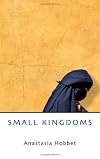
Small Kingdoms
by Anastasia Hobbet 
On This Page
Description
Set in Kuwait during the ominous years between the two Gulf wars, Small Kingdoms traces the intersecting lives of five people--rich and poor, native and foreigner, Muslim, Christian, and non-believer--when they discover that a teenaged Indian housemaid is being brutally abused by her employer.Tags
Recommendations


























Member Recommendations
Member Reviews
Small Kingdoms is an exploration of life in mid-1990s Kuwait -- after Saddam Hussein’s 1990 invasion, after the ouster of his army in the 1991 Gulf War, and amid the growing fear that he will invade again.
I liked it. But coming to that conclusion required weighing two distinct reactions. First and bearing greater weight is the novel’s sympathetic -- and beautifully written -- glimpse into the day-to-day customs and struggles of a group of protagonists who are trying to live, work, and raise children in this atmosphere. It’s a terrific examination of tensions: women and men; Kuwaitis, Americans, Indians, and Palestinian; rich, poor, and essentially slave. Second and of lesser weight is the narrative's lack of forward momentum -- a show more storyline doesn't emerge until the last third of the novel, when the protagonists’ stories begin to significantly interconnect.
A telling sign of its power is that Small Kingdoms prompted me to search for additional sources so I could revisit the country and the period further on my own, now with new insight. show less
I liked it. But coming to that conclusion required weighing two distinct reactions. First and bearing greater weight is the novel’s sympathetic -- and beautifully written -- glimpse into the day-to-day customs and struggles of a group of protagonists who are trying to live, work, and raise children in this atmosphere. It’s a terrific examination of tensions: women and men; Kuwaitis, Americans, Indians, and Palestinian; rich, poor, and essentially slave. Second and of lesser weight is the narrative's lack of forward momentum -- a show more storyline doesn't emerge until the last third of the novel, when the protagonists’ stories begin to significantly interconnect.
A telling sign of its power is that Small Kingdoms prompted me to search for additional sources so I could revisit the country and the period further on my own, now with new insight. show less
 This review was written for LibraryThing Early Reviewers.
In this novel, author Anastasia Hobbet takes us into the well-observed lives of some expatriates and natives of the tiny rarefied Arab State of Kuwait. Through deftly created characters, we explore some of the tensions that ensue when people from vastly different cultures live and work together in a delicate balance, against the tension of war in the Persian Gulf. Everyone, it seems, from the wealthy Muslim families, to the earnest American doctor to the trailing wife of a U.S. businessman, to the displaced Bedouin idealist, and on through a roll call of nationalities that live and work in Kuwait, exists in an uneasy togetherness in the rigid society of one of the richest 'kingdoms' in the world.
When it is discovered that a teenaged show more Indian housemaid is being brutally abused by her employer, several characters are forced to come to terms with their consciences and risk themselves and their social positions to rescue her. Issues of human trafficking, human rights, freedom, hypocrisy, and tolerance, are masterfully interwoven in the actions of ordinary people.
Thankfully, the author's experience living in Kuwait for five years and studying the language and culture of the region bring authenticity to the story and much insight into the delicate and difficult issues represented here. The story starts fairly slowly as all the characters are established but the patient reader is rewarded as the story builds to a powerful denouement. show less
When it is discovered that a teenaged show more Indian housemaid is being brutally abused by her employer, several characters are forced to come to terms with their consciences and risk themselves and their social positions to rescue her. Issues of human trafficking, human rights, freedom, hypocrisy, and tolerance, are masterfully interwoven in the actions of ordinary people.
Thankfully, the author's experience living in Kuwait for five years and studying the language and culture of the region bring authenticity to the story and much insight into the delicate and difficult issues represented here. The story starts fairly slowly as all the characters are established but the patient reader is rewarded as the story builds to a powerful denouement. show less
This review was written for LibraryThing Early Reviewers.This is a brilliantly written novel set in Kuwait between the two Gulf wars. People from varying social and cultural backgrounds are brought together to join in a common cause: to help a young maid servant by the name of Santana escape from a household, where she is repeatedly starved, physically abused, and raped by her employer. In the meantime, tension in Kuwait builds as Saddam Hussein threatens another attack.
Among the characters are Mufeeda, a devout, affluent Muslim woman married to a physician, who finds herself trying to balance her own ancient customs with those of the Western world; Kit, a young, naïve American from rural Oklahoma living in Kuwait with her businessman husband and young family, who attempts to fit in; Theo, show more an American doctor in love with Hanaan, his beautiful and rebellious Arabic tutor, who is a Palestinian and therefore “an official nobody”; and Emmanuella, a destitute maid from Goa, who sends her meagre earnings home to support her family. It is because of Emmanuella’s secret efforts to help Santana that all the characters come together in an incredible and unlikely act of courage and selflessness.
But as the reader soon learns Santana’s plight is not an isolated one, and there are hundreds of others just like her, often found dead. Mufeeda’s husband sets out to clarify matters: “Many in the Gulf abuse their servants, and the murderers among us are almost always protected by their status … we consider them so far beneath us … it’s as if we killed a rat or a roach.” Thanks to Anastasia Hobbet’s keen eye for detail and observation, she skilfully brings to our attention this relatively unknown form of violence and exploitation. In the meantime, as Saddam begins to make good on his threats, the dangers and dramas only escalate, and all around.
It is obvious Hobbet has a first-hand knowledge of the social and political complexities of the world she writes about; and indeed, she resided there for several years. Her compelling and powerful novel brings to life an extraordinary and trying moment in Kuwaiti history. With her compassion and piercing insight, she draws us, the readers, into the book so much so that we too want to join in and help free Santana. Hobbet is a masterful story-teller at times humorous, and her writing is both fluidly and beautifully structured. A truly stunning and gripping novel not to be missed. show less
Among the characters are Mufeeda, a devout, affluent Muslim woman married to a physician, who finds herself trying to balance her own ancient customs with those of the Western world; Kit, a young, naïve American from rural Oklahoma living in Kuwait with her businessman husband and young family, who attempts to fit in; Theo, show more an American doctor in love with Hanaan, his beautiful and rebellious Arabic tutor, who is a Palestinian and therefore “an official nobody”; and Emmanuella, a destitute maid from Goa, who sends her meagre earnings home to support her family. It is because of Emmanuella’s secret efforts to help Santana that all the characters come together in an incredible and unlikely act of courage and selflessness.
But as the reader soon learns Santana’s plight is not an isolated one, and there are hundreds of others just like her, often found dead. Mufeeda’s husband sets out to clarify matters: “Many in the Gulf abuse their servants, and the murderers among us are almost always protected by their status … we consider them so far beneath us … it’s as if we killed a rat or a roach.” Thanks to Anastasia Hobbet’s keen eye for detail and observation, she skilfully brings to our attention this relatively unknown form of violence and exploitation. In the meantime, as Saddam begins to make good on his threats, the dangers and dramas only escalate, and all around.
It is obvious Hobbet has a first-hand knowledge of the social and political complexities of the world she writes about; and indeed, she resided there for several years. Her compelling and powerful novel brings to life an extraordinary and trying moment in Kuwaiti history. With her compassion and piercing insight, she draws us, the readers, into the book so much so that we too want to join in and help free Santana. Hobbet is a masterful story-teller at times humorous, and her writing is both fluidly and beautifully structured. A truly stunning and gripping novel not to be missed. show less
Anastasia Hobbet beautifully crafted a complex, layered story about the abuse of a household servant in Kuwait. This event draws together a wide variety of people who may never associate with each other in Kuwait: Theo, an Indian man from the United States working at a hospital clinic, Mufeeda, an upper-class Kuwaiti woman, Hanaan, a Palestinian female activist, Kit, a rather naïve America living in the relative safety and isolation of an American oil company compound and Emanuella, a cook from India, who risks losing her sponsorship to remain in Kuwait. Moving from character to character and each individual story provides a rich background about life in Kuwait and the complex structure of the Middle East where class divisions remain show more strong, honor killings happen daily, Americans and British are simultaneously despised [“Americans aren’t exotic. How can they be? Everyone knows American outside and inside. You’re all over the television and movies.”] and coveted [Mufeeda’s children attend a private school where they learn English], arcane laws and customs remain in place yet Kuwait, compared to other Arab nations appears modern.
Small Kingdoms reads part-history, part-character study and part-mystery. It’s an elaborate work of literature. Hobbet enlightens us about the modern day Middle East which still has many flaws and disparity despite its outward appearances, especially Kuwait, an ally of the United States. Hobbet meticulously crafted and developed each character in such a detailed way that the reader begins to understand his or her motives. Each characters jumps off the page so vividly and memorably. Despite being from different social, economic, political, and religious backgrounds, Hobbet makes us empathize with each character and gradually know why each character is how he or she is which make the plot flow with poise and grace. The most brutal event brings together people who might never normally speak or social to solve a vital issue that makes all the difference to someone’s life. Small Kingdoms speaks beautifully about the power of humanity and honesty in the name of justice and fairness, by putting aside religion and politics to help someone less fortunate. Just to take a few moments to quiet down, stop and show empathy and compassion every once in a while. Small Kingdoms is a stunning both: in its powerful story and masterful writing. show less
Small Kingdoms reads part-history, part-character study and part-mystery. It’s an elaborate work of literature. Hobbet enlightens us about the modern day Middle East which still has many flaws and disparity despite its outward appearances, especially Kuwait, an ally of the United States. Hobbet meticulously crafted and developed each character in such a detailed way that the reader begins to understand his or her motives. Each characters jumps off the page so vividly and memorably. Despite being from different social, economic, political, and religious backgrounds, Hobbet makes us empathize with each character and gradually know why each character is how he or she is which make the plot flow with poise and grace. The most brutal event brings together people who might never normally speak or social to solve a vital issue that makes all the difference to someone’s life. Small Kingdoms speaks beautifully about the power of humanity and honesty in the name of justice and fairness, by putting aside religion and politics to help someone less fortunate. Just to take a few moments to quiet down, stop and show empathy and compassion every once in a while. Small Kingdoms is a stunning both: in its powerful story and masterful writing. show less
Set in Kuwait between the two Gulf Wars, Small Kingdoms by Anastasia Hobbet follows the lives of seemingly different individuals - local residents and Americans working abroad - and their coming together to help a maid abused by her employers.
Devoutly Muslim, Mufeeda is the picture of privilege, a Kuwaiti housewife with a successful husband and a villa teeming with servants. But with her mother-in-law breathing down her neck, Mufeeda feels her control over the household slipping. To Mufeeda's dismay and bafflement, the young Indian servant, Emmanuella, who was showing so much promise as a cook is now increasingly clumsy and absent-minded. Unbeknownst to Mufeeda, Emmanuella is risking her own employment to smuggle food next door to the show more maid, Santana, who is being starved, beaten and repeatedly raped by the couple employing her. Stripped of her documents and denied the wages she was promised, Santana has no other choice but to endure the torment.
Kit Ferguson, an American housewife and Mufeeda's neighbor, silently endures her "exile" to Kuwait in order to support her husband and his high-powered job in the region. She's shy and socially awkward, equally at odds with the wives of other American expatriates and the local women. Inept with local customs, Kit clings to and forms friendships with hired help who relish her unexpected attention. Another American, California doctor Theo, comes to Kuwait due to reasons he cannot explain, even to himself. Working under an older Indian doctor at the country's public hospital, Theo is encouraged to take Arabic lessons to better understand his patients. His lessons lead him to Hanaan, a fiercely independent and beautiful Palestinian woman who risks her family's wrath for a romance with Theo.
As rumors of Saddam's impending attack reach their peak, locals and foreigners alike are clamoring to leave the country for safer grounds. Santana's employers are no exception and they threaten to lock the maid inside the house during their absence. Faced with the desperate situation, the novel's characters are brought together in a selfless act to rescue the girl from a certain death.
Anastasia Hobbet lived in Kuwait during the time she describes in her novel, and her intimate knowledge of the country, its people and customs seeped through every page. Whether American, Kuwaiti or Palestinian, the characters felt as real as if I were another neighbor living down the street and dining at their table. From the beginning, I found myself invested in their lives and eagerly awaited the outcomes of their choices. Hobbet's fluid lyrical writing transcended the obstacles of a foreign culture and the maze of unknown customs to make the subject of Kuwait accessible to all readers. Amidst a barrage of novels set in the Middle East, Small Kingdoms stands out as a gem that is not to be missed. show less
Devoutly Muslim, Mufeeda is the picture of privilege, a Kuwaiti housewife with a successful husband and a villa teeming with servants. But with her mother-in-law breathing down her neck, Mufeeda feels her control over the household slipping. To Mufeeda's dismay and bafflement, the young Indian servant, Emmanuella, who was showing so much promise as a cook is now increasingly clumsy and absent-minded. Unbeknownst to Mufeeda, Emmanuella is risking her own employment to smuggle food next door to the show more maid, Santana, who is being starved, beaten and repeatedly raped by the couple employing her. Stripped of her documents and denied the wages she was promised, Santana has no other choice but to endure the torment.
Kit Ferguson, an American housewife and Mufeeda's neighbor, silently endures her "exile" to Kuwait in order to support her husband and his high-powered job in the region. She's shy and socially awkward, equally at odds with the wives of other American expatriates and the local women. Inept with local customs, Kit clings to and forms friendships with hired help who relish her unexpected attention. Another American, California doctor Theo, comes to Kuwait due to reasons he cannot explain, even to himself. Working under an older Indian doctor at the country's public hospital, Theo is encouraged to take Arabic lessons to better understand his patients. His lessons lead him to Hanaan, a fiercely independent and beautiful Palestinian woman who risks her family's wrath for a romance with Theo.
As rumors of Saddam's impending attack reach their peak, locals and foreigners alike are clamoring to leave the country for safer grounds. Santana's employers are no exception and they threaten to lock the maid inside the house during their absence. Faced with the desperate situation, the novel's characters are brought together in a selfless act to rescue the girl from a certain death.
Anastasia Hobbet lived in Kuwait during the time she describes in her novel, and her intimate knowledge of the country, its people and customs seeped through every page. Whether American, Kuwaiti or Palestinian, the characters felt as real as if I were another neighbor living down the street and dining at their table. From the beginning, I found myself invested in their lives and eagerly awaited the outcomes of their choices. Hobbet's fluid lyrical writing transcended the obstacles of a foreign culture and the maze of unknown customs to make the subject of Kuwait accessible to all readers. Amidst a barrage of novels set in the Middle East, Small Kingdoms stands out as a gem that is not to be missed. show less
Small Kingdoms takes place in Kuwait in the period between the two Gulf wars. It tells the story of several seemingly disparate individuals and how their lives intertwine during this tumultuous time. The characters are: Theo, an idealistic American doctor; Hanaan, an outspoken young woman who is an outsider in the land of her birth; Kit, a shy American housewife from small-town Oklahoma; Mufeeda, an upperclass Kuwaiti wife; and Emmanuela, her young Indian maid.
Small Kingdoms is a fascinating look at a foreign culture that essentially has no middle class, and where actual Kuwaiti citizens are in the minority, yet rule with absolute authority. The rich hold the passports of their foreign servants and can treat them terribly with no show more repercussions. They tolerate the foreigners in their country, but only for the skills and expertise they bring.
Anastasia Hobbet breathes wonderful life into her characters: they are rich and complex, likable and yet still flawed. They come together to save a housemaid that is being abused by her employer, yet all have different reasons for doing so. I was really drawn into this book and my only complaint was that the ending felt a little rushed in an otherwise wonderful book.
If you like books that give you a glimpse into a culture vastly different from our own, and class and privilege that most people can't even imagine, then you will like Small Kingdoms. Fans of Khaled Hosseini's A Thousand Splendid Suns or Greg Mortenson's Three Cups of Tea will also enjoy this book. show less
Small Kingdoms is a fascinating look at a foreign culture that essentially has no middle class, and where actual Kuwaiti citizens are in the minority, yet rule with absolute authority. The rich hold the passports of their foreign servants and can treat them terribly with no show more repercussions. They tolerate the foreigners in their country, but only for the skills and expertise they bring.
Anastasia Hobbet breathes wonderful life into her characters: they are rich and complex, likable and yet still flawed. They come together to save a housemaid that is being abused by her employer, yet all have different reasons for doing so. I was really drawn into this book and my only complaint was that the ending felt a little rushed in an otherwise wonderful book.
If you like books that give you a glimpse into a culture vastly different from our own, and class and privilege that most people can't even imagine, then you will like Small Kingdoms. Fans of Khaled Hosseini's A Thousand Splendid Suns or Greg Mortenson's Three Cups of Tea will also enjoy this book. show less
This review was written for LibraryThing Early Reviewers.This is a review based on the Bound Galley edition. Small Kingdoms is a refreshing surprise that looks at various slices life in Kuwait between the two Gulf Wars. The players are diverse and varied, from Americans (an Oklahoma housewife and an internest from California) to upper class Kuwait citizens (Mufeeda and her OB/GYN husband Saleh), to the "bidoon" (people "lost" of mixed origin - most interestingly Hanaan, an Arabic teacher who rescues cats) and the immigrant staff who surround and support these people. Prejudice, hatred and fear abound, but amidst that, small efforts are made to reach across vastly different cultures, classes, races and religions ~ to see the human in us all. This novel has no easy answers and I'm not even sure show more it asks the right questions. That said, it was certainly interesting and engaging. Few novels give so dramatic and seemingly accurate a glimpse into the class structure of Kuwait and the desperate immigrants who go there to work and support their families. It is rather hard to sympathize with many of the characters and I think the "Hollywood" ending rings false (especially Mufeeda who suddenly gets a conscience and becomes a hero at the last minute). But that said, I found the stories engrossing. There never was enough to REALLY get into any one character, but more like windows opening and closing, glimpses of lives, most tragic, painful or lost. It is not a hopeful novel, but an honest one, I think. I think this would appeal to anyone looking for something a bit off the beaten path or anyone trying to understand mainstream Muslim life, or even the class structure of Kuwait and how life was between the Gulf Wars. Beautifully written. show less
This review was written for LibraryThing Early Reviewers.Members
- Recently Added By
Published Reviews
ThingScore 100
Hobbet handles her characters with infinite grace, compassion and a sense of humor, constructing a moving novel that explores cultural differences at a time of political unrest. Each individual is unique and carefully fitted into a tale that will require great risk for a few women on behalf of one in terrible danger. Not only a story about an exotic locale and converging interests, this is a show more novel cut from the fabric of the human heart. show less
added by clamairy
added by permanent
Author Information
2 Works 85 Members
Awards and Honors
Awards
Common Knowledge
- People/Characters
- Kit; Jack; Theo; Hanaan; Dr. Chowdhurt; Mufeeda (show all 9); Saleh; Emmanuella; Santana
- Important places
- Kuwait
- Important events
- Gulf War, 1990-1991
- Epigraph
- Do no ask how, before cock-crow, my sister had departed
Making her way through arcane cities
Deep within us she lives
As the tree hides in the kernal.
- Muhammad Al-Ghuzzi - Dedication
- To Randall
And to Ma
And to those who never came home - First words
- A crash on the ground floor, metallic and heavy, brought Mufeeda upright from her prayers.
- Last words
- (Click to show. Warning: May contain spoilers.)Across the gulf of the threshold hey looked at one another in silence, until she reached out and took him in.
Classifications
Statistics
- Members
- 69
- Popularity
- 454,843
- Reviews
- 22
- Rating
- (3.98)
- Languages
- English
- Media
- Paper, Ebook
- ISBNs
- 2
- ASINs
- 1