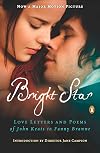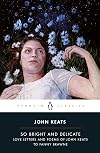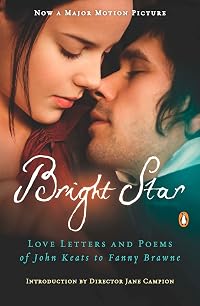
So Bright and Delicate: Love Letters and Poems of John Keats to Fanny Brawne
by John Keats
On This Page
Description
The tragic love story of nineteenth-century poet John Keats and the love of his life, Fanny Brawne. Keats died at the young age of twenty-five, leaving behind some of the most exquisite and moving verse and letters ever written, inspired by his deep love for Fanny. Bright Star is a collection of Keat's romantic poems and correspondence in the heat of his passion, and is a dazzling display of a talent cut cruelly short.Tags
Recommendations
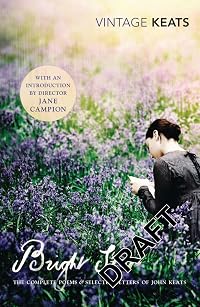
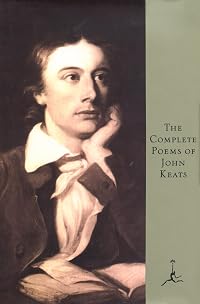






Member Reviews
”Let me have another opportunity of years before me and I will not die without being remember’d” pleads John Keats in one of the thirty-seven surviving love letters he sent to his “angel”, Fanny Brawne. It was some months before his partying to Italy, where he was sent following his doctor’s advice as the last chance to survive a long, strenuous illness. He was supposed to benefit from the milder winter there. He would never return to England, dying in Rome at the premature age of twenty-five and without having ever replied to a single letter from Fanny. He wrote to his friend Mr.Brown instead explaining he could not bear to write to her knowing that he would never see her again in this life. Fanny’s unopened letters were show more buried with him in Rome, where a simple stone pays homage to him, with no name engraved, only the words “Here lies one whose name was writ in water” , as he requested.
Keats’s spell has gone very deep for me. This short collection of letters and poems has left me emotionally drained, they bear compelling witness to Keats’s tenderness, passion, genius and vulnerability. It was sometime during the spring of 1819, the one he spent next to Fanny, that Keats experienced the great outpouring of his poetic life, managing to write about love with the only authority he ever accepted, that of experience itself. It was also the year he fell mortally sick.
"You are to me an object intensely desirable – the air I breathe in a room empty of you is unhealthy."
Letter sent to Fanny from Kentish Town, preparing for his trip to Italy, 1819.
Keats published only fifty-four poems in three slim volumes and, in spite of achieving little public notoriety during his brief life, I believe him to be the quintessential British poet of all times. Keats’s grace, which is sometimes nearly “humoristic”, along with his verbal skill and his dry wit can take by surprise any reader who believed him to be the unmanly, delicate poet, at first glance innocent, he seemed to be. We can sense some of this ingenious playfulness in his short poem called "On Fame”.
Fame, like a wayward girl, will still be coy
To those who woo her with too slavish knees,
But makes surrender to some thoughtless boy,
And dotes the more upon a heart at ease;
She is a Gipsey, - will not speak to those
Who have not learnt to be content without her.
And if one bothers to look deeper, he will discover an unknown, exotic Keats. An acute poet who plays with his own expressive virtuosity, creating poetry from poetizing, without an inch of seriousness or philosophical pretensions, his verses appear charged with irony, impregnating the reader with flashing tastes of melancholy. Taking Wordsworth, Milton and Shakespeare for inspiration, Keats’s mature sense makes the career of the artist become an exploration of art’s power to bring solace and meaning to human suffering.
His four Odes are perfect examples of the way his poems, through a highly self-conscious art, embody meditation on desire and its fulfilment and also on wishes, dreams, and romance.
Forlorn! the very word is like a bell
To toll me back from thee to my sole self!
Adieu! the fancy cannot cheat so well
As she is fam'd to do, deceiving elf.
Adieu! adieu! thy plaintive anthem fades
Past the near meadows, over the still stream,
Up the hill-side; and now 'tis buried deep
In the next valley-glades:
Was it a vision, or a waking dream?
Fled is that music:—Do I wake or sleep?
Ode to a Nightingale
Keats mastered an unusual willingness to embrace uncertainty, live with mystery and make peace with ambiguity, a term which has been called Negative Capability, in which the poet is able to forget about his self and, in vacating his mind, he can fully succumb into the intensity of countless experiences, creating poems out of them. It’s in this fashion that the reader can “feel” rather than “read” Keats’s verses because they don’t struggle with aesthetic form but for meaning against the limits of experience, and always with the under shadowing presence of death behind beauty.
Their sorrows. Pale were the sweet lips I saw,
Pale were the lips I kissed, and fair the form
I floated with, about that melancholy storm.
A Dream, after reading Dante’s Episode of Paolo and Francesca.
Keats’s relationship to Fanny Brawne has tantalized generations of lovers of his poetry, moved and shocked them by their frank passion and intense feelings. I count myself among them. His letters and poems, are all part of the alchemy that makes Keats so special. The young man who died devastated, convinced that he would be forgotten, has been repeatedly re-discovered and remains immortal in the pulsating hearts of all the readers who ache and delight in the way in which beauty reveals the subtle truth behind Keats’s distressing verses. Keats rests in peace knowing he left this earthly world more beloved than most of us will ever be.
Bright star, would I were stedfast as thou art—
Not in lone splendour hung aloft the night
And watching, with eternal lids apart,
Like nature's patient, sleepless Eremite,
The moving waters at their priestlike task
Of pure ablution round earth's human shores,
Or gazing on the new soft-fallen mask
Of snow upon the mountains and the moors--
No--yet still stedfast, still unchangeable,
Pillow'd upon my fair love's ripening breast,
To feel for ever its soft fall and swell,
Awake for ever in a sweet unrest, S
till, still to hear her tender-taken breath,
And so live ever--or else swoon to death.
Bright Star, dedicated to Fanny Brown. show less
Keats’s spell has gone very deep for me. This short collection of letters and poems has left me emotionally drained, they bear compelling witness to Keats’s tenderness, passion, genius and vulnerability. It was sometime during the spring of 1819, the one he spent next to Fanny, that Keats experienced the great outpouring of his poetic life, managing to write about love with the only authority he ever accepted, that of experience itself. It was also the year he fell mortally sick.
"You are to me an object intensely desirable – the air I breathe in a room empty of you is unhealthy."
Letter sent to Fanny from Kentish Town, preparing for his trip to Italy, 1819.
Keats published only fifty-four poems in three slim volumes and, in spite of achieving little public notoriety during his brief life, I believe him to be the quintessential British poet of all times. Keats’s grace, which is sometimes nearly “humoristic”, along with his verbal skill and his dry wit can take by surprise any reader who believed him to be the unmanly, delicate poet, at first glance innocent, he seemed to be. We can sense some of this ingenious playfulness in his short poem called "On Fame”.
Fame, like a wayward girl, will still be coy
To those who woo her with too slavish knees,
But makes surrender to some thoughtless boy,
And dotes the more upon a heart at ease;
She is a Gipsey, - will not speak to those
Who have not learnt to be content without her.
And if one bothers to look deeper, he will discover an unknown, exotic Keats. An acute poet who plays with his own expressive virtuosity, creating poetry from poetizing, without an inch of seriousness or philosophical pretensions, his verses appear charged with irony, impregnating the reader with flashing tastes of melancholy. Taking Wordsworth, Milton and Shakespeare for inspiration, Keats’s mature sense makes the career of the artist become an exploration of art’s power to bring solace and meaning to human suffering.
His four Odes are perfect examples of the way his poems, through a highly self-conscious art, embody meditation on desire and its fulfilment and also on wishes, dreams, and romance.
Forlorn! the very word is like a bell
To toll me back from thee to my sole self!
Adieu! the fancy cannot cheat so well
As she is fam'd to do, deceiving elf.
Adieu! adieu! thy plaintive anthem fades
Past the near meadows, over the still stream,
Up the hill-side; and now 'tis buried deep
In the next valley-glades:
Was it a vision, or a waking dream?
Fled is that music:—Do I wake or sleep?
Ode to a Nightingale
Keats mastered an unusual willingness to embrace uncertainty, live with mystery and make peace with ambiguity, a term which has been called Negative Capability, in which the poet is able to forget about his self and, in vacating his mind, he can fully succumb into the intensity of countless experiences, creating poems out of them. It’s in this fashion that the reader can “feel” rather than “read” Keats’s verses because they don’t struggle with aesthetic form but for meaning against the limits of experience, and always with the under shadowing presence of death behind beauty.
Their sorrows. Pale were the sweet lips I saw,
Pale were the lips I kissed, and fair the form
I floated with, about that melancholy storm.
A Dream, after reading Dante’s Episode of Paolo and Francesca.
Keats’s relationship to Fanny Brawne has tantalized generations of lovers of his poetry, moved and shocked them by their frank passion and intense feelings. I count myself among them. His letters and poems, are all part of the alchemy that makes Keats so special. The young man who died devastated, convinced that he would be forgotten, has been repeatedly re-discovered and remains immortal in the pulsating hearts of all the readers who ache and delight in the way in which beauty reveals the subtle truth behind Keats’s distressing verses. Keats rests in peace knowing he left this earthly world more beloved than most of us will ever be.
Bright star, would I were stedfast as thou art—
Not in lone splendour hung aloft the night
And watching, with eternal lids apart,
Like nature's patient, sleepless Eremite,
The moving waters at their priestlike task
Of pure ablution round earth's human shores,
Or gazing on the new soft-fallen mask
Of snow upon the mountains and the moors--
No--yet still stedfast, still unchangeable,
Pillow'd upon my fair love's ripening breast,
To feel for ever its soft fall and swell,
Awake for ever in a sweet unrest, S
till, still to hear her tender-taken breath,
And so live ever--or else swoon to death.
Bright Star, dedicated to Fanny Brown. show less
Yes, I bought a movie tie-in. We watched the movie _Bright Star_ because of our Regency interests. I discovered John Keats as a teen thanks to a conversation at a Friendly's that also turned me on to the Durants' multi-volume Western Civ. series. I remember standing in the stacks and reading "Ode on a Grecian Urn." I think Keats is best enjoyed by the young, and those especially in the throes of love angst. This slim volume has first his letters to Fanny, most of them composed while they were in the same physical house but kept separate, and then poems composed during this period. Of them all, I found the last, "This living hand, now warm and capable" the most moving. I felt unmoved by the long pseudo-medieval and classical ballads.
So Bright and Delicate is a collection of the poet John Keats' love letters to Fanny Brawne, with a selection of his love poetry attached at the end. The book is short, around 130 pages, of which around half are letters and half poems. Even if you're indifferent to early 19th century poetry, the letters make for excellent reading, and cover the period just before the end of his life. The poems are a mixed bunch, and I will admit to being unable to force myself through "Lamia", but you should probably read "The Belle Dame sans Merci" and "The Eve of St. Agnes" at least once, just to say you have.
For those looking for a real love story, the letters will be a treat. And for those in the mood, the poetry can be good too.
For those looking for a real love story, the letters will be a treat. And for those in the mood, the poetry can be good too.
Very romantic...it's insane to think that there actually were men who wrote poetry like this to women at one time or another. The first half of the book (The letters to Fanny) were both touching and beautiful. The second half which were the best of his poems was wonderful as well, however I had to re-read most of it and look up a lot of the words since it is written in old English. The movie was very well done as well and Jane Champion gives a little intro in this book which helps to put things in perspective. If you are a fan of poetry, I suggest you read this book, but keep a dictionary handy. 8/10.
John Keats died at the young age of 25. This collection of love letters and poetry capture the fevered passion, which seemed heightened by the social, financial, and medical obstacles in the path between these two lovers, at least from his viewpoint. I am not a huge fan of his poetry, but enjoyed the juxtaposition of the poetry and the letters. Nice.
A beautiful collection of letters and poem by one of the world's most passionate poets. And one of my favourite poets ever.
http://passionatebooklover.wordpress.com/2009/09/25/bright-star-love-letters-and...
John Keats (31 October 1795 – 23 February 1821) is regarded as one of the key figures of the Romantic Movement. During his short life, the poet produced a series of odes, which remain “among the most popular poems in English Literature”. However, he received several critical attacks from his contemporaries and it was not until the latter part of the nineteenth century that his work began to be recognized. Keats had a major influence on poets such as Alfred Tennyson and Wilfred Owen and his letters are “among the most celebrated by any writer”.
Bright Star contains 13 poems and 37 letters that bear witness to the love between John Keats and Fanny show more Brawne. Their passionate love affair began in 1818, when Keats was twenty-three years old and Fanny just eighteen. It was an intense love story, but unfortunately, it had a tragic end, as Keats died of tuberculosis at the age of twenty-five.
Keats and Fanny both lived in Hampstead and in 1819, they began living in the same house, which was divided into two separate living quarters (Fanny’s family moved into the same house where Keats lived with his best friend, Charles Brown). Thus, they saw each other quite often and they “shared the same garden and many meals as well”. In the early summer of 1819, Keats and his best friend left Hampstead for a writing retreat on the Isle of Wight, so Fanny and Keats were separated. Thus, the poet wrote his first letter to his beloved, pouring out his heart:
“…Ask yourself my love whether you are not very cruel to have so entrammeled me, so destroyed my freedom…I almost wish we were butterflies and liv’d but three summer days – three such days with you I could fill with more delight than fifty common years could ever contain…”
Nevertheless, they both knew that their situation was difficult, as Keats had no money to marry Fanny. His first book of poetry had sold poorly and had earned ruthless reviews. Furthermore, Fanny’s mother and Keats’s friends disapproved of their relationship. Still, Fanny and Keats could not live without each other and when Keats returned to Hampstead, he gave Fanny a ring and hoped that his next book of poems would be successful enough so they could marry.
In 1820, Keats began showing signs of tuberculosis, so the doctors suggested that he should move to Italy and leave the cold airs of England behind. Fanny and Keats knew that they wouldn’t see each other again and the poet’s departure was unbearable for both of them. While in Italy, Keats did not write to Fanny again and the letters Fanny wrote to her beloved in Italy were buried with him, unopened. When twenty-year-old Fanny heard of the poet’s death, she was devastated and she spent three years in widow’s black. She married at the age of thirty-three and had three children. Nonetheless, she could never forget her first love and would wear the ring he had given her until her death.
Although John Keats died at such a young age, “he left behind some of the most exquisite and moving poetry ever written”. The young poet feared that he would be forgotten, but he has been rediscovered by many people and his place in English Romanticism is now fully and rightly recognized.
Bright Star contains Keats’s remarkable poems and letters to his beloved; this volume is a testament to love and “a dazzling display of a talent cruelly cut short”.
Here’s one of his poems:
Bright Star by John Keats
Bright star! would I were steadfast as thou art-
Not in lone splendour hung aloft the night
And watching, with eternal lids apart,
Like nature’s patient, sleepless Eremite,
The moving waters at their priestlike task
Of pure ablution round earth’s human shores,
Or gazing on the new soft-fallen mask
Of snow upon the mountains and the moors-
No–yet still steadfast, still unchangeable,
Pillowed upon my fair love’s ripening breast,
To feel for ever its soft swell and fall,
Awake for ever in a sweet unrest,
Still, still to hear her tender-taken breath,
And so live ever – or else swoon to death. show less
John Keats (31 October 1795 – 23 February 1821) is regarded as one of the key figures of the Romantic Movement. During his short life, the poet produced a series of odes, which remain “among the most popular poems in English Literature”. However, he received several critical attacks from his contemporaries and it was not until the latter part of the nineteenth century that his work began to be recognized. Keats had a major influence on poets such as Alfred Tennyson and Wilfred Owen and his letters are “among the most celebrated by any writer”.
Bright Star contains 13 poems and 37 letters that bear witness to the love between John Keats and Fanny show more Brawne. Their passionate love affair began in 1818, when Keats was twenty-three years old and Fanny just eighteen. It was an intense love story, but unfortunately, it had a tragic end, as Keats died of tuberculosis at the age of twenty-five.
Keats and Fanny both lived in Hampstead and in 1819, they began living in the same house, which was divided into two separate living quarters (Fanny’s family moved into the same house where Keats lived with his best friend, Charles Brown). Thus, they saw each other quite often and they “shared the same garden and many meals as well”. In the early summer of 1819, Keats and his best friend left Hampstead for a writing retreat on the Isle of Wight, so Fanny and Keats were separated. Thus, the poet wrote his first letter to his beloved, pouring out his heart:
“…Ask yourself my love whether you are not very cruel to have so entrammeled me, so destroyed my freedom…I almost wish we were butterflies and liv’d but three summer days – three such days with you I could fill with more delight than fifty common years could ever contain…”
Nevertheless, they both knew that their situation was difficult, as Keats had no money to marry Fanny. His first book of poetry had sold poorly and had earned ruthless reviews. Furthermore, Fanny’s mother and Keats’s friends disapproved of their relationship. Still, Fanny and Keats could not live without each other and when Keats returned to Hampstead, he gave Fanny a ring and hoped that his next book of poems would be successful enough so they could marry.
In 1820, Keats began showing signs of tuberculosis, so the doctors suggested that he should move to Italy and leave the cold airs of England behind. Fanny and Keats knew that they wouldn’t see each other again and the poet’s departure was unbearable for both of them. While in Italy, Keats did not write to Fanny again and the letters Fanny wrote to her beloved in Italy were buried with him, unopened. When twenty-year-old Fanny heard of the poet’s death, she was devastated and she spent three years in widow’s black. She married at the age of thirty-three and had three children. Nonetheless, she could never forget her first love and would wear the ring he had given her until her death.
Although John Keats died at such a young age, “he left behind some of the most exquisite and moving poetry ever written”. The young poet feared that he would be forgotten, but he has been rediscovered by many people and his place in English Romanticism is now fully and rightly recognized.
Bright Star contains Keats’s remarkable poems and letters to his beloved; this volume is a testament to love and “a dazzling display of a talent cruelly cut short”.
Here’s one of his poems:
Bright Star by John Keats
Bright star! would I were steadfast as thou art-
Not in lone splendour hung aloft the night
And watching, with eternal lids apart,
Like nature’s patient, sleepless Eremite,
The moving waters at their priestlike task
Of pure ablution round earth’s human shores,
Or gazing on the new soft-fallen mask
Of snow upon the mountains and the moors-
No–yet still steadfast, still unchangeable,
Pillowed upon my fair love’s ripening breast,
To feel for ever its soft swell and fall,
Awake for ever in a sweet unrest,
Still, still to hear her tender-taken breath,
And so live ever – or else swoon to death. show less
Members
- Recently Added By
Author Information

444+ Works 13,707 Members
John Keats was born in London, the oldest of four children, on October 31, 1795. His father, who was a livery-stable keeper, died when Keats was eight years old, and his mother died six years later. At age 15, he was apprenticed to an apothecary-surgeon. In 1815 he began studying medicine but soon gave up that career in favor of writing poetry. show more The critic Douglas Bush has said that, if one poet could be recalled to life to complete his career, the almost universal choice would be Keats, who now is regarded as one of the three or four supreme masters of the English language. His early work is badly flawed in both technique and critical judgment, but, from his casually written but brilliant letters, one can trace the development of a genius who, through fierce determination in the face of great odds, fashioned himself into an incomparable artist. In his tragically brief career, cut short at age 25 by tuberculosis, Keats constantly experimented, often with dazzling success, and always with steady progress over previous efforts. The unfinished Hyperion is the only English poem after Paradise Lost that is worthy to be called an epic, and it is breathtakingly superior to his early Endymion (1818), written just a few years before. Isabella is a fine narrative poem, but The Eve of St. Agnes (1819), written soon after, is peerless. In Lamia (1819) Keats revived the couplet form, long thought to be dead, in a gorgeous, romantic story. Above all it was in his development of the ode that Keats's supreme achievement lies. In just a few months, he wrote the odes "On a Grecian Urn" (1819), "To a Nightingale" (1819), "To Melancholy" (1819), and the marvelously serene "To Autumn" (1819). Keats is the only romantic poet whose reputation has steadily grown through all changes in critical fashion. Once patronized as a poet of beautiful images but no intellectual content, Keats is now appreciated for his powerful mind, profound grasp of poetic principles, and ceaseless quest for new forms and techniques. For many readers, old and young, Keats is a heroic figure. John Keats died in Rome on February 23, 1821 and was buried in the Protestant Cemetery, Rome. His last request was to be placed under a tombstone bearing no name or date, only the words, "Here lies One whose Name was writ in Water." (Bowker Author Biography) show less
All Editions
Series
Belongs to Publisher Series
Work Relationships
Reference guide/companion to
Common Knowledge
- Canonical title
- So Bright and Delicate: Love Letters and Poems of John Keats to Fanny Brawne
- Alternate titles
- Bright Star: Love Letters and Poems of John Keats to Fanny Brawne
- Original publication date
- 2009
- People/Characters
- John Keats; Fanny Brawne
- Important events
- Romanticism; Georgian Era; 19th century
- Related movies
- Bright Star (2009 | IMDb)
- Disambiguation notice
- This is the work published by Penguin in the US as Bright Star and elsewhere as a Penguin Classic with the title So Bright and Delicate with the subtitle Love Letters and Poems of John Keats to Fanny Brawn... (show all)e. The Vintage edition and the film should not be combinded with this work.
Classifications
Statistics
- Members
- 317
- Popularity
- 100,832
- Reviews
- 9
- Rating
- (4.34)
- Languages
- English
- Media
- Paper, Ebook
- ISBNs
- 4
- ASINs
- 4