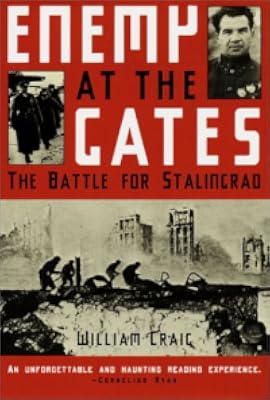
Enemy at the Gates : The Battle for Stalingrad
by William Craig
On This Page
Description
A classic work of World War II history that brings to vivid, dramatic life 1 of the bloodiest battles ever fought-and the beginning of the end for the Third Reich On August 5, 1942, giant pillars of dust rose over the Russian steppe, marking the advance of the 6th Army, an elite German combat unit dispatched by Hitler to capture the industrial city of Stalingrad and press on to the oil fields of Azerbaijan. The Germans were supremely confident; in 3 years, they had not suffered a single show more defeat.The Luftwaffe had already bombed the city into ruins. German soldiers hoped to complete their mission and be home in time for Christmas. The siege of Stalingrad lasted 5 months, 1 week, and 3 days. Nearly 2 million men and women died, and the 6th Army was completely destroyed. Considered by many historians to be the turning point of World War II in Europe, the Soviet Army's victory foreshadowed Hitler's downfall and the rise of a communist superpower. Bestselling author William Craig spent 5 years researching this epic clash of military titans, traveling to 3 continents in order to review documents and interview hundreds of survivors. Enemy at the Gates is the enthralling result: the definitive account of 1 of the most important battles in world history. The book was the inspiration for the 2001 film of the same name, starring Joseph Fiennes and Jude Law. show lessTags
Recommendations



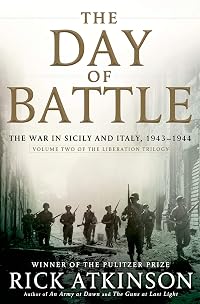
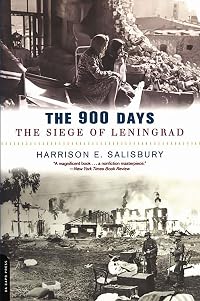
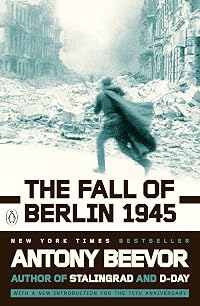
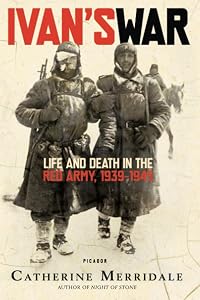


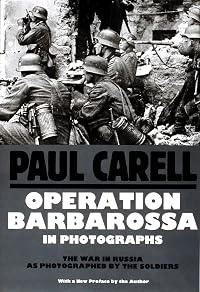
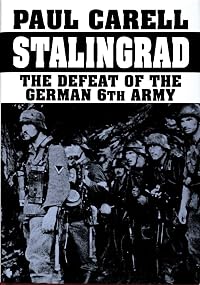
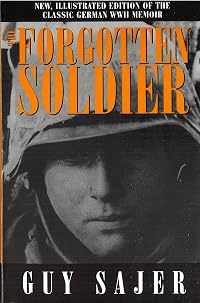
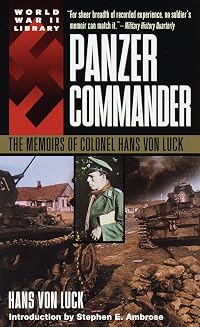









Member Recommendations
Member Reviews
Ignore the cover models and read this book. You hear that Stalingrad was "the greatest battle" or whatever, but what that means is thousands of people starving to death in holes in the ground, awful military fuckups, battles fought inside buildings literally over hallways, just an inch-by-inch muddy slugfest between two countries hell-bent on destroying one another at any cost. I feel like I was there after reading this book. Don't see the movie.
STALINGRAD.
The name evokes pain, suffering, hardship, death. William Craig’s Enemy at the Gates conveys all of the above and more. Published in 1973, Craig’s book is compiled from scores of survivor interviews, letters, communiqués and protagonist memoirs from both sides. The reader is immersed in the freezing trenches and basements of privates and NCOs, the command bunkers of German and Russian generals and Führer headquarters at the Wolf’s Lair in East Prussia. No detail is spared and the brutality of the conflict is recreated in stark detail from first hand accounts; the description of survival in Russian "POW" camps is beyond belief.
Craig also touches on the mismanagement of the German High Command, notably Hitler’s show more miscomprehension or indifference to a worsening situation and Goering’s assurance of resupply by air, doomed to failure from the outset. One almost feels sorry for the impending sense of disaster, repeatedly asserted by more competent generals. The blame does not solely lie here though. Manstein could have initiated ‘Thunderclap’, the codeword for an all out breakout from Der Kessel to link up with Hoth’s relief force. Paulus too shares some of the blame. His insistence to follow Hitler’s orders to the letter and not apply the initiative of a commander on the ground ultimately doomed the sixth army.
My one criticism is that the book could have done with a few more detailed maps. Manstein’s attempt at breakthrough and the Russian counter offensives were described in detail with place names and direction of attacks, but no maps. That said, it doesn’t detract too much from Craig’s gripping narrative and this is a must read for those interested in the Russian campaigns and WW2 as a whole.
As a side note, the movie of the same name starring Jude Law is loosely adapted from this book, focusing mainly on Vasilli Zaitsev, Tania Chernova and the cat and mouse with Major Konings. I liked the movie, but just couldn't get over the cockney "Russian" accents! show less
A horrible event in human history told well. Writing is engaging and readable. The horrors inflicted on the Russians and their invaders is hard to comprehend. That the Russians fought under the double threat of Nazism and Communism adds another wrinkle to the plot. NKVD troops were gunning down red army troops with nearly the same gusto as their German foes. The Germans exhibited foolish arrogance in ignoring all evidence of a soviet counter-offensive. The soviets endured and planned their attack brilliantly. Recommended reading.
In "Enemy at the Gates", William Craig presents a gripping narrative account of the pivotal Battle of Stalingrad. While he provides a concise survey of the strategic dimensions of the campaign, the focus of his history is on the lives, and deaths, of individuals who suffered in this epic struggle.
He has interviewed hundreds of survivors, or the spouses of those who fought, to knit together an enthralling memoir of the hell on earth that was Stalingrad. The invaders and the defenders are treated with equal measures of sympathy for their common humanity in this nightmare.
Stalingrad was the turning point in the war on the Russian front. Craig shows us how Hitler's indifference to the lives of his own troops condemned the German Sixth Army show more to a terrible fate. "Enemy at the Gates" is a terrific read. show less
He has interviewed hundreds of survivors, or the spouses of those who fought, to knit together an enthralling memoir of the hell on earth that was Stalingrad. The invaders and the defenders are treated with equal measures of sympathy for their common humanity in this nightmare.
Stalingrad was the turning point in the war on the Russian front. Craig shows us how Hitler's indifference to the lives of his own troops condemned the German Sixth Army show more to a terrible fate. "Enemy at the Gates" is a terrific read. show less
What was the pivotal battle of World War II? Pearl Harbor? El Alamein? Midway? D-Day? Iwo Jima? The Bulge? While each of these was important to the overall outcome of the war, perhaps no single battle was as significant as the one between Germany and the Soviet Union at Stalingrad. In fighting that lasted over five months the Germany army met its match and was decisively defeated by its one-time friend. The victory of the Soviet Union at Stalingrad decisively changed the momentum of the Allies, setting them on a course that would lead to the end of the Third Reich two years later.
Enemy at the Gates is an account of the fight for Stalingrad. William Craig did an outstanding job in researching the battle, drawing from first-person show more accounts of witnesses and survivors on both sides. His sources are include every rank, ranging from private to general, as well as the parts played by people who never appeared in t he battle but loomed large over nearly every key decision, particularly Adolph Hitler and Joseph Stalin.
While Enemy at the Gates is essentially a work of history, it is also in some ways a tragedy. Reading it 70 years after the battle, with the rise and fall of both the Third Reich and the Soviet Union as established facts of history, we can see in Hitler and Stalin the personality characteristics that drive leaders in a myopic manner, a manner in which the expenditure of literally hundreds of thousands of lives, is seen as fully justified. Unfortunately, the world as a whole seems to have learned little, as the mass horrors of Stalingrad continue to repeat themselves in armed conflict today.
As history, this is a well-written book of a terrible moment in human history. As tragedy, this reminds that when I read the latest accounts from Syria and Iraq, just two of today's points of conflict in the world, it remains as Ecclesiastes wrote: There is nothing new under the sun. show less
Enemy at the Gates is an account of the fight for Stalingrad. William Craig did an outstanding job in researching the battle, drawing from first-person show more accounts of witnesses and survivors on both sides. His sources are include every rank, ranging from private to general, as well as the parts played by people who never appeared in t he battle but loomed large over nearly every key decision, particularly Adolph Hitler and Joseph Stalin.
While Enemy at the Gates is essentially a work of history, it is also in some ways a tragedy. Reading it 70 years after the battle, with the rise and fall of both the Third Reich and the Soviet Union as established facts of history, we can see in Hitler and Stalin the personality characteristics that drive leaders in a myopic manner, a manner in which the expenditure of literally hundreds of thousands of lives, is seen as fully justified. Unfortunately, the world as a whole seems to have learned little, as the mass horrors of Stalingrad continue to repeat themselves in armed conflict today.
As history, this is a well-written book of a terrible moment in human history. As tragedy, this reminds that when I read the latest accounts from Syria and Iraq, just two of today's points of conflict in the world, it remains as Ecclesiastes wrote: There is nothing new under the sun. show less
I don't think I ever read a history book with so much energy. You will also need to read the wikipedia article to get the dry facts - this, while not missing on the tactical details altogether, is concentrating on the many personal stories and hundreds of small vignettes. I can't even find a book to compare it with and I read a reasonable amount of non-fiction. Initially I was disappointed as I favour more straightforward "field-report" style books but this technique proved amazing in this case, painting a graphic and powerful picture.
This is by far the best narrative non-fiction WWII history book I've ever read. It expresses the profound drama of combat between Germans and Russians and the feelings, motivations and despair of the participants.
Members
- Recently Added By
Lists

All Things Russia
459 works; 11 members

r/History Recommended Reading List
603 works; 12 members
Author Information

6 Works 1,780 Members
Series
Belongs to Publisher Series
Work Relationships
Common Knowledge
- Canonical title
- Enemy at the Gates : The Battle for Stalingrad
- Original title
- Enemy at the Gates : The Battle for Stalingrad
- Original publication date
- 1973
- People/Characters
- Grigoryevich Zaytsev; Erwin Konigs; Tanya Chernova; Commissar Danilov; Nikita Khrushchev; Friedrich Paulus (show all 8); Sacha Fillipov; Vasily Zaitsev
- Important places
- Stalingrad, USSR; USSR
- Important events
- Battle of Stalingrad (1942 | 1943); World War II (1939 | 1945); World War II, Eastern Front (1941-06-22 | 1945-05-05)
- Related movies
- Enemy at the Gates (2001 | IMDb)
Classifications
Statistics
- Members
- 1,394
- Popularity
- 17,076
- Reviews
- 25
- Rating
- (4.03)
- Languages
- 5 — Dutch, English, French, German, Spanish
- Media
- Paper, Audiobook, Ebook
- ISBNs
- 29
- ASINs
- 24