Youngblood Hawke
by Herman Wouk
On This Page
Description
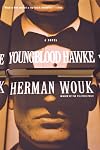
A writer finds wealth, fame, and sorrow in midcentury Manhattan. Arthur Youngblood Hawke, an ex-Navy man, moves from hardscrabble rural Kentucky to New York, hoping to make his mark on the literary world. His first novel becomes an instant hit, and he is toasted by critics and swept along on a tide of celebrity. But as Hawke gives himself over to the lush life that gilds artistic success, indulging in an affair with an older married woman and a flirtation with his editor, dabbling in real show more estate developments as his second novel brings him massive wealth and even bigger opportunities, he soon finds himself in a self-destructive downward spiral. Inspired by the life of Thomas Wolfe, and spanning from the Manhattan publishing world to Hollywood to Europe, Youngblood Hawke is both a riveting saga of postwar glamor and a poignant tale of one man's rise and fall. show lessTags
Recommendations


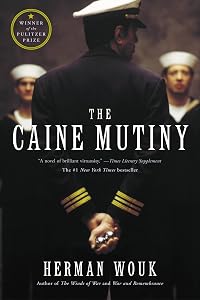



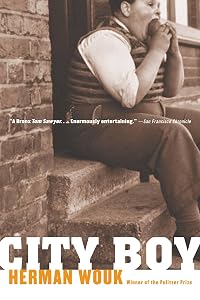

















Member Reviews
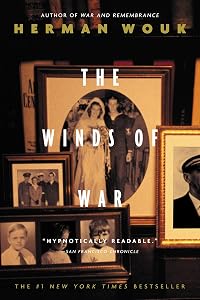
Many years ago, I read Winds of War and War and Remembrance. I enjoyed them very much, but for whatever reason, never pursued other Wouk works. After having read Youngblood Hawke, I will certainly remedy that mistake.
Youngblood Hawke is an outstanding period piece which weaves together many of the historical events of the 50s against the backdrop of the publishing and Hollywood entertainment industries. Hawke, from the small town coal country of Eastern Kentucky, rises from complete obscurity to the pinnacle of success in his field. Despite this success, Hawke is always on the razor's edge, financially, emotionally, physically and professionally. Numerous highly entertaining plot lines involving his business associates, his love show more interests and his family inject suspense and keep the story freash and moving in the right direction.
Two particular story lines were of particular interest to me; the Congressional hearings involving Communism in the entertainment industry and the confiscatory income tax policy prevalent during the period. Both were very effectively presented as major impediments to the artistic endeavors of Hawke and his literary compatriots. The gymnastics and gyrations undertaken by Hawke to avoid what was then a top tax rate of 90% provide some of the most interesting material in the novel.
All in all, an extremely entertaining and thought provoking novel. I highly recommend it. show less
Youngblood Hawke is an outstanding period piece which weaves together many of the historical events of the 50s against the backdrop of the publishing and Hollywood entertainment industries. Hawke, from the small town coal country of Eastern Kentucky, rises from complete obscurity to the pinnacle of success in his field. Despite this success, Hawke is always on the razor's edge, financially, emotionally, physically and professionally. Numerous highly entertaining plot lines involving his business associates, his love show more interests and his family inject suspense and keep the story freash and moving in the right direction.
Two particular story lines were of particular interest to me; the Congressional hearings involving Communism in the entertainment industry and the confiscatory income tax policy prevalent during the period. Both were very effectively presented as major impediments to the artistic endeavors of Hawke and his literary compatriots. The gymnastics and gyrations undertaken by Hawke to avoid what was then a top tax rate of 90% provide some of the most interesting material in the novel.
All in all, an extremely entertaining and thought provoking novel. I highly recommend it. show less
Enough people liked this novel to make it a commercial success in its day. Wouk, being a great fan of the earlier Thomas Wolfe, and a very commercial writer himself, cobbled together this tale of a brilliant, but unknown writer, who does acheive commercial success, but driven by his demons, works himself to death. I wasn't really that interested in Youngblood by the time I finished the book.
Leslie loaned this to me because it’s her favorite book. ItÂs okay, I enjoyed it, I hated to put it down without finishing (so much so that my lunch lasted two hours because I couldnÂt get to the end). But I couldnÂt put it on my favorites list. For one thing IÂm seldom really happy with the clichés of divine retribution. Frieda Winter (is that a cold name or what?) has an affair for years; her son commits suicide, leaving a note that indirectly blames the affair. Youngblood must die since heÂs the hero and he broke poor JeanneÂs heart. ThereÂs a lot of careful plotting, but it all tends to melodrama and I found everything rather predictable. What else can it be when he starts out the book with his dream of a show more million to write his Comedy on, and almost immediately his mother is talking about the big bucks sheÂs been done out of , a million maybe. I liked it that his mother was right all along, and I like it that the financial advice he acted on from Paul Winter drove him to ruin. What donÂt I like? I donÂt like the way everyone keeps on about how old Frieda is and looks when it sounds as if Hawke is aging pretty fast. I donÂt like the old brain injury and the epilepsy. I donÂt like it that Wauk says his character doesnÂt have a drinking problem when throughout the novel weÂve seen him abusing alcohol in various ways. I donÂt like it that Jeanne is such a sweet proper girl who gets to marry two men sheÂs fond of and have kids rather than marry the schmuck she loves. Mostly what I donÂt like is that the damn fool Hawke never learns a damn thing in the whole book. He lives the literary world as he entered it: working two jobs, driving himself too hard, pissing off Jeanne by seeing Frieda, dwelling on money. IÂm not comfortable with deathbed scenes when the hero says heÂll do everything differently if he lives, and then he dies and weÂre supposed to believe he would have really changed. Nonetheless, a fun look at greed, publishing, and NY. show less
I love Herman Wouk's books, and this is one of the best. It is the totally gripping saga of a young novelist, his books and his various relationships with women and money, a fascinating read though the stretches that describe law relating to mining land can get a bit tedious in places. I have read it so many times I've had to buy a new copy as the old one was falling to bits! A cautionary tale for anyone who thinks the life of a novelist is all plain sailing
The main character roams all the way from bohemian to well-known writer with writer's block. This makes for a tragically fun read.
Ratings
Members
- Recently Added By
Lists

Publisher's Weekly Bestsellers - Part II - 1940 - 1979
355 works; 6 members
Author Information

84+ Works 19,281 Members
Herman Wouk was born in the Bronx, New York on May 27, 1915. He received a bachelor's degree in comparative literature and philosophy from Columbia University. In 1936, he became a staff writer for the radio comedian Fred Allen. He enlisted in the Navy immediately after Pearl Harbor and was posted as a radio officer in the South Pacific. His debut show more novel, Aurora Dawn, was published in 1947. His other novels included The City Boy, Marjorie Morningstar, Youngblood Hawke, Don't Stop the Carnival, The Winds of War, War and Remembrance, The Hope, The Gift, A Hole in Texas, and The Lawgiver. He received the Pulitzer Prize for fiction in 1952 for The Caine Mutiny. He received the first Library of Congress Lifetime Achievement Award for the Writing of Fiction in 2008. His nonfiction books included This Is My God, The Language God Talks, and Sailor and Fiddler: Reflections of a 100-Year-Old Author. Several of his books were adapted into movies including The Caine Mutiny and Marjorie Morningstar. He adapted the courtroom sections of The Caine Mutiny into the Broadway play The Caine Mutiny Court-Martial. His other Broadway shows included The Traitor and Nature's Way. He died on May 17, 2019 at the age of 103. (Bowker Author Biography) show less
Some Editions
Awards and Honors
Distinctions
Series
Belongs to Publisher Series
Heyne Allgemeine Reihe (908)
Work Relationships
Has the adaptation
Is abridged in
Common Knowledge
- Canonical title
- Youngblood Hawke
- Original title
- Youngblood Hawke
- Original publication date
- 1962
- People/Characters
- Youngblood Hawke
- Related movies
- Youngblood Hawke (1964 | IMDb)
Classifications
Statistics
- Members
- 454
- Popularity
- 67,034
- Reviews
- 6
- Rating
- (3.89)
- Languages
- English, German, Hungarian, Swedish
- Media
- Paper, Audiobook, Ebook
- ISBNs
- 22
- ASINs
- 30