On This Page
Description
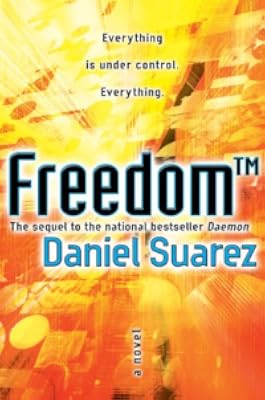
Fiction. Science Fiction. Thriller. HTML:The propulsive, shockingly plausible sequel to New York Times bestseller Daemon.In one of the most buzzed-about debuts, Daniel Suarez introduced a terrifying vision of a new world order, controlled by the Daemon, an insidious computer program unleashed by a hi-tech wunderkind, Daemon captured the attention of the tech community, became a New York Times and Indie bestseller, and left readers hungry for more.
Well, more is here, and it's even more show more gripping than its predecessor. In the opening chapters of Freedom(tm), the Daemon is firmly in control, using an expanded network of real-world, dispossessed darknet operatives to tear apart civilization and rebuild it anew. Soon civil war breaks out in the American Midwest, in a brutal wave of violence that becomes known as the Corn Rebellion. Former detective Pete Sebeck, now the Daemon's most powerful—though reluctant—operative, must lead a small band of enlightened humans toward a populist movement designed to protect the new world order. But the private armies of global business are preparing to crush the Daemon once and for all.
In a world of conflicted loyalties, rapidly diminishing human power, and the possibility that anyone can be a spy, what's at stake is nothing less than human freedom's last hope to survive the technology revolution. show less
Tags
Recommendations

















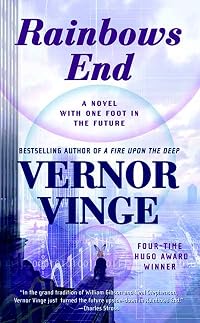

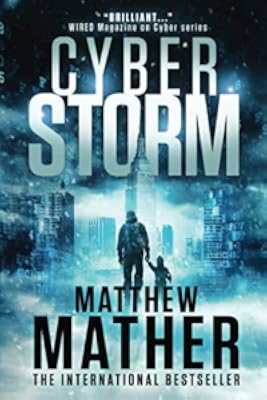
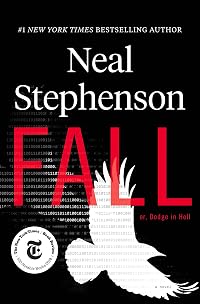
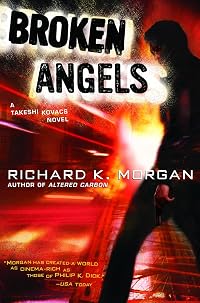
Member Recommendations

Member Reviews
Daniel Suarez takes the egalitarian utopia fantasy of the Flower Power generation and repackages it as a sadistic revolutionary wet dream in this sequel to "Daemon" which pits slackers against plutocrats while a string of computer code calls the shots. How much you enjoy this story depends on how much you're willing to swallow, so here's a little quiz: do you believe that all things blue collar working class are GOOD and all things white collar corporate are BAD? Are you willing to accept ludicrous narrative gimmicks like scimitar-wielding ninja motorcycles and villains so cartoonish they should be twirling their (virtual) moustaches? Do you believe "the end justifies the means" no matter what? Was chairman Mao just a poor misunderstood show more visionary? If you answered "yes" to any of the above then give it a shot. Personally my head still hurts from all the eye-rolling. show less
Lots of fun here for cyberthriller fans. Suarez does a decent job of holding his own in a genre known for names like Gibson and Stephenson, and this sequel to DAEMON proves that Suarez's first outing was no fluke. Yes, there's some over-the-top cinematic silliness that seems to have been written with a screenplay in mind, but the themes and underlying concepts here are just all kinds of fun for anyone with a decent geek streak, and there is no shortage of thought-provoking topics driving the action-packed narrative. A quote that sums up a particular favorite of mine: “Democracy requires active participation, and sooner or later someone ‘offers’ to take all the difficult decision-making away from you and your hectic life. But the show more darknet throws those decisions back onto you. It hard-codes democracy into the DNA of civilization. You upvote and downvote many times a day on things that directly affect your life and the lives of people around you--not just once every few years on things you haven’t got a chance in hell of affecting.” With solid hits in his first two outings, Suarez is already on my don't miss list. show less
After cruising through Daemon in about 2 days, Freedom™ was even quicker: I blew through it in about 24 hours (back in May). That’s no knock against it, though; rather, I just couldn’t put it down at all.
This review will be brief, even though it’s taken me almost three months to get around to finishing it. Basically, if Daemon was the end of the beginning, Freedom™ is the beginning of the end. Or at least of the next step. It lays out the climactic struggle much more succinctly, a titanic clash between people and business, corporate and individual. I found this particular passage most instructive:
"You, sir, are walking on a privately owned Main Street—permission to trespass revocable at will. Read the plaque on the ground at show more the entrance if you don’t believe me. These people aren’t citizens of anything, Sergeant. America is just another brand purchased for its goodwill value. For that excellent fucking logo … No conspiracy necessary. It’s a process that’s been happening for thousands of years. Wealth aggregates and becomes political power. Simple as that. ‘Corporation’ is just the most recent name for it. In the Middle Ages it was the Catholic Church. They had a great logo, too. You might have seen it, and they had more branches than Starbucks. Go back before that, and it was Imperial Rome. It’s a natural process as old as humanity."
Of course, overreach leads to retreat and retrenchment, et cetera, et cetera. Even if the message seems a little obvious (and by no means subtly presented), it’s an important one, and it’s framed in an interesting new way. It’s that presentation that makes this not only legible, but well worth your time, if not just to see what the traditional cries of anticonsumerism and Adbusters-type activism look like in the digital age.
John Robb’s ‘holons‘ take some big strides here too; Suarez has done an excellent job of envisioning the resilient community concept, and doing so in a way that makes them seem not only possible, but inevitable. A blueprint for the future? Not necessarily. But at the least, a realistic portrayal of the kind of decentralized communities that we’ll hopefully be migrating to in the future. Thanks to Daniel Suarez, they’re more than just a concept.
So read Daemon and then read Freedom™. Seriously, you won’t be disappointed. And even if you are, ignore the prose and focus on the message – it’s one we sorely need to listen to right now. show less
This review will be brief, even though it’s taken me almost three months to get around to finishing it. Basically, if Daemon was the end of the beginning, Freedom™ is the beginning of the end. Or at least of the next step. It lays out the climactic struggle much more succinctly, a titanic clash between people and business, corporate and individual. I found this particular passage most instructive:
"You, sir, are walking on a privately owned Main Street—permission to trespass revocable at will. Read the plaque on the ground at show more the entrance if you don’t believe me. These people aren’t citizens of anything, Sergeant. America is just another brand purchased for its goodwill value. For that excellent fucking logo … No conspiracy necessary. It’s a process that’s been happening for thousands of years. Wealth aggregates and becomes political power. Simple as that. ‘Corporation’ is just the most recent name for it. In the Middle Ages it was the Catholic Church. They had a great logo, too. You might have seen it, and they had more branches than Starbucks. Go back before that, and it was Imperial Rome. It’s a natural process as old as humanity."
Of course, overreach leads to retreat and retrenchment, et cetera, et cetera. Even if the message seems a little obvious (and by no means subtly presented), it’s an important one, and it’s framed in an interesting new way. It’s that presentation that makes this not only legible, but well worth your time, if not just to see what the traditional cries of anticonsumerism and Adbusters-type activism look like in the digital age.
John Robb’s ‘holons‘ take some big strides here too; Suarez has done an excellent job of envisioning the resilient community concept, and doing so in a way that makes them seem not only possible, but inevitable. A blueprint for the future? Not necessarily. But at the least, a realistic portrayal of the kind of decentralized communities that we’ll hopefully be migrating to in the future. Thanks to Daniel Suarez, they’re more than just a concept.
So read Daemon and then read Freedom™. Seriously, you won’t be disappointed. And even if you are, ignore the prose and focus on the message – it’s one we sorely need to listen to right now. show less
Nearly as amazing as the first book in the Duology, [b:Daemon|6665847|Daemon|Daniel Suarez|https://images.gr-assets.com/books/1348912643s/6665847.jpg|4763873], it leads us right into the middle of an ideological breakdown or a breakthrough, with hoards of Daemon followers playing their lives as if it was all a huge game. And indeed, the way our economics and military and politics is run, it is just that.
So what happens when a game AI successfully outplays our gloriously flawed human nature all in the desire to prevent a total breakdown of our society, as all societies have broken down when our reach outstrips our grasp?
Why, the old-guard, the rich, the staunch governmentalists, and the old idealists band together to take down, show more impossibly, the background program that had transformed the world. With devastating effect. Civil Wars, corn rebellions, tent cities, and absolute fear of the internet dominates this book.
Oh yeah, and high level wizards (techno-kind) roam the world, having risen high in wealth and real power thanks to the Daemon, and they are truly awesome and rather scary. Sound like a game? Well, it is! But this system of rewards is all in real wealth, real influence, and really awesome tech.
Who do I root for? *waves his wand around*
I won't tell you.
The fact is, this is still very much a techno-thriller to its core, but beyond that, it's super-ambitious and it's also a rather enormous SF undertaking in its own right, from the ideas, the social reform, or from the deeper implications of what it means to be human and so flawed as to have one stupid distributed program be able to outthink us, surprisingly so because it doesn't even have real intelligence!
It's just programmed to manipulate us all really, really well. And I can't say I disagree with it's core purpose, either.
But then, I must quote Robert A Heinlein, "Never underestimate the power of human stupidity."
*sigh*
Great book, great conclusion, and I don't even mind the soapbox that the author stood upon. SF is really all about ideas, but this one's a great story, too. show less
So what happens when a game AI successfully outplays our gloriously flawed human nature all in the desire to prevent a total breakdown of our society, as all societies have broken down when our reach outstrips our grasp?
Why, the old-guard, the rich, the staunch governmentalists, and the old idealists band together to take down, show more impossibly, the background program that had transformed the world. With devastating effect. Civil Wars, corn rebellions, tent cities, and absolute fear of the internet dominates this book.
Oh yeah, and high level wizards (techno-kind) roam the world, having risen high in wealth and real power thanks to the Daemon, and they are truly awesome and rather scary. Sound like a game? Well, it is! But this system of rewards is all in real wealth, real influence, and really awesome tech.
Who do I root for? *waves his wand around*
I won't tell you.
The fact is, this is still very much a techno-thriller to its core, but beyond that, it's super-ambitious and it's also a rather enormous SF undertaking in its own right, from the ideas, the social reform, or from the deeper implications of what it means to be human and so flawed as to have one stupid distributed program be able to outthink us, surprisingly so because it doesn't even have real intelligence!
It's just programmed to manipulate us all really, really well. And I can't say I disagree with it's core purpose, either.
But then, I must quote Robert A Heinlein, "Never underestimate the power of human stupidity."
*sigh*
Great book, great conclusion, and I don't even mind the soapbox that the author stood upon. SF is really all about ideas, but this one's a great story, too. show less
I'm really disappointed. Not because Freedom™ is a bad book, just because I didn't think it was better than "not bad". Considering that the prequel, Daemon, was one of my favourite books this year I really wished, hoped, and expected Freedom™ to blow me away.
This sequel incorporates all of my least favourite elements of the first book, and completely leaves out most of the stuff I loved. The first book was a clever, somewhat subtle, "look at how technology can be twisted into doing really mad but ultimately cool things", kind of story that was built up at a pace which really made the climaxes impactful. In Freedom™ technology has already gone completely mad, and just keeps getting madder. And madder. Where the first book managed show more to balance on a fine line between realism and fantasy, this book not only steps off the line, but runs perpendicularly to it for the duration. It is turned up to 11 throughout, and the attempts at inter-personal moments between the characters drown in the blood of limbs being cut off. There is a lot of great action, sure, but it is so frequent and expected that none of it really becomes exciting.
What this book does do is make a rather solid point about the world we live in, the people who control us, what defines a free society, whether a society can really be free, and so on, and so forth. However, the point is made so frequently, and in so many different ways, that even one of the most interesting perspectives on a global, connected society I have read in a long time starts to become tedious. Nevertheless, the "world view" part of the book is very much there, and it does hold up.
Finally, the ending. Without spoiling anything, it seems apparent that the ending relies on the reader feeling a certain way. I didn't. Not because I necessarily disagreed with what the book wanted me to feel, but because I just didn't care anymore. At the end of the first book I could relate to the universe, to the characters in it, and the situation they found themselves in. The story was told so meticulously that I was forced to have an opinion. After all, the situation seemed plausible. Unlikely, but plausible.
At the end of this second book I feel like I might as well have read a story about the alien mining industry on the planet Jupiter. It has become too distant for me to care. That's a real, real, pity.
I know I'm being a lot harsher than the book deserves, and had I read Freedom™ without first reading Daemon I would probably have accepted Freedom™ as a fun, but somewhat predictable and overdone, tech-inspired read. But I was hoping and wishing for a new Daemon, and I didn't get it. show less
This sequel incorporates all of my least favourite elements of the first book, and completely leaves out most of the stuff I loved. The first book was a clever, somewhat subtle, "look at how technology can be twisted into doing really mad but ultimately cool things", kind of story that was built up at a pace which really made the climaxes impactful. In Freedom™ technology has already gone completely mad, and just keeps getting madder. And madder. Where the first book managed show more to balance on a fine line between realism and fantasy, this book not only steps off the line, but runs perpendicularly to it for the duration. It is turned up to 11 throughout, and the attempts at inter-personal moments between the characters drown in the blood of limbs being cut off. There is a lot of great action, sure, but it is so frequent and expected that none of it really becomes exciting.
What this book does do is make a rather solid point about the world we live in, the people who control us, what defines a free society, whether a society can really be free, and so on, and so forth. However, the point is made so frequently, and in so many different ways, that even one of the most interesting perspectives on a global, connected society I have read in a long time starts to become tedious. Nevertheless, the "world view" part of the book is very much there, and it does hold up.
Finally, the ending. Without spoiling anything, it seems apparent that the ending relies on the reader feeling a certain way. I didn't. Not because I necessarily disagreed with what the book wanted me to feel, but because I just didn't care anymore. At the end of the first book I could relate to the universe, to the characters in it, and the situation they found themselves in. The story was told so meticulously that I was forced to have an opinion. After all, the situation seemed plausible. Unlikely, but plausible.
At the end of this second book I feel like I might as well have read a story about the alien mining industry on the planet Jupiter. It has become too distant for me to care. That's a real, real, pity.
I know I'm being a lot harsher than the book deserves, and had I read Freedom™ without first reading Daemon I would probably have accepted Freedom™ as a fun, but somewhat predictable and overdone, tech-inspired read. But I was hoping and wishing for a new Daemon, and I didn't get it. show less
Unabashed wish fulfilment fantasy, the first scene of which pretty much sets the tone for the rest of the book by slaughtering a banker. A lovely feel good story wrapped around a techno-thriller that unlike all the other ones actually makes sense from the technical point of view because the author clearly knows what he's writing about. There's still hand wavy minority report augmented reality interfaces and other over the top nonsense but it's pretty rare to read something this technically coherent.
Despite some technical errors, terminology errors, economic errors, problems with composition of sentences and paragraphs, moments of just crappy prose, events and story conceits so wildly improbable as to be effectively impossible, and instances of weirdly shoehorned-in ideological blindness, this book was overall great. It builds on the foundation laid in Daemon to get to the meat, even the heart, of the matter. The number of times I found myself thinking "I do not think that word means what you think it means!" is more than balanced by the times I found myself thinking "Damn, Daniel Suarez really gets a lot of what's at the heart of the system's problems." Like almost everyone, he incautiously and (arguably) erroneously uses terms show more like "democracy" and "free market" and so on. Unlike almost everyone, though, he focuses red dot sights squarely on the foreheads of some of the worst problems (and problem people) in the world, even if in the end he excuses some of them for their conventionally respected roles in making the meat grinder of our political systems work.
Much like Homebrew Industrial Revolution, the combination of Daemon and Freedom™ provides a lot of thought-provoking material for those ready to see the writing on the wall. Also much like Homebrew Industrial Revolution, it suffers a bit from ideological preoccupations that detract slightly from the strength of the message and inject some incoherence into an otherwise reasonably tightly plotted tale. It is, in some respects, like a science-fictional, high-adventure novelization of the points made by Homebrew Industrial Revolution -- both the good points (which are strong and numerous) and the bad (which are relatively weak and few), though I don't recall off the top of my head actual technical errors in Homebrew Industrial Revolution like those that, at times, litter Daniel's writing.
Given the short bio of the author, referring to consulting work involving enterprise software systems for government and corporate clients, I find myself wondering just how little knowledge of the wide array of information technologies in play one really needs to possess to make money in the enterprise consulting realm. He definitely seems to have learned a thing or two about how his clients are fucking up the world, though. I wish more people in the high-power white-collar world would see the rot festering at the heart of our subsidized, forcibly redistributive corporate culture like he evidently does. show less
Much like Homebrew Industrial Revolution, the combination of Daemon and Freedom™ provides a lot of thought-provoking material for those ready to see the writing on the wall. Also much like Homebrew Industrial Revolution, it suffers a bit from ideological preoccupations that detract slightly from the strength of the message and inject some incoherence into an otherwise reasonably tightly plotted tale. It is, in some respects, like a science-fictional, high-adventure novelization of the points made by Homebrew Industrial Revolution -- both the good points (which are strong and numerous) and the bad (which are relatively weak and few), though I don't recall off the top of my head actual technical errors in Homebrew Industrial Revolution like those that, at times, litter Daniel's writing.
Given the short bio of the author, referring to consulting work involving enterprise software systems for government and corporate clients, I find myself wondering just how little knowledge of the wide array of information technologies in play one really needs to possess to make money in the enterprise consulting realm. He definitely seems to have learned a thing or two about how his clients are fucking up the world, though. I wish more people in the high-power white-collar world would see the rot festering at the heart of our subsidized, forcibly redistributive corporate culture like he evidently does. show less
Members
- Recently Added By
Lists

Books Read in 2018
4,360 works; 110 members

Books Read in 2016
4,666 works; 199 members
Author Information

11+ Works 6,948 Members
Some Editions
Awards and Honors
Notable Lists
SF Site Editor's Choice (6 – 2010)
Series

Common Knowledge
- Canonical title
- Freedom™
- Original title
- Freedom
- Alternate titles
- Darknet
- Original publication date
- 2010-01-07; 2010
- People/Characters
- Peter Sebeck; Laney Price; Loki Stormbringer (Gragg); Matthew Sobol; Roy Merritt; The Major (show all 10); Dr. Natalie Phillips; Jonathan Ross; Anthony Hollis; Metzger
- Important places
- Internet; Darknet
- Epigraph
- Behind the ostensible government sits enthroned an invisible government owing no allegiance and acknowledging no responsibility to the people. To destroy this invisible government, to befoul the unholy alliance between corrup... (show all)t business and corrupt politics is the first task of the statesmanship of the day. -- Theodore Roosevelt in 1906
- Dedication
- For Generation Y
- First words
- An elderly man emerged from the crowd an aimed a revolver straight at Anthony Hollis's face.
- Quotations
- Wealth aggregates and becomes political power. Simple as that. ‘Corporation’ is just the most recent name for it. In the Middle Ages it was the Catholic Church. They had a great logo, too. You might have seen it, and they... (show all) had more branches than Starbucks. Go back before that, and it was Imperial Rome. It’s a natural process as old as humanity.
Democracy requires active participation, and sooner or later someone ‘offers’ to take all the difficult decision-making away from you and your hectic life. But the darknet throws those decisions back onto you. It hard-cod... (show all)es democracy into the DNA of civilization. You upvote and downvote many times a day on things that directly affect your life and the lives of people around you—not just once every few years on things you haven’t got a chance in hell of affecting.
When people become more reliant on multinational corporations than on their own communities, they surrendered whatever say they had in their government. Corporations are growing stronger while democratic government becomes in... (show all)creasingly helpless.
Instead of adapting, their leaders clung to power and strove instead to be the last ones to starve to death. The Mayan civilization in South America did the same, and I expect our own civilization will do likewise.
They made a simple enough mistake. The same one we’re making. They founded their society on resource extraction, and in doing so, inflated their population beyond the carrying capacity of the land.
It all seems so clear now. Corporate intrusion into public institutions. Corporate domination of culture and media. It happened in plain view, with us cheering on their success as if it reflected well on us. As if it was us.
Fact and fiction carry the same intrinsic weight in the marketplace of ideas. Unfortunately reality has no advertising budget.
We basically used oil and aquifer water to temporarily boost the carrying capacity of the land, all for economic growth demanded by Wall Street investors. It’s a crazy system that only makes sense when you foist all the cos... (show all)ts onto taxpayers in the form of crop subsidies that benefit agribusiness, and defense spending to secure fossil fuels. We’re basically paying for corporations to seize control of the food supply and dictate to us the terms under which we live.
When the survival strategy of a civilization is invalidated, in all of human history none have ever turned back from the brink.
You taught me everything I need to know; self-reliance, self-respect, community. Just don't be surprised if I actually put it to use.
How do you preserve your freedom when the powerful can use software bots to detect dissent and deploy drone aircraft to take out troublemakers? Human beings are increasingly unnecessary to wield power in the modern world.
So what? So what if everyone cares? What does that do for us? The situation we’re in isn’t going to be solved by angry posts and best fucking wishes. Public outrage has never stopped these bastards.
Exactly. Democracy is a rare thing, Pete. You hear how democracies are all over the place, but it isn’t really true. They call it democracy. They use the vocabulary, the props, but it’s theater. What your Founding Fathers... (show all) did was the real thing. But the problem with democracies is they’re hard to maintain. Especially in the face of high technology. How do you preserve your freedom when the powerful can use software bots to detect dissent and deploy drone aircraft to take out troublemakers? Human beings are increasingly unnecessary to wield power in the modern world.
Freedom is overrated. You can be completely free and starving in an igloo in Antarctica. Business is what makes people’s lives better, not democracy. The world is filled with dysfunctional democracies, paralyzed by idiots w... (show all)ith votes.
She thought about it and nodded slightly. "Yes, the darknet economy was seeded by real world wealth. Wealth that was questionable in origin to begin with. Here, it’s being invested in people and projects that have begun to ... (show all)return value - not in dollars, but in things of intrinsic human worth. Energy, information, food, shelter.
That people will do whatever a computer screen tells them. I swear to god, you could run the next Holocaust from a fucking fast-food register. He pantomimed aiming a pistol. It says I should kill you now.
Just look at corn and soybeans, subsidized with taxpayer money—creating a market that wouldn’t otherwise make sense. Why? So agribusiness firms have cheap inputs to make processed food. The taxpayers are basically subsidi... (show all)zing corporations to make crap, when we could have grown real food on our own.
There are billions of lives at stake. Tinkering with the organization of human society—it never ends well.
Did these systems give us more than they took from us?
Fact and fiction carry the same intrinsic weight in the marketplace of ideas. Fortunately, reality has no advertising budget.
the public doesn’t really decide anything now—they just select from the options they’re given.
She recalled scoffing at Morris’s three golden rules of computer security: do not own a computer;
do not power it on;
and do not use one The subtlety of it had escaped her at the time. It wasn’t meant as a surrender... (show all). It was a meditation on risk versus benefit. Did these systems give us more than they took from us? It was an admission that we will never be fully secure. We must instead strive for survivability. - Last words
- (Click to show. Warning: May contain spoilers.)"I do so enjoy my work. . . ."
- Publisher's editor
- Sevier, Ben
Classifications
Statistics
- Members
- 1,498
- Popularity
- 15,445
- Reviews
- 64
- Rating
- (4.03)
- Languages
- 6 — Dutch, English, French, German, Polish, Spanish
- Media
- Paper, Audiobook, Ebook
- ISBNs
- 23
- UPCs
- 1
- ASINs
- 8