On This Page
Description
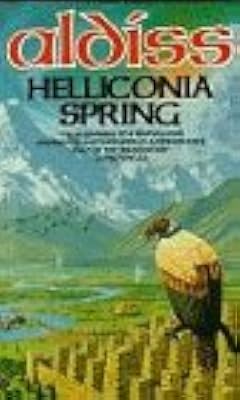
The Hugo and Nebula Award-winning author and Science Fiction Grand Master delivers a sweeping epic of a planet suffering deadly conditions of alternating extremes in this Nebula Award finalist Helliconia follows an eccentric orbit around a double-star system with a twenty-six-hundred-year cycle of very long seasons. As spring slowly breaks the brutally long winter, humans emerge from hiding and a long sequence of civilization and growth begins to repeat again, unbeknownst to the participants show more but watched by an orbiting satellite station, Avernus, created by Earth some centuries ago. Humans free themselves from slavery to the aboriginal Phagors, and religion and science flower and expand. Brian W. Aldiss has, for more than fifty years, continued to challenge readers' minds with literate, thought-provoking, and inventive fiction. Helliconia Spring's prescience with regard to climate change is nothing short of extraordinary. show lessTags
Recommendations





















Member Reviews
In 1982, when this book was published, I was 14, a SFF fan and reading novels written for adults. I read it then, and I remember only that I wasn't enthralled. I remember literally nothing else about the book. Fast forward to 2024. I picked up a copy at a library book sale, along with the others in the series. I knew this series is considered to be a masterpiece, and I thought that maybe it was just over my head when I read it the first time. So I decided to give it another go.
I'm not quite halfway into the book, and I'm wondering if I'm going to finish. I'm kind of amazed that 14-year-old me actually DID finish. It's an ambitious premise that Aldiss has attempted, so I give him points for that. But as a story, it's not actually very show more interesting. The characters feel cardboard to me. And most of them, so far, are men. Women are definitely secondary to the main narrative, and largely interchangeable. Given the time it was written, that's perhaps not surprising, but I'm just tired of reading books like this.
Also, I'm experiencing some cognitive dissonance. The planet is essentially just coming out of an ice age, the people dress in skins and use spears, and follow a hunter gatherer existence. And yet...they have metal implements. They have cloth, even thought they wear animal skins, and they have flour to make bread, meaning agriculture and some kind of mechanical means to turn grain into flour. But none of these more technological aspects are satisfactorily explained, or even alluded to beyond the product mentioned. It seems beyond the capacity of a stone age civilization. Even leaving that aside (assuming some technology left over from previous civilizations), how could you have agriculture when the ground is frozen and always covered with snow and ice? Or, how can you have a permanent town where everyone is a hunter? Hundreds of people constantly hunting in the same area is going to quickly deplete the game. Yet, all the adult males are described as hunters (if they aren't priests), and the women don't seem to do anything but bake bread with flour from *somewhere* since nobody seems to farm. And the humans don't use draft animals. And there don't seem to be any artisans. I mean, who makes all the things that aren't spears? The alien phagor that share the planet do ride the animals that they herd, and they also have metal and cloth, but are nomadic herders with no towns. Again, who weaves the cloth? Who shapes the metal? Who mines the ore? The whole milieu just seems implausible to me.
In other reviews, Aldiss is lauded for his worldbuilding and the scientific basis for Helliconia's ecology. But he hasn't put the same care into creating a believable civilization, at least so far. I mean, maybe there's an explanation for all this, but right now it just seems like Aldiss is ignoring what to me are the keystones of any civilization or society.
Haven't decided yet if I'll go any further, or read the other books.
UPDATE: Read a little bit further, investigated reviews of this book as well as others in the series, and decided to not finish. It looks like, if I don't like it that much now, my opinion isn't going to improve. Those that love it, love it. Those that don't never do. show less
I'm not quite halfway into the book, and I'm wondering if I'm going to finish. I'm kind of amazed that 14-year-old me actually DID finish. It's an ambitious premise that Aldiss has attempted, so I give him points for that. But as a story, it's not actually very show more interesting. The characters feel cardboard to me. And most of them, so far, are men. Women are definitely secondary to the main narrative, and largely interchangeable. Given the time it was written, that's perhaps not surprising, but I'm just tired of reading books like this.
Also, I'm experiencing some cognitive dissonance. The planet is essentially just coming out of an ice age, the people dress in skins and use spears, and follow a hunter gatherer existence. And yet...they have metal implements. They have cloth, even thought they wear animal skins, and they have flour to make bread, meaning agriculture and some kind of mechanical means to turn grain into flour. But none of these more technological aspects are satisfactorily explained, or even alluded to beyond the product mentioned. It seems beyond the capacity of a stone age civilization. Even leaving that aside (assuming some technology left over from previous civilizations), how could you have agriculture when the ground is frozen and always covered with snow and ice? Or, how can you have a permanent town where everyone is a hunter? Hundreds of people constantly hunting in the same area is going to quickly deplete the game. Yet, all the adult males are described as hunters (if they aren't priests), and the women don't seem to do anything but bake bread with flour from *somewhere* since nobody seems to farm. And the humans don't use draft animals. And there don't seem to be any artisans. I mean, who makes all the things that aren't spears? The alien phagor that share the planet do ride the animals that they herd, and they also have metal and cloth, but are nomadic herders with no towns. Again, who weaves the cloth? Who shapes the metal? Who mines the ore? The whole milieu just seems implausible to me.
In other reviews, Aldiss is lauded for his worldbuilding and the scientific basis for Helliconia's ecology. But he hasn't put the same care into creating a believable civilization, at least so far. I mean, maybe there's an explanation for all this, but right now it just seems like Aldiss is ignoring what to me are the keystones of any civilization or society.
Haven't decided yet if I'll go any further, or read the other books.
UPDATE: Read a little bit further, investigated reviews of this book as well as others in the series, and decided to not finish. It looks like, if I don't like it that much now, my opinion isn't going to improve. Those that love it, love it. Those that don't never do. show less
In the 40+ years that I've been reading science fiction, Brian Aldiss has been amongst my favourite authors. This, the first of the Helliconia trilogy, is one of those renowned classics that I've been meaning to read for a very long time. Unfortunately, it proved to be a great disappointment. But it's clear that opinions differ on this and the other novels in the trilogy (my own copy is an omnibus volume in a 'science fiction classics' series) so I'll describe the book and my impressions of it for you to make your own mind up.
The series is intentionally grand in scope, set on a world with a complex orbit around binary stars which means that it has two types of year and seasons - one which lasts a little longer than a terrestrial year, show more and one which lasts many thousands of years and has far more dramatic seasonal extremes. The first volume encompasses four or five generations of the human inhabitants of this world (there are other races of varying levels of advancement and longevity.) Aldiss has clearly given a great deal of thought to the setting and done a fair amount of research to ensure that the physics and biology are consistent (the introduction to this edition makes much of this clear.) But the end result demonstrates that scientific plausibility alone is no guarantee of a good story.
One aspect I struggled with was the abundance of almost unpronounceable names, which seemed to occur in unnecessary profusion. This may be to some people's tastes - it's a common characteristic of sword-and-sorcery novels and they seem to sell well enough. If you enjoy reading about characters such as Hrr-Brahl Yprt and Zzhrrk who visit places such as Rukk-Ggrl and Hhryggt then this book may be for you. After a while, I just find it tiresome.
But the real problem for me was that I wasn't engaged with the story. Although many of the characters suffer tragedy and joy, it's difficult to care for any of them and difficult to see a point to the story's telling. As a study - the creation of an imaginary world and the depiction of what life might exist there - the book works, in a slightly dull fashion. But it doesn't work on any other level, as a moral tale, as a plot-driven tale or as an atmospheric piece. (The atmosphere, though, is unremittingly bleak.)
It also felt as if there was just too much book; it would have benefited from some vigorous editing. Whether the rest of the trilogy redeems any of these shortcomings I have yet to find out. At the moment, I'm not to keen to begin that journey, which is not at all what I expected when I acquired this book. show less
The series is intentionally grand in scope, set on a world with a complex orbit around binary stars which means that it has two types of year and seasons - one which lasts a little longer than a terrestrial year, show more and one which lasts many thousands of years and has far more dramatic seasonal extremes. The first volume encompasses four or five generations of the human inhabitants of this world (there are other races of varying levels of advancement and longevity.) Aldiss has clearly given a great deal of thought to the setting and done a fair amount of research to ensure that the physics and biology are consistent (the introduction to this edition makes much of this clear.) But the end result demonstrates that scientific plausibility alone is no guarantee of a good story.
One aspect I struggled with was the abundance of almost unpronounceable names, which seemed to occur in unnecessary profusion. This may be to some people's tastes - it's a common characteristic of sword-and-sorcery novels and they seem to sell well enough. If you enjoy reading about characters such as Hrr-Brahl Yprt and Zzhrrk who visit places such as Rukk-Ggrl and Hhryggt then this book may be for you. After a while, I just find it tiresome.
But the real problem for me was that I wasn't engaged with the story. Although many of the characters suffer tragedy and joy, it's difficult to care for any of them and difficult to see a point to the story's telling. As a study - the creation of an imaginary world and the depiction of what life might exist there - the book works, in a slightly dull fashion. But it doesn't work on any other level, as a moral tale, as a plot-driven tale or as an atmospheric piece. (The atmosphere, though, is unremittingly bleak.)
It also felt as if there was just too much book; it would have benefited from some vigorous editing. Whether the rest of the trilogy redeems any of these shortcomings I have yet to find out. At the moment, I'm not to keen to begin that journey, which is not at all what I expected when I acquired this book. show less
Brian Aldiss's Helliconia Spring took me a little while to get into, not that I minded; Helliconia is a complicated planet with two suns and a 'Great Year' cycle that lasts well over a thousand years, causing a centuries long warm cycle followed by a centuries long cold cycle. The eco-system that has developed is (ha-ha) bi-polar, so during the warm spells the 'humans' fare well, and during the cold spells the principal (there are others) intelligent species, the multi-jointed, yellow-blooded, intelligent 'phagors,' referred to as 'the ancipitals,' dominate. The important point is that neither species can exist without the other, they are interdependent, that is how they have evolved. However and most cruelly, during the periods of show more change disequilibrium prevails and thousands of both humans and phagors die, the humans mostly from a tick-borne disease that the phagors host and the humans provide the breeding grounds (iew) for and also from out and out fighting, as they perceive each other as mortal enemies. During the 'winter' periods the humans generally slide far backwards culturally, caught up in the struggle of simply staying alive, everything, or almost everything gained and learned in the warm periods is lost, including the whys and wherefors of the astronomical reasons for the shifts. What matters is Helliconia is a deeply thought out world, the story is well told as a story, and the characters whose lives we follow while not hugely rounded are sufficiently unpredictible and interesting to be enjoyable.
My only complaint, if it is even a complaint, is that the 'Earth Station Avernus' posted above the planet which is a thousand light-years away from Earth, sending 'Eductainment' footage about the planet back to earth (viewed, yes, a thousand years later) feels like an afterthought or maybe a remnant from an earlier version of the story, a device that, so far, feels clunky and irrelevant. Maybe however in one of the two subsequent volumes the Avernus will play a more active role..... wait and see, I guess. **** show less
My only complaint, if it is even a complaint, is that the 'Earth Station Avernus' posted above the planet which is a thousand light-years away from Earth, sending 'Eductainment' footage about the planet back to earth (viewed, yes, a thousand years later) feels like an afterthought or maybe a remnant from an earlier version of the story, a device that, so far, feels clunky and irrelevant. Maybe however in one of the two subsequent volumes the Avernus will play a more active role..... wait and see, I guess. **** show less
As a scientific and sociological experiment about what life on a planet with a binary star system might be like, this book largely succeeds. As a gripping tale with relatable characters and fascinating plot points, it fails.
Helliconia's twin suns, Batalix and Freyr are locked in an inter-relational orbit. The planet's revolution around the nearer and weaker Batalix is similar in length to an Earth year. Freyr is much stronger, but the elliptic path Batalix and Helliconia follow around this sun is much longer and creates a great year in which many centuries are spent experiencing an arctic winter before melting into a near tropical summer. This book begins as spring is beginning to awaken the long-dormant planet. The sentient species show more have thrived or hibernated according to their respective adaptability to the season. In winter, the shaggy and brutal Phagors reign, with the more human "sons of Freyr" having regressed to a subsistence-level society. As the planet heats, the people rediscover arts such as carpentry, fashion, astronomy and agriculture.
The first section of the book focuses on Yuli and initial upbringing as part of a nomadic hunting tribe followed by his discovery and exploration of an underground society that is more civilized but less connected to the surface. Eventually he leaves this place to return to the surface and is a founding member of a civilization above. Yuli learns and grows in the cruelty of the underground civilization, discovering his unwillingness to join a priesthood of bullies and nurturing his longing for the openness of the sky.
In the second, longer section, the descendants of Yuli deal with issues related to the coming spring as well as the leadership of the settlement. The women want to embrace learning and distance themselves from the slavery of their winter lifestyle. The men are excited to tame and slaughter the local fauna as well as begin conquering other nearby settlements.
There are also many digressions into the scientific study of the planet being done by a space station manned by Earthlings orbiting Helliconia. This seems to have been the only device the author could think of to introduce information about things the planet's natives would have no knowledge of. It can be rather distracting at times, but is also valuable information. And, it's not like the story was in any way so interesting that a scientific diversion is much of an annoyance.
The whole books seems rather plodding and drawn-out, with day-to-day minutiae given as much attention as events which would move the story along. There is no major conflict or resolution or story arc. These people lived, they got a bit warmer, and they died. There is a bit of romance and a bit of infighting, which should serve to characterize or humanize the inhabitants some, but it's difficult to care about any of these characters.
Attention is given to the different religions of the humans and the Phagors and how they have developed in relation to the climate, as well as a concept regarding land octaves and air octaves, which I never really understood. Also, the humans are able to visit deceased ancestors by going into a sort of trance in which their soul sinks underground and can communicate with the dead, who are extremely unpleasant and not very forthcoming with useful information. I wasn't sure of the point of this, either.
There are two more books in this series, but I'm not interested in diving into them any time soon. show less
Helliconia's twin suns, Batalix and Freyr are locked in an inter-relational orbit. The planet's revolution around the nearer and weaker Batalix is similar in length to an Earth year. Freyr is much stronger, but the elliptic path Batalix and Helliconia follow around this sun is much longer and creates a great year in which many centuries are spent experiencing an arctic winter before melting into a near tropical summer. This book begins as spring is beginning to awaken the long-dormant planet. The sentient species show more have thrived or hibernated according to their respective adaptability to the season. In winter, the shaggy and brutal Phagors reign, with the more human "sons of Freyr" having regressed to a subsistence-level society. As the planet heats, the people rediscover arts such as carpentry, fashion, astronomy and agriculture.
The first section of the book focuses on Yuli and initial upbringing as part of a nomadic hunting tribe followed by his discovery and exploration of an underground society that is more civilized but less connected to the surface. Eventually he leaves this place to return to the surface and is a founding member of a civilization above. Yuli learns and grows in the cruelty of the underground civilization, discovering his unwillingness to join a priesthood of bullies and nurturing his longing for the openness of the sky.
In the second, longer section, the descendants of Yuli deal with issues related to the coming spring as well as the leadership of the settlement. The women want to embrace learning and distance themselves from the slavery of their winter lifestyle. The men are excited to tame and slaughter the local fauna as well as begin conquering other nearby settlements.
There are also many digressions into the scientific study of the planet being done by a space station manned by Earthlings orbiting Helliconia. This seems to have been the only device the author could think of to introduce information about things the planet's natives would have no knowledge of. It can be rather distracting at times, but is also valuable information. And, it's not like the story was in any way so interesting that a scientific diversion is much of an annoyance.
The whole books seems rather plodding and drawn-out, with day-to-day minutiae given as much attention as events which would move the story along. There is no major conflict or resolution or story arc. These people lived, they got a bit warmer, and they died. There is a bit of romance and a bit of infighting, which should serve to characterize or humanize the inhabitants some, but it's difficult to care about any of these characters.
Attention is given to the different religions of the humans and the Phagors and how they have developed in relation to the climate, as well as a concept regarding land octaves and air octaves, which I never really understood. Also, the humans are able to visit deceased ancestors by going into a sort of trance in which their soul sinks underground and can communicate with the dead, who are extremely unpleasant and not very forthcoming with useful information. I wasn't sure of the point of this, either.
There are two more books in this series, but I'm not interested in diving into them any time soon. show less
The birth of a civilization on a planet with millennia-long seasons. Its human-like inhabitants emerge from a vast, ancient winter to rediscover society, love, and conflict, while a human Earth observation station watches from orbit, grappling with the dilemma of interference.
http://nwhyte.livejournal.com/2583651.html
Reading Helliconia Spring when it first came out in 1982, when I was 15, was tremendously exciting. I last reread it, along with the other two, on holiday in Croatia in 1996, I think. I'm glad to say that it pretty much stands the test of time. It is in two parts, the first being the short tale of Yuli, who escapes the (vividly drawn) theocratic underground city of Pannoval (I was sorry that we saw no more of it) to bring new expertise to the town which becomes known as Oldorando, and the second, many generations later, being the story of how the people of Oldorando adapt to the coming of Spring. We readers are told what is going on in terms of climate change, but the characters are in the show more situation of their world gradually (and sometimes suddenly) changing out of all recognition. show less
Reading Helliconia Spring when it first came out in 1982, when I was 15, was tremendously exciting. I last reread it, along with the other two, on holiday in Croatia in 1996, I think. I'm glad to say that it pretty much stands the test of time. It is in two parts, the first being the short tale of Yuli, who escapes the (vividly drawn) theocratic underground city of Pannoval (I was sorry that we saw no more of it) to bring new expertise to the town which becomes known as Oldorando, and the second, many generations later, being the story of how the people of Oldorando adapt to the coming of Spring. We readers are told what is going on in terms of climate change, but the characters are in the show more situation of their world gradually (and sometimes suddenly) changing out of all recognition. show less
A very unique world, and very well done. Helliconia goes from extremes of summer and winter during its orbit, causing massive environmental and societal changes. Very creative.
Members
- Recently Added By
Author Information

Brian W. Aldiss was born in Dereham, United Kingdom on August 18, 1925. In 1943, he joined the Royal Signals regiment, and saw action in Burma. After World War II, he worked as a bookseller at Oxford University. His first book, The Brightfount Diaries, was published in 1955. His first science fiction novel, Non-Stop (Starship in the United show more States), was published in 1958. He wrote more than 80 books including Hothouse, Greybeard, The Helliconia Trilogy, The Squire Quartet, Frankenstein Unbound, The Malacia Tapestry, Walcot, and Mortal Morning. His short story Super-Toys Last All Summer Long was the basis for the film A.I. Artificial Intelligence. He has received numerous awards for his work including two Hugo Awards, the Nebula Award, the John W. Campbell Memorial Award, and an OBE for services to literature. He was also an anthologist and an artist. He was the editor of 40 anthologies including Introducing SF, The Penguin Science Fiction Omnibus, Space Opera, Space Odysseys, Galactic Empires, Evil Earths, and Perilous Planets. He was an abstract artist and his first solo exhibition, The Other Hemisphere, was held in Oxford in August-September 2010. He died on August 19, 2017 at the age of 92. (Bowker Author Biography) show less
Some Editions
Awards and Honors
Awards
Notable Lists
Series

Belongs to Publisher Series
Work Relationships
Is contained in
Common Knowledge
- Canonical title*
- Heliconia Primavera
- Original title
- Helliconia Spring
- Alternate titles*
- Helliconian kevät
- Original publication date
- 1982
- People/Characters
- Yuli; Laintal Ay; Aoz Roon; Vry; Shay Tal; Oyre (show all 7); Dathka
- Dedication
- My dear Clive, In my previous novel LIFE IN THE WEST, I sought to depict something of the malaise sweeping the world, painting as wide a canvas as I felt I could confidently tackle.
My partial success left me ambitio... (show all)us and dissatisfied. I resolved to start again. All art is a metaphor, but some art forms are more metaphorical than others; perhaps, I thought, I would do better with a more oblique approach. So I developed Helliconia: a place much like our world, with only one factor changed - the length of the year. It was to be a stage of the kind of drama in which we are embroiled in our century.
In order to achieve some verisimilitude, I consulted experts, who convinced me that my little Helliconia was mere fantasy; I needed something more solid.
Invention took over from allegory. A good thing, too. With the prompting of scientific fact, whole related series of new images crowded into my conscious mind. I have deployed them as best I could. When I was farthest away from my original conception - at the apastron of my earliest intentions - I discovered that I was expressing dualities that were as relevant to our century as to Helliconia's.
It could hardly be otherwise. For the people of Helliconia, and the non-people, the beasts, and other personages, interest us only if they mirror our concerns. No one wants a passport to a nation of talking slugs.
So I offer you this volume for your enjoyment, hoping you will find more to agree with than you did in LIFE IN THE WEST - and maybe even more to amuse you. Your affectionate Father Begbroke Oxford. - First words
- This is how Yuli, son of Alehaw, came to a place called Oldorando, where his descendants flourished in the better days that were to come.
- Last words
- (Click to show. Warning: May contain spoilers.)The eclipse was total now. END OF VOLUME ONE
- Original language
- English
*Some information comes from Common Knowledge in other languages. Click "Edit" for more information.
Classifications
Statistics
- Members
- 1,717
- Popularity
- 12,903
- Reviews
- 25
- Rating
- (3.43)
- Languages
- 12 — Bulgarian, Czech, Dutch, English, Finnish, French, German, Hungarian, Italian, Polish, Romanian, Spanish
- Media
- Paper, Audiobook, Ebook
- ISBNs
- 40
- ASINs
- 29