
Waldo & Magic, Inc.
by Robert A. Heinlein
On This Page
Description
"Two novels in one. Waldo: North American Air is in trouble. Their aircraft are crashing at an alarming rate and no one can figure out why. Desperate, they turn to Waldo, a crippled genius living in a zero g home in orbit around Earth. He has no reason to help until he learns the solution could hold the key to his own. Magic Inc: Under the guise of an agency for magicians, Magic Inc has systematically squeezed out all the small independent magicians. Until one business stands firm. With the show more help of an Oxford educated African shaman and a little old lady adept at black magic, he is willing to take on the demons of Hell to solve the problem"-- show lessTags
Recommendations


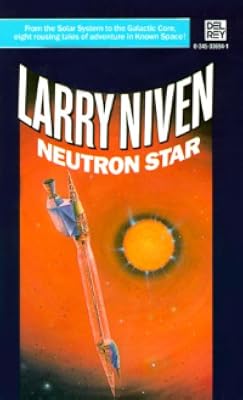


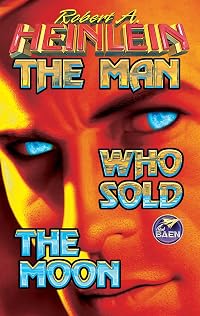
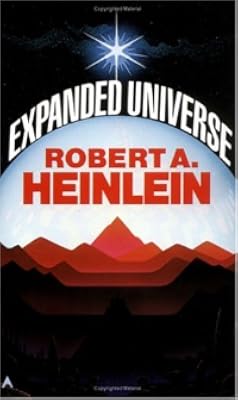


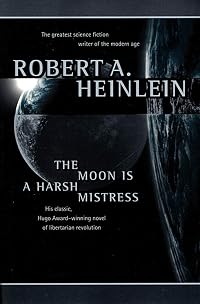


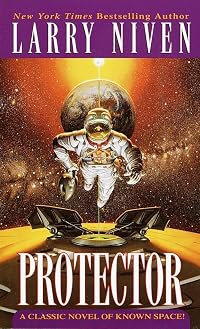





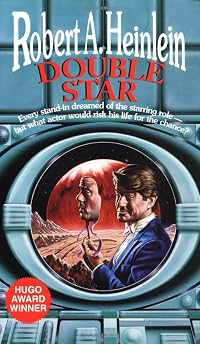




Member Recommendations
infiniteletters Specifically Magic, Inc. Waldo is rather good, but it doesn't match.
Member Reviews
Magic is just another branch of science. Chances are if you went back a couple of hundred years and, having somehow established a connection to the present day on your mobile, were observed talking to somebody, you’d have a hard time explaining to the villagers that it wasn’t the Devil on the other end of the ‘phone. Show them Skype and they would probably top you and then themselves for having seen it in the first place.
Fun though it is to mock the ancestors for their potential fear of the digital watch, the same gap in understanding exists today. The formulas used by physicists to make the Large Hydon Collider might as well be a spell to turn a princess into a frog. In fact, I’m not sure I could tell you how a hairdryer works show more exactly. Science, or magic? As for chemistry, do any of us look at the long list of chemicals on the side of the boxes of the pills we take? We probably pay more attention to the ingredients of a yoghurt than something we hope is going to get rid of that nasty rash we brought back along with the duty free from our last holiday.
‘Waldo’ and ‘Magic Inc.’ are two great novellas with the same underlying principle; that magic is real. What’s interesting is the way this reality is presented so differently in each story.
In ‘Waldo’, the world faces trouble. The engineering principles that have powered the vehicles and cities for decades are starting to fail. Fail individually without any attributable fault. The power company sends for the world’s smartest man, who lives in a space station orbiting the earth alone apart from a dog. The eponymous Waldo does not, it is fair to say, have fantastic social skills.
The story is as much about Waldo reconnecting with humanity as it is with solving the engineering problem which, in the long term, is about humanity learning to reconnect with what makes them human. Because Waldo may be a genius, but he is a nasty piece of work. His genius has made him remote in a mental sense from all others, whom he considers himself superior to, and remote in a physical sense, a medical condition rendering him weak so that a low gravity environment suits him best, hence setting up home on a personal space station. It’s fun to see a grumpy genius at work and even more fun to see them stumped for an answer, unless they learn to think the unthinkable.
In ‘Magic Inc.’ magic is an everyday part of everyday life. And Heinlein makes the extraordinary extraordinarily ordinary. The novella concerns the use of magic in the construction industry and other aspects of life. Magic is woven into the very fabric of society and Heinlein accomplishes something quite special here, making something that is so quite obviously fantastic so very ordinary. If we lived in a world where electronic communication had never been invented, he would have written about businessmen using telephones and e mail. Here, they use spells and magicians to do everything from build houses to make dresses.
But once he establishes just how ordinary and everyday the use of magic is, he then reveals that it’s not the same as using a hammer or sewing machine. It’s volatile stuff and there are dark forces that seek to control it. Humans might use magic, but there are creatures of magic, and they have their own thoughts on the best use to put it to.
What’s interesting is the way that magic is only ever described in the way that affects small town commerce, and the way that the lack of access to it might affect business. Magic, it would appear, is like electricity, but with more chanting.
Both stories are fascinating in their own way and, in this collection, compliment one another well. In ‘Waldo’ Heinlein makes the rational argument for magic as a wonder awaiting discovery by those who can go on to use it for practical applications. ‘Magic Inc.’ has not just jobbing witches, but building contractors who hire wizards the same way the hire carpenters and brickies, they even complain about the rates. show less
Fun though it is to mock the ancestors for their potential fear of the digital watch, the same gap in understanding exists today. The formulas used by physicists to make the Large Hydon Collider might as well be a spell to turn a princess into a frog. In fact, I’m not sure I could tell you how a hairdryer works show more exactly. Science, or magic? As for chemistry, do any of us look at the long list of chemicals on the side of the boxes of the pills we take? We probably pay more attention to the ingredients of a yoghurt than something we hope is going to get rid of that nasty rash we brought back along with the duty free from our last holiday.
‘Waldo’ and ‘Magic Inc.’ are two great novellas with the same underlying principle; that magic is real. What’s interesting is the way this reality is presented so differently in each story.
In ‘Waldo’, the world faces trouble. The engineering principles that have powered the vehicles and cities for decades are starting to fail. Fail individually without any attributable fault. The power company sends for the world’s smartest man, who lives in a space station orbiting the earth alone apart from a dog. The eponymous Waldo does not, it is fair to say, have fantastic social skills.
The story is as much about Waldo reconnecting with humanity as it is with solving the engineering problem which, in the long term, is about humanity learning to reconnect with what makes them human. Because Waldo may be a genius, but he is a nasty piece of work. His genius has made him remote in a mental sense from all others, whom he considers himself superior to, and remote in a physical sense, a medical condition rendering him weak so that a low gravity environment suits him best, hence setting up home on a personal space station. It’s fun to see a grumpy genius at work and even more fun to see them stumped for an answer, unless they learn to think the unthinkable.
In ‘Magic Inc.’ magic is an everyday part of everyday life. And Heinlein makes the extraordinary extraordinarily ordinary. The novella concerns the use of magic in the construction industry and other aspects of life. Magic is woven into the very fabric of society and Heinlein accomplishes something quite special here, making something that is so quite obviously fantastic so very ordinary. If we lived in a world where electronic communication had never been invented, he would have written about businessmen using telephones and e mail. Here, they use spells and magicians to do everything from build houses to make dresses.
But once he establishes just how ordinary and everyday the use of magic is, he then reveals that it’s not the same as using a hammer or sewing machine. It’s volatile stuff and there are dark forces that seek to control it. Humans might use magic, but there are creatures of magic, and they have their own thoughts on the best use to put it to.
What’s interesting is the way that magic is only ever described in the way that affects small town commerce, and the way that the lack of access to it might affect business. Magic, it would appear, is like electricity, but with more chanting.
Both stories are fascinating in their own way and, in this collection, compliment one another well. In ‘Waldo’ Heinlein makes the rational argument for magic as a wonder awaiting discovery by those who can go on to use it for practical applications. ‘Magic Inc.’ has not just jobbing witches, but building contractors who hire wizards the same way the hire carpenters and brickies, they even complain about the rates. show less
This review focuses on Magic Inc (Waldo has its own separate review) As a longtime Heinlein fan, I have enjoyed both his earlier and later works, but there is truly something to be said about his early works, and how progressive some of it seemed in its time and even today. Heinlein really had a creative mind and it shows in the world of Magic Inc. I do feel that the story got off the rails a bit as we find out who the real bad guy is, but this is a solid tale, it's almost hard to believe that this novella was published in 1940. I would have liked to see more of this urban-magical/modern fantasy world.
I originally read this book when I was a teenager and suspect I've not read it since. So, all these years later, I found that I vaguely remembered a bit about Waldo and absolutely nothing about Magic, Inc.
Waldo's an excellent story, even all these years after it was written, about a genius who happens to be handicapped. Magic's a well-crafted story--more about politics than magic--but I found it pretty dull.
Waldo's an excellent story, even all these years after it was written, about a genius who happens to be handicapped. Magic's a well-crafted story--more about politics than magic--but I found it pretty dull.
What I remembered from "Magic, Inc." was the restaurant menu that had regular entrees and magic entrees with no calories. But, rereading it in 2015, it seems that actually the story is about people who battle immoral businessmen who try to take over an industry---magic in this case---by means both criminal and political. There is a lot of talking about the points Mr. Heinlein is upset about. The plot is clearly not important and only at the end of the story does the action get exciting. The story makes a better essay or article, but I suppose it would have a smaller audience if presented that way.
What I remembered from "Waldo" was that complicated technical things, like airplanes, stop working if you don't believe in them anymore. show more (That's why I find flying so tiring---having to concentrate throughout the flight on keeping the plane in the air.) It's also a coming of age story about a resentful genius who lives isolated in space until he figures out how to save the world and himself. show less
What I remembered from "Waldo" was that complicated technical things, like airplanes, stop working if you don't believe in them anymore. show more (That's why I find flying so tiring---having to concentrate throughout the flight on keeping the plane in the air.) It's also a coming of age story about a resentful genius who lives isolated in space until he figures out how to save the world and himself. show less
Two short novels. In Waldo, a crippled, thoroughly unlikable genius, compensating for his infirmity with a weightless orbital home, seeks a solution to an impossible mechanical problem and finds an even more improbable solution. In the process Heinlein invents the "waldo" since used in laborato does as extensions of human hand functions. In Magic, a protection racket for magicians in a 1940s America where magic is real leads to a demon from hell. Both fun stories, an unusual foray into fantasy by the Dean of American Science Fiction. Recommended.
Waldo (1942) and Magic, Inc. (1940) are two (mostly) unrelated novellas that (mostly) wear their age well. The tenuous connection is that in both "magic is loose in the world" and there is talk of "laws" such as those of "sympathy," "contiguity" and "homeopathy" that rule magic, which is associated with another world, an alternate universe as it were, called the "Other World" in Waldo and the "Half-World" in Magic, Inc.. Waldo is more a hybrid of science-fiction and fantasy, starting out as straightforward science fiction and in the end, there is still a scientific underpinning and rationale to the magic. And I liked the way Heinlein developed Waldo and his psychology. And how cool can you get that the real-life waldoes, remote robot show more manipulators are named after this fictional character? (Who in the story invented them and the device comes to be named after him.)
Magic, Inc is quite different. This is more traditional fantasy, although there's something of the science-fiction spirit in how it's treated. Because this is magic taken for granted in what is recognizably our modern-day technological culture--but one where magic is routinely used in business. Only someone seems determined to corner the market. There are witches, witch doctors, and more than a smidgen of political satire to be had, but all-in-all it's quite light-hearted. I think it shows its age a bit more than Waldo. Let's just say the racial and sexual depictions aren't exactly PC. But it's still imaginative and enjoyable.
I wouldn't say name either story as one of Heinlein's best--but then Heinlein provides tough competition for the best-of sweepstakes. But both of these are fun, entertaining reads. show less
Magic, Inc is quite different. This is more traditional fantasy, although there's something of the science-fiction spirit in how it's treated. Because this is magic taken for granted in what is recognizably our modern-day technological culture--but one where magic is routinely used in business. Only someone seems determined to corner the market. There are witches, witch doctors, and more than a smidgen of political satire to be had, but all-in-all it's quite light-hearted. I think it shows its age a bit more than Waldo. Let's just say the racial and sexual depictions aren't exactly PC. But it's still imaginative and enjoyable.
I wouldn't say name either story as one of Heinlein's best--but then Heinlein provides tough competition for the best-of sweepstakes. But both of these are fun, entertaining reads. show less
In spite of its contribution to the world of robotics, neither Waldo, nor the commercialization of Magic in "Magic Inc." hold much interest for me...The stories were printed in the early 1950's and show their age.
Members
- Recently Added By
Lists

Bibliography for Among Others
159 works; 15 members

Favorite Childhood Books
1,651 works; 519 members

Books Read in 2016
4,666 works; 199 members
Author Information

457+ Works 174,512 Members
Robert Anson Heinlein was born on July 7, 1907 in Butler, Mo. The son of Rex Ivar and Bam Lyle Heinlein, Robert Heinlein had two older brothers, one younger brother, and three younger sisters. Moving to Kansas City, Mo., at a young age, Heinlein graduated from Central High School in 1924 and attended one year of college at Kansas City Community show more College. Following in his older brother's footsteps, Heinlein entered the Navel Academy in 1925. After contracting pulmonary tuberculosis, of which he was later cured, Heinlein retired from the Navy and married Leslyn MacDonald. Heinlein was said to have held jobs in real estate and photography, before he began working as a staff writer for Upton Sinclair's EPIC News in 1938. Still needing money desperately, Heinlein entered a writing contest sponsored by the science fiction magazine Thrilling Wonder Stories. Heinlein wrote and submitted the story "Life-Line," which went on to win the contest. This guaranteed Heinlein a future in writing. Using his real name and the pen names Caleb Saunders, Anson MacDonald, Lyle Monroe, John Riverside, and Simon York, Heinlein wrote numerous novels including For Us the Living, Methuselah's Children, and Starship Troopers, which was adapted into a big-budget film for Tri-Star Pictures in 1997. The Science Fiction Writers of America named Heinlein its first Grand Master in 1974, presented 1975. Officers and past presidents of the Association select a living writer for lifetime achievement. Also, the Science Fiction and Fantasy Hall of Fame inducted Heinlein in 1998. Heinlein died in 1988 from emphysema and other related health problems. Heinlein's remains were scattered from the stern of a Navy warship off the coast of California. (Bowker Author Biography) show less
Some Editions
Awards and Honors
Distinctions
Series
Belongs to Publisher Series
Work Relationships
Common Knowledge
- Canonical title*
- Die Zeit der Hexenmeister
- Original title
- Waldo & Magic Inc.
- Original publication date
- 1950
- Dedication
- To John and Doña
- First words
- The act was billed as ballet tap - which does not describe it. -- Waldo
'Whose spells are you using, buddy?' --Magic, Inc. - Last words
- (Click to show. Warning: May contain spoilers.)They were all such grand guys. -- Waldo
(Click to show. Warning: May contain spoilers.)I've built the new wing and bought those two trucks, just as Mrs Jennings predicted. Business is good. --Magic, Inc. - Original language
- English
- Canonical DDC/MDS
- 813.08762
- Disambiguation notice
- Variant Titles: Waldo & Magic, Inc. was also published as Waldo: Genius in Orbit and also as A Heinlein Triad and in German as Die Zeit der Hexenmeister (The Time of the Warlock).
*Some information comes from Common Knowledge in other languages. Click "Edit" for more information.
Classifications
- Genres
- Science Fiction, Fiction and Literature
- DDC/MDS
- 813.08762 — Literature & rhetoric American literature in English American fiction in English By type Genre fiction Adventure fiction Speculative fiction Science fiction
- LCC
- PS3515 .E288 — Language and Literature American literature American literature Individual authors 1900-1960
- BISAC
Statistics
- Members
- 1,854
- Popularity
- 11,693
- Reviews
- 20
- Rating
- (3.62)
- Languages
- Czech, English, German, Portuguese
- Media
- Paper, Audiobook, Ebook
- ISBNs
- 23
- UPCs
- 1
- ASINs
- 45