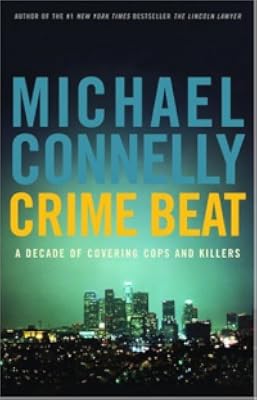
Crime Beat: A Decade of Covering Cops and Killers
by Michael Connelly
On This Page
Description
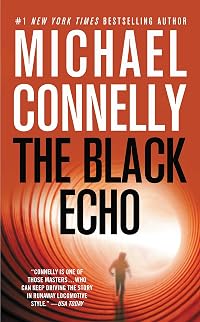
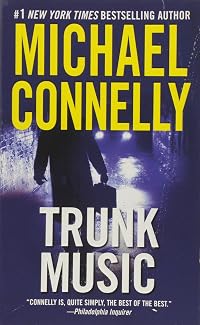
From Connelly's first career as a prizewinning crime reporter--the true stories that inspired and informed his novels. Covering the homicide beat in Florida and Los Angeles in vivid, hard-hitting articles, Connelly leads the reader past the yellow police tape as he follows the investigators, the victims, their families and friends--and, of course, the killers--to tell the real stories of murder and its aftermath. Connelly's firsthand observations would lend inspiration to his novels, from show more The Black Echo, which was drawn from a real-life bank heist, to Trunk Music, based on an unsolved case of a man found in the trunk of his Rolls Royce. And the vital details of his best-known characters, both heroes and villains, would be drawn from the cops and killers he reported on: from loner detective Harry Bosch to the manipulative serial killer the Poet.--From publisher description. show lessTags
Recommendations






Member Reviews
Moments. It all comes down to moments. I have been watching the detectives for more than thirty years. It all started because of a single moment. The best things that I have seen and taken into my imagination and then seeded into my fiction came to me in moments. Sometimes I am haunted by the what ifs. What if I hadn't looked out my car window that night when I was sixteen? What if I hadn't seen the detective take off his glasses? What if I had gone to L.A. for the first time a day later, or I hadn't answered the phone the time my editor called me to send me up the hill to check out a murder?
Connelly Non-Fiction 1984-1992
Review of the Little, Brown & Co. hardcover (2006)
Crime Beat collects a selection of writer Michael Connelly's crime reporting for the Fort Lauderdale Sun-Sentinel and the Los Angeles Times from the time before he began a successful crime fiction writing career with the release of The Black Echo - Harry Bosch #1 (1992).
The book is organized by themes such as Cops, Killers, and Cases, rather than chronologically. It conveys how Connelly was always building a human & character story into his straight crime writing, which is the feature that has continued into his fiction writing. I did not notice any particular inspiration for the later Harry Bosch novels, except for a case that was slightly similar to Trunk show more Music - Harry Bosch #5 (1997). show less
Review of the Little, Brown & Co. hardcover (2006)
Crime Beat collects a selection of writer Michael Connelly's crime reporting for the Fort Lauderdale Sun-Sentinel and the Los Angeles Times from the time before he began a successful crime fiction writing career with the release of The Black Echo - Harry Bosch #1 (1992).
The book is organized by themes such as Cops, Killers, and Cases, rather than chronologically. It conveys how Connelly was always building a human & character story into his straight crime writing, which is the feature that has continued into his fiction writing. I did not notice any particular inspiration for the later Harry Bosch novels, except for a case that was slightly similar to Trunk show more Music - Harry Bosch #5 (1997). show less
"Crime Beat: A Decade of Covering Cops and Killers" is one of those books that work much better in theory than it does in execution. It is based on what seems to be the rather clever idea of reprinting the newspaper articles Michael Connelly wrote as a young crime beat reporter in order to illustrate how he morphed into the respected crime fiction writer he is today. Not surprisingly, Connelly carried away more from his reporting days than just a few plot ideas he could use later in his novels. He also developed his writing skills and, most importantly, his observational skills. The capability to see below the surface of the individuals he reported on (cops and killers, alike) that he picked up as a young reporter is what enables show more Connelly to create some of the most memorable characters in modern crime fiction.
As Connelly puts it in the book's introduction:
"There could not have been the novelist without there first being the reporter on the crime beat. I could not write about my fictional detective Harry Bosch without having written about the real detectives first. I could not create my killers without having talked to a few of the real ones first."
"Crime Beat" features an interesting selection of newspaper articles written by Connelly during his crime beat days in Miami and Los Angeles. Based upon their emphasis, the articles are divided into three distinct sections: "The Cops," "The Killers," and "The Cases." Fans of Connelly's Harry Bosch novels will be quick to see a little of Harry in some of the detectives featured in the articles, as well as prototypes for the criminals with whom Harry does constant battle. They will perhaps even recognize some of the crimes described in the articles as being the springboards for some of the stories themselves.
All well and good - but the big problem with the book stems from the nature of the cases and articles featured. Many of these cases were of the spectacular variety, either because of the nature of the crimes themselves or because it took law enforcement officers so long to solve them. For those reasons, most of the featured crimes required Connelly to write an initial newspaper article and at least one or two follow-up articles, sometimes four or five of them. Since none of the articles appear to have been edited for inclusion in Crime Beat, that means that details of the crime, including details about the killers and victims, are repeated several times within the ten or fifteen pages dedicated to each event. A reader with even a minimum capacity for remembering details will quickly become bored, if not irritated, by all that repetition.
And that makes "Crime Beat" rather difficult to get through - I found myself skimming the pages of the articles to a degree I have seldom experienced before - and a bit disappointing because it does not work as well as it should have.
Rated at: 2.5 show less
As Connelly puts it in the book's introduction:
"There could not have been the novelist without there first being the reporter on the crime beat. I could not write about my fictional detective Harry Bosch without having written about the real detectives first. I could not create my killers without having talked to a few of the real ones first."
"Crime Beat" features an interesting selection of newspaper articles written by Connelly during his crime beat days in Miami and Los Angeles. Based upon their emphasis, the articles are divided into three distinct sections: "The Cops," "The Killers," and "The Cases." Fans of Connelly's Harry Bosch novels will be quick to see a little of Harry in some of the detectives featured in the articles, as well as prototypes for the criminals with whom Harry does constant battle. They will perhaps even recognize some of the crimes described in the articles as being the springboards for some of the stories themselves.
All well and good - but the big problem with the book stems from the nature of the cases and articles featured. Many of these cases were of the spectacular variety, either because of the nature of the crimes themselves or because it took law enforcement officers so long to solve them. For those reasons, most of the featured crimes required Connelly to write an initial newspaper article and at least one or two follow-up articles, sometimes four or five of them. Since none of the articles appear to have been edited for inclusion in Crime Beat, that means that details of the crime, including details about the killers and victims, are repeated several times within the ten or fifteen pages dedicated to each event. A reader with even a minimum capacity for remembering details will quickly become bored, if not irritated, by all that repetition.
And that makes "Crime Beat" rather difficult to get through - I found myself skimming the pages of the articles to a degree I have seldom experienced before - and a bit disappointing because it does not work as well as it should have.
Rated at: 2.5 show less
I wanted to like this book. I truly enjoy Connelly's Bosch and Lincoln Lawyer series but this was so poorly edited it was unreadable. It was a series of 5-10 minute vignettes extracted from his experience as a crime reporter in Florida and California. It just does not work as a listen--the stories run together and after awhile; don't make much sense and can't be separated....chop....chop....chop....chop. What am I reading now? So, I gave up and did not finish.
A reprinting of various stories Connelly had originally written for Florida and California news organizations. The book ends with a flattering summary of Connelly's style and how it is an in between space from police/detective reports (emphasizing law enforcement priorities) and crime novels (emphasizing all character points of view). Very well done but shows the dark side of human nature, criminal justice system, and victims without recourse to adequate physical protections. This book is part of my history of Los Angeles collection of books.
Unfortunately this book is not what it could have been.
It could have been a collection of Connelly's journalism with some reflections from the author tying the pieces to his creative process in writing crime fiction or his personal reflections on each piece from his current position as a talented writer of crime fiction. It wasn't. It was, instead, a recycled collection of newspaper clippings. The stories, once so current and maybe even flashy, are now pretty stale and shopworn - your basic crime beat writing with nothing really to set it apart from other crime beat writing aside from its author's eventual fame.
Don't bother.
It could have been a collection of Connelly's journalism with some reflections from the author tying the pieces to his creative process in writing crime fiction or his personal reflections on each piece from his current position as a talented writer of crime fiction. It wasn't. It was, instead, a recycled collection of newspaper clippings. The stories, once so current and maybe even flashy, are now pretty stale and shopworn - your basic crime beat writing with nothing really to set it apart from other crime beat writing aside from its author's eventual fame.
Don't bother.
Crime Beat is a collection of journalistic crime articles written by Micheal Connelly during the 80s and early 90s before he became a full time author. They are rather interesting to read since they rarely read as a newspaper articles but as short essays about a person, a victim or a crime.
In many cases there is a final note attached to the articles telling the reader what happened in the years after the article was written.
The main reasons to read these articles is to learn more about the author and his inspiration, and to get an insight into real crime in the Los Angeles area. And several of the real crimes or criminals have clearly been inspirational in later Harry Bosch books.
In many cases there is a final note attached to the articles telling the reader what happened in the years after the article was written.
The main reasons to read these articles is to learn more about the author and his inspiration, and to get an insight into real crime in the Los Angeles area. And several of the real crimes or criminals have clearly been inspirational in later Harry Bosch books.
Members
- Recently Added By
Author Information

Michael Connelly was born in Philadelphia, Pennsylvania on July 21, 1956. He graduated from the University of Florida in 1980 where he majored in journalism and minored in creative writing. After graduation, he worked at newspapers in Daytona Beach and Fort Lauderdale, Florida, specializing in the crime beat. In 1986, he interviewed survivors of a show more plane crash with two other reporters and the magazine story subsequently written on the crash was on the short list for the Pulitzer Prize for feature writing. This story led to a job as a crime reporter for the Los Angeles Times. After three years there, he began writing his first novel. His first novel, The Black Echo, was published in 1992 and won the Edgar Award for best first novel. He is the author of the Harry Bosch series, the Jack McEvoy series, and the Mickey Haller series. He has won numerous awards including the Anthony Award, Macavity Award, Shamus Award, Dilys Award, Nero Award, Barry Award, Ridley Award, Maltese Falcon Award (Japan), .38 Caliber Award (France), Grand Prix Award (France), Premio Bancarella Award (Italy), and the Pepe Carvalho Award (Spain). (Bowker Author Biography) show less
Some Editions
Awards and Honors
Distinctions
Series
Belongs to Publisher Series
Work Relationships
Common Knowledge
- Canonical title
- Crime Beat: A Decade of Covering Cops and Killers
- Original title
- Crime Beat, a Decade of Covering Cops and Killers
- Alternate titles*
- Chroniques du crime : Articles de presse (1984-1992) (1984-1992)
- Original publication date
- 2006
- People/Characters
- John Moretz
- Blurbers
- Konrath, J.A.
- Original language
- English
*Some information comes from Common Knowledge in other languages. Click "Edit" for more information.
Classifications
- Genres
- Nonfiction, General Nonfiction
- DDC/MDS
- 363.25 — Society, government, & culture Social problems and social services Public Safety - Police, Crime Investigation Police services Criminal investigation & forensics
- LCC
- HV6783 .C715 — Social sciences Social pathology. Social and public welfare. Criminology Social pathology. Social and public welfare. Criminology Crimes and criminal classes
- BISAC
Statistics
- Members
- 1,147
- Popularity
- 21,930
- Reviews
- 25
- Rating
- (2.97)
- Languages
- 7 — English, French, German, Italian, Polish, Spanish, Swedish
- Media
- Paper, Audiobook, Ebook
- ISBNs
- 45
- ASINs
- 12