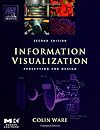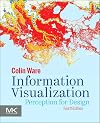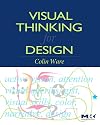
Information Visualization: Perception for Design
by Colin Ware
The Morgan Kaufmann Series in Interactive Technologies
On This Page
Description
Most designers know that yellow text presented against a blue background reads clearly and easily, but how many can explain why, and what really are the best ways to help others and ourselves clearly see key patterns in a bunch of data? When we use software, access a website, or view business or scientific graphics, our understanding is greatly enhanced or impeded by the way the information is presented. This book explores the art and science of why we see objects the way we do. Based on show more the science of perception and vision, the author presents the key principles at work for a wide r show lessTags
Recommendations










































Member Reviews
Colin Ware directs a Data Visualization Research Lab at the University of New Hampshire. His education is broad and interesting: He holds degrees both in computer science and the psychology of perception. He is a (the?) leading expert on integrating neuroscience and psychology with computer graphics.
Most computer graphics books teach how to make things that look cool. This book takes a different tact and discusses why things look cool in terms of the brain’s structure. Should you read this book, be ready for a heavy dose of neuroanatomy, cognition, and perception! It leaves its readers ready not just to make cool graphics but to address their graphics’ viewers “visual thinking.” In other words, it takes graphics to a show more psychological level.
This work is more accessible than Ware’s other textbook Information Visualization and could serve as a fitting tutorial towards a broader audience. Being a tome of basic research, this book addresses an audience as wide as it is varied. Graphic designers, scientists of visualization, psychologists of learning, and informaticians (like myself) can all glean insights into their craft from this work. Indeed, anyone who presents information that combines word and image can benefit – especially those using electronic images like PowerPoint slide decks. Also, it clarifies the pathways and processes by which humans gain knowledge from visual images. I find this stuff extraordinarily fascinating and am glad that Ware has spent time mastering these disciplines. show less
Most computer graphics books teach how to make things that look cool. This book takes a different tact and discusses why things look cool in terms of the brain’s structure. Should you read this book, be ready for a heavy dose of neuroanatomy, cognition, and perception! It leaves its readers ready not just to make cool graphics but to address their graphics’ viewers “visual thinking.” In other words, it takes graphics to a show more psychological level.
This work is more accessible than Ware’s other textbook Information Visualization and could serve as a fitting tutorial towards a broader audience. Being a tome of basic research, this book addresses an audience as wide as it is varied. Graphic designers, scientists of visualization, psychologists of learning, and informaticians (like myself) can all glean insights into their craft from this work. Indeed, anyone who presents information that combines word and image can benefit – especially those using electronic images like PowerPoint slide decks. Also, it clarifies the pathways and processes by which humans gain knowledge from visual images. I find this stuff extraordinarily fascinating and am glad that Ware has spent time mastering these disciplines. show less
Look at this book, and at Tufte and Berges' books to refresh your seeing.
Look at this book, and at Tufte and Berges' books to refresh your seeing.
Ratings
Members
- Recently Added By
Author Information
3+ Works 395 Members
Colin Ware is Director of the Data Visualization Research Lab at the University of New Hampshire, where he specializes in advanced data visualization and applications of visualization for oceanography.
Series

Common Knowledge
- Canonical title
- Information Visualization: Perception for Design
- Alternate titles
- Visual Thinking for Design
- Publisher's editor
- Card, Stuart; Grudin, Jonathan; Nielsen, Jakob
- Canonical LCC
- BF241 .W34
Classifications
Statistics
- Members
- 314
- Popularity
- 100,521
- Reviews
- 3
- Rating
- (3.86)
- Languages
- English, French
- Media
- Paper, Ebook
- ISBNs
- 12
- ASINs
- 3