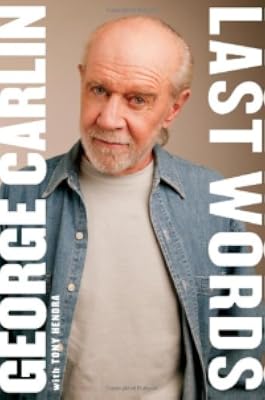
Last Words: A Memoir
by George Carlin
On This Page
Description
An autobiography that the late comedian nearly completed before he died chronicles his storied career, during which he pushed the boundaries of comedy and language and influenced several generations of performers.Tags
Recommendations



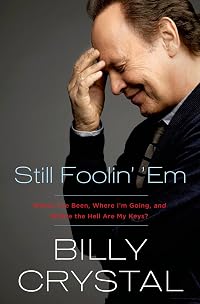
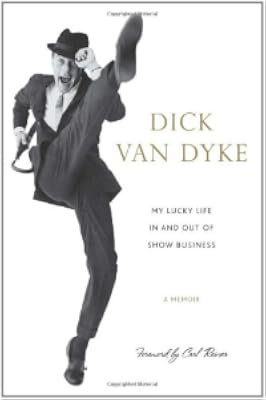
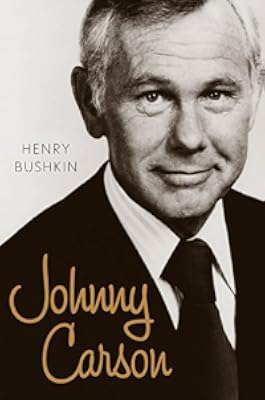
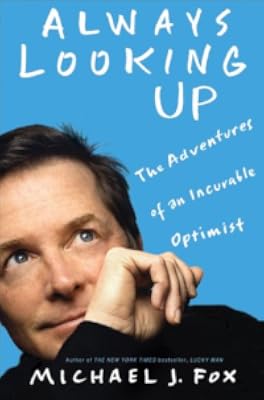





Member Reviews
This is a somewhat different autobiography; in fact, Carlin referred to it as a “sortabiography”. This difference comes about because the material is gathered from hours of taped conversations between Carlin and Tony Hendra. The intent of the tapes was, indeed, to put together the “sortabiography”, but you have to wonder how different this would have been had Carlin not died - how it would have differed if he had been more involved in the final product. Not that I think he would disapprove of the work Hendra has done; it tells a very full tale of the life of George Carlin.
The best successes for a comic’s autobiography (I’m sticking with that term) result from one of two things. The first is to just be funny. Paula show more Poundstone’s biography works on that level. It is not what she reveals about herself that makes her book a rousing success (though that is of interest); it is that she did it while be really funny. Steve Martin’s book is successful because he does an excellent job of providing insight into how his comedy developed. His book does not provide many laugh-out-loud moments, but the insight into the comic as artist is engrossing.
George Carlin’s book succeeds on this second level. Sure there is some funny stuff (sometimes, it feels like someone is trying too hard to be funny), but the book’s real success comes from the insight into how Carlin became funny and continued to reinvent himself toward being funny in new ways. Carlin tells of his constant battle between maintaining the status quo when he found success (read that as “selling out”) and reaching for something new and different. No, it didn’t always work, and it may have kept him from some other successes, but it allowed him to be something greater than anyone might have expected.
At first blush, it feels like the gloves are removed in some instances – that some of the topics could have been hit harder. But, looking closer, it is obvious Carlin does not shy away from the tough stuff. The drug use is there, the way it harmed his family is there, the IRS is there, and fellow comics are there (some being lauded, others having shots taken at them.) And these are all handled at the right level. They are discussed as much as they need to be and no more. In the final analysis, this book does an excellent job of portraying a man who was a genius at comedy, but was a man. And it shows how that man used that genius to take comedy places it had never been before. show less
The best successes for a comic’s autobiography (I’m sticking with that term) result from one of two things. The first is to just be funny. Paula show more Poundstone’s biography works on that level. It is not what she reveals about herself that makes her book a rousing success (though that is of interest); it is that she did it while be really funny. Steve Martin’s book is successful because he does an excellent job of providing insight into how his comedy developed. His book does not provide many laugh-out-loud moments, but the insight into the comic as artist is engrossing.
George Carlin’s book succeeds on this second level. Sure there is some funny stuff (sometimes, it feels like someone is trying too hard to be funny), but the book’s real success comes from the insight into how Carlin became funny and continued to reinvent himself toward being funny in new ways. Carlin tells of his constant battle between maintaining the status quo when he found success (read that as “selling out”) and reaching for something new and different. No, it didn’t always work, and it may have kept him from some other successes, but it allowed him to be something greater than anyone might have expected.
At first blush, it feels like the gloves are removed in some instances – that some of the topics could have been hit harder. But, looking closer, it is obvious Carlin does not shy away from the tough stuff. The drug use is there, the way it harmed his family is there, the IRS is there, and fellow comics are there (some being lauded, others having shots taken at them.) And these are all handled at the right level. They are discussed as much as they need to be and no more. In the final analysis, this book does an excellent job of portraying a man who was a genius at comedy, but was a man. And it shows how that man used that genius to take comedy places it had never been before. show less
A must read for every fan of Carlin, and those who want a look inside the mind of the word-obsessed, meaning-searching stand-up comedian. What we find inside is not always pretty, but it's as honest and truthful as any memoir can be.
While the book is, at times, uproariously funny, the focus here is not on comedy, but on how comedy is made. Humor, it turns out, is no laughing matter. Carlin worked meticulously on notes on topics, slowly and carefully shaping his 'bits' over years, carefully nursing them until they were ready for public view.
This book, too, was decades in the making, and the effort paid off. Those who hate Carlin will find reason here to find him as the self-centered, uncaring, drug addled freak that they expect. And show more those who love Carlin will find the working class intellectual who rose above two-dimensional shtick to rip the lid off polite society and show it for the hateful, greedy, violent mess that it is, and did so with great humor.
They're each part of who George Carlin was, and what made his work unique. I miss him, I miss his work, and I am grateful that this book invited in one last time. show less
While the book is, at times, uproariously funny, the focus here is not on comedy, but on how comedy is made. Humor, it turns out, is no laughing matter. Carlin worked meticulously on notes on topics, slowly and carefully shaping his 'bits' over years, carefully nursing them until they were ready for public view.
This book, too, was decades in the making, and the effort paid off. Those who hate Carlin will find reason here to find him as the self-centered, uncaring, drug addled freak that they expect. And show more those who love Carlin will find the working class intellectual who rose above two-dimensional shtick to rip the lid off polite society and show it for the hateful, greedy, violent mess that it is, and did so with great humor.
They're each part of who George Carlin was, and what made his work unique. I miss him, I miss his work, and I am grateful that this book invited in one last time. show less
I read biographies to gain insight into another person's life, to experience their pains and pleasures, their beauty and bruises. Carlin does not disappoint. You get the full experience of growing up Irish in NYC, stealing bikes, going to mass and making trouble. He spills on everything and everyone, himself not excluded. He's a prick to the bitter end and that's what made him great. I winced at his drug use, laughed at handling his daughter's boyfriend with a baseball bat, and cheered when he took on authority. He was no saint and doesn't pretend to be; his rant on the concept of God will live forever. His wife passed away with only a few details mentioned. I wanted to hear him expand on that, to see less of the angry, bitter Carlin show more (there's plenty of that) but I understand that might have been too painful. show less
George Carlin is the ultimate American standup comedian -- nobody else came up with so much good material over such a long span. No comedian challenged the audience like he did, no one influenced the culture the way he did. And here we have Carlin's life in his own words, as told to fellow funny man Tony Hendra (who wisely introduces George and gets out of the way). Anyone familiar with GC's records will know the outlines of his story -- childhood in NYC, rise as a clean-cut comic, maturity as an edgier performer, misadventures with drugs, ripe old age after coming clean. The candor of this book is expected, as is Carlin's lack of interest in letting himself off the hook for bad behavior. He managed the rare feat of growing more radical show more as he aged, more and more himself. Fans should read this -- newcomers should go watch a bunch of clips on YouTube, then read this. show less
George Carlin was the greatest, not only at using words, but at telling us what we miss when we look right at the elephant standing in plain sight. This 'sortabiography' was culled together from 15 years of tapes and notes of Tony Hendra's, so going into it, the writing is a little stilted. In a large part of the the book, there is fluidity and great history—George's parents, birth, growing up, education, street education!, going into comedy, family, drugs, people, TV, movies, touring, books, and words. George goes deep, speaking about how his brain works and how his career rose, fell, and then hit the summit. Nothing is left out, pouring over the details of a typical, dysfunctional family, his role as a husband and father, and the show more death of his first wife. His whole life is left splayed open in the book, with plenty of words.
Unfortunately, the book was not written all in one go. There are great details about his early life, up through the '70s, then the voice was lost. The storytelling becomes a little choppy, and the details drop off as the years go by, either by George's own volition, or loss of thought. And to better get through the book, George's speech style should really be adopted—this enhances the reading ten-fold! And visually, the arms and jaw are flailing!
The greatest comedian of our time left too soon, but he did leave some of his best thoughts and the meaning behind his words. show less
Unfortunately, the book was not written all in one go. There are great details about his early life, up through the '70s, then the voice was lost. The storytelling becomes a little choppy, and the details drop off as the years go by, either by George's own volition, or loss of thought. And to better get through the book, George's speech style should really be adopted—this enhances the reading ten-fold! And visually, the arms and jaw are flailing!
The greatest comedian of our time left too soon, but he did leave some of his best thoughts and the meaning behind his words. show less
Fun, quick read. Some insights to his genius are revealed. He left out lots of his life and revealed his narcissism. He is one of the few humans to have earned it though. A true American icon in my view. He gives a nod to AA in the end but shows he never really got some of its core concepts, more evidence of the narcissism. It was a good book to expand views on all sorts of topics.
I've followed George Carlin most of his career and it was always good for a laugh. After all the man had a way with words. I did not recall his suit and tie days from the Ed Sullivan era but more the hippy dippy years of his bad word dialogue. This of course covers his entire life. From hardscrabble New York, to wavy LA. I listened to the audio version and it was narrated by his brother Patrick. His voice is a deadringer for George and that added to the real life nature of it all. George now is gone but his humor lives on in its unique way.
Members
- Recently Added By
Author Information

75+ Works 7,593 Members
Comedian George Carlin was born on May 12, 1937 in Bronx, New York. He began his career at age 19 at the KJOE radio station in Louisiana. After making numerous appearances on TV, Carlin moved to radio and produced two albums, Take-Offs and Put-Ons, and FM & AM, which won a Grammy Award and was the first of four albums in a row to go gold. One of show more his best known routines was Seven Words You Can Never Say on Television. After performing this routine in Milwaukee in 1972, he was arrested for disturbing the peace and it also led to an indecency case after WBAI-FM radio aired it in 1973. Carlin also wrote three books and appeared on television and in movies. Besides his four Grammy Awards for best spoken comedy album, he was nominated for five Emmys. In 2002, Carlin was awarded the Freedom of Speech Award by the First Amendment Center in cooperation with the U.S. Comedy Arts Festival in Aspen, Colorado, and he was the named 11th recipient of The Kennedy Center Mark Twain Prize for American Humor in June of 2008. George Carlin passed away at age 71 on June 22, 2008 in Santa Monica, California. (Bowker Author Biography) show less
All Editions
Some Editions
Awards and Honors
Distinctions
Common Knowledge
- Original publication date
- 2009
- People/Characters
- George Carlin; Brenda Carlin; Kelly Carlin; Jack Burns; Lenny Bruce; Mike Douglas (show all 8); Merv Griffin; Lorne Michaels
- Important places
- New York, New York, USA; Los Angeles, California, USA
- Epigraph
- "Gee, he was here a moment ago..."
--(What George wanted on his tombstone--if he'd had one.) - First words
- Sliding headfirst down a vagina with no clothes on and landing in the freshly shaven crotch of a screaming woman did not seem to be part of God's plan for me.
- Quotations
- I have this real moron thing I do? It's called thinking.
- Last words
- (Click to show. Warning: May contain spoilers.)I'm calling it New York Boy.
- Original language
- English
Classifications
- Genres
- Biography & Memoir, Nonfiction, General Nonfiction
- DDC/MDS
- 792.76028092 — Arts & recreation Recreation, sports, and performing arts Stage presentations Variety shows and theatrical dancing; burlesque, cabaret, vaudeville, music hall, nightclubs Stand-up comedy modified standard subdivisions Techniques, procedures, apparatus, equipment, materials, miscellany Acting & performance standard subdivisions History, geographic treatment, biography Biography
- LCC
- PN2287 .C2685 .A3 — Language and Literature Literature (General) Literature (General) Drama Dramatic representation. The theater Special regions or countries
- BISAC
Statistics
- Members
- 1,102
- Popularity
- 23,135
- Reviews
- 22
- Rating
- (3.88)
- Languages
- English
- Media
- Paper, Audiobook, Ebook
- ISBNs
- 13
- ASINs
- 12