
Tony Hendra (1941–2021)
Author of Father Joe
About the Author
Image credit: Eye on Books
Works by Tony Hendra
Associated Works
Design Culture: An Anthology of Writing from the AIGA Journal of Graphic Design (1997) — Contributor — 45 copies
National Lampoon: The 199th Birthday Book—A Tribute to the United States of America, 1776–1975 (1975) — Editor — 19 copies
Tagged
Common Knowledge
- Birthdate
- 1941
- Date of death
- 2021-03-04
- Gender
- male
- Occupations
- comedian
performer
humorist
author
editor - Organizations
- National Lampoon
Spy - Relationships
- Hendra, Jessica (daughter)
- Nationality
- UK
- Birthplace
- Hertfordshire, England, UK
- Associated Place (for map)
- England, UK
Members
Reviews

A hilarious book of utter and devastatingly funny blasphemy. The real target is not Christianity itself but the American fundamentalist variety thereof, and the author nails it. Screamingly funny because it accurately portrays the numskullery masking as theology that's been let loose on the American Republic in the last 50 years. This was published in 1984, but reads like it could've come hot off the press in our current political/social environment. Read it and laugh, then weep.
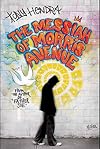
Suppose there really were a "Second Coming", an authentic new Messiah, in the midst of a self-righteous, politicized, and commercialized Christianity. It's not an entirely new idea, but Tony Hendra gives it real life. He doesn't stop with the obvious. No, the Messiah does not approve. But there's more to it.
Hendra's Messiah is "Jay" ("Jose" or even "Hay-soos"). But the contrast between Jay and establishment Christianity that left an impression on me was not that the Messiah isn't a show more well-dressed white guy. It's that his Christianity is simple. It's not an ideology, a way to claim superiority over other people, or a badge of righteousness. It's a way to live moment by moment and a way to treat other people, moment by moment. There's very little of "God said this" or "God said that" -- Jay wants us to treat each other well. He won't use television, movies, or other electronic media to spread his message -- it's spread person to person, face to face, live. "The Revelation," he says, "will not be televised."
Hendra's narrator, Johnny Greco, is an "unbeliever." But what he doesn't quite believe is that Jay is truly the Messiah; what I think he does believe is the simple message that Jay brings. That seems fine with Jay, but the problem is that not everyone reacts that way. They want proof that he is the Messiah. Heal people, perform miracles. Jay heals. But it never ends. That person may have been a plant. Heal somebody else. Prove yourself.
Nothing will be sufficient -- faith is an action, not the consequence of a demonstration of proof. The message is lost. It's not Jay's authenticity, it's just his message that really matters. Do we really need a Messiah to prove himself to us before we can accept that we should treat each other well?
Tony Hendra may not be a familiar name, but he's been around. He played the band manager in Spinal Tap, and he's an accomplished satirist. I haven't mentioned his farcical depictions of Christian leaders and politicians -- but this is a fun read. I sailed through it -- it's written with both humor and substance. It's a good book. show less
Hendra's Messiah is "Jay" ("Jose" or even "Hay-soos"). But the contrast between Jay and establishment Christianity that left an impression on me was not that the Messiah isn't a show more well-dressed white guy. It's that his Christianity is simple. It's not an ideology, a way to claim superiority over other people, or a badge of righteousness. It's a way to live moment by moment and a way to treat other people, moment by moment. There's very little of "God said this" or "God said that" -- Jay wants us to treat each other well. He won't use television, movies, or other electronic media to spread his message -- it's spread person to person, face to face, live. "The Revelation," he says, "will not be televised."
Hendra's narrator, Johnny Greco, is an "unbeliever." But what he doesn't quite believe is that Jay is truly the Messiah; what I think he does believe is the simple message that Jay brings. That seems fine with Jay, but the problem is that not everyone reacts that way. They want proof that he is the Messiah. Heal people, perform miracles. Jay heals. But it never ends. That person may have been a plant. Heal somebody else. Prove yourself.
Nothing will be sufficient -- faith is an action, not the consequence of a demonstration of proof. The message is lost. It's not Jay's authenticity, it's just his message that really matters. Do we really need a Messiah to prove himself to us before we can accept that we should treat each other well?
Tony Hendra may not be a familiar name, but he's been around. He played the band manager in Spinal Tap, and he's an accomplished satirist. I haven't mentioned his farcical depictions of Christian leaders and politicians -- but this is a fun read. I sailed through it -- it's written with both humor and substance. It's a good book. show less
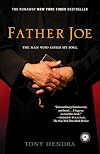
This memoir got an adulatory review in the NYT Book Review. At first I thought I might agree - the part about him being seduced at 14 by a married woman was engrossing. But by the end I agreed with one of the daughters he allegedly molested - he's an insufferable selfish self-absorbed narcissist. And I started to wonder if Father Joe even existed.
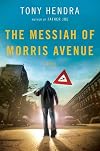
A few years ago a popular song asked, "What if God was one of us?" For many Christians, the question causes us to imagine how the Gospel stories would be different if Jesus were to be born in our lifetime, into a world of air travel, microwave cooking, and electronic communication so different from ancient Judea. Tony Hendra accepts this challenge in "The Messiah of Morris Avenue," retelling the story of Jesus if he were to be born in the United States sometime in the near future.
Told from show more the perspective of a jaded journalist -- in a future where newspapers have been replaced with online sources that pursue tabloid, TMZ-style stories at the local level -- the novel focuses on the investigation of nebulous miracles attributed to a young Hispanic man named Jay. In search of this man described as wearing a hooded sweatshirt, the cynical reporter Johnny Greco encounters the small group closest to the purported wonderworker, a collection of unemployed outcasts, most who had served time in prison — drug addicts, prostitutes, and petty thieves.
Although skeptical, Greco is intrigued by the mysterious teacher, eventually meeting with Jay. While not convinced that he is Jesus reborn, the reporter believes him to be sincere, something quite unusual in the context of cynical and cutthroat reporting that has come to define Jay's industry. As might be expected, the growing notoriety of the Hispanic wonderworker attracts the attention of the religious powers that be, including the dominant televangelist James Sabbath. The resulting conflict parallels the narrative arc of the Gospels, if with slightly more attention and empathy given to the religious elites.
Hendra generally stays close to the contours of the original stories about Jesus, using wonderful ingenuity to create a modern equivalent to the story filled with marvelous details, such as the federal lethal injection facility he imagines. As might be expected of an author who previously edited humor magazines, there are many laughs, including several witty barbs against the Religious Right bogeyman that serve as the novel's high priest. However Hendra, sensitively and rightly, is more interested in a search for true faith wherever it might be found; this marvelous book is one such fruitful search.
This review is also published at http://alongthispilgrimsjourney.blogspot.com/2012/07/book-review-messiah-of-morr... show less
Told from show more the perspective of a jaded journalist -- in a future where newspapers have been replaced with online sources that pursue tabloid, TMZ-style stories at the local level -- the novel focuses on the investigation of nebulous miracles attributed to a young Hispanic man named Jay. In search of this man described as wearing a hooded sweatshirt, the cynical reporter Johnny Greco encounters the small group closest to the purported wonderworker, a collection of unemployed outcasts, most who had served time in prison — drug addicts, prostitutes, and petty thieves.
Although skeptical, Greco is intrigued by the mysterious teacher, eventually meeting with Jay. While not convinced that he is Jesus reborn, the reporter believes him to be sincere, something quite unusual in the context of cynical and cutthroat reporting that has come to define Jay's industry. As might be expected, the growing notoriety of the Hispanic wonderworker attracts the attention of the religious powers that be, including the dominant televangelist James Sabbath. The resulting conflict parallels the narrative arc of the Gospels, if with slightly more attention and empathy given to the religious elites.
Hendra generally stays close to the contours of the original stories about Jesus, using wonderful ingenuity to create a modern equivalent to the story filled with marvelous details, such as the federal lethal injection facility he imagines. As might be expected of an author who previously edited humor magazines, there are many laughs, including several witty barbs against the Religious Right bogeyman that serve as the novel's high priest. However Hendra, sensitively and rightly, is more interested in a search for true faith wherever it might be found; this marvelous book is one such fruitful search.
This review is also published at http://alongthispilgrimsjourney.blogspot.com/2012/07/book-review-messiah-of-morr... show less
Awards

You May Also Like


Associated Authors
Statistics
- Works
- 16
- Also by
- 8
- Members
- 1,460
- Popularity
- #17,596
- Rating
- 3.8
- Reviews
- 34
- ISBNs
- 56
- Languages
- 6
- Favorited
- 1