
Blow-up and Other Stories
by Julio Cortázar
On This Page
Description
In a collection of stories that explore life's mystery, a tiger stalks a vacation home and a man discovers that in the mystery he is reading, he is the victim.Tags
Recommendations
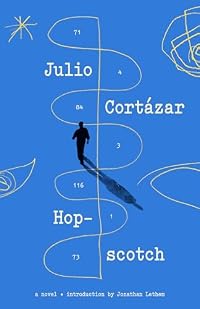
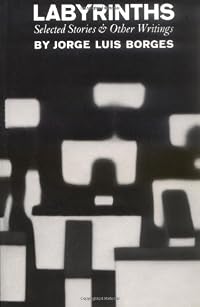

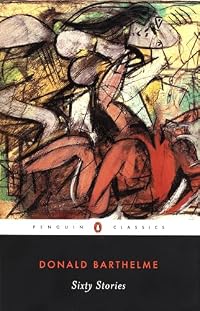
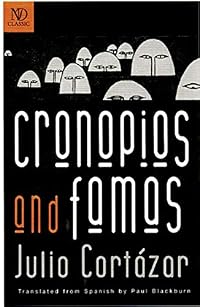

















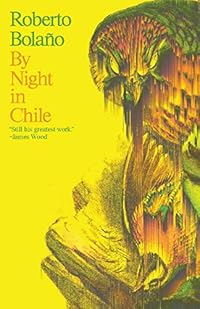
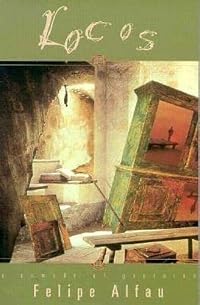

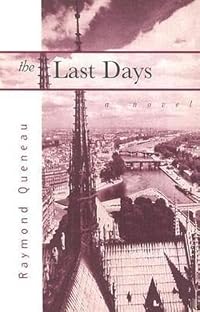

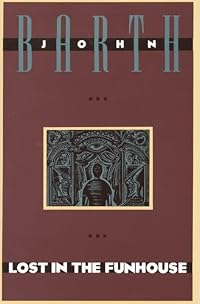

Member Recommendations

Member Reviews
These stories gave me the deepest, from-childhood reading pleasure of anything I can remember reading in the past year, maybe the past five. Cortazar is master of the phase transition: from innocence to corruption, lover to rapist, human to beast, living to dead, reader to character, from a soul in one body to a soul in another, he takes you across the invisible lines between incompatible states with such terrifying skill that you feel an actual physical reverberation from the journey. And you wonder briefly who else might have written short stories before Cortazar did, and why anyone else would bother to try afterward.
I'm also giving deserved props to the translator of this edition, Paul Blackburn, because he must have done his best to show more let stand lovely imagery like "She smelled fresh, like the shadow under trees"... show less
I'm also giving deserved props to the translator of this edition, Paul Blackburn, because he must have done his best to show more let stand lovely imagery like "She smelled fresh, like the shadow under trees"... show less
I read Hopscotch many years ago and loved it, but for some reason didn’t pick up anymore Cortazar until now.
I remember not so much about Hopscotch but this book jogged my memory a bit- my favorite stories in this collection were definitely the more realistic ones (Blow Up, End of the Game, The Pursuer) where Cortazar’s formal experiments can really shine. In the more surreal/ symbolic stories I sometimes lost my foothold, which maybe was the point, but mixing the dream like plot with the shifting narrators and time frames sometimes made it all feel a little muddled.
What made the stories I mentioned above so excellent was the way Cortazar zips around his characters like a ghost possessing, showing the other side of the mirror so to show more speak. I love how you can feel the improvisation in his language, where he lets his mind just spool out on the page - appropriate for a writer that seemed to have a great love for jazz. The best this book has to offer is a master class in what you can do when you are well practiced and the ideas are flowing. show less
I remember not so much about Hopscotch but this book jogged my memory a bit- my favorite stories in this collection were definitely the more realistic ones (Blow Up, End of the Game, The Pursuer) where Cortazar’s formal experiments can really shine. In the more surreal/ symbolic stories I sometimes lost my foothold, which maybe was the point, but mixing the dream like plot with the shifting narrators and time frames sometimes made it all feel a little muddled.
What made the stories I mentioned above so excellent was the way Cortazar zips around his characters like a ghost possessing, showing the other side of the mirror so to show more speak. I love how you can feel the improvisation in his language, where he lets his mind just spool out on the page - appropriate for a writer that seemed to have a great love for jazz. The best this book has to offer is a master class in what you can do when you are well practiced and the ideas are flowing. show less
Oh, Julio, if I could just have a moment to talk to you. You are up here in your heavenly jazz tree, on a higher branch then where I am sitting, laughing at the sadness of the world stuck in its own grass and mortar rather than taking a ride in the whirlwind of imagination, reading Blow-Up, Axolotl, House Taken Over, Continuity of Parks, End of the Game and other stories in this little book of yours. You play the divine trumpet, buzzing your lips on the horn of plenty, the jazz of words, improvising, taking a look inside, your fantasy being the fun stuff, exciting, the way you take a certain vision, say the room in a house, and come up with a story where the room is taken over by a mysterious presence.
If the man in another story, like show more Blow-Up, starts saying funny, nonsensical things, then you simply ball up his talking and throw it against your imagination and the story slides into its rightful place. Up here in the tree with your trumpet, no branch is too high for you to climb to pick the fruit of words, a word on each leaf, some pretty exotic fruit up here in your jazz tree.
Suddenly, I hear a voice down below asking: “What is Julio Cortázar doing up in that jazzword tree?”
I freeze, look down at the two men on the ground. “Now that’s really odd,” continues the man, “I thought he was dead . . . and now he’s up in that tree playing his trumpet.”
The other man says, “Let’s get Billy and his friend to cut the tree down with their two-man saw.”
I shout at them: “Please don’t have Billy and his friend cut down this tree – Julio won’t do you any harm.”
“Unless Julio plays his trumpet and all his words start shaking things up,” comes the reply.
I’m trying to figure it all out. I thought you were dead anyway, Julio, but as you always said, that’s only one part of the story. Maybe you are more than dead and came out the other side. If anyone could pull it off, it would be you, around the block and back again, around the day in eighty worlds.
I shout down at the men, “No need to call Billy and his friend. I can recommend Blow-Up and Other Stories, and let Julio go back to playing his trumpet.” show less
Oh, Julio, if I could just have a moment to talk to you. You are up here in your heavenly jazz tree, on a higher branch then where I am sitting, laughing at the sadness of the world stuck in its own grass and mortar rather than taking a ride in the whirlwind of imagination, reading Blow-Up, Axolotl, House Taken Over, Continuity of Parks, End of the Game and other stories in this little book of yours. You play the divine trumpet, buzzing your lips on the horn of plenty, the jazz of words, improvising, taking a look inside, your fantasy being the fun stuff, exciting, the way you take a certain vision, say the room in a house, and come up with a story where the room is taken over by a mysterious presence.
If the man in another story, like show more Blow-Up, starts saying funny, nonsensical things, then you simply ball up his talking and throw it against your imagination and the story slides into its rightful place. Up here in the tree with your trumpet, no branch is too high for you to climb to pick the fruit of words, a word on each leaf, some pretty exotic fruit up here in your jazz tree.
Suddenly, I hear a voice down below asking: “What is Julio Cortázar doing up in that jazzword tree?”
I freeze, look down at the two men on the ground. “Now that’s really odd,” continues the man, “I thought he was dead . . . and now he’s up in that tree playing his trumpet.”
The other man says, “Let’s get Billy and his friend to cut the tree down with their two-man saw.”
I shout at them: “Please don’t have Billy and his friend cut down this tree – Julio won’t do you any harm.”
“Unless Julio plays his trumpet and all his words start shaking things up,” comes the reply.
I’m trying to figure it all out. I thought you were dead anyway, Julio, but as you always said, that’s only one part of the story. Maybe you are more than dead and came out the other side. If anyone could pull it off, it would be you, around the block and back again, around the day in eighty worlds.
I shout down at the men, “No need to call Billy and his friend. I can recommend Blow-Up and Other Stories, and let Julio go back to playing his trumpet.” show less
The fantastic and the mundane combine in 'Blow-Up and Other Stories', often possessing the scorpion's sting in their tales. The best stories here make for a memorable collection. They have the quality of disturbing dreams, often with nightmare endings, the terrible realisation of the narrator in 'The Night Face Up', the grisly fate of the Kid in 'The Bestiary'. It's apparent something special lies ahead from the opening tale, 'Axolotl'.
It earns a five-star rating for the highlights. I was less keen on some of the longer pieces in Part Three. So 'The Pursuer', about the jazz man Johnny and his laconic biographer, strained too hard to be cool for my tastes. Inevitably, the wraith of Borges lurked in the shadows of the collection, but show more that's no bad thing in this reader's opinion. show less
It earns a five-star rating for the highlights. I was less keen on some of the longer pieces in Part Three. So 'The Pursuer', about the jazz man Johnny and his laconic biographer, strained too hard to be cool for my tastes. Inevitably, the wraith of Borges lurked in the shadows of the collection, but show more that's no bad thing in this reader's opinion. show less
This volume is my introduction to Cortázar, part of my 2012 Year of Discovering Latin American and Spanish writers. I have his novels on my horizon, and I'm itching to read them, but I thought starting with a short story volume would be a good introduction.
In the past, I have neglected short stories, in part because of an early preference for huge novels that I could escape in for days at a time. There may have been some elements of an introvert's frustration over getting to know a series of characters, only to say goodbye to them after 15 pages or so and to have to ready myself for meeting a whole new set of characters all over again. (Silly, I know - treating a short story collection as a literary cocktail party.)
I'm very glad that show more I've shaken off those earlier views, because I found this collection to be captivating. Cortázar destablizes our understandings of identity in every story. Characters merge into other characters. Boundaries, physical and psychic, dissolve in thin air. When reading the first story, Axolotl, I actually had a physical sense of my perspective shifting at a key point in the story, almost as if I were watching a film and visualizing an extreme change in perspective. Cortázar also is masterful at creating a surreal atmosphere of menace in many of these stories, which is all the more effective because the danger doesn't unfold all at once. It creeps up on the reader.
I have read other reviewers who discussed their confusion when reading many of these stories. Cortázar often uses a technique of jumping midway into his narrative and leaving it up to the reader to patiently hang on for the ride until he provides clues to piece together later in the story. If you're willing to play along with Cortázar, there's a game-like quality in many of these stories. For this reason, I recommend not reading it all at once from beginning to end. Some time between stories helps to increase the feeling of tension at Cortázar's approach.
This is a volume that begs for re-reading. I plan to revisit it soon. show less
In the past, I have neglected short stories, in part because of an early preference for huge novels that I could escape in for days at a time. There may have been some elements of an introvert's frustration over getting to know a series of characters, only to say goodbye to them after 15 pages or so and to have to ready myself for meeting a whole new set of characters all over again. (Silly, I know - treating a short story collection as a literary cocktail party.)
I'm very glad that show more I've shaken off those earlier views, because I found this collection to be captivating. Cortázar destablizes our understandings of identity in every story. Characters merge into other characters. Boundaries, physical and psychic, dissolve in thin air. When reading the first story, Axolotl, I actually had a physical sense of my perspective shifting at a key point in the story, almost as if I were watching a film and visualizing an extreme change in perspective. Cortázar also is masterful at creating a surreal atmosphere of menace in many of these stories, which is all the more effective because the danger doesn't unfold all at once. It creeps up on the reader.
I have read other reviewers who discussed their confusion when reading many of these stories. Cortázar often uses a technique of jumping midway into his narrative and leaving it up to the reader to patiently hang on for the ride until he provides clues to piece together later in the story. If you're willing to play along with Cortázar, there's a game-like quality in many of these stories. For this reason, I recommend not reading it all at once from beginning to end. Some time between stories helps to increase the feeling of tension at Cortázar's approach.
This is a volume that begs for re-reading. I plan to revisit it soon. show less
There was a time when I thought a great deal about the story "Axolotl". When I envied those rhythms, their faint movements, those sentences in particular, intimate, slightly illogical, thought-like vectors achieving a rolling quality that is not like a sentence at all. Yes, above all I envied Cortazar's sentences, which are unique in their grammatical messiness, their organic connections, the imperceptible consequences of unfolding. Those days I read "Axolotl" obsessively, drunk on the sound of "Ambystoma", "Port Royal", and "an indifferent immobility", sometimes three or four times a day, captured by that minute looking, that description in which the words are just a cake of dust upon what is actually a chthonic--slow--turning over and show more over. Often I drifted off while reading, and they would enter my dreams, the axolotls and the sentences both, together.
"Axolotl" is probably the best story in this collection. The sentences are what I fell in love with first, but Cortazar is preoccupied with other notions. With the idea of becoming the Other, switching identities, with time, with perception. Most of these concepts, dare I say it, are weights that hinder his gifts, yes sometimes even gimmicks. Once you read one story, you begin to see the pattern and start looking for it, which is incredibly distracting, especially when you're trying to focus your eyes on those mysterious sentences at the bottom of the tank. But the particulars, that is where these stories sit implacable, where the concept cannot infringe. I insist that these stories do not need to be weighed down by such concepts, that they should live alone at the level of the sentence, that they need to be freed from the constraints of expectation. show less
"Axolotl" is probably the best story in this collection. The sentences are what I fell in love with first, but Cortazar is preoccupied with other notions. With the idea of becoming the Other, switching identities, with time, with perception. Most of these concepts, dare I say it, are weights that hinder his gifts, yes sometimes even gimmicks. Once you read one story, you begin to see the pattern and start looking for it, which is incredibly distracting, especially when you're trying to focus your eyes on those mysterious sentences at the bottom of the tank. But the particulars, that is where these stories sit implacable, where the concept cannot infringe. I insist that these stories do not need to be weighed down by such concepts, that they should live alone at the level of the sentence, that they need to be freed from the constraints of expectation. show less
Members
- Recently Added By
Lists

Favourite Books
1,817 works; 316 members

Magic Realism
371 works; 51 members

Best Fantasy Originally Published in a Language Other Than English
84 works; 25 members

Speculative Fiction from around the World
610 works; 17 members

Blue Pyramid 1,276 Best Books of All Time
1,248 works; 32 members

Best Sellers / Popular 1968
237 works; 5 members

Stephen King's Danse Macabre Full Appendix List
110 works; 2 members
Author Information

398+ Works 21,838 Members
Julio Cortazar is an Argentine poet, short story writer, and translator, whose pseudonym is Julio Denis. He was born in Brussels, Belgium, in 1914. In 1918, he moved with his parents to their native Argentina. He taught high school and later French literature at the University of Cuyo, resigning after participating in demonstrations against show more Argentine President Juan Peron. He worked for a Buenos Aires publishing company and also earned a degree as a translator. Cortazar is part of the "boom" of excellence in Latin American letters in the 1950s and 1960s. He combines fantastic plots with commonplace events and characters, and looks for new ways for literature to represent life. His first novel, The Winners, tells the story of passengers on a luxury liner who are restricted to a certain area of the ship and forbidden to communicate with the crew. He explores the ways passengers react. Hopscotch has a complex narrative structure with 165 chapters that can be read in at least two logical sequences to create variations. A Change of Light and Other Stories is a short story collection dealing with themes ranging from political oppression to fantasy. We Love Glenda So Much is about a fan club murder of their favorite actress whose films do not meet their standards. A Certain Lucas is comprised of three sections of short observations, discussing the nature of reality, the exploration of literary form, and search for new ways to view the world. (Bowker Author Biography) show less
Some Editions
Series
Belongs to Publisher Series
Work Relationships
Contains
Common Knowledge
- Canonical title
- Blow-up and Other Stories
- Original title
- Bestiario; Las Armas Secretas; Final del Juego [3 collections]
- Alternate titles
- End of the Game and Other Stories
- Original publication date
- 1967
- Related movies
- Blow-Up (1966 | IMDb)
- First words
- There was a time when I thought a great deal about the axolotls.
- Last words
- (Click to show. Warning: May contain spoilers.)"I hope there's some cognac," Roland says, coming down hard on the brake.
- Blurbers
- Wood, Michael; Hogan, William; Coleman, Alexander; Yates, Donald A.; Kauffmann, Stanley
- Disambiguation notice
- This translation of fifteen Cortázar stories by Paul Blackburn was originally published as End of the Game and Other Stories. Do not combine with other collections.
Classifications
- Genres
- Fiction and Literature, General Fiction
- DDC/MDS
- 863 — Literature & rhetoric Spanish, Portuguese, Galician literatures Spanish fiction
- LCC
- PQ7797 .C7145 .A23 — Language and Literature French, Italian, Spanish and Portuguese literatures Spanish literature Provincial, local, colonial, etc. Spanish America
- BISAC
Statistics
- Members
- 1,538
- Popularity
- 14,821
- Reviews
- 19
- Rating
- (4.07)
- Languages
- English, Portuguese, Spanish
- Media
- Paper, Ebook
- ISBNs
- 6
- ASINs
- 10