Death of a Hero
by Richard Aldington
On This Page
Description
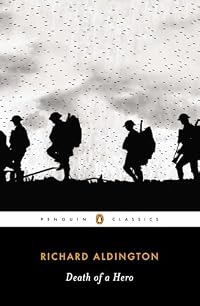
"Death of a Hero", published in 1929 was the author's literary response to the war. He went on to publish several works of fiction. In 1942, having moved to the United States, he began to write biographies. This last work was very controversial, as it was highly critical of the man still regarded as a war hero.Tags
Recommendations

















Member Reviews
Olyan, mintha ketten írták volna: egy jó író, meg egy rossz író. Sajnos a rossz írónak jobban szaladt a tolla, övé durván az első 300 oldal. Ez a szakasz szegény George Winterbourne származásáról és felcseperedéséről szól, és össze lehetne foglalni két szóban: „rohadt viktoriánusok”. A szerzőnek láthatóan nincs más célja, mint hogy a korszak aljasságát, képmutatását és talmi voltát igazolja, ennek érdekében szereplők helyett karikatúrákat ír, elemzések helyett kirohanásokat, fárasztó, néha megmosolyogtatóan felületes eszmefuttatásokba bonyolódik, egyszóval: végig sokkal fontosabb neki Winterbourne személyes sorsánál az, hogy jól szájon kenje a Brit Birodalmat. Az egész show more első háromszáz oldal tankönyvi példája, hogy a strukturálatlan harag egy rendszer ellen (attól függetlenül, hogy az írónak igaza van-e, vagy sem) az irodalom ellen dolgozik. Az írónak desztillálnia kell ezt a dühöt, azt a regény belső motorjaként felhasználni – de nem engedheti meg, hogy a düh a szöveg voltaképpeni céljává változzon.
Aztán szerencsére Winterbourne bezupál, és a szöveg is varázsütésre megváltozik. A kötet második fele, az első világháború ábrázolása példaszerű, tiszta, pontos és erős. Érezzük a könnygáz ananászszagát, mi is ott caplatunk a térdig érő sárban, halljuk a srapnelek becsapódásait. Azt hiszem, a két textúra közötti minőségi különbség oka, hogy amíg az első szakasz az ellenszenvből táplálkozott, addig a második a személyes élményből, ennek köszönhetően amíg az első széteső és torz, addig a második feszes és plasztikus. Tanulságos. Vajon miért nem bízták erre az íróra az első részt is, kérdezi magában a naiv olvasó.
Különben meg pacifista regény. De valahogy disszonánsan az. Nem azért, mert az eleje rosszul van megírva – az más lapra tartozik. Hanem mert amíg az első szakasz egy hazug, kétszínű világot mutat be, a második egy olyan létezésnek – a háborúnak – állít emléket, ami véres és értelmetlenül kegyetlen ugyan, de mégis: a maga módján őszinte, átlátható és világos. Áthatja a bajtársiasság, és az a tudat, hogy a háború hülyeség. Paradox, hogy ezért az összhangért magának a háborúnak tartoznak hálával. Talán emiatt éreztem úgy, hogy ez a szöveg legalább annyira nosztalgiával kezeli a világégést, mint ellenszenvvel. Amit persze nem rónék fel neki, enélkül is van gondja elég. show less
Aztán szerencsére Winterbourne bezupál, és a szöveg is varázsütésre megváltozik. A kötet második fele, az első világháború ábrázolása példaszerű, tiszta, pontos és erős. Érezzük a könnygáz ananászszagát, mi is ott caplatunk a térdig érő sárban, halljuk a srapnelek becsapódásait. Azt hiszem, a két textúra közötti minőségi különbség oka, hogy amíg az első szakasz az ellenszenvből táplálkozott, addig a második a személyes élményből, ennek köszönhetően amíg az első széteső és torz, addig a második feszes és plasztikus. Tanulságos. Vajon miért nem bízták erre az íróra az első részt is, kérdezi magában a naiv olvasó.
Különben meg pacifista regény. De valahogy disszonánsan az. Nem azért, mert az eleje rosszul van megírva – az más lapra tartozik. Hanem mert amíg az első szakasz egy hazug, kétszínű világot mutat be, a második egy olyan létezésnek – a háborúnak – állít emléket, ami véres és értelmetlenül kegyetlen ugyan, de mégis: a maga módján őszinte, átlátható és világos. Áthatja a bajtársiasság, és az a tudat, hogy a háború hülyeség. Paradox, hogy ezért az összhangért magának a háborúnak tartoznak hálával. Talán emiatt éreztem úgy, hogy ez a szöveg legalább annyira nosztalgiával kezeli a világégést, mint ellenszenvvel. Amit persze nem rónék fel neki, enélkül is van gondja elég. show less
The third part of this book is terrific war writing, capturing trench warfare in all its tedium and terror, and giving a desolate account of how "shell shock" ruined so many of the combatants. Aldington's satire bites hard against the chattering classes back home, but the predominant tone is an elegiac helplessness in the face of the war's industrialised carnage.
The first two parts are like a much more superficial "Way of all Flesh", excoriating the Victorians for their moral (especially sexual) cant and hypocrisy and in effect locating all the blame for the war therein. Here the writing lacks nuance and sometimes seems juvenile, with frequent resort to italics and other emphatic devices. There are occasional good descriptive passages, show more especially of nature, but in general it's an Angry Young Man polemic without any depth that cannot justify its 200+ pages.
The framing device of a narrator who gets to know the titular "hero" shortly before he dies is implausible and I'm not sure why Aldington didn't just go with omniscient third person.
I believe you could actually skip the first two parts of "Death of a Hero" entirely and just enjoy the third for what it is, a brilliant and horrifying rendition of life in the trenches. show less
The first two parts are like a much more superficial "Way of all Flesh", excoriating the Victorians for their moral (especially sexual) cant and hypocrisy and in effect locating all the blame for the war therein. Here the writing lacks nuance and sometimes seems juvenile, with frequent resort to italics and other emphatic devices. There are occasional good descriptive passages, show more especially of nature, but in general it's an Angry Young Man polemic without any depth that cannot justify its 200+ pages.
The framing device of a narrator who gets to know the titular "hero" shortly before he dies is implausible and I'm not sure why Aldington didn't just go with omniscient third person.
I believe you could actually skip the first two parts of "Death of a Hero" entirely and just enjoy the third for what it is, a brilliant and horrifying rendition of life in the trenches. show less
Cant and sex. Those are the twin themes of this book, although, perhaps, it would be more accurate to say that cant about sex is the one theme of this book.
The first two thirds of the book tell the story of the titular hero, George Winterbourne, and his family. They are a set of grotesques, wrapped so tightly in late Victorian sexuality that it warps them beyond almost all humanity. The point is made repeatedly and with little subtlety. Indeed, Aldington frequently brings the action to a halt to pour another bucket of venom over their heads. The effect is not a little tedious.
This is a shame because when the war writing begins it is electrifying, although, again, Aldington finds the causes of the war in Victorian sexual mores. show more Intriguingly, Aldington's book covers the latter stages of the war, when the Allied armies defeated those of Germany, which are absent from the better known books of [a:Robert Graves|3012988|Robert Graves|https://d.gr-assets.com/authors/1251049332p2/3012988.jpg] and [a:Edmund Blunden|31139|Edmund Blunden|https://d.gr-assets.com/authors/1335026460p2/31139.jpg].
Lurking in this long, hectoring book about cant and sex (or cant about sex) is a shorter, far better book about the First World War. show less
The first two thirds of the book tell the story of the titular hero, George Winterbourne, and his family. They are a set of grotesques, wrapped so tightly in late Victorian sexuality that it warps them beyond almost all humanity. The point is made repeatedly and with little subtlety. Indeed, Aldington frequently brings the action to a halt to pour another bucket of venom over their heads. The effect is not a little tedious.
This is a shame because when the war writing begins it is electrifying, although, again, Aldington finds the causes of the war in Victorian sexual mores. show more Intriguingly, Aldington's book covers the latter stages of the war, when the Allied armies defeated those of Germany, which are absent from the better known books of [a:Robert Graves|3012988|Robert Graves|https://d.gr-assets.com/authors/1251049332p2/3012988.jpg] and [a:Edmund Blunden|31139|Edmund Blunden|https://d.gr-assets.com/authors/1335026460p2/31139.jpg].
Lurking in this long, hectoring book about cant and sex (or cant about sex) is a shorter, far better book about the First World War. show less
A sarcastic account of the fictional life of George Winterbourne with whose death in the closing days of World War I the novel begins. The story that follows this opening is much in the form of a biography of the 'hero'. Needless to say, his life is one that starts poorly and goes downhill from there to the point where his final return to the front seems precursor to the denouement of his life. Aldington's passion over the folly and waste of war is expended in this fictional tale of a life much the same. Heroic in name only.
2276 Death of a Hero, by Richard Aldington (read 11 Mar 1990) Paul Fussell mentioned this book in the same breath as All Quiet on the Western Front and other great World War One novels. I had never heard of it but I decided to read it because of Fussell's comment. Aldington was born in 1892, and was in France from 1916 to 1918. This book was published in 1929, and is cynical and 'avant garde' and filled with half-baked free love opinions pretty well shown to be reprehensible. He rails against the war, quite rightly, but his blaming all of it on "dull" people is unwarranted. When Aldington died in 1962 the Times obituary of him said "an angry young man of the generation before they became fashionable, he remained something of an angry show more old man to the end." Only the last third of the book tells of the war in Europe--and it conveys well the awfulness of life at the Front. Hard to glorify that awful Western Front. Not at all a book I liked--he poisoned me right at the beginning by anti-Catholic comments. show less
Ratings
Members
- Recently Added By
Lists

The Guardian's 1000 Novels Everyone Must Read
1,005 works; 546 members

World War I Fiction
94 works; 15 members

r/AskHistorians' Recommended Books
1,068 works; 16 members

War Literature
101 works; 19 members
THE WAR ROOM
813 works; 24 members
Author Information

95+ Works 1,429 Members
Richard Aldington, christened Edward Godfree, was born at Portsmouth, Hampshire, England, on July 8, 1892. Aldington attended preparatory schools as a child, after which he studied for four years at Dover College. He then enrolled in University College but did not complete his education there due to a sudden financial loss suffered by his father, show more forcing him to withdraw. For a while, Aldington was supporting himself as an assistant to a newspaper sportswriter. He also wrote reviews and essays, worked on translations, and finally began selling his own poems. He soon made friends with a group of three other young poets: Ezra Pound, Hilda Doolittle, and Harold Monro. During this period, Aldington became associated with the Imagist movement, through his association with Ezra Pound. His poetry appeared in Pound's 1914 anthology Des Imagistes and in Amy Lowell's annual anthology Some Imagist Poets. He published his first volume of poetry, Images (1910-1915), in 1915. On June 24, 1916, Aldington left for military service. He was sent to France in the winter after training. The two and a half years that Aldington spent in active duty during WWI was to become perhaps the greatest single influence on his writing for the decades to follow. His most immediate literary response to the war was his collection of poetry Images of War, published in 1919, which was followed by his first, and perhaps most well known novel, Death of a Hero. Aldington published 24 books, as editor or translator, or collections of his poems, between 1920 and 1929, including the first book of his about his friend D.H. Lawrence, D.H. Lawrence, An Indiscretion. Over the following ten years, he published several more collections of short stories, three long poems, four editions of his collected poems, miscellaneous literary journalism and wrote seven novels. In 1939, Viking offered him editorship of The Viking Book of Poetry of the English Speaking World after having published his novel Rejected Guest. Aldington sold serial rights to his memoirs to the Atlantic Monthly which were published in 1941 under the title Life for Life's Sake. After moving to Florida, Aldington began his biography of the Duke of Wellington, which was published in 1943. In 1942, Aldington took his family to Hollywood where he hoped to work as a screen writer. They stayed in Hollywood for over three years while Aldington worked as a freelance writer for the studios. He also finished The Duke, which he began in Florida, edited the Portable Oscar Wilde, and did a few translations. He published his last novel, The Romance of Casanova: A Novel, in 1946. Aldington died in France in 1962. (Bowker Author Biography) show less
Some Editions
Awards and Honors
Series
Belongs to Publisher Series
Common Knowledge
- Original title
- Death of a Hero
- Original publication date
- 1929
- People/Characters
- George Winterbourne; Narrator
- Important events
- World War I (1914 | 1918)
- Epigraph
- 'See how we trifle! but one can't pass one's youth too amusingly; for one must grow old, and that in England; two most serious circumstances, either of which makes people grey in the twinkling of a bedstaff; for know you, the... (show all)re is not a country upon earth where there are so many old fools and so few young ones.' - Horace Walpole
- Dedication
- To Halcott Glover
- First words
- The casualty lists went on appearing for a long time after the Armistice - last spasms of Europe's severed arteries.
- Last words
- (Click to show. Warning: May contain spoilers.)And I too walked away / In an agony of helpless grief and pity.
- Original language
- English
Classifications
Statistics
- Members
- 234
- Popularity
- 138,649
- Reviews
- 5
- Rating
- (3.40)
- Languages
- 7 — Czech, Danish, English, French, German, Hungarian, Italian
- Media
- Paper, Ebook
- ISBNs
- 12
- ASINs
- 6