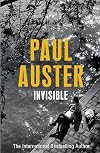
A very good review by Evening All Afternoon of Paul Auster's New York Trilogy prompts me finally to write about Invisible, which I have had in my TBR pile for quite some time.
Some of those who have read the Trilogy might have been left wondering, like me, if it was actually intended as a real novel at all, rather than just an exercise for a creative writing class. Am I alone in finding that all the obsessive behaviour and constantly shifting (and often uncertain) identities get in the way of the story, which is any event pretty thin? Having bought it as a result of all the hype which surrounded it, I ended up being dreadfully disappointed.
If so, relax, for Invisible is a different animal entirely. Yes, it is told by various narrators from various different viewpoints, and moves between the past and the present, but on this occasion it all works, and the reader feels challenged but never downright bewildered.
Auster uses the device of an author struggling to finish a book, and enlisting the help of a third party in order to do so. Death, natural and otherwise, a detective style investigation, and sex make up the mix. It is difficult to say much more about the plot without spoiling the ending.
In fairness I should point out that I have never read any of Auster's other books (which many admire and respect), but on the evidence of the Trilogy, which frankly I did not enjoy, Invisible came as a very pleasant surprise. It is well written and well crafted, each of the three main show more characters coming across with their own voice. I would happily recommend this book to anyone show less
Some of those who have read the Trilogy might have been left wondering, like me, if it was actually intended as a real novel at all, rather than just an exercise for a creative writing class. Am I alone in finding that all the obsessive behaviour and constantly shifting (and often uncertain) identities get in the way of the story, which is any event pretty thin? Having bought it as a result of all the hype which surrounded it, I ended up being dreadfully disappointed.
If so, relax, for Invisible is a different animal entirely. Yes, it is told by various narrators from various different viewpoints, and moves between the past and the present, but on this occasion it all works, and the reader feels challenged but never downright bewildered.
Auster uses the device of an author struggling to finish a book, and enlisting the help of a third party in order to do so. Death, natural and otherwise, a detective style investigation, and sex make up the mix. It is difficult to say much more about the plot without spoiling the ending.
In fairness I should point out that I have never read any of Auster's other books (which many admire and respect), but on the evidence of the Trilogy, which frankly I did not enjoy, Invisible came as a very pleasant surprise. It is well written and well crafted, each of the three main show more characters coming across with their own voice. I would happily recommend this book to anyone show less
 This review was written for LibraryThing Early Reviewers.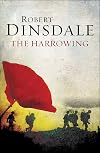
"The Harrowing" is a well written novel set against a background of the First World War, and the playing out of a relationship between two brothers. It is difficult to say much more without giving away the ending, but the writing is strong and good, and the characters are sympathetic and well drawn. This is a fine book and I really enjoyed reading it.
This review was written for LibraryThing Early Reviewers.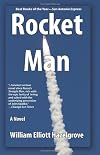
I really enjoyed reading this book. It is well written and comes across with a strong, original voice, Purely to give an idea of the flavour, and not suggesting that it is in any way derivative, I was reminded of Richard Russo and Michael Chabon.
The only real problem is that the central character is so unsympathetic. It is difficult to empathise with someone who goes through life in some kind of morose, self-pitying withdrawal - and the fact that he is a failed novelist is no excuse! T.D. Hammer (is there some kind of American joke there that I have missed?) is a failure as a father, a husband, a writer and a neighbour. It is perhaps a tribute to Hazelgrove's powers of characterisation that Hammer comes across as so determinedly awful, but it makes for a very bleak read. Incidentally, some of the other characters are wonderfully drawn too, especially Hammer's father and the obnoxious scoutmaster and his wife.
I am not sure whether the book was meant to be funny or not. If so, then I missed the humour, but then this is a very American book, to the extent that it is quite a difficult read for a Brit. To take but one small example, I have no idea what a crossing belt is.
I should also mention that the book contains a lot of strong language, which some readers may find upsetting. I certainly found it a bit disturbing myself. Is it really necessary? There is only one incidence of it which is actually integral to the plot.
The only real problem is that the central character is so unsympathetic. It is difficult to empathise with someone who goes through life in some kind of morose, self-pitying withdrawal - and the fact that he is a failed novelist is no excuse! T.D. Hammer (is there some kind of American joke there that I have missed?) is a failure as a father, a husband, a writer and a neighbour. It is perhaps a tribute to Hazelgrove's powers of characterisation that Hammer comes across as so determinedly awful, but it makes for a very bleak read. Incidentally, some of the other characters are wonderfully drawn too, especially Hammer's father and the obnoxious scoutmaster and his wife.
I am not sure whether the book was meant to be funny or not. If so, then I missed the humour, but then this is a very American book, to the extent that it is quite a difficult read for a Brit. To take but one small example, I have no idea what a crossing belt is.
I should also mention that the book contains a lot of strong language, which some readers may find upsetting. I certainly found it a bit disturbing myself. Is it really necessary? There is only one incidence of it which is actually integral to the plot.
This review was written for LibraryThing Early Reviewers.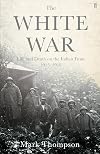
This is an excellent book which really gripped me. It tells of Italy's role in the First World War, which was completely new territory for me, and does it very well. Mark Thompson has the great gift of being able to present histpry as highly readable narrative and I particularly enjoyed the pen pictures of the various characters whom he singles out.
A tragic story of terrible and futile waste, as with all aspects of the Great War. One should remember that alone among the Allied powers Italy was an aggressor rather than fighting for self-defence or to defend a treat obligation, and that this campaign had some huge ramifications, including making certain the collapse of the Austro-Hungarian Empire.
I highly recommend this book to anyone interested in history, or even enyone who wants to learn a littel more about modern Italy.
A tragic story of terrible and futile waste, as with all aspects of the Great War. One should remember that alone among the Allied powers Italy was an aggressor rather than fighting for self-defence or to defend a treat obligation, and that this campaign had some huge ramifications, including making certain the collapse of the Austro-Hungarian Empire.
I highly recommend this book to anyone interested in history, or even enyone who wants to learn a littel more about modern Italy.
This review was written for LibraryThing Early Reviewers.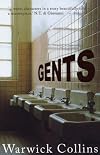
I thoroughly enjoyed this book. It is well written, with passages of thoughtful and well-crafted descriptive writing alternating with totally credible Jamaican dialogue.
My big issue is with its length. With large print and wide line spacing, it cannot be more than about 25,000 words. Certainly not a novel and hardly even a novella - more of an extended short story. It seems a bit steep to have to pay £7.99 for a paperback which takes little more than half an hour to read.
My big issue is with its length. With large print and wide line spacing, it cannot be more than about 25,000 words. Certainly not a novel and hardly even a novella - more of an extended short story. It seems a bit steep to have to pay £7.99 for a paperback which takes little more than half an hour to read.
This review was written for LibraryThing Early Reviewers.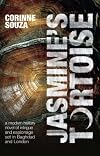
I was very nervous when I received this book as the first one I reviewed under the Early Reviewer programme was so disappointing, but I need not have worried. This is a tremendous read, a well-crafted thriller that teeters on the edge of being a literary novel. To my mind that is the mark of a really good writer who has set out to write a commecially successful book.
This book deserves to sell and sell. It ranges across the decades, across the world and across different generations of an extended family group, but the author's grip is sure and precise. It is totally believable, and there are at least three different twists at the end.
My only concern is what on earth Corinne Souza is planning to do for an encore. "Jasmine's Tortoise" is going to be a really tough act to follow!
This book deserves to sell and sell. It ranges across the decades, across the world and across different generations of an extended family group, but the author's grip is sure and precise. It is totally believable, and there are at least three different twists at the end.
My only concern is what on earth Corinne Souza is planning to do for an encore. "Jasmine's Tortoise" is going to be a really tough act to follow!
This review was written for LibraryThing Early Reviewers.Fresh by Mark McNay
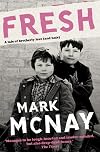
I received this book as part of the Early Reviewers programme, but having read it (which doesn't take very long, mind) I am in something of a quandary. I am very keen to give it a positive rating if I can, but I find myself completely unable to do so.
Let me say at once in its defence that the book has been praised by several newspapers and has won an award. None of that changes my opinion that this is a very bad novel. The writing style is simplistic in the extreme, almost as though the author makes it a principle never to use any word of more than two syllables. Sentences are short and consequently the text feels very disjointed. Description and characterisation are kept to a minimum.
Why does somebody bother to write a book like this, and why should anyone bother to read it? One feels no sense of identification or sympathy with any of the characters. It is like watching (with a strong sense of detachment) a brief film of revolting people doing and saying mundane and revolting things.
Perhaps I am just deeply out of tune with the "modern novel", if that hasn't become an oxymoron in itself. Have we really become so culturally bankrupt that something like this should be praised as good writing? See someone like Frank McGillion or Christopher Brookmyre (or even, for heaven's sake, Irvine Walsh) for very much better examples of comtemporary Scottish literarture.
Incidentally, I have never read a Canongate book before, and will not be encouraged to do so in the future.
Let me say at once in its defence that the book has been praised by several newspapers and has won an award. None of that changes my opinion that this is a very bad novel. The writing style is simplistic in the extreme, almost as though the author makes it a principle never to use any word of more than two syllables. Sentences are short and consequently the text feels very disjointed. Description and characterisation are kept to a minimum.
Why does somebody bother to write a book like this, and why should anyone bother to read it? One feels no sense of identification or sympathy with any of the characters. It is like watching (with a strong sense of detachment) a brief film of revolting people doing and saying mundane and revolting things.
Perhaps I am just deeply out of tune with the "modern novel", if that hasn't become an oxymoron in itself. Have we really become so culturally bankrupt that something like this should be praised as good writing? See someone like Frank McGillion or Christopher Brookmyre (or even, for heaven's sake, Irvine Walsh) for very much better examples of comtemporary Scottish literarture.
Incidentally, I have never read a Canongate book before, and will not be encouraged to do so in the future.
This review was written for LibraryThing Early Reviewers.