On This Page
Description
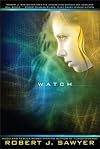
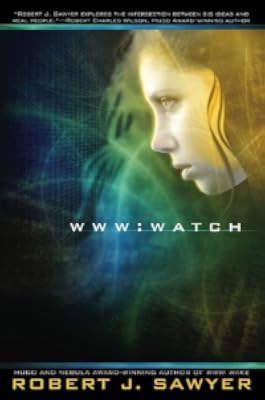
A sentient World Wide Web entity known as Webmind has befriended Caitlin Decter and grown eager to learn about her world. But Webmind has also come to the attention of WATCH--the secret government agency that monitors the Internet for any threat to the United States-and they're fully aware of Caitlin's involvement in its awakening. WATCH is convinced that Webmind represents a risk to national security and wants it purged from cyberspace.Tags
Recommendations






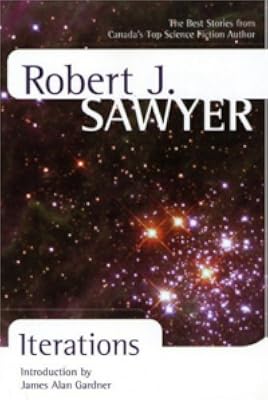
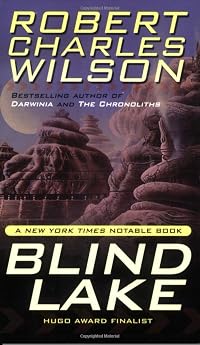
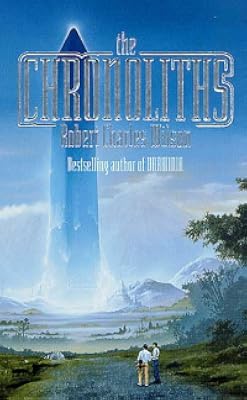
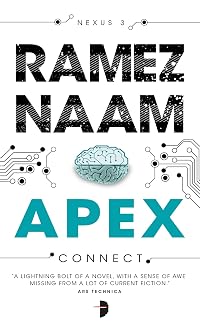


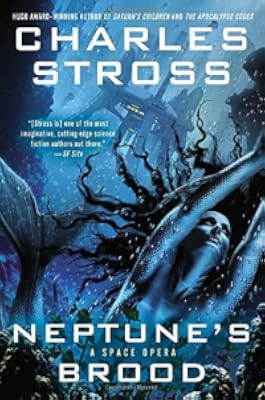
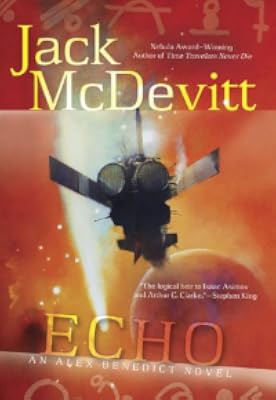
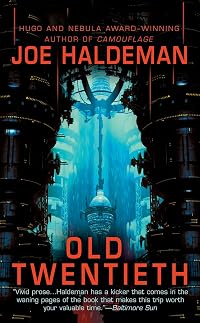
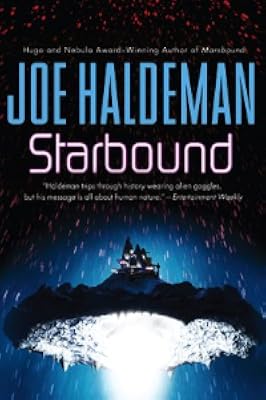



Member Recommendations

BriarE Some interesting plot and character resonances
Member Reviews
I contemplated adding this book to my "Philosophy" shelf as well as the SF shelf. Underlying the continuing, entertaining story is a subtle investigation of the question, "What is the evolutionary value of consciousness?". Sawyer does, at least, give you his view on the matter and I am inclined to agree with his position. (Some authors like to just raise such questions and then never actually deal with them in a substantive way. I hate that kind of intellectual teasing.) But Sawyer also doesn't let the investigation of that question get in the way of the story, nor does he really hit you over the head with an overly long exposition disquisition of his thesis. Everything remains balanced, in my opinion. As I was coming to the end of this show more book, it reminded me of why I have always been a science fiction fan, even before I was made aware that it was a genre separate from others. I love stories that make you really think about the implications of some technology or philosophy or political stance. To extrapolate into the future (even if it is only a couple of years into the future) what the application of these things might mean is the essence of SF. And Sawyer does a wonderful job of it in this series. This book is definitely part of a trilogy: the story does not stand on its own, nor is any plotline resolved in any meaningful way. I immediately downloaded the final book in order to reach the story's end. I suspect anyone who takes up this second book may do likewise.
[UPDATE: Still enjoyable the second time around. And the multi-reader audiobook is excellent.] show less
[UPDATE: Still enjoyable the second time around. And the multi-reader audiobook is excellent.] show less
This is the second book in Sawyer's WWW trilogy. The third book WWW: Wonder is due out in April of 2011. This was another amazing book. Sawyer does a great job of packing in a ton of issues, both philosophical and political, that make the reader really think, while giving the reader characters that are interesting and easy to relate too. I loved this book. I listened to this on audiobook, which I highly recommend. The audiobook is exceedingly well done, with different voice actors for the different points of view. I think listening to this on audiobook makes this book even better than reading it on paper would be.
This book picks up literally right where the first book left off. Caitlin is still reeling at the realization that Webmind is show more real. She decides to tell her parents about it since she is struggling to keep Webmind busy and worried about what might happen to him over a time of inactivity. When the government starts plaguing Caitlin and her family they have some tough decisions to make about what to do with their knowledge of Webmind. Meanwhile Hobo, the ape who had his first inter-species webchat with a chimp in the first book, starts getting violent with his keepers. This puts Hobo's already uncertain future at even greater risk. The last storyline deals with the NSA in the United States; they discover unconventional activity on the web and think at first it may be a terrorist threat...when they finally decide it is actually an emerging consciousness they want answers.
This book touches on so many issues it is mind-boggling and it does it in a way that is easy to relate to and follow. It is really a book that will make you think. Some of the political issues addressed are racism, animal rights, GLBT rights, the privacy act, national security, international politics, and human rights. Some of the deeper issues touched on are the differences between artificial intelligence and emerging consciousness, autism, blindness, suicide, and the question behind how emerging consciousness can override natural selection and evolution. All of it is very interesting and presented in a way that is clear and easy to understand.
The characters are fantastic. All of them are intelligent and highly engaging. I love the dynamics between Caitlin and her family; how even with her father's autism to struggle with, they are a cohesive force that works together, respects each other, and understands each other. I also liked that Caitlin develops a love interest, this made Caitlin more real and was realistic given her age. I love how even with all the fantastic stuff going on in her life, Caitlin can still be concerned about how she comes off to Matt...it makes her totally real and likable.
Some of the story lines that didn't really seem to relate in the first book come together in this book. Finally we see how the story of Hobo and how what happened with China shutting down their web infrastructure is related to the emergence of Webmind.
The biggest disappointment for me in this book was how the government approached Webmind. As many might predict the government's knee-jerk reaction is to shut Webmind down. It made me a bit sad that Sawyer couldn't try a more creative government reaction than the one that is normally presented in the majority of books dealing with AI; of course the way Sawyer wrote is very realistic...it is just too bad it has to be that way.
Overall I loved some of the theories presented in this novel. The idea of consciousness modifying behaviors dictated by evolution is an underlying theme and it's an interesting one. The characters and story are very engaging. The story is nicely wrapped up in this book leaving me to wonder what Sawyer will do in book 3, WWW: Wonder. Absolutely love this series. It makes heavy issues easy to relate to and contemplate and has wonderful characterization. I will definitely be checking out more of Sawyer's works when I finish this trilogy. show less
This book picks up literally right where the first book left off. Caitlin is still reeling at the realization that Webmind is show more real. She decides to tell her parents about it since she is struggling to keep Webmind busy and worried about what might happen to him over a time of inactivity. When the government starts plaguing Caitlin and her family they have some tough decisions to make about what to do with their knowledge of Webmind. Meanwhile Hobo, the ape who had his first inter-species webchat with a chimp in the first book, starts getting violent with his keepers. This puts Hobo's already uncertain future at even greater risk. The last storyline deals with the NSA in the United States; they discover unconventional activity on the web and think at first it may be a terrorist threat...when they finally decide it is actually an emerging consciousness they want answers.
This book touches on so many issues it is mind-boggling and it does it in a way that is easy to relate to and follow. It is really a book that will make you think. Some of the political issues addressed are racism, animal rights, GLBT rights, the privacy act, national security, international politics, and human rights. Some of the deeper issues touched on are the differences between artificial intelligence and emerging consciousness, autism, blindness, suicide, and the question behind how emerging consciousness can override natural selection and evolution. All of it is very interesting and presented in a way that is clear and easy to understand.
The characters are fantastic. All of them are intelligent and highly engaging. I love the dynamics between Caitlin and her family; how even with her father's autism to struggle with, they are a cohesive force that works together, respects each other, and understands each other. I also liked that Caitlin develops a love interest, this made Caitlin more real and was realistic given her age. I love how even with all the fantastic stuff going on in her life, Caitlin can still be concerned about how she comes off to Matt...it makes her totally real and likable.
Some of the story lines that didn't really seem to relate in the first book come together in this book. Finally we see how the story of Hobo and how what happened with China shutting down their web infrastructure is related to the emergence of Webmind.
The biggest disappointment for me in this book was how the government approached Webmind. As many might predict the government's knee-jerk reaction is to shut Webmind down. It made me a bit sad that Sawyer couldn't try a more creative government reaction than the one that is normally presented in the majority of books dealing with AI; of course the way Sawyer wrote is very realistic...it is just too bad it has to be that way.
Overall I loved some of the theories presented in this novel. The idea of consciousness modifying behaviors dictated by evolution is an underlying theme and it's an interesting one. The characters and story are very engaging. The story is nicely wrapped up in this book leaving me to wonder what Sawyer will do in book 3, WWW: Wonder. Absolutely love this series. It makes heavy issues easy to relate to and contemplate and has wonderful characterization. I will definitely be checking out more of Sawyer's works when I finish this trilogy. show less
Having only read the first two of this trilogy that is, obviously, a single-story, I'm forced to write a review that reads more like an update rather than an all-out "This is Great".
That being said...
This is great!
Why?
If I went by a certain set of standards that was commonplace ten or fifteen years ago, I would have been reading this novel and saying... hey! This is on par or better than almost ALL the SF out there. It has all the huge scope, the excellent science, the pure speculation of what a modern-day singularity might become with our current technology. It has emergent an emergent AI, with full explanations, in the World Wide Web. It has heart, social and Game Theory, great storytelling, and a hugely updated nod and a literal nod show more to Wargames.
And above all, it's GOOD. Effortless storytelling, easygoing pace, enjoyable characters, and an almost corny plug for Canadians.
So what happened? Robert J. Sawyer has written something easily as good if not better than his prior Hugo noms and wins in the early 2000s. I actually ENJOY this on more levels than his other trilogy.
Hell, I started crying once or twice. And the whole damn thing is OPTIMISTIC and HOPEFUL.
Awards aside, this is very good SF. I think it should be a staple of all you fanboy-and-fangirl's diets. And this is especially true if you have noticed an ongoing trend in SF in general that seems to be having a conversation with itself. As in... every generation builds on what the prior generations have created. The same is true for SF as in everything. But in this case, Sawyer is self-consciously bridging several huge gaps between all the classics and the modern sensibilities.
I can do nothing but applaud. show less
That being said...
This is great!
Why?
If I went by a certain set of standards that was commonplace ten or fifteen years ago, I would have been reading this novel and saying... hey! This is on par or better than almost ALL the SF out there. It has all the huge scope, the excellent science, the pure speculation of what a modern-day singularity might become with our current technology. It has emergent an emergent AI, with full explanations, in the World Wide Web. It has heart, social and Game Theory, great storytelling, and a hugely updated nod and a literal nod show more to Wargames.
And above all, it's GOOD. Effortless storytelling, easygoing pace, enjoyable characters, and an almost corny plug for Canadians.
So what happened? Robert J. Sawyer has written something easily as good if not better than his prior Hugo noms and wins in the early 2000s. I actually ENJOY this on more levels than his other trilogy.
Hell, I started crying once or twice. And the whole damn thing is OPTIMISTIC and HOPEFUL.
Awards aside, this is very good SF. I think it should be a staple of all you fanboy-and-fangirl's diets. And this is especially true if you have noticed an ongoing trend in SF in general that seems to be having a conversation with itself. As in... every generation builds on what the prior generations have created. The same is true for SF as in everything. But in this case, Sawyer is self-consciously bridging several huge gaps between all the classics and the modern sensibilities.
I can do nothing but applaud. show less
WWW: Watch is the sequel to WWW: Wake (although either book can stand alone). These books tell the story of Caitlin Decter, precocious daughter of two brilliant parents who has been blind from birth because of a defect in her retina encoding. Right before she turned sixteen, she received the wonderful gift of sight via a signal-correcting retinal implant. As an unexpected bonus, she also gained the ability to flip a toggle switch and “see” the datastreams of the World Wide Web. In the first book, WWW: Wake, Caitlin is amazed to discover an emergent consciousness in the Web, which she calls Webmind, and she helps it awaken.
In WWW: Watch, Webmind comes to the attention of WATCH – Web Activity Threat Containment Headquarters, which show more is a secret part of the U.S. National Security Agency. WATCH decides that anything they don’t understand and can’t control is a potential danger, and they set out to destroy it. But they don’t count on the ingenuity of Caitlin and her love for Webmind.
Caitlin isn’t alone in her efforts to save Webmind. She enlists the help of her parents, and also of a boy she likes, Matt, who is in her math class. Her friend Bashira doesn’t think Matt is good-looking enough for Caitlin, but Caitlin’s mom gives her a different perspective:
"‘You know, you’re in an interesting position, dear. The rest of us have all been programmed by images in the media telling us who is attractive and who isn’t. But you…’ She smiled. ‘You get to choose who you find attractive.”
And Caitlin knows what is attractive to her, in spite of what Bashira says. What she "sees" is Matt's kindness, gentleness, brilliance, and wit. And she sticks with what she "sees."
As all of them go up against the government to save Webmind, Webmind learns a few things about people too: about the pros and cons of surveillance in the technological age, and about the real power of information, both for good and for evil.
Evaluation: Another fabulous book from Robert Sawyer! It’s not an easy book – there’s plenty in here about the origins of consciousness and artificial intelligence, and about the possible implications of cellular automata, but Sawyer – through the character of Caitlin – does a great job in making it all understandable. And there’s plenty of humor too: from a high school class debate on whether the word computer is masculine or feminine, to Caitlin’s first views of everything from what her friends look like to what happens to a stimulated penis, are laugh-out-loud moments.
I don’t like all science fiction: I don’t like “cyberpunk” books, nor visions that are too dark, nor most of the endless books about ongoing wars with other species. But I love Sawyer, and I can’t help thinking that when he makes a case for Matt being attractive, he is describing himself. show less
In WWW: Watch, Webmind comes to the attention of WATCH – Web Activity Threat Containment Headquarters, which show more is a secret part of the U.S. National Security Agency. WATCH decides that anything they don’t understand and can’t control is a potential danger, and they set out to destroy it. But they don’t count on the ingenuity of Caitlin and her love for Webmind.
Caitlin isn’t alone in her efforts to save Webmind. She enlists the help of her parents, and also of a boy she likes, Matt, who is in her math class. Her friend Bashira doesn’t think Matt is good-looking enough for Caitlin, but Caitlin’s mom gives her a different perspective:
"‘You know, you’re in an interesting position, dear. The rest of us have all been programmed by images in the media telling us who is attractive and who isn’t. But you…’ She smiled. ‘You get to choose who you find attractive.”
And Caitlin knows what is attractive to her, in spite of what Bashira says. What she "sees" is Matt's kindness, gentleness, brilliance, and wit. And she sticks with what she "sees."
As all of them go up against the government to save Webmind, Webmind learns a few things about people too: about the pros and cons of surveillance in the technological age, and about the real power of information, both for good and for evil.
Evaluation: Another fabulous book from Robert Sawyer! It’s not an easy book – there’s plenty in here about the origins of consciousness and artificial intelligence, and about the possible implications of cellular automata, but Sawyer – through the character of Caitlin – does a great job in making it all understandable. And there’s plenty of humor too: from a high school class debate on whether the word computer is masculine or feminine, to Caitlin’s first views of everything from what her friends look like to what happens to a stimulated penis, are laugh-out-loud moments.
I don’t like all science fiction: I don’t like “cyberpunk” books, nor visions that are too dark, nor most of the endless books about ongoing wars with other species. But I love Sawyer, and I can’t help thinking that when he makes a case for Matt being attractive, he is describing himself. show less
This latest Sawyer novel is part two of a trilogy continuing the tale of a blind girl, who through a new technology that helped her see, also helped her see an emerging artificial intelligence (AI).
Sawyer does a great job at keeping the novel well-paced, and throwing a clever nugget or two at those who are familiar with science fiction films and novels. The only "con" is that reading the first novel is a must to reading the second. It would be really hard to follow otherwise.
"Watch" is a governmental agency that has put it upon itself to wipe out the Webmind (the AI), regardless of no proof that the Webmind means harm to humankind. In fact, Webmind finds that humans are fascinating creatures and realizes that if humans are wiped out, show more eventually he would be too!
The story not only involves a fascinating evolution for Webmind, but also for the communication problems of Hobo, a bonobo/chimp hybrid, who is having some problems with dealing with humans himself. The sign language that Webmind uses on Hobo to help him out is a lot of fun to read.
Another fun thing to read is Caitlin developing as a teenager -- there's a bit of a love triangle between the 'jerk' Trevor and her infatuation with math nerd Matthew. Sawyer thankfully does not allow the novel to get too maudlin or soap opera.
Sci-Fi Allusions:
Mention by one character of the TV series 'Flash Forward' which is amusing since Sawyer himself wrote the novel that the TV series is based.
Star Trek the "Motionless Picture" is mentioned. Webmind quoted heavily from Spock and Kirk which was hilarious.
2001: A Space Odyssey, War Games and other films that dealt with artificial intelligence, although Webmind prefers the AI movies that put the AI in a positive light!
Bottom Line:
What a fun novel, easy to read and you are really rooting for Caitlin and wanting the government agents out to get Webmind to lose. The characters in the governmental agency are not well-developed however, and Sawyer drops the whole Communist freedom fighter introduced in the first book. Finally, the revelation of one of the characters being gay does not add to the plot at all and comes across as having to add a gay character as a token character.
Even so, highly recommended. show less
Sawyer does a great job at keeping the novel well-paced, and throwing a clever nugget or two at those who are familiar with science fiction films and novels. The only "con" is that reading the first novel is a must to reading the second. It would be really hard to follow otherwise.
"Watch" is a governmental agency that has put it upon itself to wipe out the Webmind (the AI), regardless of no proof that the Webmind means harm to humankind. In fact, Webmind finds that humans are fascinating creatures and realizes that if humans are wiped out, show more eventually he would be too!
The story not only involves a fascinating evolution for Webmind, but also for the communication problems of Hobo, a bonobo/chimp hybrid, who is having some problems with dealing with humans himself. The sign language that Webmind uses on Hobo to help him out is a lot of fun to read.
Another fun thing to read is Caitlin developing as a teenager -- there's a bit of a love triangle between the 'jerk' Trevor and her infatuation with math nerd Matthew. Sawyer thankfully does not allow the novel to get too maudlin or soap opera.
Sci-Fi Allusions:
Mention by one character of the TV series 'Flash Forward' which is amusing since Sawyer himself wrote the novel that the TV series is based.
Star Trek the "Motionless Picture" is mentioned. Webmind quoted heavily from Spock and Kirk which was hilarious.
2001: A Space Odyssey, War Games and other films that dealt with artificial intelligence, although Webmind prefers the AI movies that put the AI in a positive light!
Bottom Line:
What a fun novel, easy to read and you are really rooting for Caitlin and wanting the government agents out to get Webmind to lose. The characters in the governmental agency are not well-developed however, and Sawyer drops the whole Communist freedom fighter introduced in the first book. Finally, the revelation of one of the characters being gay does not add to the plot at all and comes across as having to add a gay character as a token character.
Even so, highly recommended. show less
WWW: Watch (WWW, #2)WWW: Watch by Robert J. Sawyer
My rating: 4 of 5 stars
This continues the tale of Caitlin and the emergent AI Webmind. This is a fun book, easy to read, packed with ideas and with characters you care about.
This book is slightly more static than the first in the series. It allows itself the time for the protagonists to lay out their arguments and explore the issues.
If you are a sci fi fan, you will definitely get this book. If not, well you'll either become a sci fi fan or move on to the next book. Sawyer delights in using science fiction itself as a reference point that his protagonists use to figure stuff out with: movies like "War Games", "Star Trek" and the "Planet of Apes" series rub shoulders with references to show more Vernor Vinge and George Orwell. It's a fun ride for those of us who remember all those movies coming out (I'm definitely in the "parent" generation for this book) and a great appetizer for those to whom this is all new.
The ideas in the book are exciting and relevant and unashamedly selling a message that the evolutionary value of consciousness is to enable us to choose to step outside our genetically programmed responses.
Definitely worth a read.
I look forward to the final part of the trilogy being published next month. show less
My rating: 4 of 5 stars
This continues the tale of Caitlin and the emergent AI Webmind. This is a fun book, easy to read, packed with ideas and with characters you care about.
This book is slightly more static than the first in the series. It allows itself the time for the protagonists to lay out their arguments and explore the issues.
If you are a sci fi fan, you will definitely get this book. If not, well you'll either become a sci fi fan or move on to the next book. Sawyer delights in using science fiction itself as a reference point that his protagonists use to figure stuff out with: movies like "War Games", "Star Trek" and the "Planet of Apes" series rub shoulders with references to show more Vernor Vinge and George Orwell. It's a fun ride for those of us who remember all those movies coming out (I'm definitely in the "parent" generation for this book) and a great appetizer for those to whom this is all new.
The ideas in the book are exciting and relevant and unashamedly selling a message that the evolutionary value of consciousness is to enable us to choose to step outside our genetically programmed responses.
Definitely worth a read.
I look forward to the final part of the trilogy being published next month. show less
An enjoyable story (2nd in the trilogy) about an AI that emerges from the web, with interesting conversations about Unitarianism, the teachings of Jesus as expressed through game theory, mathematical probabilities, and the evolutionary worth of consciousness, not to mention appreciation of the five Planet of the Apes movies...
Members
- Recently Added By
Lists

Top Five Books of 2013
1,562 works; 721 members
Author Information

107+ Works 20,042 Members
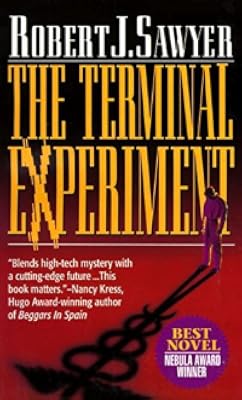
Robert J. Sawyer was born in Ottawa on April 29, 1960, but raised in Toronto. In 1980, while still in high school, Sawyer submitted a short story to the the Rochester Museum and Science Center, which was running a contest for light show ideas. Sawyer didn't win, but the Museum purchased his story Motive anyway and it ran for 192 performances. show more Sawyer went on to attend Toronto's Ryerson Polytechnical Institute, majoring in Radio and Television Arts. In September 1979, he had his first piece of fiction published at the end of his first year, in Ryerson's literary annual, White Wall Review. Sawyer graduated from Ryerson in 1982. Sawyer was hired back the following semester to teach television studio production techniques to second- and third-year students. In the four months interim, he worked for minimum wage at the local SF bookstore, spending all his earnings on books. From 1984 to 1992, while teaching, Sawyer also coordinated a social group of Toronto-area science-fiction writers founded by SF editor Judith Merril. He established a Canadian region of the Science Fiction and Fantasy Writers of America; and in 1998, served as that organization's president. Sawyer also retained freelance nonfiction writing contracts, writing articles for newspapers and magazines, press releases and brochures for corporations, newsletters for government departments. He churned out vast amounts of promotional materials and over 200 articles for computing and personal-finance magazines in a span of five years. But in that time, his only really significant publication was the novelette Golden Fleece, which appeared as the cover story in the September 1988 edition of Amazing Stories. The novel-length Golden Fleece was sold to Warner Books a year later in 1989. The sales of his first five books were uninspiring and Sawyer faced being dropped by his publisher. Sawyer decided to take the time to write a book, without a contract, take as long as necessary, and produce a blockbuster. He also wanted to tackle a controversial issue and deal with it head on. With that in mind, Sawyer wrote The Terminal Experiment, about abortion and the soul. His publisher rejected it on grounds of controversy. HarperPrism then bought the book and serialization rights were sold to Analog, the number-one best-selling English-language SF magazine. The Terminal Experiment went on to win the Science Fiction and Fantasy Writers of America's Nebula Award for Best Novel of 1995. His novel Frameshift was his first book published in hardcover, and was nominated for the Hugo Award, and won Japan's Seiun Award for best foreign novel of the year. (Bowker Author Biography) show less
Some Editions
Awards and Honors
Awards
Series

Work Relationships
Common Knowledge
- Original title
- www.watch
- Original publication date
- 2010-04
- People/Characters
- Caitlin Decter; Webmind; Marcus Decter; Hobo
- Important places
- Waterloo, Ontario, Canada
- Dedication
- For JAMES ALAN GARDNER Who Explained Teleology to the World at Large
- First words
- I now knew what I was - knew who I was.
- Quotations
- But in general, people do want to be happy. That's why we promise them 'Life, liberty and the pursuit of happiness.'"
You're in Canada now, Caitlin. I believe the corresponding promise made there is simply "Peace, order an... (show all)d good government." No mention of happiness.
Page 163. - Last words
- (Click to show. Warning: May contain spoilers.)And that day - that wondrous day - is upon you now.
Classifications
Statistics
- Members
- 686
- Popularity
- 41,806
- Reviews
- 44
- Rating
- (3.87)
- Languages
- 5 — English, French, Hungarian, Polish, Turkish
- Media
- Paper, Audiobook, Ebook
- ISBNs
- 23
- ASINs
- 11