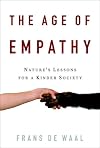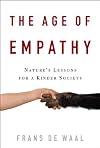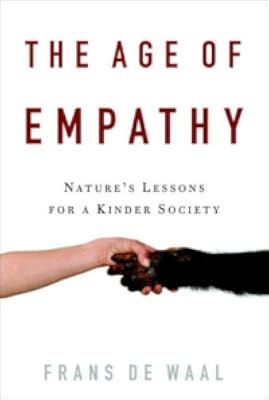
The Age of Empathy: Nature's Lessons for a Kinder Society
by Frans de Waal
On This Page
Description
Is it really human nature to stab one another in the back in our climb up the corporate ladder? Competitive, selfish behavior is often explained away as instinctive, thanks to evolution and "survival of the fittest," but, in fact, humans are equally hard-wired for empathy ...Tags
Recommendations








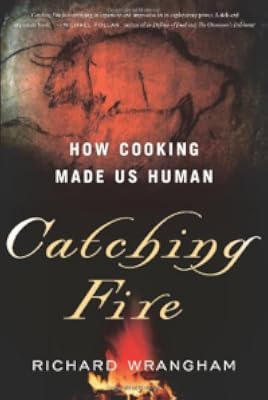
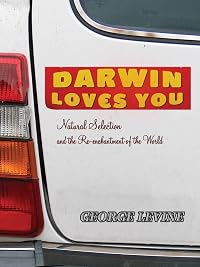
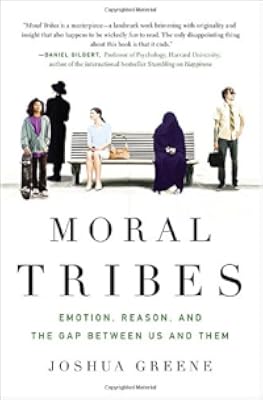

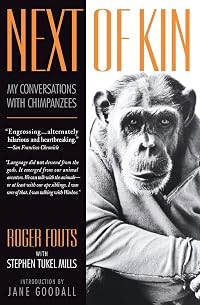


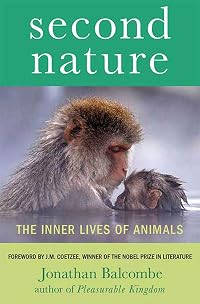
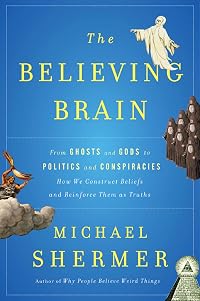
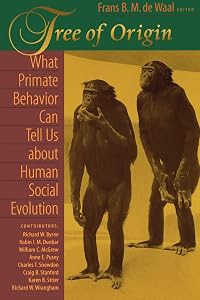
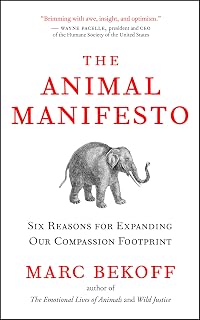


Member Recommendations



Member Reviews
A fun intriguing book taking you into the world of primate research performed in a relatively natural setting. Primates are shown to demonstrate components of behaviour that are highly evocative of our human counterpart. The problem with identification, projecting intent in actions that may or may not subjectively be the same as ours takes an ominous central place in the subtext. However the argument is necessarily circular, you need to empathise and therefore identify yourself with the subject to be able to interpret it as such.
This is the first book I’ve read by Frans de Waal. It is written in simple, accessible language and is positively stuffed with provocative ideas and anecdotal stories. The premise, that empathetic behaviors and tendencies predate our evolutionary pedigree, directly addresses underrepresented views in both evolutionary biology as well as popular conceptions of our own animal nature. I found his unapologetic attitude about the political implications of his work to be personally refreshing and scientifically defensible. However, here’s what really sells the book: in casual conversation I found myself repeatedly (and indirectly) referencing “The Age of Empathy” as a touchstone for an astonishing array of tangential interdisciplinary show more topics. My only complaint is that I would have preferred a longer, more complex book on the subject. show less
de Waal's primary talent is as a popularizer of the subtle findings of primatology, of which he is a major figure. So unlike similar summaries from science writers who may not fully command the literature, here we have the benefit of an insider's deep knowledge, phrased in a casual tone unflinching in its directness. His books are always enjoyable, but for various reasons I would recommend picking up his latest, and only reading the earlier titles if there is a specific need.
In this book, for me the most startling new discovery: "about seventy thousand years ago, our lineage was at the edge of extinction, living in scattered small bands with a global population of just a couple of thousand." I had no idea the human race came so close to show more extinction. show less
In this book, for me the most startling new discovery: "about seventy thousand years ago, our lineage was at the edge of extinction, living in scattered small bands with a global population of just a couple of thousand." I had no idea the human race came so close to show more extinction. show less
This is a clearly written, easily read report of animal studies that show empathy to be an evolutionary necessary, and basic attribute of humanity. Written after the current financial collapse, DeWall shows that following the Milton Friedman, Alan Greenspan, Gordon Gekko assumption that greed is good and a natural underpinning to a self-sustaining economic system is what lead to the collapse of that system. He shows that humans are social creatures, and that society cannot exist unless its members take the well-being of others into account. These are provocative ideas that are well worth pondering at this point in our history.
I also like the fact that he debunks the behavorist idea that animals don't have emotions by giving clear show more examples of those emotions. The fact that the book is so easy to read makes it easier for me to recommend it to people who might be reluctant to read more complicated animal studies. show less
I also like the fact that he debunks the behavorist idea that animals don't have emotions by giving clear show more examples of those emotions. The fact that the book is so easy to read makes it easier for me to recommend it to people who might be reluctant to read more complicated animal studies. show less
Important if the reader is new to the ideas - but in my case de Waal was 'preaching to the choir.' ?áSo I only read about 1/3 (beginning and end).
Yes, it's political. ?áBut the author's views are based on good science. ?áAdam Smith, Mencius, even Darwin, knew that 'survival of the fittest' doesn't mean we all ought to become Machiavellian. ?áGordon Gekko is wrong. ?á1. Apes and other animals show us that empathy, cooperation, and even altruism is wired into us, and 2. even though competition is, also, we can use our intelligence to avoid becoming so competitive we are ruthless. 3. Compassion & cooperation are Christian virtues, and it's terribly hypocritical for righteous Republicans to cut funding for social programs. show more ?áIt is ?áIn the (not very) long run, win-win for everyone to play on the same team (my paraphrase, not de Waal's).
[Adam] Smith saw society as a huge machine, the wheels of which are polished by virtue, whereas vice causes them to grate." ?áIn other words, ppl who revere him as the founder of cut-throat capitalism have not read their economic 'bible' carefully. ?á
FYI, De Waal isn't a communist, and knows well the pitfalls of Europe's caretaker governments. ?áHe criticizes the attitudes of the citizens who have, in many countries there, developed an attitude of entitlement. ?áIow, he presents a more balanced view than many, and does so credibly as he has spent decades living on both continents. ?áAlso FYI, I'm making it sound even more political than it is - there's a lot of interesting stuff about animals, and about ppl as simply a more cognitively complex (again my paraphrase) animal." show less
Yes, it's political. ?áBut the author's views are based on good science. ?áAdam Smith, Mencius, even Darwin, knew that 'survival of the fittest' doesn't mean we all ought to become Machiavellian. ?áGordon Gekko is wrong. ?á1. Apes and other animals show us that empathy, cooperation, and even altruism is wired into us, and 2. even though competition is, also, we can use our intelligence to avoid becoming so competitive we are ruthless. 3. Compassion & cooperation are Christian virtues, and it's terribly hypocritical for righteous Republicans to cut funding for social programs. show more ?áIt is ?áIn the (not very) long run, win-win for everyone to play on the same team (my paraphrase, not de Waal's).
[Adam] Smith saw society as a huge machine, the wheels of which are polished by virtue, whereas vice causes them to grate." ?áIn other words, ppl who revere him as the founder of cut-throat capitalism have not read their economic 'bible' carefully. ?á
FYI, De Waal isn't a communist, and knows well the pitfalls of Europe's caretaker governments. ?áHe criticizes the attitudes of the citizens who have, in many countries there, developed an attitude of entitlement. ?áIow, he presents a more balanced view than many, and does so credibly as he has spent decades living on both continents. ?áAlso FYI, I'm making it sound even more political than it is - there's a lot of interesting stuff about animals, and about ppl as simply a more cognitively complex (again my paraphrase) animal." show less
De Waal shows that empathy in animals is well-established and is chiefly interested in exploring how it functions. From the average reader's point of view, Chapter 7 is the most interesting, where the author addresses the role of empathy in human society.
De Waal is strongly committed to the view that both empathy and gender differences related to it are deeply grounded in evolutionary biology. This makes him optimistic, on the one hand, but also hesitant to endorse any re-engineering of human nature; he does, however, believe our species is capable of more "fellow feeling." But he stops short of proposing "how to achieve this goal"—perhaps reserving it for a future book?
Frans de Waal writes in an offhand casual style that belies his show more immense learning. show less
De Waal is strongly committed to the view that both empathy and gender differences related to it are deeply grounded in evolutionary biology. This makes him optimistic, on the one hand, but also hesitant to endorse any re-engineering of human nature; he does, however, believe our species is capable of more "fellow feeling." But he stops short of proposing "how to achieve this goal"—perhaps reserving it for a future book?
Frans de Waal writes in an offhand casual style that belies his show more immense learning. show less
Some thought provoking ideas are explored in this book. I like to believe my dog understands when I need comfort. I understand her need to go for a run.
This book makes that sound plausible.
I am adding his more recent titles to my list.
This book makes that sound plausible.
I am adding his more recent titles to my list.
Members
- Recently Added By
Published Reviews
ThingScore 75
added by Shortride
Lists

Books Read in 2018
4,360 works; 110 members

The Five Books That Represent Us
391 works; 149 members
Author Information

33+ Works 6,081 Members
Frans De Waal has been named one of Time magazine's 100 Most Influential People. The author of The Bonobo and the Atheist, among many other works, he is the C. H. Candler Professor in Emory University's Psychology Department and director of the Living Links Center at the Yerkes National Primate Research Center. He lives in Atlanta, Georgia.
Common Knowledge
- Canonical title*
- Een tijd voor empathie
- Original title
- The Age of Empathy
- Original publication date
- 2009
- Quotations
- "Students of law, economics, and politics lack the tools to look at their own society with any objectivity"
"With monkeys and apes around every corner, no rain forest culture has ever produced a religion that places hu... (show all)mans outside of nature"
"Do business schools teach ethics and obligations to the community in any context other than how it may advance business? Do they pay equal attention to stakeholders and shareholders? And why does the 'dismal science' attract so few female students, and has never produced a female Nobelist?" - Original language*
- Engels
*Some information comes from Common Knowledge in other languages. Click "Edit" for more information.
Classifications
- Genres
- Science & Nature, Nonfiction, General Nonfiction, Anthropology, Philosophy
- DDC/MDS
- 152.41 — Philosophy & psychology Psychology Sensory perception, movement, emotions, physiological drives Emotions Love and Affection
- LCC
- BF575 .E55 .W3 — Philosophy, Psychology and Religion Psychology Psychology Affection. Feeling. Emotion
- BISAC
Statistics
- Members
- 484
- Popularity
- 62,806
- Reviews
- 11
- Rating
- (4.05)
- Languages
- 10 — Dutch, English, French, German, Italian, Polish, Portuguese, Spanish, Swedish, Turkish
- Media
- Paper, Audiobook, Ebook
- ISBNs
- 33
- ASINs
- 8