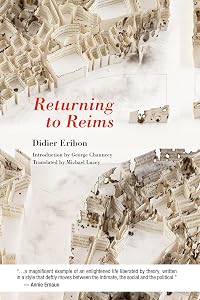
Returning to Reims
by Didier Eribon
On This Page
Description
After his father dies, Didier Eribon returns to his hometown of Reims and rediscovers the working-class world he had left behind thirty years earlier. For years, Eribon had thought of his father largely in terms of the latter's intolerable homophobia. Yet his father's death provokes new reflection on Eribon's part about how multiple processes of domination intersect in a given life and in a given culture. Eribon sets out to investigate his past, the history of his family, and the trajectory show more of his own life. His story weaves together a set of remarkable reflections on the class system in France, on the role of the educational system in class identity, on the way both class and sexual identities are formed, and on the recent history of French politics, including the shifting voting patterns of the working classes -- reflected by Eribon's own family, which changed its allegiance from the Communist Party to the National Front. Returning to Reims is a remarkable book of sociological inquiry and critical theory, of interest to anyone concerned with the direction of leftist politics in the contemporary world, and to anyone who has ever experienced how sexual identity can clash with other parts of one's identity. A huge success in France since its initial publication in 2009, Returning to Reims received enthusiastic reviews in Le Monde, Liberation, L'Express, Les Inrockuptibles, and elsewhere. show lessTags
Recommendations


























Member Reviews
Like many gay men, Didier Eribon moved to the big city and effectively broke off contact with his parents when he came out — he was prompted to write this memoir largely by the process of renewing his relationship with his elderly mother, decades later, when she found herself having to cope with his father’s illness and death.
In the book, he reflects on how both his sexuality and his choice of an academic career cut him off from the rough, working-class background he grew up in, and at the odd ways in which the two interact. It is quite consciously written as a book by an academic, for academics, and it’s written in the finest sociologese (a dialect that at least has the merit of being no harder to understand in French than it is show more in English...). It can be tough for a lay reader to follow in places, and occasionally it almost reads as though Eribon is just making fun of himself, but it is worth battling on through the jargon. Eribon takes his personal experiences and bounces them up against political and sociological theory and against the parallel experiences of writers who have influenced him - Sartre, Marx, Foucault, Bourdieu, etc., but also, less obviously, Annie Ernaux, Raymond Williams, James Baldwin and Patrick Chamoiseau. And he comes up with some interesting conclusions about the problems that are inherent in the relationship between academic left-wing thought and the real working-class that it claims to represent.
One aspect of the book that has got a lot of media coverage is his analysis — drawn from his mother’s admission that she “only once” voted for Le Pen — of the way the Left may have made space for radical right-wing ideas by moving into the comfortable mainstream of politics. But this is actually a rather minor part of the book, and he doesn’t really develop this idea very far. What was interesting, though, was the point he made about the complexity of the act of voting. People don’t simply vote to express their agreement with a candidate’s policies, or in their own interests (in press interviews more recently he’s taken this further to talk about not only the way his mother — a pensioner dependent on social security — would have lost out if Le Pen had got in, but also the turkey/Christmas referendum in the UK). But there also seems to be something more than a little patronising about his attitude: he seems to accept that working-class culture is necessarily racist, sexist, homophobic, and that you can only get beyond that by engaging people in some cause that makes them see beyond their own noses (striking workers show solidarity with their black colleagues...).
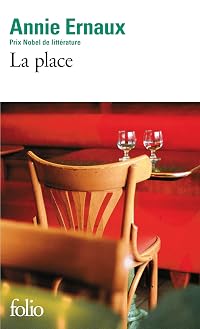
What I found particularly interesting about the book was the frankness of Eribon’s discussion of his feelings about his working-class background, which actually do seem to come very close to those Ernaux expresses in her books (in very different language!). There is the same feeling of shame and embarrassment at his (perceived) coarseness and ignorance compared to his bourgeois fellow-students, the same guilt about having abandoned “where he came from”. And the same anger about the education system that pretends to provide equal opportunities but is actually designed to favour kids from nice, respectable middle-class backgrounds at every stage.
Also interesting to see his thoughts about how expressing his sexuality as a gay man required him to develop an identity different from the one he grew up in, so reinforcing the tendency to become middle-class (and a sport-hating aesthete — yes, we’ve all been there and done that...!).
Not an easy book, but worth reading if you’re interested in class and sexuality and how they interact. show less
In the book, he reflects on how both his sexuality and his choice of an academic career cut him off from the rough, working-class background he grew up in, and at the odd ways in which the two interact. It is quite consciously written as a book by an academic, for academics, and it’s written in the finest sociologese (a dialect that at least has the merit of being no harder to understand in French than it is show more in English...). It can be tough for a lay reader to follow in places, and occasionally it almost reads as though Eribon is just making fun of himself, but it is worth battling on through the jargon. Eribon takes his personal experiences and bounces them up against political and sociological theory and against the parallel experiences of writers who have influenced him - Sartre, Marx, Foucault, Bourdieu, etc., but also, less obviously, Annie Ernaux, Raymond Williams, James Baldwin and Patrick Chamoiseau. And he comes up with some interesting conclusions about the problems that are inherent in the relationship between academic left-wing thought and the real working-class that it claims to represent.
One aspect of the book that has got a lot of media coverage is his analysis — drawn from his mother’s admission that she “only once” voted for Le Pen — of the way the Left may have made space for radical right-wing ideas by moving into the comfortable mainstream of politics. But this is actually a rather minor part of the book, and he doesn’t really develop this idea very far. What was interesting, though, was the point he made about the complexity of the act of voting. People don’t simply vote to express their agreement with a candidate’s policies, or in their own interests (in press interviews more recently he’s taken this further to talk about not only the way his mother — a pensioner dependent on social security — would have lost out if Le Pen had got in, but also the turkey/Christmas referendum in the UK). But there also seems to be something more than a little patronising about his attitude: he seems to accept that working-class culture is necessarily racist, sexist, homophobic, and that you can only get beyond that by engaging people in some cause that makes them see beyond their own noses (striking workers show solidarity with their black colleagues...).
What I found particularly interesting about the book was the frankness of Eribon’s discussion of his feelings about his working-class background, which actually do seem to come very close to those Ernaux expresses in her books (in very different language!). There is the same feeling of shame and embarrassment at his (perceived) coarseness and ignorance compared to his bourgeois fellow-students, the same guilt about having abandoned “where he came from”. And the same anger about the education system that pretends to provide equal opportunities but is actually designed to favour kids from nice, respectable middle-class backgrounds at every stage.
Also interesting to see his thoughts about how expressing his sexuality as a gay man required him to develop an identity different from the one he grew up in, so reinforcing the tendency to become middle-class (and a sport-hating aesthete — yes, we’ve all been there and done that...!).
Not an easy book, but worth reading if you’re interested in class and sexuality and how they interact. show less
I'll admit I don't read non-fiction titles very often, but this is one of the better ones I've read in recent years. With his sociological/philosophical approach, Eribon provides insight into what it is like to come from the "working class" and try to break out of the vicious cycle; very interesting thoughts about what happened to Marxism and the left, accompanied by the rise of the ultra-right; and a great deal of genuinely honest self analysis about what it means to be a homosexual in a society that is still today highly discriminatory of any behaviour it sees as different from the accepted norm, whether that means being poor, being a socialist or being gay.
This is a very interesting book that can be read by everyone who wants to show more understand the importance of tolerance. show less
This is a very interesting book that can be read by everyone who wants to show more understand the importance of tolerance. show less
Interesse für Kunst oder Literatur hat stets, ob bewusst oder unbewusst, auch damit zu tun, dass man das Selbst aufwertet, indem man sich von jenen abgrenzt, die keinen Zugang zu solchen Dingen haben; es handelt sich um eine »Distinktion«, einen Unterschied im Sinne einer Kluft, die konstitutiv ist für das Selbst und die Art, wie man sich selbst sieht, und zwar immer im Vergleich zu den anderen – den »bildungsfernen« oder »unteren« Schichten etwa. Wie oft konnte ich in meinem späteren Leben als »kultivierte Person« die Selbstzufriedenheit besichtigen, die Ausstellungen, Konzerte und Opern vielen ihrer Besuchern bereiten. Dieses Überlegenheitsgefühl, das aus ihrem ewigen diskreten Lächeln ebenso spricht wie aus ihrer show more Körperhaltung, dem kennerhaften Jargon, dem ostentativen Wohlgefühl … In all diesen Dingen kommt die soziale Freude darüber zum Ausdruck, den kulturellen Konventionen zu entsprechen und zum privilegierten Kreis derer zu gehören, die sich darin gefallen, dass sie mit »Hochkultur« etwas anfangen können. Dieses Gehabe hat mich seit je eingeschüchtert, und doch tat ich alles dafür, so zu werden wie diese Leute, in kulturellen Kontexten dieselbe Lockerheit an den Tag zu legen und den Eindruck zu vermitteln, ich sei ebenfalls so geboren worden.
Wenn die überlebende oder wiederhergestellte Bedeutung des »Wir« sich dermaßen gewandelt hat, dass nun nicht länger die »Arbeiter« den »Bourgeois« gegenüberstehen, sondern die »Franzosen« den »Ausländern«? Oder genauer: Wenn der Gegensatz zwischen »uns hier unten« und »denen da oben«, in den sich der zwischen Arbeitern und Bourgeois verwandelt hat (was schon nicht mehr dasselbe ist und jeweils unterschiedliche politische Schlussfolgerungen impliziert), plötzlich eine nationale und ethnische Komponente bekommt, weil »die da oben« als Befürworter einer Immigration wahrgenommen werden, deren Folgen »die da unten« angeblich jeden Tag zu ertragen haben, einer Einwanderung, die plötzlich für alle möglichen Übel verantwortlich gemacht wird?
Die entfremdete Weltanschauung (den Ausländern die Schuld geben) verdrängt den politischen Begriff (gegen die Herrschaft ankämpfen).
Ich entschied mich also für Bildung und »Kultur« und gegen den Männlichkeitskult der unteren Schichten. show less
Wenn die überlebende oder wiederhergestellte Bedeutung des »Wir« sich dermaßen gewandelt hat, dass nun nicht länger die »Arbeiter« den »Bourgeois« gegenüberstehen, sondern die »Franzosen« den »Ausländern«? Oder genauer: Wenn der Gegensatz zwischen »uns hier unten« und »denen da oben«, in den sich der zwischen Arbeitern und Bourgeois verwandelt hat (was schon nicht mehr dasselbe ist und jeweils unterschiedliche politische Schlussfolgerungen impliziert), plötzlich eine nationale und ethnische Komponente bekommt, weil »die da oben« als Befürworter einer Immigration wahrgenommen werden, deren Folgen »die da unten« angeblich jeden Tag zu ertragen haben, einer Einwanderung, die plötzlich für alle möglichen Übel verantwortlich gemacht wird?
Die entfremdete Weltanschauung (den Ausländern die Schuld geben) verdrängt den politischen Begriff (gegen die Herrschaft ankämpfen).
Ich entschied mich also für Bildung und »Kultur« und gegen den Männlichkeitskult der unteren Schichten. show less
Very interesting, must write a review.
Un libro che è in parte autobiografia in parte un saggio. Lo rende sicuramente strano l’abbondanza di note e di riferimenti bibliografici che si inseriscono nel racconto di episodi della vita dell’autore.
Aver letto Reckwitz poco prima mi ha fortemente condizionato. Ho cercato di identificare i segni della contrapposizione tra epoche con paradigmi differenti e devo ammettere che non è stato difficile. L’autore rappresenta in modo chiarissimo l’esigenza di costruire una propria identità usando intensamente la cultura ed in particolare una cultura ‘antagonista’ che si basa sulle proprie origini ma se ne allontana allo stesso tempo. Altro elemento chiarissimo: la contrapposizione tra una realtà operaia e borghese ormai al show more tramonto presente a Reims e la nuova società caratterizzata dal predominio di professioni culturali presente a Parigi. È ancora: la contrapposizione tra hypercultura e quello che Reckwitz definisce ‘cultural essentialism’ presente nelle varie comunità che l’autore descrive ed in particolare in quelle che prendono le distanze dalle forme di individualizzazione e sviluppo soggettivo, dalle forme di sviluppo di identità diverse, di ‘noi’ differenti. Interessante la riflessione sul profondo conflitto personale con le proprie origini, il conflitto tra il se radicato nel proprio passato e il se che tenta di emergere autonomo alimentandosi di cultura. E ancora: l’equivalenza tra sinistra e destra nel rappresentare la classe operaia nei diversi periodi che l’autore esamina.
Mi riesce difficile capire come può questa storia essermi vicina. È così lontana per tanti aspetti, a volte diametralmente opposta, eppure qualcosa sento che c’è. show less
Aver letto Reckwitz poco prima mi ha fortemente condizionato. Ho cercato di identificare i segni della contrapposizione tra epoche con paradigmi differenti e devo ammettere che non è stato difficile. L’autore rappresenta in modo chiarissimo l’esigenza di costruire una propria identità usando intensamente la cultura ed in particolare una cultura ‘antagonista’ che si basa sulle proprie origini ma se ne allontana allo stesso tempo. Altro elemento chiarissimo: la contrapposizione tra una realtà operaia e borghese ormai al show more tramonto presente a Reims e la nuova società caratterizzata dal predominio di professioni culturali presente a Parigi. È ancora: la contrapposizione tra hypercultura e quello che Reckwitz definisce ‘cultural essentialism’ presente nelle varie comunità che l’autore descrive ed in particolare in quelle che prendono le distanze dalle forme di individualizzazione e sviluppo soggettivo, dalle forme di sviluppo di identità diverse, di ‘noi’ differenti. Interessante la riflessione sul profondo conflitto personale con le proprie origini, il conflitto tra il se radicato nel proprio passato e il se che tenta di emergere autonomo alimentandosi di cultura. E ancora: l’equivalenza tra sinistra e destra nel rappresentare la classe operaia nei diversi periodi che l’autore esamina.
Mi riesce difficile capire come può questa storia essermi vicina. È così lontana per tanti aspetti, a volte diametralmente opposta, eppure qualcosa sento che c’è. show less
Jun 30, 2022Italian
Na zijn interview in de Groene leek Eribon me sympathieker dan hij in dit boek naar voren komt. Gepresenteerd als een terugkeer van deze succesvolle hoogleraar sociologie en mediapersoon naar zijn 'roots', een arbeidersgezin uit Reims, na de dood van zijn vader, maar toch eerder een sociologische verhandeling over kansarmen en kansrijken. In zijn analyses heeft E. meestal wel gelijk, maar ze zijn erg 'dik' geschreven, met wel tamelijk opblazen van de kloof hoog-laag (maar misschien was die in Frk jaren 50-70 wel groter dan Nl.) en met erg weinig oog voor de verschillen binnen de klasse 'boven' hem (zoals typisch en ook logisch is voor sociale stijgers). Wat hij over de onderdrukking van homo's zegt spreekt me meer aan dan wat hij over show more die van arbeiders zegt; ook logisch. Wat me het meeste tegenviel is zijn gebrek aan werkelijke terugkeer, aan sympathie met zijn ouders en broers, aan een poging tot contact. Ik vind het onbegrijpelijk dat iemand veertig jaar zijn familie niet wil zien, m.i. toch ook uit arrogantie en kilte. show less
Jun 10, 2018Dutch
A partir d'un retour dans sa ville natale, après la mort de son père, Didier Eribon mène une réflexion sur son itinéraire d'enfant d'une famille ouvrière, devenu universitaire. Bien au-delà d'un récit intime, en soi déjà intéressant, une analyse sociologique passionnante sur la famille, l'éducation, la construction de l'identité sexuelle, les choix politiques.
Apr 30, 2011French
1
Members
- Recently Added By
Lists

All Things France
100 works; 8 members

Books Read in 2018
4,360 works; 110 members

contemporary literary fiction list to check out
47 works; 1 member
Author Information

Some Editions
Awards and Honors
Series
Belongs to Publisher Series
Work Relationships
Has the adaptation
Common Knowledge
- Canonical title
- Returning to Reims
- Original title
- Retour à Reims
- Original publication date
- 2009 (French) (French)
- Original language
- French
Classifications
Statistics
- Members
- 456
- Popularity
- 66,993
- Reviews
- 7
- Rating
- (4.11)
- Languages
- 11 — Chinese, Dutch, English, Finnish, French, German, Italian, Polish, Portuguese (Portugal), Spanish, Swedish
- Media
- Paper, Audiobook, Ebook
- ISBNs
- 34
- ASINs
- 12