Totemism
by Claude Lévi-Strauss
On This Page
Description
"Levi-Strauss continues his assault on the myth of the primitice as savage by turning to the phenomena of totemism an totoemix classification ... to show, contrary to this myth, that primitive thought rests upon a rich and complex conceptual structure." - CommentaryTags
Recommendations















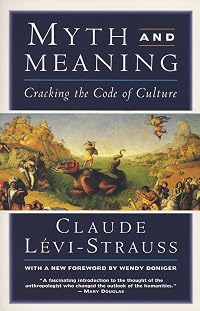


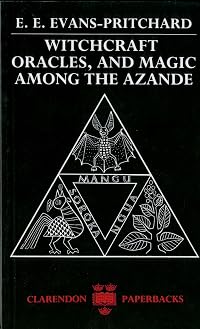











Member Recommendations

Member Reviews
A translation of Claude Levi-Strauss's classic and conclusive short volume on the problem of Totemism - why did it come about seemingly independently, and in so many complex forms, across the world; what human needs does it solve, and why this form here, and another in that place over there. Are its roots economic, as suggested by some anthropologists, based on a misunderstanding of tribal genealogy or the natural world as suggested by others, or spawned from neurosis and anxiety as Freud suggests?
Levi-Strauss deftly runs through the various theories that have been proposed over the years, and then neatly ties up all the loose ends in a very satisfactory conclusion. It is a paradoxical magic trick, by showing the logic behind the show more mystery, the concept of Totemism itself disappears.
Though his method, Structuralism, is not fully explained here, it is not required really to see the general idea of how he got to where he did. For anyone more interested in this method of analysis (which is in itself as interesting as the topic of Totemism), it would be worth seeking out a separate work such as Edmund Leach's Modern Masters volume on Levi-Strauss, which makes the neatness of this approach more fully appreciable. Perhaps read that first. show less
Levi-Strauss deftly runs through the various theories that have been proposed over the years, and then neatly ties up all the loose ends in a very satisfactory conclusion. It is a paradoxical magic trick, by showing the logic behind the show more mystery, the concept of Totemism itself disappears.
Though his method, Structuralism, is not fully explained here, it is not required really to see the general idea of how he got to where he did. For anyone more interested in this method of analysis (which is in itself as interesting as the topic of Totemism), it would be worth seeking out a separate work such as Edmund Leach's Modern Masters volume on Levi-Strauss, which makes the neatness of this approach more fully appreciable. Perhaps read that first. show less
Il totemismo, ossia il particolare fenomeno per cui un uomo o un gruppo di uomini si legano con un rapporto di parentela e di mutua protezione a una specie animale - o a piante o a fenomeni naturali - è stato variamente considerato: gli sono stati di volta in volta riconosciuti e negati carattere religioso e carattere universale; a volte è stato considerato tipico di una fase del progresso culturale; altre volte se ne è constatata l'assenza nei popoli più primitivi. L'analisi critica cui Claude Levi-Strauss lo sottopone in questo libro prospetta il fenomeno in una luce tutta nuova: ‟Il totemismo partecipa della conoscenza; le esigenze alle quali risponde, il modo stesso in cui cerca di soddisfarle, sono in primo luogo d'ordine show more intellettuale. In questo senso non ha nulla d'arcaico e di lontano.” show less
A very interesting read. However, the book was at times kind of a hard read but considering when it was written and the fact it is very much an academic book, its not surprising. Overall, a good read over non-neopagan or New Age totemism.
Ratings
Members
- Recently Added By
Lists

Filosofía - Clásicos
217 works; 1 member

Books in the Bibliography of The Mind in the Cave by David Lewis-Williams
257 works; 1 member
Author Information

151+ Works 9,344 Members
Claude Levi-Strauss, a French anthropologist, was the founder of structural anthropology. This theoretical position assumes that there are structural propensities in the human mind that lead unconsciously toward categorization of physical and social objects, hence such book titles as The Raw and the Cooked (1964) and such expositions of his work show more by others as The Unconscious in Culture and Elementary Structures Reconsidered. According to Levi-Strauss, the models of society that scholars create are often dual in nature:status-contract (Maine): Gemeinschaft-Gesellschaft (Tonnies); mechanical-organic solidarity (Durkheim); folk-urban (Redfield); universalism-particularism (Parsons); and local-cosmopolitan (Merton). Levi-Strauss's writings---some of which have been described by Clifford Geertz as "theoretical treatises set out as travelogues"---have been enormously influential throughout the scholarly world. George Steiner has described him, along with Freud (see also Vol. 5) and Marx (see also Vol. 4), as one of the major architects of the thought of our times. Levi-Strauss died October 30, 2009. (Bowker Author Biography) show less
Some Editions
Series
Belongs to Publisher Series
Work Relationships
Is contained in
Common Knowledge
- Original title
- Le Totémisme aujourd'hui
- Original publication date
- 1962
Classifications
- Genres
- Anthropology, Nonfiction, General Nonfiction, Religion & Spirituality, Philosophy
- DDC/MDS
- 301.2 — Society, government, & culture Social sciences, sociology & anthropology Sociology and anthropology Formerly: Culture and cultural processes
- LCC
- GN491 .L413 — Geography, Anthropology and Recreation Anthropology Anthropology Ethnology. Social and cultural anthropology Cultural traits, customs, and institutions Social organization
- BISAC
Statistics
- Members
- 419
- Popularity
- 73,892
- Reviews
- 4
- Rating
- (3.40)
- Languages
- 9 — English, French, German, Italian, Polish, Portuguese, Spanish, Swedish, Turkish
- Media
- Paper, Ebook
- ISBNs
- 18
- UPCs
- 1
- ASINs
- 15