On This Page
Description
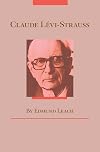
The theories of Claude Lévi-Strauss (born 1908) aim at no less than a complete understanding of the human mind. They combine, to quote the author of this book, ‘baffling complexity’ with ‘overwhelming erudition’. In unravelling these complexities, Sir Edmund Leach’s classic study balances a sharply critical approach with a generous recognition of Lévi-Strauss’s importance as the father of modern structural anthropology. This Second Edition of ' Lévi-Strauss' comes with a show more revised bibliography, updated notes and a new preface by Dr James Laidlaw, who lectures in Social Anthropology in the University of Cambridge. Leach, with great humour and impartiality, explains Lévi-Strauss’s originality, castigates his intellectual arrogance and theoretical dogmatism, and puts him into perspective, not only within the field of anthropology, but also the general history of thought.JOHN WEIGHTMAN, 'Observer' The newcomer to Lévi-Strauss or to structural anthropology will find this book an admirable key to a convoluted mind and a complicated topic.NEW SOCIETY Leach, the analytic anthropologist, faults many of Lévi-Strauss’s basic purposes – for example, the attempt to establish facts ‘universally true of the human mind’. But Leach rightly admires Lévi-Strauss’s remarkably revealing handling of complex traditions, and so attempts only to curtail Lévi-Strauss’s extravagance.BIRMINGHAM POST show lessTags
Recommendations

































Member Recommendations
Member Reviews
Written in the 1970s, this critical introduction to Levi-Strauss is an excellent guide to Lévi-Strauss's ideas as well as to the deficiencies in his structuralist approach. Leach comes out of the functionalist school which has a particular focus on the rules and practices of each individual society whereas Lévi-Strauss developed the structuralist (based on linguistics) approach in seeking to identify underlying common tendencies in all human societies. Leach is quick to point out where Lévi-Strauss overreaches or where his theories fail to match empirical facts. But he also acknowledges that Lévi-Strauss's method provides important insights and should not be ignored. Using an example of his own, Leach explains how cultural show more manifestations can be based on structural foundations in our understanding of nature. He explains the algebraic binary oppositions that are at the bottom of Lévi-Strauss's analytical technique. He then takes us through the analysis of cooking, human nature, myths and finally the structures of kinship. show less
This is a popular account of the work of Levi-Strauss, who is known for bringing Structuralism to his field of Anthropology. Structuralism, when applied to its original fields of linguistics, can sometimes seem so simple as to be a re-stating of the obvious using unnecessary technical terms, with its intellectual significance entirely out of grasp. However, from reading this work, the importance of Structuralism in Anthropology appears quite clear and wide-ranging.
Though the analogy with Kant is not used in this book, there are some similarities between what he attempted to do for our understanding of the natural world, and what Levi-Strauss has done for the cultural, social, and mythological world. In the first case, Kant claims that show more pre-existing organisational structures in our minds determine the categories that order our perceptions – giving us conceptions of three-dimensional space, time, quantity, relation etc. What Levi-Strauss does is to present evidence that we have pre-existing categories, or structures of organising abstract social or cultural concepts in our minds, which we have inherited from simple versions evolved in the animal kingdom. These unconscious structures provide a means of categorising, and thus structuring our social behaviour and human cultural behaviour. They are not deterministic, but they predispose us to act and see the world in certain ways. These universal categories often exist in binary oppositions, for example male/female, predator/prey, edible/non-edible, same-species/different-species, and evolved as useful concepts (not necessarily used consciously, but instinctively), over the vast history of evolution. He shows that these categories can be seen in operation in the animal kingdom, and were carried over and developed in complexity in human societies. Some interesting examples are given in the development of social hierarchy, and its effects on the social value and role of food and other matters such as marriage that appear to be universal or at least widely spread across independently-developed cultures.
Thus structuralism is a method of drawing out organisational concepts, and ways of classifying things, that enables patterns in behaviour to be found across societies. In its more complex forms this is used to produce tables, or algebraic matrices of permutations in multiple categories, where combinational similarities can be drawn out between disparate cultures, which wouldn’t otherwise be apparent. These are the same similarities and aspects of cultures that would ordinarily be studied by the anthropologist, but the use of structuralism is here a useful tool for increasing the depth of the analysis, while at the same time providing explanatory power with over-arching concepts, as well as predictive scope for future investigations. A very good example is provided in this volume on structuralist interpretation of Greek myths (though Levi-Strauss worked predominantly on South American culture), which offers to explain multiple otherwise-confusing features of these stories.
In addition to explaining the value of structuralism in anthropology, this book also does a good job of illustrating its limitations. Firstly, in some examples of its simpler uses, it is difficult to see how the use of structuralism provides anything in addition to a non-structuralist approach, other than a linguistic sleight-of-hand or re-description of the same facts using different terms. At the other end of the complexity scale, where vast tabular comparisons have been made to draw out cross-cultural similarities across a range of phenomena, it has been accused of ignoring evidence that does not fit to the predicted patterns, or at least a selective interpretation of the recorded facts.
Overall a great introduction to structuralism and its use in anthropology, and general enough in its importance to be worth reading for the general reader interested in human culture. show less
Though the analogy with Kant is not used in this book, there are some similarities between what he attempted to do for our understanding of the natural world, and what Levi-Strauss has done for the cultural, social, and mythological world. In the first case, Kant claims that show more pre-existing organisational structures in our minds determine the categories that order our perceptions – giving us conceptions of three-dimensional space, time, quantity, relation etc. What Levi-Strauss does is to present evidence that we have pre-existing categories, or structures of organising abstract social or cultural concepts in our minds, which we have inherited from simple versions evolved in the animal kingdom. These unconscious structures provide a means of categorising, and thus structuring our social behaviour and human cultural behaviour. They are not deterministic, but they predispose us to act and see the world in certain ways. These universal categories often exist in binary oppositions, for example male/female, predator/prey, edible/non-edible, same-species/different-species, and evolved as useful concepts (not necessarily used consciously, but instinctively), over the vast history of evolution. He shows that these categories can be seen in operation in the animal kingdom, and were carried over and developed in complexity in human societies. Some interesting examples are given in the development of social hierarchy, and its effects on the social value and role of food and other matters such as marriage that appear to be universal or at least widely spread across independently-developed cultures.
Thus structuralism is a method of drawing out organisational concepts, and ways of classifying things, that enables patterns in behaviour to be found across societies. In its more complex forms this is used to produce tables, or algebraic matrices of permutations in multiple categories, where combinational similarities can be drawn out between disparate cultures, which wouldn’t otherwise be apparent. These are the same similarities and aspects of cultures that would ordinarily be studied by the anthropologist, but the use of structuralism is here a useful tool for increasing the depth of the analysis, while at the same time providing explanatory power with over-arching concepts, as well as predictive scope for future investigations. A very good example is provided in this volume on structuralist interpretation of Greek myths (though Levi-Strauss worked predominantly on South American culture), which offers to explain multiple otherwise-confusing features of these stories.
In addition to explaining the value of structuralism in anthropology, this book also does a good job of illustrating its limitations. Firstly, in some examples of its simpler uses, it is difficult to see how the use of structuralism provides anything in addition to a non-structuralist approach, other than a linguistic sleight-of-hand or re-description of the same facts using different terms. At the other end of the complexity scale, where vast tabular comparisons have been made to draw out cross-cultural similarities across a range of phenomena, it has been accused of ignoring evidence that does not fit to the predicted patterns, or at least a selective interpretation of the recorded facts.
Overall a great introduction to structuralism and its use in anthropology, and general enough in its importance to be worth reading for the general reader interested in human culture. show less
Edmund Leach wrote a short introduction to Claude Lévi - Strauss´ work: Explaining the basics of structural approach to Social and Cultural Anthropology, he describes Lévis - Straussian binaries and models.
Ratings
Members
- Recently Added By
Lists

Books in the Bibliography of The Mind in the Cave by David Lewis-Williams
257 works; 1 member

In Our Time books
4,934 works; 2 members
Author Information

All Editions
Some Editions
Series

Belongs to Publisher Series
Common Knowledge
- Canonical title
- Lévi-Strauss
- Original publication date
- 1970
- People/Characters
- Claude Lévi-Strauss
- First words
- Claude Lévi-Strauss, Professor of Social Anthropology at the Collège de France, is, by common consent, the most distinguished exponent of this particular academic trade to be found anywhere outside the English speaking worl... (show all)d, but scholars who call themselves social anthropologists are of two kinds.
- Last words
- (Click to show. Warning: May contain spoilers.)Perhaps even in the age of space rockets and hydrogen bombs Paradise need not be wholly beyond recall.
- Original language
- English
Classifications
- Genres
- Anthropology, Nonfiction, Philosophy, Biography & Memoir
- DDC/MDS
- 301.092 — Society, government, & culture Social sciences, sociology & anthropology Sociology and anthropology standard subdivisions of sociology and/or anthropology History, geographic treatment, biography Biography
- LCC
- GN21 .L4 .L4 — Geography, Anthropology and Recreation Anthropology Anthropology
- BISAC
Statistics
- Members
- 344
- Popularity
- 92,009
- Reviews
- 4
- Rating
- (3.13)
- Languages
- 5 — Danish, English, Finnish, German, Spanish
- Media
- Paper
- ISBNs
- 15
- UPCs
- 1
- ASINs
- 5