On This Page
Description
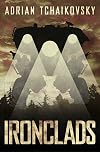
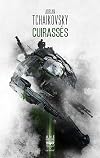
Scions have no limits. Scions do not die. And Scions do not disappear. Sergeant Ted Regan has a problem. A son of one of the great corporate families, a Scion, has gone missing at the front. He should have been protected by his Ironclad - the lethal battle suits that make the Scions masters of war - but something has gone catastrophically wrong. Now Regan and his men, ill-equipped and demoralized, must go behind enemy lines, find the missing Scion, and uncover how his suit failed. Is there a show more new Ironclad killer out there? And how are common soldiers, lacking the protection afforded the rich, supposed to survive the battlefield of tomorrow? A standalone audiobook by the Arthur C Clarke Award-winning author of Children of Time. show lessTags
Recommendations














Member Reviews
Do you want some military science fiction, like Starship Troopers, but where instead of battling bugs, ground pounders take on corporate scions in invulnerable mechanized tanks, a la the Walkers in Star Wars?
That is what Adrian Tchaikovsky offers up in Ironclads.
Ted Regan, the first-person narrator, talks like an everyman hero from a novel by Robert Heinlein. Tchaikovsky’s satire of corporate authoritarian bureaucracy also has a Heinleinian ring, as does his portrayal of a Scandinavian warrior goddess figure.
But there is also some backhanded satire aimed at Heinlein. What would he think, for example, of the prohibitions against blasphemy by the First Church of Christ Libertarian? Or the idea that the theocratic state of corporate show more America has bought a bankrupt Britain and gone to war in Sweden? show less
That is what Adrian Tchaikovsky offers up in Ironclads.
Ted Regan, the first-person narrator, talks like an everyman hero from a novel by Robert Heinlein. Tchaikovsky’s satire of corporate authoritarian bureaucracy also has a Heinleinian ring, as does his portrayal of a Scandinavian warrior goddess figure.
But there is also some backhanded satire aimed at Heinlein. What would he think, for example, of the prohibitions against blasphemy by the First Church of Christ Libertarian? Or the idea that the theocratic state of corporate show more America has bought a bankrupt Britain and gone to war in Sweden? show less
Let the record show that when I started reading this book, I was still in the deep space haze of an astrophysics mental "hangover" having just read about a rum smelling, raspberry tasting Milky Way. But, this book is WILD and just lassoed my brain and dragged me out into curated chaos of the Ironclad world.
From the get go, I was transported into the barracks of a couple of soldiers fighting in a really weird war where the countries at loggerheads sound eerily familiar but also....different. Nordland, Sweden...the Union ...which Union? Hooked in a couple of paragraphs. I try not to read the blurbs for most books I select and this was one of them. I had a vague notion that it had to do with some form of higher order AI and from the cover show more - machines, and that was enough for me.
We see the events of Ironclads through Ted's eyes (Poor Ted, not the Rich Ted because Rich Ted could never get his hands dirty, typical suit.) and it's like trying to surf a massive wave using an orca whale as the board - messy, dangerous, INSANE, epic and a behemoth task for the daring daredevils. Honestly, at some point, it seemed like they were literally stumbling about in the face of danger at every turn. It was thrilling.
1. We've got big machines that people can sit in and go wage war. Unfair advantage and only for the wealthy, kinda like the massive Pacific Rim's Jaeger's run and managed by corporations.
2. We've got a war backed by Multinational Corporations - it's basically a war between these companies really and the people are cannon fodder. (par for the course in reality as well)
3. Scandinavians are the last holdout pushing back the expanding Union (which sounds a lot like the US to the power of 5 more countries or so) and you know what - that is believable. shoutout to Finland and The Finns who are the all powerful hybridized bioweapons.
4. We've got humor, double crosses, questionable war strategies, drones, oh man some really epic drones mind-melted to an operator.
So really, how could I not fall in love with this book with off the cuff, witty writing like this:
"Cruising in at treetop height was probably the biggest gunship anyone had ever managed to get in the air. In Canada they’d had three of them across the whole front, and they were called something like Jodorowskys. Of course just being big didn’t actually count for a whole deal, but they were built with that modern Slavic approach to engineering, all redundancy and hard-wearing components and no regard whatsoever for looking pretty. They took a lot of pounding before gravity took offence and yanked them down to earth." show less
From the get go, I was transported into the barracks of a couple of soldiers fighting in a really weird war where the countries at loggerheads sound eerily familiar but also....different. Nordland, Sweden...the Union ...which Union? Hooked in a couple of paragraphs. I try not to read the blurbs for most books I select and this was one of them. I had a vague notion that it had to do with some form of higher order AI and from the cover show more - machines, and that was enough for me.
We see the events of Ironclads through Ted's eyes (Poor Ted, not the Rich Ted because Rich Ted could never get his hands dirty, typical suit.) and it's like trying to surf a massive wave using an orca whale as the board - messy, dangerous, INSANE, epic and a behemoth task for the daring daredevils. Honestly, at some point, it seemed like they were literally stumbling about in the face of danger at every turn. It was thrilling.
1. We've got big machines that people can sit in and go wage war. Unfair advantage and only for the wealthy, kinda like the massive Pacific Rim's Jaeger's run and managed by corporations.
2. We've got a war backed by Multinational Corporations - it's basically a war between these companies really and the people are cannon fodder. (par for the course in reality as well)
3. Scandinavians are the last holdout pushing back the expanding Union (which sounds a lot like the US to the power of 5 more countries or so) and you know what - that is believable. shoutout to Finland and The Finns who are the all powerful hybridized bioweapons.
4. We've got humor, double crosses, questionable war strategies, drones, oh man some really epic drones mind-melted to an operator.
So really, how could I not fall in love with this book with off the cuff, witty writing like this:
"Cruising in at treetop height was probably the biggest gunship anyone had ever managed to get in the air. In Canada they’d had three of them across the whole front, and they were called something like Jodorowskys. Of course just being big didn’t actually count for a whole deal, but they were built with that modern Slavic approach to engineering, all redundancy and hard-wearing components and no regard whatsoever for looking pretty. They took a lot of pounding before gravity took offence and yanked them down to earth." show less
On a slightly future Earth where the "Military-Industrial Complex" has openly become the driving force for all international relations (no comment on whether this is already the case), a ragtag group of soldiers is plucked from the front lines for a special mission. They are to attempt to discover what happened to a Scion, a member of one of the ultra-rich corporate families, who has done the unthinkable: disappeared despite the fantastic, weaponized armor the very wealthy provide for their own (visualize the soldiers from Halo). Along the way, the group meets the results of various biowarfare experiments, fight Swedish soldiers and Finnish rebels, and learn who they can and cannot trust.
This is a short novel with a relatively simple show more plot, but it's also full of little surprises. It reminded me of the stories of John Wyndham (albeit more modern). In other words, very enjoyable. show less
This is a short novel with a relatively simple show more plot, but it's also full of little surprises. It reminded me of the stories of John Wyndham (albeit more modern). In other words, very enjoyable. show less
Tchaikovsky is writing up a great SF storm here, folks! I've said before that I love his SF much more than his fantasy, and this one is easily my proof positive. Right after Dogs of War and Children of Time, I didn't know if he could keep it up, but he does. And this ain't no throwaway novella, either. My only complaint is that there are only a thousand copies made!
Here's the best part of the tale... ARMOR! Think Gundam meets Special-Ops, a war-torn world with very interesting lines drawn, a world-building that is pretty fantastic AND with great reasons behind it, and very memorable characters. Right, Sturgeon?
The haves and the have-nots hearken right back to the good old days of chivalry and suits of armor. If you're rich, you have show more great armor, if you're not rich, you're meat. Let's get us back to those roots! :) We need to turn the world into a playground for rich soldiers like it should always have been! :)
Honestly, this is one of the best mil-sf tales I've read in a while and I may have enjoyed it even more than the author's Dogs of War. That was all about genetically altered animals and war and I may be wrong, but Ironclad seems to be a PREQUEL to that world!
War is constantly a tale of evolving means and methods and sometimes (or often) it gets really wonky. This is no different.
Above all, though, I love the characters. The stories that Sturgeon told and the reveals were great, but there was enough action in this short novella to pack a few novels, too.
Eagerly awaiting a lot more!
Thanks to Netgalley for the ARC! show less
Here's the best part of the tale... ARMOR! Think Gundam meets Special-Ops, a war-torn world with very interesting lines drawn, a world-building that is pretty fantastic AND with great reasons behind it, and very memorable characters. Right, Sturgeon?
The haves and the have-nots hearken right back to the good old days of chivalry and suits of armor. If you're rich, you have show more great armor, if you're not rich, you're meat. Let's get us back to those roots! :) We need to turn the world into a playground for rich soldiers like it should always have been! :)
Honestly, this is one of the best mil-sf tales I've read in a while and I may have enjoyed it even more than the author's Dogs of War. That was all about genetically altered animals and war and I may be wrong, but Ironclad seems to be a PREQUEL to that world!
War is constantly a tale of evolving means and methods and sometimes (or often) it gets really wonky. This is no different.
Above all, though, I love the characters. The stories that Sturgeon told and the reveals were great, but there was enough action in this short novella to pack a few novels, too.
Eagerly awaiting a lot more!
Thanks to Netgalley for the ARC! show less
I loved 'Children of Time' and was delighted to receive this ARC from Netgalley
Ironclads is a novella set in a future where corporations go to war alongside governments. The wealthy members of this elite like their medieval forerunners with suits of armour having seemingly invincible armoured battle suits. The US war with the Nords in Sweden is not going as planned with multiple partisan factions weighing into the conflict and the Finns providing support for the Nords with their genetically altered troops and insect weapons grown in their Frankenstein labs.
One of the scions has gone missing behind enemy lines and a ragtag group of soldiers have orders to find and rescue the missing corporate and discover what happened to the suit. In show more this war technology is given more value than soldiers as its cheaper to grow more troops than replace expensive kit.
What follows is a race across Sweden with battles against partisans factions, white Russian mercenaries, war of the worlds type tripod weapons platforms, government troops and the assistance of the truly strange Finn spec op soldiers.
Told from the point of view of the team with wit and a deep understanding of their essentially disposable value and a sly commentary on corporate greed this was an truly fun reading experience,
I laughed out loud at the concept of an Ikea brigade of partisans. I loved the world building, the odd translation software and was disturbed by the strangeness of the Finns.
Thank you Netgalley show less
Ironclads is a novella set in a future where corporations go to war alongside governments. The wealthy members of this elite like their medieval forerunners with suits of armour having seemingly invincible armoured battle suits. The US war with the Nords in Sweden is not going as planned with multiple partisan factions weighing into the conflict and the Finns providing support for the Nords with their genetically altered troops and insect weapons grown in their Frankenstein labs.
One of the scions has gone missing behind enemy lines and a ragtag group of soldiers have orders to find and rescue the missing corporate and discover what happened to the suit. In show more this war technology is given more value than soldiers as its cheaper to grow more troops than replace expensive kit.
What follows is a race across Sweden with battles against partisans factions, white Russian mercenaries, war of the worlds type tripod weapons platforms, government troops and the assistance of the truly strange Finn spec op soldiers.
Told from the point of view of the team with wit and a deep understanding of their essentially disposable value and a sly commentary on corporate greed this was an truly fun reading experience,
I laughed out loud at the concept of an Ikea brigade of partisans. I loved the world building, the odd translation software and was disturbed by the strangeness of the Finns.
Thank you Netgalley show less
It is not so distant future - world as we know exists no more. After suffering through multiple conflicts and geographical changes and plagues (what would dystopian future be without these, eh) world is organized around national governments that act more like screens for international corporations that wage wars as a way of gaining and securing their assets across the world. I found this very interesting because it sounds very true. When hit by multiple disasters nations will surely seize all assets available to ensure their citizens can live. Of course, this will be stepping on international corporations' interests and what ensures is war to keep the corporation interests but masked as a war for national interests.
Thankfully today we show more don't have these types of scenarios. There is no gun fighting, only vilifying national governments when they work to ensure their countries are safe and sound (just take that Germany move when they objected why their state money given to help automobile industry in 2008 ended up over the Atlantic as golden parachute for the management, I mean truly how dare they!).
But I digress, back to the story.
So in this new technocratic feudal world war is omnipresent - not unlike war period in Medieval Italy. You have general national armies with minimum equipment and very high probability of getting dead because of it. These are what you might call spear-men (but not like Swiss or Spain's tercios), can fight between themselves but that's about it. They are cannon fodder.
Then we have corporate troops and mercenaries. Like Mercenary companies of Italian Wars these are better equipped, much more capable and can beat the national armies at any place and any time. Of course they are less keen to actually engage in firefights because if there is no money it what is the point. But they can fight.
And finally we have Scions. Very much like knights of old, these new feudal lords that live in their own worlds far away from the rest of "peasants", are the untouchables, "divine" - very much what armored horseman was before advent of crossbow and rifle [beautiful thing that evened the field of battle in the past]. Armed in power armors and huge war machines, they are immortals and no other military can touch them. When they show up it is usually to joust with their peers, all the rest are so beneath them it is not worthy to even fight them.
And then you have Finns ...... Now this was a twist but considering the author's general obsessions about evolution I should have expected it. I wont go into details here but Finns ...... heh, they are in category of their own. They are something I would call Mengele's wet dream and wont say anything else. You have to experience them.
So we get dropped in the middle of the war with Scandinavia. American and British forces are regrouping in the UK before heading to the war contested Sweden. Suddenly ad-hoc group of veterans [from US army] is organized and dropped near the Sweden-Finland border in order to assess what happened with one of the US Scions.
Story itself is standard adventure - rag tag group of soldiers sent on a mission, moving through war torn land (again very much reminiscent of 30 and 100 year wars from Europe history), suffering fatalities and encountering wonders until the final revelation. We have every usual stereotype character in place here - patriotic commander, smart-mouth capable and on the ground sergeant, gruff soldier from the low parts of the society, dismissive when it comes to natives, and shady assassin with shiny skills and tech that is not trusted by the others in the team.
It is an adventure story as old as adventure itself. I enjoy some of the reviews that say that story like this was already told. Of course it is. If we go by that there is no reason for any story after Bible (or any other major religious book).
Book is a warning on multiple levels. Basis of everything is that greatest danger comes from world control imposed by non-electable organizations (corporations in case anyone wandered). If we surrender ourselves to these organizations we will just end up in cycles of violence, because for these entities peace and stability is something to avoid, constant change, constant disruption and disturbance is required and unfortunately when it comes to nation wide populace this translates to war.
I assume author also wanted to say something with Finns, but story ends up rather abruptly and Finns remain mystery here. They show up like Stephen King's Mist and that is it. I hoped to get more but they remained the secret.
But even with that I truly enjoyed this book. It is not ground breaking but nevertheless I enjoyed it thoroughly.
To those that say same stories are told over and over again I can only say it obviously does not matter because people either do not read stories like this or treat them a something to strive to. Last thought always gives me shivers. People need to read stories and books like this because they need to understand that in real world tyranny is never brought down and loss of freedom reverted as easily as in video games or TV shows. If Germans did not do horrendous things in their concentration camps who knows how WW2 might have ended. Because up to that point they were nothing more than your usual off-the-mill dictatorship.
So as long people exist, stories like this are needed.
Excellent novelette. If you are interested in stories like Dirty Dozen, Redliners or Wild Geese you will enjoy it.
Recommended. show less
Thankfully today we show more don't have these types of scenarios. There is no gun fighting, only vilifying national governments when they work to ensure their countries are safe and sound (just take that Germany move when they objected why their state money given to help automobile industry in 2008 ended up over the Atlantic as golden parachute for the management, I mean truly how dare they!).
But I digress, back to the story.
So in this new technocratic feudal world war is omnipresent - not unlike war period in Medieval Italy. You have general national armies with minimum equipment and very high probability of getting dead because of it. These are what you might call spear-men (but not like Swiss or Spain's tercios), can fight between themselves but that's about it. They are cannon fodder.
Then we have corporate troops and mercenaries. Like Mercenary companies of Italian Wars these are better equipped, much more capable and can beat the national armies at any place and any time. Of course they are less keen to actually engage in firefights because if there is no money it what is the point. But they can fight.
And finally we have Scions. Very much like knights of old, these new feudal lords that live in their own worlds far away from the rest of "peasants", are the untouchables, "divine" - very much what armored horseman was before advent of crossbow and rifle [beautiful thing that evened the field of battle in the past]. Armed in power armors and huge war machines, they are immortals and no other military can touch them. When they show up it is usually to joust with their peers, all the rest are so beneath them it is not worthy to even fight them.
And then you have Finns ...... Now this was a twist but considering the author's general obsessions about evolution I should have expected it. I wont go into details here but Finns ...... heh, they are in category of their own. They are something I would call Mengele's wet dream and wont say anything else. You have to experience them.
So we get dropped in the middle of the war with Scandinavia. American and British forces are regrouping in the UK before heading to the war contested Sweden. Suddenly ad-hoc group of veterans [from US army] is organized and dropped near the Sweden-Finland border in order to assess what happened with one of the US Scions.
Story itself is standard adventure - rag tag group of soldiers sent on a mission, moving through war torn land (again very much reminiscent of 30 and 100 year wars from Europe history), suffering fatalities and encountering wonders until the final revelation. We have every usual stereotype character in place here - patriotic commander, smart-mouth capable and on the ground sergeant, gruff soldier from the low parts of the society, dismissive when it comes to natives, and shady assassin with shiny skills and tech that is not trusted by the others in the team.
It is an adventure story as old as adventure itself. I enjoy some of the reviews that say that story like this was already told. Of course it is. If we go by that there is no reason for any story after Bible (or any other major religious book).
Book is a warning on multiple levels. Basis of everything is that greatest danger comes from world control imposed by non-electable organizations (corporations in case anyone wandered). If we surrender ourselves to these organizations we will just end up in cycles of violence, because for these entities peace and stability is something to avoid, constant change, constant disruption and disturbance is required and unfortunately when it comes to nation wide populace this translates to war.
I assume author also wanted to say something with Finns, but story ends up rather abruptly and Finns remain mystery here. They show up like Stephen King's Mist and that is it. I hoped to get more but they remained the secret.
But even with that I truly enjoyed this book. It is not ground breaking but nevertheless I enjoyed it thoroughly.
To those that say same stories are told over and over again I can only say it obviously does not matter because people either do not read stories like this or treat them a something to strive to. Last thought always gives me shivers. People need to read stories and books like this because they need to understand that in real world tyranny is never brought down and loss of freedom reverted as easily as in video games or TV shows. If Germans did not do horrendous things in their concentration camps who knows how WW2 might have ended. Because up to that point they were nothing more than your usual off-the-mill dictatorship.
So as long people exist, stories like this are needed.
Excellent novelette. If you are interested in stories like Dirty Dozen, Redliners or Wild Geese you will enjoy it.
Recommended. show less
Awesome science-fiction military battle story. Tchaikovsky makes this story roar right from the first page with a superb narrative voice. Told in a vernacular all its own, that voice tells the tale, sounding for all the world like an Army grunt of the future relating his good buddy Sturgeon's sayings and theories. It's just an ordinary guy telling a story from his point of view.
But, wow, what a story! A future where there is a constant war being fought and the rich elites are in giant armored suits of near-invincibility and the grunts are just cannon fodder. There are cyber-beings and underground forces. And half-human and half something else things. The whole book is one secret mission behind enemy lines and the battle scenes are show more vivid, stark, and brutal.
Thank you to Rebellion Press for an advance copy. show less
But, wow, what a story! A future where there is a constant war being fought and the rich elites are in giant armored suits of near-invincibility and the grunts are just cannon fodder. There are cyber-beings and underground forces. And half-human and half something else things. The whole book is one secret mission behind enemy lines and the battle scenes are show more vivid, stark, and brutal.
Thank you to Rebellion Press for an advance copy. show less
Members
- Recently Added By
Lists

Books Read in 2023
5,638 works; 147 members

Library Fantasy/Science Fiction
159 works; 2 members
Author Information

133+ Works 27,925 Members
Adrian Tchaikovsky is a British fantasy and science fiction author, born on June 14, 1972 in Woodhall Spa, Lincolnshire. He studied Zoology and Psychology at the University of Reading. His career focus changed to law and has worked as a Legal Executive in both Reading and Leeds. He's the author of the Shadows of the Apt series, and his standalone show more novel Children of Time is the winner of the 2016 Arthur C Clarke Award for Best Science Fiction Novel. (Bowker Author Biography) show less
Some Editions
Series

Belongs to Publisher Series
Une heure-lumière (61)
Work Relationships
Is contained in
Common Knowledge
- Canonical title*
- Cuirassés
- Original title
- Ironclads
- Original publication date
- 2018
- People/Characters*
- Theodore "Ted" Patrick Regan; Ted Speling; Daniel Bellweather Franken; Soloman Sturgeon; Lawes; Helena Cormoran (show all 11); Ada Ruriskdottir; Viina; Freya; Jerome Speling; Genaddy Osipov
- Important places*
- Londres, Angleterre, États-Unis; Gothamberg, Suède; Stockholm, Suède
- Dedication
- With thanks to my special military advisers
Harry Cattes, Shane McLean and Rick Wynne - First words
- Sturgeon says that, way back when, the sons of the rich used to go to war as a first choice of career.
- Last words*
- (Click to show. Warning: May contain spoilers.)Mais j'étais alors déjà dans le ciel, et elle avait emmené ses secrets vers cette sombre zone d'exclusion aérienne hantée par la science qu'était devenue la Finlande.
- Original language*
- Anglais britannique
*Some information comes from Common Knowledge in other languages. Click "Edit" for more information.
Classifications
Statistics
- Members
- 165
- Popularity
- 198,644
- Reviews
- 17
- Rating
- (3.56)
- Languages
- English, French
- Media
- Paper, Audiobook, Ebook
- ISBNs
- 4
- ASINs
- 3