The Lucifer Principle: A Scientific Expedition into the Forces of History
by Howard Bloom
On This Page
Description
The Lucifer Priciple is a revolutionary work that explores the intricate relationships among genetics, human behavior, and culture to put forth the thesis that "evil" is a by-product of nature's strategies for creation and that it is woven into our most basic biological fabric.Tags
Recommendations














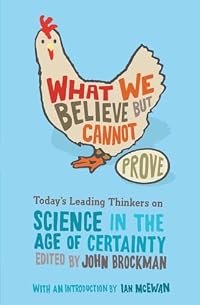
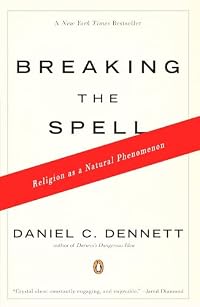
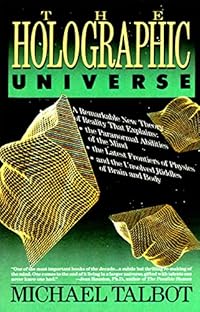


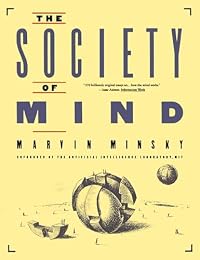




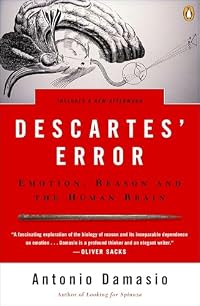
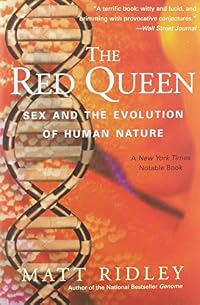
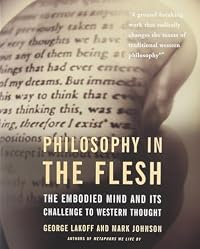










Member Recommendations

Member Reviews
Starts off very interestingly, discussing how biological behaviors influence history and how humans aren't quite as removed from our origins as we'd like to think.
Curiously, the last quarter of the book takes a turn to some very anti-Islamic material and raises troubling questions which will probably offend multi-cuturalists.
Curiously, the last quarter of the book takes a turn to some very anti-Islamic material and raises troubling questions which will probably offend multi-cuturalists.
It is amazing what a person can get away with under the pretense of science. Mr. Bloom certainly evinces his bigotry of Islam, the "Islamic world" and Arabs under the guise science. The Lucifer Principle is merely a vehicle to support a political agenda disguised as science. This is not too surprising since it comes from a political writer.
To extrapolate societal and human behavior from animal behaviour is a large logical leap that can't be proved, but merely inferred. While genetics influences behaviour, within a species, it is questionable whether it carries over to other species higher up the phylogenetic scale, and certainly to humans, where geography, environment and culture play a big role in behavior. Thus, Bloom’s assertion show more that what is observed in lower phyla directly contributes to killer cultures of the Islamic world.
Show me the data? Regarding killer cultures, Bloom spends significant page space to point out that Arabs by nature have a blood lust, and that Islam justifies the blood lust. Are there not other killer cultures? What about violence in Norse culture, Aryan culture, Mongol culture, and now American culture? How about in his own Jewish culture? Certainly the Old Testament is replete with genocide, justified as God’s will and sanction for the Israelites.
Both Arabs and Jews descend from the same father, Abraham. If violence is in the genes, as Bloom argues, then why are Jews exculpated from possessing a killer culture, but Arabs are not? Certainly history has shown the old kings of Judaism wiped out whole tribes for not believing in the same God as them (see Karen Armstrong's Holy War). But forget about the past, we only need to look at America, coming off of the Newtown, CT tragedy. Despite the mass slaughter of children, we as a society are not willing to give up our “right to carry” military assault rifles for hunting and self-protection. I would submit that more people were killed in America by domestic abuse, homicide, drugs, and other forms of violence than by Islamic terrorists. In fact more civilian people in Pakistan (30,000) have been killed by America since 9/11 than actual Americans killed from 9/11.
Bloom asserts that Islamic cultures in particular glorify violence, yet how much violence is depicted in our most prevelant cultural medium, television? We glorify violence. This nation was built on violence (ask the American Indian, or the Black man-see Howard Zinn's A Peoples History of the US) and we promote violence through TV-here's a meme for you. And despite this violence, we export it to the third world, whether they like it or not (see Ben Barber's Jihad vs. McWorld).
Bloom asserts that Islamic fundamentalism/terrorism is the consequence of one meme "nibbling at the flesh" of other cultures. Yet the violence of American cultural meme has had a far more pernicious effect on the Islamic world than the Islamic world on the West. So which superorganism "nibbles at the flesh" of which superorganism?
The author faults Muslim’s for reacting to European invasion during the Crusades citing it as an example typifying Muslim behavior. Islamic distrust of European culture (whether from the Crusades or European colonialism) is therefore over-reaction.
The Crusades, after all, was really about Christian Europeans reclaiming what was rightfully theirs. Regardless of the fact Europeans are from Europe, they have superior claim to the Middle East because Christianity and Judaism arose out of the Middle-East. Well, where did Islam arise from? Europe?
Bloom cannot excuse the Crusades as an attempt at reinstituting "Western" values in a region that was formerly Christian. And I am not sure what Western values Christians were inculcating since they slaughtered the Jews when they took Jerusalem, and sacked Constantinople during the Crusades. Or the fact that Constantinople beseeched the Muslims of Egypt for aid against European Franks. Conflating Christianity with Western-secular values is erroneous. Christian Arabs are culturally equivalent Muslim Arabs, eating and dressing the same, speaking the same language (and even referring to God as Allah). Similarly, Bloom cannot excuse the racist mentality of European colonials in the Middle East and the Indian Subcontinent – yet he does. The complete subjugation, denigration, and massacre of whole populations in Algeria, India-Pakistan, the Levant warrants the ire by these peoples towards the European colonials.
People seem to get all upset when Muslims try to acknowledge their cultural heritage and value sets; perceiving as expressing fundamentalist beliefs. They fear the Islamic meme will overtake America. Despite such absurdities, we continue to pass anti-Sharia laws, block the building of mosques and cultural centers (like the Ground Zero “mosque”, produce truly hateful and bigoted videos against Muslims, and even books like the instant one, to keep a meme of fear and distrust alive. I would argue this type of meme is just as insidious as any killer culture meme.
I don't disagree that virulent memes spread across religions, and Islam certainly has its share. But so do all other religions. Singling out one religion and one broad set of people (Muslims, Arabs, etc. to the exclusion of the rest of humanity is misleading and intellectually dishonest. I think Howard Bloom just does not like Muslims and Islam, and thats okay, but he should have the honesty to apply his logic universally, not just to the group he does not like. show less
To extrapolate societal and human behavior from animal behaviour is a large logical leap that can't be proved, but merely inferred. While genetics influences behaviour, within a species, it is questionable whether it carries over to other species higher up the phylogenetic scale, and certainly to humans, where geography, environment and culture play a big role in behavior. Thus, Bloom’s assertion show more that what is observed in lower phyla directly contributes to killer cultures of the Islamic world.
Show me the data? Regarding killer cultures, Bloom spends significant page space to point out that Arabs by nature have a blood lust, and that Islam justifies the blood lust. Are there not other killer cultures? What about violence in Norse culture, Aryan culture, Mongol culture, and now American culture? How about in his own Jewish culture? Certainly the Old Testament is replete with genocide, justified as God’s will and sanction for the Israelites.
Both Arabs and Jews descend from the same father, Abraham. If violence is in the genes, as Bloom argues, then why are Jews exculpated from possessing a killer culture, but Arabs are not? Certainly history has shown the old kings of Judaism wiped out whole tribes for not believing in the same God as them (see Karen Armstrong's Holy War). But forget about the past, we only need to look at America, coming off of the Newtown, CT tragedy. Despite the mass slaughter of children, we as a society are not willing to give up our “right to carry” military assault rifles for hunting and self-protection. I would submit that more people were killed in America by domestic abuse, homicide, drugs, and other forms of violence than by Islamic terrorists. In fact more civilian people in Pakistan (30,000) have been killed by America since 9/11 than actual Americans killed from 9/11.
Bloom asserts that Islamic cultures in particular glorify violence, yet how much violence is depicted in our most prevelant cultural medium, television? We glorify violence. This nation was built on violence (ask the American Indian, or the Black man-see Howard Zinn's A Peoples History of the US) and we promote violence through TV-here's a meme for you. And despite this violence, we export it to the third world, whether they like it or not (see Ben Barber's Jihad vs. McWorld).
Bloom asserts that Islamic fundamentalism/terrorism is the consequence of one meme "nibbling at the flesh" of other cultures. Yet the violence of American cultural meme has had a far more pernicious effect on the Islamic world than the Islamic world on the West. So which superorganism "nibbles at the flesh" of which superorganism?
The author faults Muslim’s for reacting to European invasion during the Crusades citing it as an example typifying Muslim behavior. Islamic distrust of European culture (whether from the Crusades or European colonialism) is therefore over-reaction.
The Crusades, after all, was really about Christian Europeans reclaiming what was rightfully theirs. Regardless of the fact Europeans are from Europe, they have superior claim to the Middle East because Christianity and Judaism arose out of the Middle-East. Well, where did Islam arise from? Europe?
Bloom cannot excuse the Crusades as an attempt at reinstituting "Western" values in a region that was formerly Christian. And I am not sure what Western values Christians were inculcating since they slaughtered the Jews when they took Jerusalem, and sacked Constantinople during the Crusades. Or the fact that Constantinople beseeched the Muslims of Egypt for aid against European Franks. Conflating Christianity with Western-secular values is erroneous. Christian Arabs are culturally equivalent Muslim Arabs, eating and dressing the same, speaking the same language (and even referring to God as Allah). Similarly, Bloom cannot excuse the racist mentality of European colonials in the Middle East and the Indian Subcontinent – yet he does. The complete subjugation, denigration, and massacre of whole populations in Algeria, India-Pakistan, the Levant warrants the ire by these peoples towards the European colonials.
People seem to get all upset when Muslims try to acknowledge their cultural heritage and value sets; perceiving as expressing fundamentalist beliefs. They fear the Islamic meme will overtake America. Despite such absurdities, we continue to pass anti-Sharia laws, block the building of mosques and cultural centers (like the Ground Zero “mosque”, produce truly hateful and bigoted videos against Muslims, and even books like the instant one, to keep a meme of fear and distrust alive. I would argue this type of meme is just as insidious as any killer culture meme.
I don't disagree that virulent memes spread across religions, and Islam certainly has its share. But so do all other religions. Singling out one religion and one broad set of people (Muslims, Arabs, etc. to the exclusion of the rest of humanity is misleading and intellectually dishonest. I think Howard Bloom just does not like Muslims and Islam, and thats okay, but he should have the honesty to apply his logic universally, not just to the group he does not like. show less
This was one of those books that I spent a good amount of time feeling like I'd read before, as it echos feelings and beliefs that I've developed independently. The first part of the book lays out some interesting theory about memes and the social organism and effectively maps the Darwinian struggle for survival to societies as a whole. The second half read as an impeachment of both Islamic and to a lesser degree American society, and while the events of 9/11/2001 certainly contribute an interesting light to the arguments they came off rather ethnocentric. I am excited to read his later works as the frontier he recommends for global unity (space) is likely replaced by the development of the internet and it's unifying forces. Definitely show more recommended!! show less
In between ravings about homoeopathy and inaccurate descriptions of what a neural net is and what it can do the book is just a random hotchpotch of musings with no clear aim. Not sure what the message is but the author sure tries to hammer it home by repeating himself ad nauseam. It's like listening in to a pub conversation. You are drunk Mr Bloom, go home.
Lucifer Principle Drinking Game:
Drink every time you read "pecking order" or "superorganism".
If you see "superorganismic pecking order" down your drink.
Lucifer Principle Drinking Game:
Drink every time you read "pecking order" or "superorganism".
If you see "superorganismic pecking order" down your drink.
A friend of mine had read this book many years ago and when she described it to me, I thought it presented a combination of ingredients to keep me enthralled: history, biology, psychology, sociology, all tied together in terms easy to understand for a layperson like me. Very quickly it became evident that the research Bloom was quoting from had the sole purpose of backing up his own agenda, but curiosity kept me reading on to find out what foregone conclusion he was leading us to. After all, most everyone knows that research can be used to 'prove' just about anything, depending on the bias of the researchers and/or by the ability of the writer to quote facts out of context as suits his needs. I did not appreciate Bloom's almost show more exclusively American point of view, whether pro or con, and was especially offended to find that all this led to a condemnation of Islam and all who ascribe to that faith, including those with moderate or pro-Western philosophies. The culmination of all this, that the next frontiers to battle over will be interplanetary ones, made me think this man had probably watched too much Star Trek and X-Files. In fact, I believe that Bloom ever the PR man, had attempted to create his own self-propagating meme in the writing and publication of this book by appealing to his target audience's own fears and propensities for readily believing in conspiracy theories and other half-baked half-truths.
I had been initially interested to read about the phenomena of memes, and now wonder whether Richard Dawkins' The Selfish Gene might satisfy my curiosity in a more substantial way or whether it was written with a similar lack of scruples and objectivity. One thing's for sure, I'll be reading reviews by those least satisfied with it first before deciding to spend any time or money on it. show less
I had been initially interested to read about the phenomena of memes, and now wonder whether Richard Dawkins' The Selfish Gene might satisfy my curiosity in a more substantial way or whether it was written with a similar lack of scruples and objectivity. One thing's for sure, I'll be reading reviews by those least satisfied with it first before deciding to spend any time or money on it. show less
This is the most poorly researched book I've ever read. A smart-aleck whiz-kid rock promoter takes a couple weeks to misread whole genres of science, then assembles a whiny diatribe against everything that bugs him. Each chapter is about 3 pages long and makes huge leaps of logic to connect completely unrelated ideas out of thin air, pretending that one proves the other. Good thing he has a massive ego, otherwise I'm sure he'd be utterly embarrassed. (I wonder if he still thinks Michael Jackson is the paradigmatic family man, 10 years after writing this?)
If you'd rather get your science from scientists insteaf of grumpy ex-rock promoters, read Richard Dawkins, Richard Wright or Steven Pinker instead.
If you'd rather get your science from scientists insteaf of grumpy ex-rock promoters, read Richard Dawkins, Richard Wright or Steven Pinker instead.
An interesting historical and social explanation for the concept of "evil". I'm still not entirely sure I'm on board with the type of biological fatalism argued for by Bloom, though in saying that it is certainly a powerful and compelling argument that cannot be easily knocked down.
Members
- Recently Added By
Author Information

9+ Works 1,582 Members
Howard Bloom was a legendary publicist in the 1970s and 1980s for singers and bands such as Prince, Michael Jackson, Billy Joel, and Styx. Since then, he has published six books on human evolution and group behavior, including The Genius of the Beast, Global Brain, and The Lucifer Principle. In his Zelig-like career, Bloom has been cited, thanked, show more anthologized, and quoted in books on quantum physics, genetics, philosophy, evolutionary biology, and much more. How I Accidentally Started The Sixties may be his strangest book yet. show less
Common Knowledge
- Canonical title
- The Lucifer Principle: A Scientific Expedition into the Forces of History
- Original publication date
- 1995
- Original language
- English
Classifications
- Genres
- Science & Nature, Nonfiction, Sociology, General Nonfiction, History, Philosophy, Religion & Spirituality
- DDC/MDS
- 128 — Philosophy and Psychology Epistemology (how do you know what you know?) Humankind
- LCC
- BD450 .B526 — Philosophy, Psychology and Religion Speculative philosophy Speculative philosophy Ontology
- BISAC
Statistics
- Members
- 967
- Popularity
- 27,159
- Reviews
- 15
- Rating
- (3.70)
- Languages
- English, French
- Media
- Paper, Audiobook, Ebook
- ISBNs
- 12
- ASINs
- 5