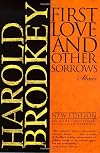
First Love and Other Sorrows
by Harold Brodkey
On This Page
Description
Today, nearly one of every eight Americans is 65 or older, and by 2030, over 20% of the population will be in this age group. Are you prepared to work with this vastly diverse--and rapidly growing--population? This single source is designed to help social service professionals provide effective services to America's vastly diverse and rapidly growing elderly population. Diversity and Aging in the Social Environment explores the impact of race/ethnicity, gender, sexual orientation, and show more geographic location on elders' strengths, challenges, needs, and resources to provide you with a more complete understanding of the issues elders face. In order to be more responsive to older adults, social workers and other human service professionals need to enhance their knowledge of the aging population and the factors that impact the way seniors interact with society, organizations, community resources, neighborhoods, support networks, kinship groups, family, and friends. Diversity and Aging in the Social Environment examines differences in race, ethnicity, geographical location, sexual orientation, religion, and health status to help current and future human service professionals provide culturally competent services to the diverse range of elderly people they serve. In addition, it addresses the wide disparity that exists for older Americans in terms of income and assets, number of chronic conditions, functional and cognitive impairment, housing arrangements, and access to health care. This book provides a context for the examination of diversity issues among older adults by describing and discussing several theoretical perspectives on aging that highlight important aspects of diversity. Next, you'll find thoughtful examinations of: issues and challenges faced by lesbian, gay, bisexual, and transgender elders--and the strengths they bring into later life the impact of gender, race, and sexual orientation on prevalence rates, risk factors, methods of disease contraction, and mortality rates among older adults with HIV/AIDS--along with a discussion of the psychosocial issues they face diverse characteristics of custodial grandparents--and the influence of the caregivers' gender, race, age, and geographic location on methods of care and available caregiver support differences in caregiver characteristics, service utilization, caregiver strain, and coping mechanisms among several racial/ethnic groups of adults who care for elderly, disabled, and ill persons cultural/religious factors that influence interactions between health care personnel and Japanese-American elders the relationship between acculturation and depressive symptoms among Mexican-American couples life challenges facing Jewish and African-American elders--with a look at each group's coping mechanisms differences in religious/spiritual coping skills among Native American, African-American, and white elders psychological well-being and religiosity among a diverse group of rural elders show lessTags
Recommendations




































Member Reviews
In Harold Brodkey's short story, "The State of Grace," (first published in 1954) that opens his exceptional debut collection from 1958, First Love and Other Sorrows, Brodkey, autobiographically speaking through his thirteen-year-old protagonist, recollects babysitting a seven year old boy. The boy was lonely, but unaware of his loneliness, as children that age can't help but be, and he'd light up each time Brodkey arrived at his house to keep an eye on him. Brodkey sensed the boy's subtle unhappiness over time, but being so unhappy himself, would not reciprocate the boy's adoration. Oh, he'd play with the boy -- perfunctorily -- keep him entertained and looked-after properly while his parents dined out and saw a movie or a play, but he show more would not give the boy what he knew the boy wanted from him -- his love.
Brodkey, now the adult, as the story concludes, and he looks back, wonders why it was so hard for him -- as that thirteen year old babysitter -- to give the boy what he needed, when it was obvious to everyone in the neighborhood that the kid just needed a big brother to love and guide him since his own father was so distant, practically no more materialized as a real presence in the boy's life than a ghost's. Just like Brodkey's Papa -- a phantom father. All the kid needed was some affirmation and acceptance, Brodkey! Couldn't you at least have given the boy that?
And Brodkey lamented that he couldn't (or wouldn't) give the boy what he needed; not because he didn't have anything to give, but because he resented his own parents not giving him the same thing he sensed the boy needing from him -- nurturing, esteem -- and perhaps felt a false sense of empowerment in similarly denying the boy as likewise Brodkey's parents denied him, withholding from that deprived seven-year-old those primal and vital emotional needs.
Looking back further, Brodkey regrets his mistake of needlessly withholding warmth and praise from the boy, berating himself for the sins of his youth, wishing, dreaming that he could go back in time and love the boy like the big brother that boy so desperately needed, exhorting his younger self to make that connection somehow, even though time had long since crushed the possibility of connection, and left instead in its inexorable wake, regret, loss, and self-loathing, over the wasted opportunity.
It's a painful conclusion to a powerful story, dramatizing how the past, no matter how well remembered (and my does Brodkey remember!), can never be recaptured (my apologies, Proust) at least in terms of removing its stained accumulation of regrets, or recaptured to induce some magical reenactment of a different, wished-for outcome, no matter how earnestly one yearns or imagines themselves vociferously instructing their younger, long-disappeared, unreachable self.
Poignant evocation of regret and loss, Brodkey! Bravo, Sir! Perhaps too evocative?
When I was in middle school, there was this girl. In retrospect, she obviously liked me. At the time, though, being so gangly and awkward and nervous around anybody and not just the opposite sex -- so insecure and uncomfortable in my own skin and lonely and mostly friendless because of it -- I didn't know, having never experienced a girl's attention before, how to react to it. To what were friendly advances accented maybe with that mysterious feminine vibe of attraction (a glance, a touch of her hair, a certain smile of hers) that I instinctively intuited meant more than her just being friendly, especially considering her persistence, poor girl, day after day and week after week in the classroom and junior high hallways, approaching me with that irrepressible "vibe". That "vibe" that rattled and alarmed me and, frankly, scared the shit out of me. I was afraid of the girl and embarrassed by her attentiveness, made overly-anxious and self conscious by it, stupid hypersensitive boy that I was. And lacking the internal tools to appropriately reciprocate her advances, and meanwhile realizing that I lacked the know-how to respond to her anyway, and that she held such power in exposing my opposite-sex ineptitude just by approaching me, I began to secretly loathe her. Just as Brodkey began resenting the boy for his unspoken needs.
My solution to this girl who would not go away?: Avoid her. Ignore her. Shun her. But not overtly; I couldn't be that rude. I mean avoid her by looking right through her, never directly at her even though our eyes sometimes met. I could keep her distanced and disengaged this way, no matter how relentless she became. Went on all school year like that. The more I resisted, the more she persisted. At least persisted up to a point; her point being the last day of class. Kids performing the yearly June ritual passing around their school annuals for signing and sentimentalized memorials of "good luck," "goodbye" and "friends forever".
The girl took my annual. I took hers. I did my (by then) rote don't-engage-her routine one last time. There was nothing grandiose or sentimental in what she handed back to me, her last words in my yearbook annual: "I just wish we could've become friends".
Killed me. How it hurt, her honest words. And why shouldn't it have hurt? Wasn't I in dire need of some friends? Wasn't I lonely? Hadn't she been generously, beyond-patient with me, offering me a balm to loneliness and outsider'd-ness -- her friendship and maybe more -- all damn yearlong? Would it have been so exceedingly difficult for me to have just woken up -- "wake up, Freeque!" as Harold Brodkey exhorted his immature thirteen-year-old self to do regarding the boy he babysat -- and to (damn it!) befriend the poor girl, merely accept what she was offering? It's what she needed from me. It's what the neglected boy Brodkey babysat needed from him. It's what Brodkey himself needed and I needed too, and what none of us got.
Beware all who approach the First Love and Other Sorrows of Harold Brodkey's, lest his writing resurrect memories and regrets you'd might rather have remained dead. show less
Brodkey, now the adult, as the story concludes, and he looks back, wonders why it was so hard for him -- as that thirteen year old babysitter -- to give the boy what he needed, when it was obvious to everyone in the neighborhood that the kid just needed a big brother to love and guide him since his own father was so distant, practically no more materialized as a real presence in the boy's life than a ghost's. Just like Brodkey's Papa -- a phantom father. All the kid needed was some affirmation and acceptance, Brodkey! Couldn't you at least have given the boy that?
And Brodkey lamented that he couldn't (or wouldn't) give the boy what he needed; not because he didn't have anything to give, but because he resented his own parents not giving him the same thing he sensed the boy needing from him -- nurturing, esteem -- and perhaps felt a false sense of empowerment in similarly denying the boy as likewise Brodkey's parents denied him, withholding from that deprived seven-year-old those primal and vital emotional needs.
Looking back further, Brodkey regrets his mistake of needlessly withholding warmth and praise from the boy, berating himself for the sins of his youth, wishing, dreaming that he could go back in time and love the boy like the big brother that boy so desperately needed, exhorting his younger self to make that connection somehow, even though time had long since crushed the possibility of connection, and left instead in its inexorable wake, regret, loss, and self-loathing, over the wasted opportunity.
It's a painful conclusion to a powerful story, dramatizing how the past, no matter how well remembered (and my does Brodkey remember!), can never be recaptured (my apologies, Proust) at least in terms of removing its stained accumulation of regrets, or recaptured to induce some magical reenactment of a different, wished-for outcome, no matter how earnestly one yearns or imagines themselves vociferously instructing their younger, long-disappeared, unreachable self.
Poignant evocation of regret and loss, Brodkey! Bravo, Sir! Perhaps too evocative?
When I was in middle school, there was this girl. In retrospect, she obviously liked me. At the time, though, being so gangly and awkward and nervous around anybody and not just the opposite sex -- so insecure and uncomfortable in my own skin and lonely and mostly friendless because of it -- I didn't know, having never experienced a girl's attention before, how to react to it. To what were friendly advances accented maybe with that mysterious feminine vibe of attraction (a glance, a touch of her hair, a certain smile of hers) that I instinctively intuited meant more than her just being friendly, especially considering her persistence, poor girl, day after day and week after week in the classroom and junior high hallways, approaching me with that irrepressible "vibe". That "vibe" that rattled and alarmed me and, frankly, scared the shit out of me. I was afraid of the girl and embarrassed by her attentiveness, made overly-anxious and self conscious by it, stupid hypersensitive boy that I was. And lacking the internal tools to appropriately reciprocate her advances, and meanwhile realizing that I lacked the know-how to respond to her anyway, and that she held such power in exposing my opposite-sex ineptitude just by approaching me, I began to secretly loathe her. Just as Brodkey began resenting the boy for his unspoken needs.
My solution to this girl who would not go away?: Avoid her. Ignore her. Shun her. But not overtly; I couldn't be that rude. I mean avoid her by looking right through her, never directly at her even though our eyes sometimes met. I could keep her distanced and disengaged this way, no matter how relentless she became. Went on all school year like that. The more I resisted, the more she persisted. At least persisted up to a point; her point being the last day of class. Kids performing the yearly June ritual passing around their school annuals for signing and sentimentalized memorials of "good luck," "goodbye" and "friends forever".
The girl took my annual. I took hers. I did my (by then) rote don't-engage-her routine one last time. There was nothing grandiose or sentimental in what she handed back to me, her last words in my yearbook annual: "I just wish we could've become friends".
Killed me. How it hurt, her honest words. And why shouldn't it have hurt? Wasn't I in dire need of some friends? Wasn't I lonely? Hadn't she been generously, beyond-patient with me, offering me a balm to loneliness and outsider'd-ness -- her friendship and maybe more -- all damn yearlong? Would it have been so exceedingly difficult for me to have just woken up -- "wake up, Freeque!" as Harold Brodkey exhorted his immature thirteen-year-old self to do regarding the boy he babysat -- and to (damn it!) befriend the poor girl, merely accept what she was offering? It's what she needed from me. It's what the neglected boy Brodkey babysat needed from him. It's what Brodkey himself needed and I needed too, and what none of us got.
Beware all who approach the First Love and Other Sorrows of Harold Brodkey's, lest his writing resurrect memories and regrets you'd might rather have remained dead. show less
I really have no idea why when going for a collection of short stories to read aloud with my wife the name Harold Brodkey popped into my head as the obvious answer. He must have been lurking somewhere in there for some time just waiting for his chance. Brodkey was well known in his day, the fifties through the eighties or so, for his short stories and as staff writer on The New Yorker. He kept the literary world waiting for decades for his debut novel, which when finally released in 1991 as an 800 page behemoth was met with all the critical enthusiasm of a wet fart and which has now disappeared from the public consciousness so comprehensively that on Goodreads it has all of 63 ratings and fewer than a dozen reviews of more than one show more line. Amazing.
This is his debut collection, containing the stories that launched his reputation and ultimately ill-fated career. The brilliance they contain lay in their close examination of the characters' inner states of mind, their thoughts and feelings and contradictory emotions. The collection is a story of two halves. The first four stories are of some length and concern Brodkey's youth in St. Louis and college years at Harvard. The final five stories are much shorter and are attempts at portraying a young woman and mother, I'm assuming modeled after Brodkey's older sister.
I enjoyed the first half much more than the second half, I must say. Brodkey had more to say in them and of course he had easy access to his own past mind to mine. He could describe his protagonist's state of inner feeling with crystal clarity. A 13 year old's insecurity and feeling of otherness is brilliantly portrayed in State of Grace and an account of a college age young man's spending a year cycling through France with a friend describes the peril that can arise from getting to know anyone too closely for too long with amusing aplomb in The Quarrel.
The second batch of stories he's trying to do the same with a literary stand in for his sister, whom he apparently thought of as shallow and incredibly vain. Sometimes it succeeds I think but for me he misses more often than he hits with these. I miss the feeling of authorial sympathy for his protagonist that the earlier stories have, and I think the length of these compared to the length of the earlier stories reflects that he didn't have as good a grasp on this character and was floundering a bit.
So then, Harold Brodkey, I hope this raising you to the forefront of my consciousness for this time has served to scratch whatever itch you planted at some past moment into my own mind. I'm sorry you've faded from fame so greatly, but hey, there's always the chance you'll get rediscovered, even for that novel to get reevaluated and declared an unjustly ignored classic. You never know. show less
This is his debut collection, containing the stories that launched his reputation and ultimately ill-fated career. The brilliance they contain lay in their close examination of the characters' inner states of mind, their thoughts and feelings and contradictory emotions. The collection is a story of two halves. The first four stories are of some length and concern Brodkey's youth in St. Louis and college years at Harvard. The final five stories are much shorter and are attempts at portraying a young woman and mother, I'm assuming modeled after Brodkey's older sister.
I enjoyed the first half much more than the second half, I must say. Brodkey had more to say in them and of course he had easy access to his own past mind to mine. He could describe his protagonist's state of inner feeling with crystal clarity. A 13 year old's insecurity and feeling of otherness is brilliantly portrayed in State of Grace and an account of a college age young man's spending a year cycling through France with a friend describes the peril that can arise from getting to know anyone too closely for too long with amusing aplomb in The Quarrel.
The second batch of stories he's trying to do the same with a literary stand in for his sister, whom he apparently thought of as shallow and incredibly vain. Sometimes it succeeds I think but for me he misses more often than he hits with these. I miss the feeling of authorial sympathy for his protagonist that the earlier stories have, and I think the length of these compared to the length of the earlier stories reflects that he didn't have as good a grasp on this character and was floundering a bit.
So then, Harold Brodkey, I hope this raising you to the forefront of my consciousness for this time has served to scratch whatever itch you planted at some past moment into my own mind. I'm sorry you've faded from fame so greatly, but hey, there's always the chance you'll get rediscovered, even for that novel to get reevaluated and declared an unjustly ignored classic. You never know. show less
FINAL REVIEW
It is said that string quartet music is the highest form of art and the lowest form of entertainment. I’m reminded of this pithy observation when reading Harold Brodkey’s highly polished, finely drawn short stories. Not the bite of fantasy or sci-fi but the world of the everyday rendered clearly and with the lyricism of a classical poet, as when the teenage narrator of “First Love and Other Sorrows” says of his mother: “She did not want to see life in a grain of sand; she wanted to see it from the shores of the Riviera, wearing a white sharkskin dress.” And here is one of my favorite Harold Brodkey quotes: “Reading is an intimate act, perhaps more intimate than any other human act. I say that because of the show more prolonged (or intense) exposure of one mind to another.”
As a way of writing my review, I initially considered synopsizing several of these Brodkey pieces or commenting on specific scenes. However, after further reflection, both of these approaches strike me as less than adequate, almost as if I were to synopsize or provide a running commentary on a collection of classical poetry. Therefore, as a way of giving a reader unfamiliar with Harold Brodkey a sampling of what is to be found in this book, here are a few direct quotes.
From “The State of Grace,” when the narrator is a 13-year old boy: “There is a certain shade of red brick – a dark, almost melodious red, somber and riddled with blue – that is my childhood in St. Louis. Not the real childhood, but the false one that extends from the dawning of consciousness until the day that one leaves home for college. That one shade of red brick and green foliage in St. Louis in the summer (the winter is just a gray sky and a crowded school bus and the wet footprints on the brown linoleum floor at school), and that brick and a pale sky is spring. It’s also loneliness and the queer, self-pitying wonder that children whose families are having catastrophes feel.”
From “First Love and Other Tales,” when the narrator is a high-schooler: “That spring when I was sixteen, more than anything else in the world I wanted to be a success when I grew up. I did not know there was any other way of being lovable. My best friend was a boy named Preston, who already had a heavy beard. He was sky, and unfortunate in his dealings with other people, and he wanted to be a physicist. He had very little imagination, and he pitied anyone who did have it. “You and the word ‘beautiful’!” he would say disdainfully, holding his nose and imitating my voice. “Tell me – what does ‘beautiful’ mean?”
“It’s something you want,” I would say.
“You’re an aesthete,” Preston would say. “I’m a scientist. That’s the difference.”
From “The Quarrel,” when the narrator is a freshman at college: “I came to Harvard from St. Louis in the fall of 1948. I had a scholarship and a widowed mother and a reputation for being a good, hardworking boy. What my scholarship didn’t cover, I earned working Wednesday nights and Saturdays, and I strenuously avoided using any of my mother’s small but adequate income. During the summer between my freshman and sophomore years, my grandmother died and willed me five thousand dollars. I quit my part-time job and bought a gray flannel suit and a pair of white buck shoes, and I got on the editorial board of the college literary magazine. I met Duncan Leggert at the first editorial meeting I attended. He had been an editor for a full year, and this particular night he was infuriated by a story, which everyone wanted to print, about an unhappy, sensitive child. “Why shouldn’t that child be unhappy?” Duncan shouted. “He’s a bore.” The story was accepted, and Duncan stalked out of the meeting.”
Such subtlety and attention to the nuances of language in creating character, setting, atmosphere and tension. If you enjoy poetry as well as prose, Harold Brodkey may become one of your very favorite short story writers.
Harold Brodkey, age 28, in 1958, the year “First Love and Other Sorrows” was first published. show less
It is said that string quartet music is the highest form of art and the lowest form of entertainment. I’m reminded of this pithy observation when reading Harold Brodkey’s highly polished, finely drawn short stories. Not the bite of fantasy or sci-fi but the world of the everyday rendered clearly and with the lyricism of a classical poet, as when the teenage narrator of “First Love and Other Sorrows” says of his mother: “She did not want to see life in a grain of sand; she wanted to see it from the shores of the Riviera, wearing a white sharkskin dress.” And here is one of my favorite Harold Brodkey quotes: “Reading is an intimate act, perhaps more intimate than any other human act. I say that because of the show more prolonged (or intense) exposure of one mind to another.”
As a way of writing my review, I initially considered synopsizing several of these Brodkey pieces or commenting on specific scenes. However, after further reflection, both of these approaches strike me as less than adequate, almost as if I were to synopsize or provide a running commentary on a collection of classical poetry. Therefore, as a way of giving a reader unfamiliar with Harold Brodkey a sampling of what is to be found in this book, here are a few direct quotes.
From “The State of Grace,” when the narrator is a 13-year old boy: “There is a certain shade of red brick – a dark, almost melodious red, somber and riddled with blue – that is my childhood in St. Louis. Not the real childhood, but the false one that extends from the dawning of consciousness until the day that one leaves home for college. That one shade of red brick and green foliage in St. Louis in the summer (the winter is just a gray sky and a crowded school bus and the wet footprints on the brown linoleum floor at school), and that brick and a pale sky is spring. It’s also loneliness and the queer, self-pitying wonder that children whose families are having catastrophes feel.”
From “First Love and Other Tales,” when the narrator is a high-schooler: “That spring when I was sixteen, more than anything else in the world I wanted to be a success when I grew up. I did not know there was any other way of being lovable. My best friend was a boy named Preston, who already had a heavy beard. He was sky, and unfortunate in his dealings with other people, and he wanted to be a physicist. He had very little imagination, and he pitied anyone who did have it. “You and the word ‘beautiful’!” he would say disdainfully, holding his nose and imitating my voice. “Tell me – what does ‘beautiful’ mean?”
“It’s something you want,” I would say.
“You’re an aesthete,” Preston would say. “I’m a scientist. That’s the difference.”
From “The Quarrel,” when the narrator is a freshman at college: “I came to Harvard from St. Louis in the fall of 1948. I had a scholarship and a widowed mother and a reputation for being a good, hardworking boy. What my scholarship didn’t cover, I earned working Wednesday nights and Saturdays, and I strenuously avoided using any of my mother’s small but adequate income. During the summer between my freshman and sophomore years, my grandmother died and willed me five thousand dollars. I quit my part-time job and bought a gray flannel suit and a pair of white buck shoes, and I got on the editorial board of the college literary magazine. I met Duncan Leggert at the first editorial meeting I attended. He had been an editor for a full year, and this particular night he was infuriated by a story, which everyone wanted to print, about an unhappy, sensitive child. “Why shouldn’t that child be unhappy?” Duncan shouted. “He’s a bore.” The story was accepted, and Duncan stalked out of the meeting.”
Such subtlety and attention to the nuances of language in creating character, setting, atmosphere and tension. If you enjoy poetry as well as prose, Harold Brodkey may become one of your very favorite short story writers.
Harold Brodkey, age 28, in 1958, the year “First Love and Other Sorrows” was first published. show less
FINAL REVIEW
It is said that string quartet music is the highest form of art and the lowest form of entertainment. I’m reminded of this pithy observation when reading Harold Brodkey’s highly polished, finely drawn short stories. Not the bite of fantasy or sci-fi but the world of the everyday rendered clearly and with the lyricism of a classical poet, as when the teenage narrator of “First Love and Other Sorrows” says of his mother: “She did not want to see life in a grain of sand; she wanted to see it from the shores of the Riviera, wearing a white sharkskin dress.” And here is one of my favorite Harold Brodkey quotes: “Reading is an intimate act, perhaps more intimate than any other human act. I say that because of the show more prolonged (or intense) exposure of one mind to another.”
As a way of writing my review, I initially considered synopsizing several of these Brodkey pieces or commenting on specific scenes. However, after further reflection, both of these approaches strike me as less than adequate, almost as if I were to synopsize or provide a running commentary on a collection of classical poetry. Therefore, as a way of giving a reader unfamiliar with Harold Brodkey a sampling of what is to be found in this book, here are a few direct quotes.
From “The State of Grace,” when the narrator is a 13-year old boy: “There is a certain shade of red brick – a dark, almost melodious red, somber and riddled with blue – that is my childhood in St. Louis. Not the real childhood, but the false one that extends from the dawning of consciousness until the day that one leaves home for college. That one shade of red brick and green foliage in St. Louis in the summer (the winter is just a gray sky and a crowded school bus and the wet footprints on the brown linoleum floor at school), and that brick and a pale sky is spring. It’s also loneliness and the queer, self-pitying wonder that children whose families are having catastrophes feel.”
From “First Love and Other Tales,” when the narrator is a high-schooler: “That spring when I was sixteen, more than anything else in the world I wanted to be a success when I grew up. I did not know there was any other way of being lovable. My best friend was a boy named Preston, who already had a heavy beard. He was sky, and unfortunate in his dealings with other people, and he wanted to be a physicist. He had very little imagination, and he pitied anyone who did have it. “You and the word ‘beautiful’!” he would say disdainfully, holding his nose and imitating my voice. “Tell me – what does ‘beautiful’ mean?”
“It’s something you want,” I would say.
“You’re an aesthete,” Preston would say. “I’m a scientist. That’s the difference.”
From “The Quarrel,” when the narrator is a freshman at college: “I came to Harvard from St. Louis in the fall of 1948. I had a scholarship and a widowed mother and a reputation for being a good, hardworking boy. What my scholarship didn’t cover, I earned working Wednesday nights and Saturdays, and I strenuously avoided using any of my mother’s small but adequate income. During the summer between my freshman and sophomore years, my grandmother died and willed me five thousand dollars. I quit my part-time job and bought a gray flannel suit and a pair of white buck shoes, and I got on the editorial board of the college literary magazine. I met Duncan Leggert at the first editorial meeting I attended. He had been an editor for a full year, and this particular night he was infuriated by a story, which everyone wanted to print, about an unhappy, sensitive child. “Why shouldn’t that child be unhappy?” Duncan shouted. “He’s a bore.” The story was accepted, and Duncan stalked out of the meeting.”
Such subtlety and attention to the nuances of language in creating character, setting, atmosphere and tension. If you enjoy poetry as well as prose, Harold Brodkey may become one of your very favorite short story writers.
Harold Brodkey, age 28, in 1958, the year “First Love and Other Sorrows” was first published. show less
It is said that string quartet music is the highest form of art and the lowest form of entertainment. I’m reminded of this pithy observation when reading Harold Brodkey’s highly polished, finely drawn short stories. Not the bite of fantasy or sci-fi but the world of the everyday rendered clearly and with the lyricism of a classical poet, as when the teenage narrator of “First Love and Other Sorrows” says of his mother: “She did not want to see life in a grain of sand; she wanted to see it from the shores of the Riviera, wearing a white sharkskin dress.” And here is one of my favorite Harold Brodkey quotes: “Reading is an intimate act, perhaps more intimate than any other human act. I say that because of the show more prolonged (or intense) exposure of one mind to another.”
As a way of writing my review, I initially considered synopsizing several of these Brodkey pieces or commenting on specific scenes. However, after further reflection, both of these approaches strike me as less than adequate, almost as if I were to synopsize or provide a running commentary on a collection of classical poetry. Therefore, as a way of giving a reader unfamiliar with Harold Brodkey a sampling of what is to be found in this book, here are a few direct quotes.
From “The State of Grace,” when the narrator is a 13-year old boy: “There is a certain shade of red brick – a dark, almost melodious red, somber and riddled with blue – that is my childhood in St. Louis. Not the real childhood, but the false one that extends from the dawning of consciousness until the day that one leaves home for college. That one shade of red brick and green foliage in St. Louis in the summer (the winter is just a gray sky and a crowded school bus and the wet footprints on the brown linoleum floor at school), and that brick and a pale sky is spring. It’s also loneliness and the queer, self-pitying wonder that children whose families are having catastrophes feel.”
From “First Love and Other Tales,” when the narrator is a high-schooler: “That spring when I was sixteen, more than anything else in the world I wanted to be a success when I grew up. I did not know there was any other way of being lovable. My best friend was a boy named Preston, who already had a heavy beard. He was sky, and unfortunate in his dealings with other people, and he wanted to be a physicist. He had very little imagination, and he pitied anyone who did have it. “You and the word ‘beautiful’!” he would say disdainfully, holding his nose and imitating my voice. “Tell me – what does ‘beautiful’ mean?”
“It’s something you want,” I would say.
“You’re an aesthete,” Preston would say. “I’m a scientist. That’s the difference.”
From “The Quarrel,” when the narrator is a freshman at college: “I came to Harvard from St. Louis in the fall of 1948. I had a scholarship and a widowed mother and a reputation for being a good, hardworking boy. What my scholarship didn’t cover, I earned working Wednesday nights and Saturdays, and I strenuously avoided using any of my mother’s small but adequate income. During the summer between my freshman and sophomore years, my grandmother died and willed me five thousand dollars. I quit my part-time job and bought a gray flannel suit and a pair of white buck shoes, and I got on the editorial board of the college literary magazine. I met Duncan Leggert at the first editorial meeting I attended. He had been an editor for a full year, and this particular night he was infuriated by a story, which everyone wanted to print, about an unhappy, sensitive child. “Why shouldn’t that child be unhappy?” Duncan shouted. “He’s a bore.” The story was accepted, and Duncan stalked out of the meeting.”
Such subtlety and attention to the nuances of language in creating character, setting, atmosphere and tension. If you enjoy poetry as well as prose, Harold Brodkey may become one of your very favorite short story writers.
Harold Brodkey, age 28, in 1958, the year “First Love and Other Sorrows” was first published. show less
Quiet and understated, these stories have the feel of personal anecdotes related over late-night coffees, and the title of the collection does indeed set the tone for each of the inclusions. Exploring the sorrows of love, in multiple guises, Brodkey's stories come together in something like a quilting of remembrances, and read beautifully. That said, the last stories in the collection are connected by a central character, and even as short as they are, some of the immediacy present in earlier stories just doesn't come across. Still, for lovers of quiet and realistically written stories, these are a pleasant escape for an afternoon.
One of the greatest writers and contributors to The New Yorker and other magazines has produced an amazing collection of stories. This is an above-average premier collection of stories thanks to its psychological insights and lovely prose style. Three more stories that were not in the first edition are included in my paperback addition.
Ratings
Members
- Recently Added By
Author Information

38+ Works 1,735 Members
Harold Brodkey was a novelist, short-story writer, and essayist. He was born in Alton, Illinois, in 1930. He graduated from Harvard University. Brodkey worked briefly as a page at NBC before a story he had shown to an editor at The New Yorker was published in 1953. His first short-story collection "First Love and Other Stories" was published in show more 1958. Brodkey was also a longtime staff writer at The New Yorker. He became legendary for a novel that he spent much of his adult life writing with parts being published in his 1988 short-story collection, Stories in an Almost Classical Mode before it was finally published as The Runaway Soul. In 1993, Brodkey announced to the readers of The New Yorker that he had AIDS. He chronicled his illness in a diary that was published in The New Yorker. Harold Brodkey died on January 26, 1996. (Bowker Author Biography) show less
Some Editions
Common Knowledge
- Original title
- First Love and Other Sorrows
- Original publication date
- 1954
Classifications
Statistics
- Members
- 315
- Popularity
- 101,261
- Reviews
- 6
- Rating
- (3.68)
- Languages
- English, German, Italian, Spanish
- Media
- Paper, Ebook
- ISBNs
- 14
- ASINs
- 6