On This Page
Description
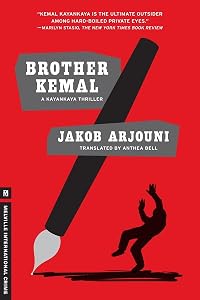
When a Turkish laborer is stabbed to death in Frankfurt's red light district, the local polcie see no need to work overtime. But when the laborer's wife comes to him for help, wise-cracking detective Kemal Kayankaya, a Turkish immigrant himself, smells a rat. The dead man wasn't the kind of guy who spent time with prostitutes. What gives? The deeper he digs, the more Kayankaya finds that the vitim was a good guy, a poor immigrant just trying to look out for his family. So who wanted him show more dead, and why? On the way to find out, Kayankaya has run-ins with prostitutes and drug addicts, gets beaten up by anonymous thugs, survives a gas attack, and suffers several close encounters with a Fiat. show lessTags
Recommendations




































Member Recommendations

charl08 Both European set crime novels focusing on immigrant experience.
Member Reviews
http://www.mytwostotinki.com/?p=810
Kemal Kayankaya – the name is without doubt Turkish. But Kemal doesn’t speak Turkish because he was adopted by a German couple when he was still a toddler. His parents, immigrants from Anatolia in Frankfurt/Main, died young. And so Kemal grew up like any other German child, except for his name.
A very clever choice by the author, I can say. Because it makes the hero of Happy Birthday, Turk! a born outsider - for many Germans he is the Turk who they think cannot speak proper German and should probably work as a garbage collector and for the Turks he is encountering in his work as a private investigator he is the fellow countryman who truly understands them because he has the same background as they show more do. But both sides are wrong.
In reality this cocky, quick-witted young man in his late twenties with the talent for seeking trouble who after several attempts to find his true vocation somehow acquired a license for his business, and who has an issue with alcohol, is – like many literary heroes of this genre – a romantic to the core. Just scratch a bit on the surface and you will see…
And this is the case with which the Philip Marlowe of Frankfurt has to deal in this book:
Ahmed Hamul, the husband of Ilter, Kayankaya's client, was found stabbed to death on the streets of Frankfurt's red light district. Since the police is not very eager to solve the case and because the wife has little trust in them, she is asking her alleged compatriot for help to find out who murdered her husband. Kayankaya accepts and finds himself soon in a case that gets much bigger than he initially thought.
While meeting the family, K. remarks that the brother-in-law has a particularly low opinion of the victim and except for Ahmet's widow nobody seems really very interested in finding the truth. Also that the family is hiding the youngest daughter under the pretext that she is ill is a hint for the private eye that something is fishy here.
The police proves little willingness to give the needed information to Kemal and his impudent behavior to some of the admittetly racist policemen doesn't exactly help. Kommissar Futt (a dialect word for vagina by the way), one of the least endearing exemplars in this biotop is leading the investigation and makes it a personal issue to keep Kayankaya, who fooled him once as alleged investigator from the Turkish Embassy, in the dark.
But fortunately, Kayankaya is in friendly terms with the retired police commissioner Löff who is pulling some strings with his former colleagues and is also later of great help. The slightly chaotic Kayankaya and his unofficial assistant who in his very German pedantic way tries to teach his friend some order and discipline and organization are an odd couple and this adds to the humor in the book which is frequently supported by witty dialogues and descriptions.
While some facts are hinting at a conflict in the red light district - Ahmet had obviously a girl friend among the prostitutes there - it is soon obvious that the issue is bigger than Kayankaya thought. It turns out that Ahmet was close with his father-in-law, who got killed in a car accident just months before. Unless the car accident wasn't exactly an accident as one of the children that witnessed the event, claimed. But Kayankaya cannot ask the child, because it too fell victim to an accident...
I don't want to give the whole story away, that would spoil the fun for possible future readers of the book. Honestly speaking, the plot was rather conventional and I saw it more or less coming from an early stage of the book.
But when this sounds a bit derogative, I don't really mean it. Arjouni was 23 when the book was published first and it is quite an accomplishment for such a young author to deliver such a fast-paced classical hardboiled crime novel with an interesting main character.
And there is more to the book. As someone who has lived in Frankfurt for several years in the 1990s I can say that the book gives an authentic impression of the place to its readers. Starting from the Frankfurt dialect that is used in the German version (yes, Kayankaya "babbelt" frequently in Frankfurterish - how funny is that?) to the description of the locations ("Wasserhäuschen" inclusive - a kind of kiosk open 24/7, literally "little water house", the typical place for an alcoholic to buy and drink his booze), it all fits. And there is plenty of hilarious situations that give Kayankaya not only opportunity for acerbic or ironic remarks but also for a playful inventiveness on his (and the author's) side.
Was Frankfurt, the city with the highest percentage of migrants (and the highest crime rate in Germany) really that racist in the 1980s? I cannot really say from my own experience - but I am not a migrant and my living conditions and the milieu in which I lived and worked there a few years later were very different from Kayankaya's. Since the whole book is so well written and researched, probably it was.
A good decision by the author was also to choose Frankfurt and not Berlin as the location for this novel. In no other place in Germany is the connection between big money and crime so tangible as here, no other city in Germany looks like a miniature version of Metropolis, no other city has this mixture of backwater mentality and delusions of grandeur.
The only bad thing about the book is that it is such a fast read. I finished it in one sitting during a flight from Istanbul to Almaty. But there are four more Kayankaya novels and I am quite sure you will like all of them. (The whole set is translated and available in the Melville International Crime series)
Jakob Arjouni died last year after a long battle with cancer. A real loss for German literature and especially for crime fiction afficionados. I can also strongly recommend his Magic Hoffmann, a crime novel too (but without Kayankaya). show less
Kemal Kayankaya – the name is without doubt Turkish. But Kemal doesn’t speak Turkish because he was adopted by a German couple when he was still a toddler. His parents, immigrants from Anatolia in Frankfurt/Main, died young. And so Kemal grew up like any other German child, except for his name.
A very clever choice by the author, I can say. Because it makes the hero of Happy Birthday, Turk! a born outsider - for many Germans he is the Turk who they think cannot speak proper German and should probably work as a garbage collector and for the Turks he is encountering in his work as a private investigator he is the fellow countryman who truly understands them because he has the same background as they show more do. But both sides are wrong.
In reality this cocky, quick-witted young man in his late twenties with the talent for seeking trouble who after several attempts to find his true vocation somehow acquired a license for his business, and who has an issue with alcohol, is – like many literary heroes of this genre – a romantic to the core. Just scratch a bit on the surface and you will see…
And this is the case with which the Philip Marlowe of Frankfurt has to deal in this book:
Ahmed Hamul, the husband of Ilter, Kayankaya's client, was found stabbed to death on the streets of Frankfurt's red light district. Since the police is not very eager to solve the case and because the wife has little trust in them, she is asking her alleged compatriot for help to find out who murdered her husband. Kayankaya accepts and finds himself soon in a case that gets much bigger than he initially thought.
While meeting the family, K. remarks that the brother-in-law has a particularly low opinion of the victim and except for Ahmet's widow nobody seems really very interested in finding the truth. Also that the family is hiding the youngest daughter under the pretext that she is ill is a hint for the private eye that something is fishy here.
The police proves little willingness to give the needed information to Kemal and his impudent behavior to some of the admittetly racist policemen doesn't exactly help. Kommissar Futt (a dialect word for vagina by the way), one of the least endearing exemplars in this biotop is leading the investigation and makes it a personal issue to keep Kayankaya, who fooled him once as alleged investigator from the Turkish Embassy, in the dark.
But fortunately, Kayankaya is in friendly terms with the retired police commissioner Löff who is pulling some strings with his former colleagues and is also later of great help. The slightly chaotic Kayankaya and his unofficial assistant who in his very German pedantic way tries to teach his friend some order and discipline and organization are an odd couple and this adds to the humor in the book which is frequently supported by witty dialogues and descriptions.
While some facts are hinting at a conflict in the red light district - Ahmet had obviously a girl friend among the prostitutes there - it is soon obvious that the issue is bigger than Kayankaya thought. It turns out that Ahmet was close with his father-in-law, who got killed in a car accident just months before. Unless the car accident wasn't exactly an accident as one of the children that witnessed the event, claimed. But Kayankaya cannot ask the child, because it too fell victim to an accident...
I don't want to give the whole story away, that would spoil the fun for possible future readers of the book. Honestly speaking, the plot was rather conventional and I saw it more or less coming from an early stage of the book.
But when this sounds a bit derogative, I don't really mean it. Arjouni was 23 when the book was published first and it is quite an accomplishment for such a young author to deliver such a fast-paced classical hardboiled crime novel with an interesting main character.
And there is more to the book. As someone who has lived in Frankfurt for several years in the 1990s I can say that the book gives an authentic impression of the place to its readers. Starting from the Frankfurt dialect that is used in the German version (yes, Kayankaya "babbelt" frequently in Frankfurterish - how funny is that?) to the description of the locations ("Wasserhäuschen" inclusive - a kind of kiosk open 24/7, literally "little water house", the typical place for an alcoholic to buy and drink his booze), it all fits. And there is plenty of hilarious situations that give Kayankaya not only opportunity for acerbic or ironic remarks but also for a playful inventiveness on his (and the author's) side.
Was Frankfurt, the city with the highest percentage of migrants (and the highest crime rate in Germany) really that racist in the 1980s? I cannot really say from my own experience - but I am not a migrant and my living conditions and the milieu in which I lived and worked there a few years later were very different from Kayankaya's. Since the whole book is so well written and researched, probably it was.
A good decision by the author was also to choose Frankfurt and not Berlin as the location for this novel. In no other place in Germany is the connection between big money and crime so tangible as here, no other city in Germany looks like a miniature version of Metropolis, no other city has this mixture of backwater mentality and delusions of grandeur.
The only bad thing about the book is that it is such a fast read. I finished it in one sitting during a flight from Istanbul to Almaty. But there are four more Kayankaya novels and I am quite sure you will like all of them. (The whole set is translated and available in the Melville International Crime series)
Jakob Arjouni died last year after a long battle with cancer. A real loss for German literature and especially for crime fiction afficionados. I can also strongly recommend his Magic Hoffmann, a crime novel too (but without Kayankaya). show less
Happy Birthday Turk! is rife with noir cliches. A private eye who does not eat anything for days; he is so tough that he just drinks coffee and alcohol. He gets beaten up, his eye swollen shut and his jaw bleeding, yet he can go on to investigate crimes, interview people, chase down criminals. The plot is obvious from the very beginning and everything unravels very easily: It seems that people are just waiting to be asked to spill the beans. Perhaps the only redeeming quality is the "ethnic" identity of the private eye, a German-Turk, who is pretty German in culture, but looks like a Turk. So there is some biting commentary, and some incidences written into the plot, that bring out this aspect of the main character. He has a witty and show more fast mouth, which he uses well to dish out advice for those unfortunate enough to discriminate against him due to his looks or those who assume he is just another Turk. But then again, he also thinks Turkey is a dictatorship so who knows what that's all about... Maybe it is on purpose, to show us that Kayankaya is just like the other ignorant Germans, or it is a mistake the author made, or maybe the translator chose "dictatorship" but the actual text said "democratic rule often overseen by the military"? Also the whole family structure of the Turkish family (of the murder victim) is wrong. To imagine such an obedient and quiet mother-in-law, to the point that she'd remain silent when one of her daughters "gets sick" is unbelievable.
I hear that the translation is actually pretty good, so I am going to guess that, like most noir out there, the book was written in the choppy style that dwells way too much on minute-by-minute movements of the main character (i.e. "I opened the door. I walked in. I sat down. I reached for the glass on the table. I poured myself some water.") Just how many times can a smell "hit" someone's "nostrils"? Many, many, many times. show less
I hear that the translation is actually pretty good, so I am going to guess that, like most noir out there, the book was written in the choppy style that dwells way too much on minute-by-minute movements of the main character (i.e. "I opened the door. I walked in. I sat down. I reached for the glass on the table. I poured myself some water.") Just how many times can a smell "hit" someone's "nostrils"? Many, many, many times. show less
The detective is always an outsider, negotiating between two worlds, whether he is the classic, Sherlock Holmes type or he, sometimes, she, is the hard-boiled detective, the loner fiercely guarding her independence. The detective’s alienation is worse when his race differs from all those around him, and that is the case in the books written by the German-born Turk Jakob Arjouni.
Arjouni’s Frankfurt detective is Kemal Kayankaya, a Turkish-born German who experiences daily prejudice and seems to make a specialty of it in his cases. When Arjouni describes Frankfurt from the point of view of his detective, racial friction comes through even the most casual and mundane encounters. Arjouni is not well-known in America, but he has a huge show more following in Germany; where his books are now routinely filmed and he is considered one of the best crime novelists in the world.
Arjouni was only twenty-one when he published his first detective novel in 1985. Titled Happy, Birthday, Turk, it introduces Kayankaya, whose name and birthplace are Turkish, but who doesn’t speak the language, having been raised by German foster-parents. His appearance is non-Aryan enough to arouse vicious prejudice in the seedy Frankfurt underworld where he spends most of his time. . ''They are 'international' down to their Parisian underwear “ Kayankaya says of his fellow Germans, “but they're not able to recognize a Turk unless he's carrying a garbage can.'' On his twenty-sixth birthday, Kayankaya is hired by the widow of a Turkish immigrant who has been stabbed to death in Frankfurt’s red-light district. The investigation dumps Kayankaya deep into places where German intolerance for the Turks is not even thinly disguised. In a complicated plot he uncovers police corruption and encounters as much violence as any American hard-boiled detective.
What is interesting to me about Arjouni is the combination of his subject matter, his method, and his reception by the Germans. His subject matter in the Kayankaya novels, of which there are now four, is always the tension and resulting violence between cultures. Throughout these books, as Kayankaya uncovers nationalism and racism or feels it in his own person, there is anger but no preaching. For Kayankaya, prejudice is just one part of the whole resistant milieu in which he works, and preaching about it would be, in a sense, as silly as Dashiell Hammett’s Sam Spade preaching against violence.
The effect of these books is a stark picture of German xenophobia and the many problems of that country, where reunification, the European union, and borders newly opened to former Soviet-bloc nations all happened with a speed no one could have predicted. But German readers and moviegoers, far from being resentful at the mirror Arjouni holds up to them, have made him a phenomenon: Germany’s most popular mystery writer. show less
Arjouni’s Frankfurt detective is Kemal Kayankaya, a Turkish-born German who experiences daily prejudice and seems to make a specialty of it in his cases. When Arjouni describes Frankfurt from the point of view of his detective, racial friction comes through even the most casual and mundane encounters. Arjouni is not well-known in America, but he has a huge show more following in Germany; where his books are now routinely filmed and he is considered one of the best crime novelists in the world.
Arjouni was only twenty-one when he published his first detective novel in 1985. Titled Happy, Birthday, Turk, it introduces Kayankaya, whose name and birthplace are Turkish, but who doesn’t speak the language, having been raised by German foster-parents. His appearance is non-Aryan enough to arouse vicious prejudice in the seedy Frankfurt underworld where he spends most of his time. . ''They are 'international' down to their Parisian underwear “ Kayankaya says of his fellow Germans, “but they're not able to recognize a Turk unless he's carrying a garbage can.'' On his twenty-sixth birthday, Kayankaya is hired by the widow of a Turkish immigrant who has been stabbed to death in Frankfurt’s red-light district. The investigation dumps Kayankaya deep into places where German intolerance for the Turks is not even thinly disguised. In a complicated plot he uncovers police corruption and encounters as much violence as any American hard-boiled detective.
What is interesting to me about Arjouni is the combination of his subject matter, his method, and his reception by the Germans. His subject matter in the Kayankaya novels, of which there are now four, is always the tension and resulting violence between cultures. Throughout these books, as Kayankaya uncovers nationalism and racism or feels it in his own person, there is anger but no preaching. For Kayankaya, prejudice is just one part of the whole resistant milieu in which he works, and preaching about it would be, in a sense, as silly as Dashiell Hammett’s Sam Spade preaching against violence.
The effect of these books is a stark picture of German xenophobia and the many problems of that country, where reunification, the European union, and borders newly opened to former Soviet-bloc nations all happened with a speed no one could have predicted. But German readers and moviegoers, far from being resentful at the mirror Arjouni holds up to them, have made him a phenomenon: Germany’s most popular mystery writer. show less
Old-school style detective story, none of the bullshit torture porn that passes for detective books nowadays. The plot is fast and snappy and has lots of action. The private detective has chutzpa and guts and will spin out a lie at the drop of a hat. He's charming and lucky and goddamn it, it's his birthday.
http://www.mytwostotinki.com/?p=810
Kemal Kayankaya – the name is without doubt Turkish. But Kemal doesn’t speak Turkish because he was adopted by a German couple when he was still a toddler. His parents, immigrants from Anatolia in Frankfurt/Main, died young. And so Kemal grew up like any other German child, except for his name.
A very clever choice by the author, I can say. Because it makes the hero of Happy Birthday, Turk! a born outsider - for many Germans he is the Turk who they think cannot speak proper German and should probably work as a garbage collector and for the Turks he is encountering in his work as a private investigator he is the fellow countryman who truly understands them because he has the same background as they show more do. But both sides are wrong.
In reality this cocky, quick-witted young man in his late twenties with the talent for seeking trouble who after several attempts to find his true vocation somehow acquired a license for his business, and who has an issue with alcohol, is – like many literary heroes of this genre – a romantic to the core. Just scratch a bit on the surface and you will see…
And this is the case with which the Philip Marlowe of Frankfurt has to deal in this book:
Ahmed Hamul, the husband of Ilter, Kayankaya's client, was found stabbed to death on the streets of Frankfurt's red light district. Since the police is not very eager to solve the case and because the wife has little trust in them, she is asking her alleged compatriot for help to find out who murdered her husband. Kayankaya accepts and finds himself soon in a case that gets much bigger than he initially thought.
While meeting the family, K. remarks that the brother-in-law has a particularly low opinion of the victim and except for Ahmet's widow nobody seems really very interested in finding the truth. Also that the family is hiding the youngest daughter under the pretext that she is ill is a hint for the private eye that something is fishy here.
The police proves little willingness to give the needed information to Kemal and his impudent behavior to some of the admittetly racist policemen doesn't exactly help. Kommissar Futt (a dialect word for vagina by the way), one of the least endearing exemplars in this biotop is leading the investigation and makes it a personal issue to keep Kayankaya, who fooled him once as alleged investigator from the Turkish Embassy, in the dark.
But fortunately, Kayankaya is in friendly terms with the retired police commissioner Löff who is pulling some strings with his former colleagues and is also later of great help. The slightly chaotic Kayankaya and his unofficial assistant who in his very German pedantic way tries to teach his friend some order and discipline and organization are an odd couple and this adds to the humor in the book which is frequently supported by witty dialogues and descriptions.
While some facts are hinting at a conflict in the red light district - Ahmet had obviously a girl friend among the prostitutes there - it is soon obvious that the issue is bigger than Kayankaya thought. It turns out that Ahmet was close with his father-in-law, who got killed in a car accident just months before. Unless the car accident wasn't exactly an accident as one of the children that witnessed the event, claimed. But Kayankaya cannot ask the child, because it too fell victim to an accident...
I don't want to give the whole story away, that would spoil the fun for possible future readers of the book. Honestly speaking, the plot was rather conventional and I saw it more or less coming from an early stage of the book.
But when this sounds a bit derogative, I don't really mean it. Arjouni was 23 when the book was published first and it is quite an accomplishment for such a young author to deliver such a fast-paced classical hardboiled crime novel with an interesting main character.
And there is more to the book. As someone who has lived in Frankfurt for several years in the 1990s I can say that the book gives an authentic impression of the place to its readers. Starting from the Frankfurt dialect that is used in the German version (yes, Kayankaya "babbelt" frequently in Frankfurterish - how funny is that?) to the description of the locations ("Wasserhäuschen" inclusive - a kind of kiosk open 24/7, literally "little water house", the typical place for an alcoholic to buy and drink his booze), it all fits. And there is plenty of hilarious situations that give Kayankaya not only opportunity for acerbic or ironic remarks but also for a playful inventiveness on his (and the author's) side.
Was Frankfurt, the city with the highest percentage of migrants (and the highest crime rate in Germany) really that racist in the 1980s? I cannot really say from my own experience - but I am not a migrant and my living conditions and the milieu in which I lived and worked there a few years later were very different from Kayankaya's. Since the whole book is so well written and researched, probably it was.
A good decision by the author was also to choose Frankfurt and not Berlin as the location for this novel. In no other place in Germany is the connection between big money and crime so tangible as here, no other city in Germany looks like a miniature version of Metropolis, no other city has this mixture of backwater mentality and delusions of grandeur.
The only bad thing about the book is that it is such a fast read. I finished it in one sitting during a flight from Istanbul to Almaty. But there are four more Kayankaya novels and I am quite sure you will like all of them. (The whole set is translated and available in the Melville International Crime series)
Jakob Arjouni died last year after a long battle with cancer. A real loss for German literature and especially for crime fiction afficionados. I can also strongly recommend his Magic Hoffmann, a crime novel too (but without Kayankaya). show less
Kemal Kayankaya – the name is without doubt Turkish. But Kemal doesn’t speak Turkish because he was adopted by a German couple when he was still a toddler. His parents, immigrants from Anatolia in Frankfurt/Main, died young. And so Kemal grew up like any other German child, except for his name.
A very clever choice by the author, I can say. Because it makes the hero of Happy Birthday, Turk! a born outsider - for many Germans he is the Turk who they think cannot speak proper German and should probably work as a garbage collector and for the Turks he is encountering in his work as a private investigator he is the fellow countryman who truly understands them because he has the same background as they show more do. But both sides are wrong.
In reality this cocky, quick-witted young man in his late twenties with the talent for seeking trouble who after several attempts to find his true vocation somehow acquired a license for his business, and who has an issue with alcohol, is – like many literary heroes of this genre – a romantic to the core. Just scratch a bit on the surface and you will see…
And this is the case with which the Philip Marlowe of Frankfurt has to deal in this book:
Ahmed Hamul, the husband of Ilter, Kayankaya's client, was found stabbed to death on the streets of Frankfurt's red light district. Since the police is not very eager to solve the case and because the wife has little trust in them, she is asking her alleged compatriot for help to find out who murdered her husband. Kayankaya accepts and finds himself soon in a case that gets much bigger than he initially thought.
While meeting the family, K. remarks that the brother-in-law has a particularly low opinion of the victim and except for Ahmet's widow nobody seems really very interested in finding the truth. Also that the family is hiding the youngest daughter under the pretext that she is ill is a hint for the private eye that something is fishy here.
The police proves little willingness to give the needed information to Kemal and his impudent behavior to some of the admittetly racist policemen doesn't exactly help. Kommissar Futt (a dialect word for vagina by the way), one of the least endearing exemplars in this biotop is leading the investigation and makes it a personal issue to keep Kayankaya, who fooled him once as alleged investigator from the Turkish Embassy, in the dark.
But fortunately, Kayankaya is in friendly terms with the retired police commissioner Löff who is pulling some strings with his former colleagues and is also later of great help. The slightly chaotic Kayankaya and his unofficial assistant who in his very German pedantic way tries to teach his friend some order and discipline and organization are an odd couple and this adds to the humor in the book which is frequently supported by witty dialogues and descriptions.
While some facts are hinting at a conflict in the red light district - Ahmet had obviously a girl friend among the prostitutes there - it is soon obvious that the issue is bigger than Kayankaya thought. It turns out that Ahmet was close with his father-in-law, who got killed in a car accident just months before. Unless the car accident wasn't exactly an accident as one of the children that witnessed the event, claimed. But Kayankaya cannot ask the child, because it too fell victim to an accident...
I don't want to give the whole story away, that would spoil the fun for possible future readers of the book. Honestly speaking, the plot was rather conventional and I saw it more or less coming from an early stage of the book.
But when this sounds a bit derogative, I don't really mean it. Arjouni was 23 when the book was published first and it is quite an accomplishment for such a young author to deliver such a fast-paced classical hardboiled crime novel with an interesting main character.
And there is more to the book. As someone who has lived in Frankfurt for several years in the 1990s I can say that the book gives an authentic impression of the place to its readers. Starting from the Frankfurt dialect that is used in the German version (yes, Kayankaya "babbelt" frequently in Frankfurterish - how funny is that?) to the description of the locations ("Wasserhäuschen" inclusive - a kind of kiosk open 24/7, literally "little water house", the typical place for an alcoholic to buy and drink his booze), it all fits. And there is plenty of hilarious situations that give Kayankaya not only opportunity for acerbic or ironic remarks but also for a playful inventiveness on his (and the author's) side.
Was Frankfurt, the city with the highest percentage of migrants (and the highest crime rate in Germany) really that racist in the 1980s? I cannot really say from my own experience - but I am not a migrant and my living conditions and the milieu in which I lived and worked there a few years later were very different from Kayankaya's. Since the whole book is so well written and researched, probably it was.
A good decision by the author was also to choose Frankfurt and not Berlin as the location for this novel. In no other place in Germany is the connection between big money and crime so tangible as here, no other city in Germany looks like a miniature version of Metropolis, no other city has this mixture of backwater mentality and delusions of grandeur.
The only bad thing about the book is that it is such a fast read. I finished it in one sitting during a flight from Istanbul to Almaty. But there are four more Kayankaya novels and I am quite sure you will like all of them. (The whole set is translated and available in the Melville International Crime series)
Jakob Arjouni died last year after a long battle with cancer. A real loss for German literature and especially for crime fiction afficionados. I can also strongly recommend his Magic Hoffmann, a crime novel too (but without Kayankaya). show less
Take the wise-cracking detective and move him to Germany. Make him a Turk who speaks nothing but German raised by an echtes-deutsches-Blut family. Make him mean, nasty and short. Sling everyday racist slurs from fat drunk Germans, even from sober ones. Give him a murder to chew on. No grace, no charm, just tired and bulldogging his way towards the end. Not fun, but a long look at low-class Frankfurt.
Classic hard-boiled private investigator tale that uses most of the tropes of the genre with one exception. The woman who hires Kemal Kayankaya is neither young or beautiful but she does want him to find out who killed her husband who was stabbed to death in Frankfurt's red-light district and she doesn't hold out much hope of a proper investigation by the police due to his Turkish descent. Even though he was raised by a German family, Kayankaya knows all about the prejudice received by migrants because of his own Turkish heritage. It's not too long into the investigation that he's either being threatened, beaten up or getting the girl though and all with a glib remark not far from his lips. Drugs, prostitutes and crooked cops all show more feature as the search for the killer continues.
This is a good, quick story that flows very well so a nod to the translator is in order. While offering up nothing wholly original it's still worth a look if you like books of this kind. I'll be adding More Beer, the 2nd in the series, to my wishlist to pick up at some point. show less
This is a good, quick story that flows very well so a nod to the translator is in order. While offering up nothing wholly original it's still worth a look if you like books of this kind. I'll be adding More Beer, the 2nd in the series, to my wishlist to pick up at some point. show less
Members
- Recently Added By
Lists

Global Mysteries
90 works; 6 members
Author Information

28+ Works 1,296 Members
Some Editions
Series

Belongs to Publisher Series
Work Relationships
Common Knowledge
- Canonical title
- Happy Birthday, Turk!
- Original title
- Happy Birthday, Türke!
- Original publication date
- 1987
- People/Characters
- Kemal Kayankaya
- Important places
- Frankfurt am Main, Hesse, Germany
- Related movies
- Happy Birthday, Türke! (1992 | IMDb)
- Original language
- German
Classifications
Statistics
- Members
- 292
- Popularity
- 110,755
- Reviews
- 13
- Rating
- (3.53)
- Languages
- 8 — Danish, English, Finnish, German, Greek, Italian, Spanish, Turkish
- Media
- Paper, Audiobook, Ebook
- ISBNs
- 27
- ASINs
- 7