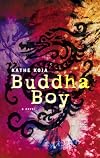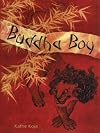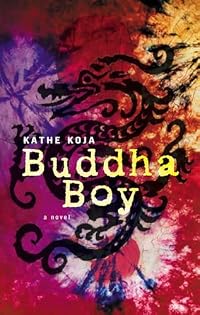
Buddha Boy
by Kathe Koja
On This Page
Description
Justin spends time with Jinsen, the unusual and artistic new student whom the school bullies torment and call Buddha Boy, and ends up making choices that impact Jinsen, himself, and the entire school.Tags
Recommendations





















Member Reviews
Buddha Boy has that feeling of hurtling towards disaster running along in the background of the whole thing. In the forefront, however, there is a great story about Jinsen and Justin. Jinsen seems not to care what anyone thinks of or does to him. Good thing, too, since he dresses, looks and acts odd, none of which gets him a bunch of friends. He practically invites kids to bully him when he starts to beg for lunch money in the cafeteria. Most of the kids do just that, either actively by throwing pennies or worse or passively by ignoring Jinsen altogether. Justin, instead, asks him why he's different.
The two boys have more in common than Justin had originally thought; they are both artists. Koja's use of language, especially when show more describing the boys' artwork, is beautiful. You can really see the works of art that Justin and Jinsen are creating as you're reading. Stemming from that, the rest of the book is simply lyrical. The story, even though it is set in a contemporary high school and deals with some pointedly cruel bullying, has the far away feel of a fairytale. Justin tells this story and it somehow manages to feel like it's happening in the present tense and like it's already happened at the same time. Regardless of the subject matter, it's beautiful. When you add Jinsen's attitude and actions, and the way he affects and changes Justin, the whole thing is really breathtaking.
I only had one complaint, and it's not exactly a deal-breaker. During the course of Justin and Jinsen's growing friendship, Jinsen explains a few things about Buddhism, but mostly smiles and lets Justin figure things out for himself. Jinsen lives by example. This is great and fits well with his reaction to the bullying in the story, but I did wish every once in a while that Jinsen would give a straight answer to Justin's questions. There doesn't seem to be a lot of young adult fiction dealing with Buddhism, so it would have been nice for this one to be a bit more informative.
I loved Koja's writing. I probably would have loved it even if the story hadn't been great, it was that good. Luckily, the story lived up to the writing and both worked together to create a magnificent finished product.
Book source: Philly Free Library show less
The two boys have more in common than Justin had originally thought; they are both artists. Koja's use of language, especially when show more describing the boys' artwork, is beautiful. You can really see the works of art that Justin and Jinsen are creating as you're reading. Stemming from that, the rest of the book is simply lyrical. The story, even though it is set in a contemporary high school and deals with some pointedly cruel bullying, has the far away feel of a fairytale. Justin tells this story and it somehow manages to feel like it's happening in the present tense and like it's already happened at the same time. Regardless of the subject matter, it's beautiful. When you add Jinsen's attitude and actions, and the way he affects and changes Justin, the whole thing is really breathtaking.
I only had one complaint, and it's not exactly a deal-breaker. During the course of Justin and Jinsen's growing friendship, Jinsen explains a few things about Buddhism, but mostly smiles and lets Justin figure things out for himself. Jinsen lives by example. This is great and fits well with his reaction to the bullying in the story, but I did wish every once in a while that Jinsen would give a straight answer to Justin's questions. There doesn't seem to be a lot of young adult fiction dealing with Buddhism, so it would have been nice for this one to be a bit more informative.
I loved Koja's writing. I probably would have loved it even if the story hadn't been great, it was that good. Luckily, the story lived up to the writing and both worked together to create a magnificent finished product.
Book source: Philly Free Library show less
A quick read (and listen) about a guy who was floating by in the social middle in high school who befriends a new kid, Ginsen, who is targeted by bullies because he is different. "Buddha Boy" has incredible talent as an artist and has a tough home life, but he has managed to get himself to a zen state of mind. Keeping to his promise of a peaceful, non-engagement existence with the bullies who try to torment him at every opportunity. The narrator has a much harder time seeing this treatment and moving himself from a bystander to a upstander.
There's something to be said for a book that can be started and finished in one long car trip. For an old lady it is easy to remember all the cast and how they are related to each other. On the other hand it means the author really has to pack a lot into a few words.
Buddha Boy tells the story of Justin and his relationship with the new, strange kid at school, Jinsen. When Justin is paired with Jinsen for a class project, he tries to get away from the boy with the shaved head who begs in the school lunchroom. He watches in silence as the "cool" kids bully Jinsen, but the more Justin is around him, and the more he learns about his talents and his beliefs, the more Justin begins to question and push back on the way things are.
I got this show more book as part of the Sync giveaway on Audiobooksync.com. Given that the Sync program is geared toward kids in school, the story seemed written at the right level, but I felt it seemed a bit trite at times. Jinsen's backstory, while an interesting one, didn't seem to jive with his physical description throughout most of the book.
All that being said, however, I think the message of the book is a good one and I did find myself being challenged in the same way that Justin found his own beliefs challenged. So this is a book that is recommended with reservations. show less
Buddha Boy tells the story of Justin and his relationship with the new, strange kid at school, Jinsen. When Justin is paired with Jinsen for a class project, he tries to get away from the boy with the shaved head who begs in the school lunchroom. He watches in silence as the "cool" kids bully Jinsen, but the more Justin is around him, and the more he learns about his talents and his beliefs, the more Justin begins to question and push back on the way things are.
I got this show more book as part of the Sync giveaway on Audiobooksync.com. Given that the Sync program is geared toward kids in school, the story seemed written at the right level, but I felt it seemed a bit trite at times. Jinsen's backstory, while an interesting one, didn't seem to jive with his physical description throughout most of the book.
All that being said, however, I think the message of the book is a good one and I did find myself being challenged in the same way that Justin found his own beliefs challenged. So this is a book that is recommended with reservations. show less
Justin is enduring social pressure from his friends and his enemies at his rich, suburban high school, while still trying to maintain a relationship with his divorced parents by doing everything right. The problem is when you know that the “right” thing to do is also the “wrong” thing to do. Justin is faced with deciding whether to turn his back on his pals by befriending the odd kid at school who shaves his head, or join the cool crowd by making fun of the new boy who also happens to be a fantastic artist. Peer pressure and bullying are major themes of this story. Not only does Justin contend with issues of social justice in the high school arena, he is also exposed to weighty matters of poverty, death, and religion through the show more growing development of his hesitant friendship with Jinsen. Middle school readers and up will relate to the main character’s sometimes frustrating and challenging personal experiences, always questioning how they might act if they were in Justin’s shoes. Ultimately, this fast-paced tale of enlightenment will entertain readers with its varied cast of thought-provoking characters and true-to-life situations. show less
This is a story about befriending the weird kid, and the power of art to transform the worst situations.
I thought this was entertaining, especially with the Full Cast Audio production, but it didn't say anything new to me.
Justin is happily in the middle,not one of the popular kids, and not one of the outcasts, but one of a small gang of kids on the fringe. But when he befriends Jinsen, the new boy who is the focus of the schools bullies, he finds that he can't hide out on the edges any more. A common love of art brings the two boys together, but also allows the bullies to do their worst damage.
I don't think that Justin really changed during the course of this book, he made a friend, but he barely stood up for Jinsen at all. So the show more transformation is that he finds courage to like someone, but not to stand by that someone? His temper tantrum at the end is more whiny outburst than courageous gesture.
I'd give this to a reader interested in bullies, art, or boy's friendship. show less
I thought this was entertaining, especially with the Full Cast Audio production, but it didn't say anything new to me.
Justin is happily in the middle,not one of the popular kids, and not one of the outcasts, but one of a small gang of kids on the fringe. But when he befriends Jinsen, the new boy who is the focus of the schools bullies, he finds that he can't hide out on the edges any more. A common love of art brings the two boys together, but also allows the bullies to do their worst damage.
I don't think that Justin really changed during the course of this book, he made a friend, but he barely stood up for Jinsen at all. So the show more transformation is that he finds courage to like someone, but not to stand by that someone? His temper tantrum at the end is more whiny outburst than courageous gesture.
I'd give this to a reader interested in bullies, art, or boy's friendship. show less
Jinsen is the new kid at school, and he's strange. He wears huge t-shirts, shaves his head, and doesn't fight back when he's bullied. Not only that, he doesn't cry or run, either. He smiles to himself and continues with his day.
Justin is curious, but likes his high school social status of being in the middle and doesn't want to risk being the target of the bullies or shunned by his current friends in order to reach out to Jinsen. However, when he is paired with Jinsen for a school project, he doesn't have a choice other than to spend some time with the new kid. They develop a friendship, which Justin tries to hide from his peers at first.
This is a very short book, only 4 hours on a playaway, so it doesn't delve too deeply into the issue show more of bullying. But it does give a different perspective because the "victim" refuses to be a victim, but is also not an activist. He accepts the behaviors of others towards him without taking it on as his own identity. It's pretty unbelievable that a teenage boy with a violent history would begin to live a Buddhist life immediately after the death of his parents and moving to a new place to live with an elderly aunt. However, the story works. If it had gone on longer, it probably would not have. show less
Justin is curious, but likes his high school social status of being in the middle and doesn't want to risk being the target of the bullies or shunned by his current friends in order to reach out to Jinsen. However, when he is paired with Jinsen for a school project, he doesn't have a choice other than to spend some time with the new kid. They develop a friendship, which Justin tries to hide from his peers at first.
This is a very short book, only 4 hours on a playaway, so it doesn't delve too deeply into the issue show more of bullying. But it does give a different perspective because the "victim" refuses to be a victim, but is also not an activist. He accepts the behaviors of others towards him without taking it on as his own identity. It's pretty unbelievable that a teenage boy with a violent history would begin to live a Buddhist life immediately after the death of his parents and moving to a new place to live with an elderly aunt. However, the story works. If it had gone on longer, it probably would not have. show less
Jinsen, a Buddhist, sophomore and artist, transfers to Rucher, the stereotypical rich preppy high school. Justin befriends him, almost against his will, and has to decide how to respond to bullies when Jinsen won’t fight back.
I liked this book, and would recommend it. As someone with a pretty decent background in Buddhism, I think the author did a good job of getting the basic points across but without being too preachy. It was annoying and distracting when the narrator inserted flippant comments, like “Karma, it was all karma. Just don’t ask me what that means.”
I liked this book, and would recommend it. As someone with a pretty decent background in Buddhism, I think the author did a good job of getting the basic points across but without being too preachy. It was annoying and distracting when the narrator inserted flippant comments, like “Karma, it was all karma. Just don’t ask me what that means.”
Members
- Recently Added By
Lists

Books Read in 2015
3,298 works; 129 members
Author Information

57+ Works 3,193 Members
Kathe Koja was born in Detroit, Michigan in 1960. Her first novel, The Cipher, won the Bram Stoker Award for Best First Novel in 1992 and the Locus Award. She also won a Deathrealm Award for Strange Angels. Her other adult novels include Bad Brains, Skin, Kink, and Under the Poppy. She also writes young adult novels including Straydog, Buddha Boy, show more The Blue Mirror, and Going Under. (Bowker Author Biography) show less
Some Editions
Awards and Honors
Awards
Distinctions
Common Knowledge
- Original publication date
- 2003
- People/Characters
- Michael Martin (Jinsen); Jakob McManus; Megan; Tim Elder; Brian Frame
Classifications
Statistics
- Members
- 392
- Popularity
- 79,065
- Reviews
- 16
- Rating
- (3.61)
- Languages
- English
- Media
- Paper, Audiobook, Ebook
- ISBNs
- 17
- ASINs
- 5