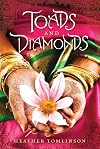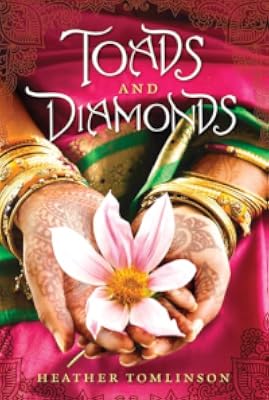
Toads and Diamonds
by Heather Tomlinson
On This Page
Description
A retelling of the Perrault fairy tale set in pre-colonial India, in which two stepsisters receive gifts from a goddess and each walks her own path to find her gift's purpose, discovering romance along the way.Tags
Recommendations






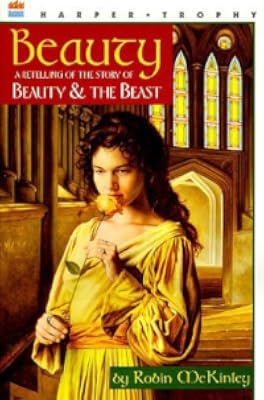
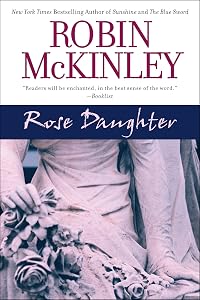
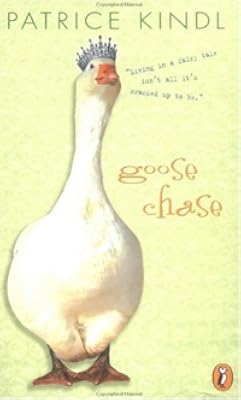




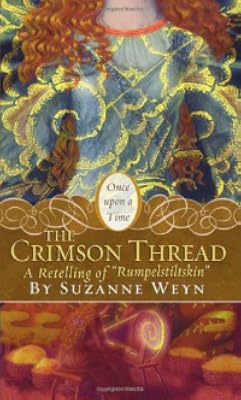






Member Recommendations
Member Reviews
Toads and Diamonds by Heather Tomlinson is an interesting blend of a French fable and Indian mythology. The story is about two sisters who have been blessed by their goddess in two very interesting ways. One sister drops flowers and precious jewels when she speaks, and the other sister drops frogs and snakes. Each sister must discover what their particular gift means and how to best use it.
The story covers the two paths that the girls travel and along the way the reader is treated to some wonderful world building and descriptions of their culture. Of course there is a covetous governor who wants the one sister for what she can provide him and despises snakes so wishes to kill the other sister. The country they live in is a replica of show more India and the people are divided by religion, so the sisters beliefs are much like the Hindus while the ruling class are like the Muslims. This isn’t a particularly “happy-ever-after” story, and although each girl finds someone to love, there is no guarantee of a happy ending. This is far more a morality tale about fate, accepting differences and showing kindness to the less fortunate.
Toads and Diamonds is a well written, well-researched and fun take on an established story. I really liked that in this version, both sisters were normal young women of their time, instead of the original tale of one sister being so good and thus deserved being blessed by flowers and jewels while the other was an abrasive, jealous girl and therefore was given the snakes and toads. show less
The story covers the two paths that the girls travel and along the way the reader is treated to some wonderful world building and descriptions of their culture. Of course there is a covetous governor who wants the one sister for what she can provide him and despises snakes so wishes to kill the other sister. The country they live in is a replica of show more India and the people are divided by religion, so the sisters beliefs are much like the Hindus while the ruling class are like the Muslims. This isn’t a particularly “happy-ever-after” story, and although each girl finds someone to love, there is no guarantee of a happy ending. This is far more a morality tale about fate, accepting differences and showing kindness to the less fortunate.
Toads and Diamonds is a well written, well-researched and fun take on an established story. I really liked that in this version, both sisters were normal young women of their time, instead of the original tale of one sister being so good and thus deserved being blessed by flowers and jewels while the other was an abrasive, jealous girl and therefore was given the snakes and toads. show less
I had to read this book as soon as I heard about it. Toads and Diamonds is one of the lesser-known fairy tales but it is also one of my favorite fairy tales ever. There was something that was utterly brilliant to me as a child of having gems and flowers falling from my lips when I spoke.
Tomlinson took the little-known tale and crafted a truly unique story that takes place in a little-known culture. Diribani and Tana are sisters who were both gifted by a goddess in different ways, and become pawns in a dangerous political game. Both discover that blessings can be curses, and curses can be blessings.
Tomlinson took the little-known tale and crafted a truly unique story that takes place in a little-known culture. Diribani and Tana are sisters who were both gifted by a goddess in different ways, and become pawns in a dangerous political game. Both discover that blessings can be curses, and curses can be blessings.
This book has been on my to-read list for what feels like forever, so when I saw it featured at my library I decided enough was enough. I can definitely see what would have drawn me to it many years ago, but I think it’s not as great a fit for me now.
Representation:
- the two protagonists, as well as the rest of the cast, are Indian
When sisters Diribani and Tana encounter the snake goddess Naghali-Ji at their local well, they’re each given extraordinary gifts: Diribani the ability to speak gemstones and flowers into existence, and Tana snakes and frogs. Diribani’s gift brings her a life among royalty, where she hopes her riches can improve the life of her people. Tana’s gift, however, makes her forced to live outside town by the show more snake-fearing governor. But Diribani’s world also comes with assassin’s and back-stabbing nobles, and without Tana’s ability in the village, plague spreads. The sisters are left wondering what exactly the goddess meant by giving them these abilities.
I’m familiar with the Toads and Diamonds fairytale so I know about its annoying, “bad sister gets snakes, good sister gets gems” deal. Heather Tomlinson does the story a million favors by showing that not all things are as straightforward as they seem and making her characters a little more complicated. Her writing is also beautiful and lush, transporting you to this fictional India deeply and fully.
But the religions in this world took me out of it. In the author’s note, Heather Tomlinson says the two religions featured in the novel (the MC’s religion, worshipping the 12 gods and goddesses; and the religion of those who have conquered the MC’s people, the monotheistic Believers) are invented, simply containing characteristics of many of India’s religions. However, it reads like Tana and Diribani’s religion is largely based on Hinduism, with little bits of inspiration taken from other religions -- and the Believers largely on Islam. Even more so when she notes that the novel resembles the Mughal Empire’s time period, in which Islam ruled over many Hindu artisans.
Obviously, that’s not a problem by itself, but the Believers and their religion aren’t really depicted in a lovely kind of light. There are specific Believers who are good people, but the religion itself and its customs don’t stop being badmouthed throughout the entire novel. For a book made for a Western audience, this leaves a sour taste in my mouth.
Not to mention, I expected religion to play a larger role than it did. It was presented as a huge issue between all the characters, and then it was kind of dropped by the end.
I do think the story is okay. It has its strengths, but it didn’t engross me as much as I hoped it would. show less
Representation:
- the two protagonists, as well as the rest of the cast, are Indian
When sisters Diribani and Tana encounter the snake goddess Naghali-Ji at their local well, they’re each given extraordinary gifts: Diribani the ability to speak gemstones and flowers into existence, and Tana snakes and frogs. Diribani’s gift brings her a life among royalty, where she hopes her riches can improve the life of her people. Tana’s gift, however, makes her forced to live outside town by the show more snake-fearing governor. But Diribani’s world also comes with assassin’s and back-stabbing nobles, and without Tana’s ability in the village, plague spreads. The sisters are left wondering what exactly the goddess meant by giving them these abilities.
I’m familiar with the Toads and Diamonds fairytale so I know about its annoying, “bad sister gets snakes, good sister gets gems” deal. Heather Tomlinson does the story a million favors by showing that not all things are as straightforward as they seem and making her characters a little more complicated. Her writing is also beautiful and lush, transporting you to this fictional India deeply and fully.
But the religions in this world took me out of it. In the author’s note, Heather Tomlinson says the two religions featured in the novel (the MC’s religion, worshipping the 12 gods and goddesses; and the religion of those who have conquered the MC’s people, the monotheistic Believers) are invented, simply containing characteristics of many of India’s religions. However, it reads like Tana and Diribani’s religion is largely based on Hinduism, with little bits of inspiration taken from other religions -- and the Believers largely on Islam. Even more so when she notes that the novel resembles the Mughal Empire’s time period, in which Islam ruled over many Hindu artisans.
Obviously, that’s not a problem by itself, but the Believers and their religion aren’t really depicted in a lovely kind of light. There are specific Believers who are good people, but the religion itself and its customs don’t stop being badmouthed throughout the entire novel. For a book made for a Western audience, this leaves a sour taste in my mouth.
Not to mention, I expected religion to play a larger role than it did. It was presented as a huge issue between all the characters, and then it was kind of dropped by the end.
I do think the story is okay. It has its strengths, but it didn’t engross me as much as I hoped it would. show less
I have always loved the Charles Perrault fairy tale called simply “The Fairies.” A girl goes to a well to draw water for her family and is approached by an old, threadbare woman who asks for a drink. The girl gladly gives her water. As a reward for her kindness, the woman (actually a fairy, disguised) gives the girl a gift: for every word she speaks, a flower or a jewel shall fall from her lips. The girl returns to her stepmother, who is astonished at the gift and resolves to send her own daughter to the well. That daughter is rude to the fairy, who this time appears as a wealthy old woman (thereby foiling the mother’s instructions to treat a threadbare old woman with kindness). The fairy therefore rewards the daughter with a show more different gift: for every word she speaks, a toad or a snake will fall from her lips. A nice lesson on the importance of kindness!
Heather Tomlinson has written her own, more modern — and foreign — version of this fairy tale in the young adult novel Toads and Diamonds. Tomlinson sets her novel in an unnamed imagined country similar to India or Pakistan. Her two main characters, who take turns as the viewpoint character in alternating chapters, are Diribani and Tana. The two are stepsisters, but in this story they are the best of friends rather than the typical fairy tale enemies. They live in poverty since the death of Diribani’s father, who was Tana’s stepfather. They are not used to this state; their father was a well-off jeweler, but everything he had saved for them is gone now. One day Diribani goes to the well for water — a task she is not used to performing, as servants used to accomplish that for her family — and meets the goddess Naghali-ji, one of a pantheon of twelve gods. Naghali-ji is disguised as an old, infirm and destitute woman. Diribani gives her water and helps her to a spot in the shade, at which point the old woman is suddenly clear-voiced and sound of body, offering Diribani her heart’s desire. Silently, stunned by the now-obvious presence of the goddess, Diribani wishes for beauty, and receives the gift of flowers and jewels.
In the tumult of emotions arising from the gift, though, Diribani breaks the family’s last clay jar. Tana must return to the well to get water, taking with her a silver pitcher, the last of the family’s wealth. She encounters an obviously wealthy woman who offers her a drink, but Tana refuses. She tells the woman that she would serve her but for the fact that the pitcher drips, and would streak the woman’s lovely silk dress. The woman, who is once again Naghali-ji, offers her a gift for her candor. Tana is silent, but Naghali-ji divines her wish: to protect her family. And so Naghali-ji gives her the gift of toads and snakes. The difference from the Perrault take is that, in this culture, toads and snakes really are a gift. Frogs and toads are lucky, and every household keeps a “house naga” — a snake known to be a species that eats rats.
The young women realize immediately that they must hide their gifts to avoid unwanted attention, but that very quickly becomes impossible. An impetuous but kind act by Diribani gets the story really moving past its fairy tale origins by bringing both sisters to the attention of Prince Zahid and Governor Alwar. The sisters become separated from each other and their mother, both seeking to learn what Naghali-ji intended for them with their gifts in environments fundamentally different from their lives before their encounters with the goddess.
Toads and Diamonds is simply told, with few linguistic flourishes. It lets the reader peer into a foreign culture; even if it is not strictly set in the Mughal Empire during the time of the Hundred Kingdoms, it is sufficiently similar to pique a young reader’s curiosity in another place and time (Tomlinson gives some recommendations for women of the time whom readers might wish to investigate). It is free of sex and bad language, making it easily appropriate for children as young as eight years old to read, but sufficiently sophisticated that a teenager is likely to enjoy it as well. And for those of us who enjoy fairy tales retold, it is good reading no matter our age. show less
Heather Tomlinson has written her own, more modern — and foreign — version of this fairy tale in the young adult novel Toads and Diamonds. Tomlinson sets her novel in an unnamed imagined country similar to India or Pakistan. Her two main characters, who take turns as the viewpoint character in alternating chapters, are Diribani and Tana. The two are stepsisters, but in this story they are the best of friends rather than the typical fairy tale enemies. They live in poverty since the death of Diribani’s father, who was Tana’s stepfather. They are not used to this state; their father was a well-off jeweler, but everything he had saved for them is gone now. One day Diribani goes to the well for water — a task she is not used to performing, as servants used to accomplish that for her family — and meets the goddess Naghali-ji, one of a pantheon of twelve gods. Naghali-ji is disguised as an old, infirm and destitute woman. Diribani gives her water and helps her to a spot in the shade, at which point the old woman is suddenly clear-voiced and sound of body, offering Diribani her heart’s desire. Silently, stunned by the now-obvious presence of the goddess, Diribani wishes for beauty, and receives the gift of flowers and jewels.
In the tumult of emotions arising from the gift, though, Diribani breaks the family’s last clay jar. Tana must return to the well to get water, taking with her a silver pitcher, the last of the family’s wealth. She encounters an obviously wealthy woman who offers her a drink, but Tana refuses. She tells the woman that she would serve her but for the fact that the pitcher drips, and would streak the woman’s lovely silk dress. The woman, who is once again Naghali-ji, offers her a gift for her candor. Tana is silent, but Naghali-ji divines her wish: to protect her family. And so Naghali-ji gives her the gift of toads and snakes. The difference from the Perrault take is that, in this culture, toads and snakes really are a gift. Frogs and toads are lucky, and every household keeps a “house naga” — a snake known to be a species that eats rats.
The young women realize immediately that they must hide their gifts to avoid unwanted attention, but that very quickly becomes impossible. An impetuous but kind act by Diribani gets the story really moving past its fairy tale origins by bringing both sisters to the attention of Prince Zahid and Governor Alwar. The sisters become separated from each other and their mother, both seeking to learn what Naghali-ji intended for them with their gifts in environments fundamentally different from their lives before their encounters with the goddess.
Toads and Diamonds is simply told, with few linguistic flourishes. It lets the reader peer into a foreign culture; even if it is not strictly set in the Mughal Empire during the time of the Hundred Kingdoms, it is sufficiently similar to pique a young reader’s curiosity in another place and time (Tomlinson gives some recommendations for women of the time whom readers might wish to investigate). It is free of sex and bad language, making it easily appropriate for children as young as eight years old to read, but sufficiently sophisticated that a teenager is likely to enjoy it as well. And for those of us who enjoy fairy tales retold, it is good reading no matter our age. show less
I liked the delicate interplay between the two religions. The Believers are an occupying power, yes, but they are only portrayed as evil at the beginning, while they’re still “the other” — as Diribani gets to know them she comes to appreciate their customs. I also liked Diribani’s and Tana’s separate quests to determine what Naghali intends for them to do with her gifts. Both girls have quite believable crises of faith, but the goddess never really forsakes them. This is an unabashedly religious book in a way that modern readers will relate to, I think, even though the religion is made up. (Full review at http://www.parenthetical.net/2011/07/13/nerds-heart-ya-toads-and-diamonds-heathe...
Based on Charles Perrault's story, "The Fairies," Toads and Diamonds turns the original tale on its head by focusing on the strength of two sisters' friendship rather than on their animosity. The original tale was short and simple: Two stepsisters were raised along with their mother. One day the kind younger sister goes to fetch water from the well and meets an old woman who asks for a drink. The younger sister, of course, gives her the water and the disguised fairy gifts her with gems and flowers that drop from her lips with every word she speaks. Her mother immediately sends her stepsister off to receive the same gift; except the stepsister is selfish and refuses to be sufficiently kind and is cursed to have snakes and toads fall from show more her lips instead. The mother blames the younger sister for the elder's curse, and throws her out of the house. She is found weeping by the side of the road by a Prince, who is entranced by the gems and flowers that appear each time she speaks and marries her. The mother eventually grows tired of the elder sister's toads and snakes and throws her out as well.
In this retelling, rather than condemning one sister as a selfish brat and the other as a selfless paragon, both sisters have their strengths and virtues as well as their weaknesses and vices. Both sisters have to use their unexpected gifts to improve the lives of their families and the people around them. Tana's snakes are just as, or even more, useful to her neighbors as Diribani's gems. It's important as well how different the sisters' wishes that lead to their gifts are. Diribani wished for beauty and received flowers and gems every time she talked. The correlation between her wish and her gift are obvious, but the downsides are less so. Time spent at the court of a prince allows Diribani to see why beauty alone can lead to hardship. Tana, on the other hand, wished to be able to protect her family, which had recently fallen into poverty and had few options for raising funds. Her wish is exemplary, but the use of the gift granted is not immediately apparent; she must search to discover how her gift can keep her family safe.
While Diribani immediately recognizes the benefits to having limitless supply of gems at her disposal, the greed and violence of others causes her to lose control of the results of her gift. Furthermore, the constant presence of the jewels leads Diribani to forget why they were astonishing and helpful in the first place. Tana, on the other hand, immediately assumes that her gift of frogs and snakes is a punishment for not showing proper respect to the goddess and assumes that she must atone for her sins. It is only much later that she realizes how helpful the creation of snakes can be in a province ruled by a man terrified of snakes and unable to recognize their use in catching rats, and thus stopping a plague. Both sisters have to recognize that there is more to their gifts than face value and that both of them were equally blessed and cursed by the goddess.
This is such a striking difference from the original tale where one sister reaped all the rewards and the other all the punishments. Instead, the sisters show that no one person is all good or all bad and that women don't need to pitted against each other to teach a moral tale. Even the secondary female characters who first appear to be antagonistic are shown to be multifaceted and just as willing to help the sisters as the sisters are to help them. Basically, the relationships between women in this book are amazing and so refreshing.
While the overall concept behind Toads and Diamonds is definitely exemplary, the execution did leave a few things to be desired. The pacing throughout was odd. While Tana's story fairly consistently moved along and generally seemed to have a purpose and a recognizable narrative arc, there were times when Diribani's story moved at a glacial pace. While her personal revelations, when they did arrive, were gratifying in their content, the context was sudden and disjointed. The conclusion of the novel seemed to come out of nowhere and the book ended very abruptly. Alwar's kidnapping of Diribani and his eventual death had little foreshadowing or development and was over so quickly that it was clear the kidnapping was a slightly clumsy attempt to bring Tana and Diribani together for their final meeting with the goddess that was sloppily tacked to the end of the novel. It felt as if there was little real resolution in the conclusion; so much still felt like it was up in the air.
The interactions between the sisters are somewhat disappointing in how few there are; the sisters are almost immediately separated after receiving their gifts and only reunite for the last chapter or two. In their separation, the sisters remain devoted to each and comfort themselves in their own trials and tribulations with the thought that their sister at least must be happy, but there's really no development in the relationship between them. Their stories are completely separate until those last, contrived scenes.
Personally, I think adding a few more chapters to the end of the novel to really flesh out how the sisters came back together and to more fully connect the two sisters separate journeys would have been nice. I also feel like some better explanation of how the sisters planned to move on and put the lessons they had learned to use would have been nice as well. The book ends with them still standing at the well where they had lost their gifts and with no indication of where they might go in the future.
All the same, overall it was a very good book that I will most likely reread at some point in the future. show less
In this retelling, rather than condemning one sister as a selfish brat and the other as a selfless paragon, both sisters have their strengths and virtues as well as their weaknesses and vices. Both sisters have to use their unexpected gifts to improve the lives of their families and the people around them. Tana's snakes are just as, or even more, useful to her neighbors as Diribani's gems. It's important as well how different the sisters' wishes that lead to their gifts are. Diribani wished for beauty and received flowers and gems every time she talked. The correlation between her wish and her gift are obvious, but the downsides are less so. Time spent at the court of a prince allows Diribani to see why beauty alone can lead to hardship. Tana, on the other hand, wished to be able to protect her family, which had recently fallen into poverty and had few options for raising funds. Her wish is exemplary, but the use of the gift granted is not immediately apparent; she must search to discover how her gift can keep her family safe.
While Diribani immediately recognizes the benefits to having limitless supply of gems at her disposal, the greed and violence of others causes her to lose control of the results of her gift. Furthermore, the constant presence of the jewels leads Diribani to forget why they were astonishing and helpful in the first place. Tana, on the other hand, immediately assumes that her gift of frogs and snakes is a punishment for not showing proper respect to the goddess and assumes that she must atone for her sins. It is only much later that she realizes how helpful the creation of snakes can be in a province ruled by a man terrified of snakes and unable to recognize their use in catching rats, and thus stopping a plague. Both sisters have to recognize that there is more to their gifts than face value and that both of them were equally blessed and cursed by the goddess.
This is such a striking difference from the original tale where one sister reaped all the rewards and the other all the punishments. Instead, the sisters show that no one person is all good or all bad and that women don't need to pitted against each other to teach a moral tale. Even the secondary female characters who first appear to be antagonistic are shown to be multifaceted and just as willing to help the sisters as the sisters are to help them. Basically, the relationships between women in this book are amazing and so refreshing.
While the overall concept behind Toads and Diamonds is definitely exemplary, the execution did leave a few things to be desired. The pacing throughout was odd. While Tana's story fairly consistently moved along and generally seemed to have a purpose and a recognizable narrative arc, there were times when Diribani's story moved at a glacial pace. While her personal revelations, when they did arrive, were gratifying in their content, the context was sudden and disjointed. The conclusion of the novel seemed to come out of nowhere and the book ended very abruptly. Alwar's kidnapping of Diribani and his eventual death had little foreshadowing or development and was over so quickly that it was clear the kidnapping was a slightly clumsy attempt to bring Tana and Diribani together for their final meeting with the goddess that was sloppily tacked to the end of the novel. It felt as if there was little real resolution in the conclusion; so much still felt like it was up in the air.
The interactions between the sisters are somewhat disappointing in how few there are; the sisters are almost immediately separated after receiving their gifts and only reunite for the last chapter or two. In their separation, the sisters remain devoted to each and comfort themselves in their own trials and tribulations with the thought that their sister at least must be happy, but there's really no development in the relationship between them. Their stories are completely separate until those last, contrived scenes.
Personally, I think adding a few more chapters to the end of the novel to really flesh out how the sisters came back together and to more fully connect the two sisters separate journeys would have been nice. I also feel like some better explanation of how the sisters planned to move on and put the lessons they had learned to use would have been nice as well. The book ends with them still standing at the well where they had lost their gifts and with no indication of where they might go in the future.
All the same, overall it was a very good book that I will most likely reread at some point in the future. show less
Vastly different from Charles Perrault’s The Fairies, in my opinion, Toads and Diamonds by Heather Tomlinson is a much-better version of the tale. For those not familiar with the original, two step-sisters encounter a disguised fairy on separate occasions. The younger of the two is blessed with a gift: Whenever she speaks, flowers and jewels fall from her lips. The eldest isn’t a kind person, so the fairy curses her to spit out snakes and amphibians when she speaks. In traditional fairy tale fashion, the good-hearted, but downtrodden maiden overcomes all while those that put her down get their just rewards. Tomlinson took a fresh look at the original tale and thought, “What if the fairy blessed both sisters?” Both sisters are show more kind, good-hearted people who honestly love one another despite the fact that they don’t share blood. Some parts of the tale remain consistent: Diribani is blessed with the gift of jewels and flowers, while her stepsister Tana is given the ability to speak snakes and toads. But which is a blessing and which a curse?
Tomlinson sets Toads and Diamonds in India, where snakes are revered. Tana has also received a gift, not a curse, though there are those who flee from what her lips release upon speaking. Many families own house nagas, snakes that eat the rats and keep pestilence from spreading. While outwardly, Diribani has received a priceless gift and releases a small fortune whenever she has something to say, it’s actually a curse in disguise. She’s locked up and kept away from everyone; her jewels line the king’s coffers and a greedy governor wants her for himself. Toads and Diamonds is told in alternating POVs, so readers are able to follow both Diribani and Tana, seeing what becomes of the sisters and their “gifts.”
Overall, Tana was my favorite of the sisters. She’s made of strong mettle and goes through so much agony, while Diribani has a much easier life. Diribani’s story flatlined a bit, and at times, I was eager to get back to Tana’s plight. There was so much heartbreak and misery in her life; Tana was braver than most girls in her situation. As with any other fairy tale, there are also romantic prospects involved, though a relationship is hard for either sister due to their unique gifts. The throne doesn’t want to let go of Diribani’s riches while Tana feels that no one could love a girl who spits venomous snakes. The setting also played an important factor in the book and was a character in and of itself. I loved that Tomlinson modeled her land on a real country, India, and invented two powerful religions that are similar to ones we have in reality, while still being quite unique. Everything fit together well and created a lovely atmosphere not often seen in literature. Combined with an unusual outlook on what constitutes a blessing or a curse, Toads and Diamonds leaves readers with a lot to think about and reflect on. show less
Tomlinson sets Toads and Diamonds in India, where snakes are revered. Tana has also received a gift, not a curse, though there are those who flee from what her lips release upon speaking. Many families own house nagas, snakes that eat the rats and keep pestilence from spreading. While outwardly, Diribani has received a priceless gift and releases a small fortune whenever she has something to say, it’s actually a curse in disguise. She’s locked up and kept away from everyone; her jewels line the king’s coffers and a greedy governor wants her for himself. Toads and Diamonds is told in alternating POVs, so readers are able to follow both Diribani and Tana, seeing what becomes of the sisters and their “gifts.”
Overall, Tana was my favorite of the sisters. She’s made of strong mettle and goes through so much agony, while Diribani has a much easier life. Diribani’s story flatlined a bit, and at times, I was eager to get back to Tana’s plight. There was so much heartbreak and misery in her life; Tana was braver than most girls in her situation. As with any other fairy tale, there are also romantic prospects involved, though a relationship is hard for either sister due to their unique gifts. The throne doesn’t want to let go of Diribani’s riches while Tana feels that no one could love a girl who spits venomous snakes. The setting also played an important factor in the book and was a character in and of itself. I loved that Tomlinson modeled her land on a real country, India, and invented two powerful religions that are similar to ones we have in reality, while still being quite unique. Everything fit together well and created a lovely atmosphere not often seen in literature. Combined with an unusual outlook on what constitutes a blessing or a curse, Toads and Diamonds leaves readers with a lot to think about and reflect on. show less
Members
- Recently Added By
Lists

Favorite Fairy Tale Retellings
210 works; 62 members

Fairy Tales..retellings
44 works; 2 members

Fantasy with Rulers (and some Sci-fi rulers, too)
56 works; 1 member
Author Information
3 Works 625 Members
Some Editions
Awards and Honors
Awards
Distinctions
Classifications
Statistics
- Members
- 293
- Popularity
- 109,655
- Reviews
- 20
- Rating
- (3.74)
- Languages
- English
- Media
- Paper, Ebook
- ISBNs
- 3
- ASINs
- 2