Fundamental Principles of the Metaphysics of Morals
by Immanuel Kant
On This Page
Description
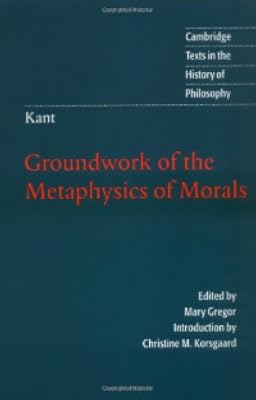
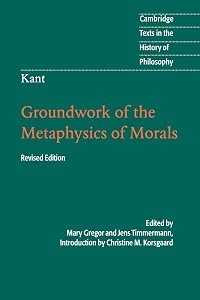
Immanuel Kant's Groundwork for the Metaphysics of Morals is one of the most important texts in the history of ethics. In it Kant searches for the supreme principle of morality and argues for a conception of the moral life that has made this work a continuing source of controversy and an object of reinterpretation for over two centuries. This new edition of Kant's work provides a fresh translation that is uniquely faithful to the German original and more fully annotated than any previous show more translation. There are also four essays by well-known scholars that discuss Kant's views and the philosophical issues raised by the Groundwork. J.B. Schneewind defends the continuing interest in Kantian ethics by examining its historical relation both to the ethical thought that preceded it and to its influence on the ethical theories that came after it; Marcia Baron sheds light on Kant's famous views about moral motivation; and Shelly Kagan and Allen W. Wood advocate contrasting interpretations of Kantian ethics and its practical implications. show lessTags
Recommendations
















Member Reviews
Inasmuch as we can praise Kant's brilliance and analytical rigour, the Metaphysics of Morals falls patently flat if only because he is overextending the gains he has made in the first Critique to apply to the domain of ethics. Any movement from "is" to "ought" (i.e., the shift from ontology to ethics) is going to be fraught with perils. I would say that, from the standpoint of Kant's entire oeuvre, this is his lowest point. That being said, no serious reader in philosophy can bypass this text as it is essential reading in the development of ethics in the transition from the Enlightenment to subsequent Romanticism.
A dense but relatively short piece on moral action. Notably, it is the source of the "categorical imperative," which in its base formulation states: "act only on a maxim that you can also will to become a universal law” (G 421). This is a deceptively simple formulation that appears to resonate with the "golden rule" except that "universal law" does not imply reciprocity of action. The universality of the law means that moral actions ought to be based on laws that rational creatures can arrive at a priori (i.e., prior to or outside of experience) that establishes an obligation for action that, no matter the circumstances of application, never contradicts itself. The most illustrative example is about telling small lies for one's show more benefit. As a universal, the maxim does not hold because if everyone acted on the premise that it is okay to tell small lies then we can never know when/if people are telling the truth and so the expectation of truth telling breaks down.
One of the most interesting parts of the book for me was Kant's linkage between freedom, autonomy, and morality. I am, for sure, missing some nuance here, but I read this argument saying that we need to be free to make true choices about our aims, actions, and consequently, the ends to which we orient ourselves. And as long as the maxims by which we act could be willed universal they are the basis for moral action. This idea does seem to create a bit of friction around the imposition of civil law (lowercase "l") with the aim of imposing morality. When it is an external determinant on our actions, can it ever really result in moral action or just morally cognate acts that are motivated by self-interest? Or are just laws those that curtail actions that cannot be universalized? Also, what does this formulation say about moral transgression? Should we or even can we do anything about moral transgression? Maybe I'm just getting caught up in the normativity of this system.
I also really liked the discussion of ends and means. This is the practical formulation of the categorical imperative to "act in such a way that you treat humanity whether in your own person or anyone else’s, never merely as a means, but also as an end” (G 430). I like that and see strong resonance with Simone Weil's discussion of human dignity and the need for us to be able to pursue our ends. It's all related to freedom as well, as I see it: when a person is treated as a means to an end, they are robbed of some of their autonomy and their ability to choose to act toward their ends. However, it's not that we should never treat people as means to ends, just not merely as means to ends.
On the whole, I found Kant's to be quite readable. There is a fair bit of terminology and specialized meanings and a fair bit of ambiguity, but reading this work alongside some secondary work really helped. Section III on the will seemed … inconclusive? Maybe that’s what he resolves in the Critique of Practical Reason. show less
One of the most interesting parts of the book for me was Kant's linkage between freedom, autonomy, and morality. I am, for sure, missing some nuance here, but I read this argument saying that we need to be free to make true choices about our aims, actions, and consequently, the ends to which we orient ourselves. And as long as the maxims by which we act could be willed universal they are the basis for moral action. This idea does seem to create a bit of friction around the imposition of civil law (lowercase "l") with the aim of imposing morality. When it is an external determinant on our actions, can it ever really result in moral action or just morally cognate acts that are motivated by self-interest? Or are just laws those that curtail actions that cannot be universalized? Also, what does this formulation say about moral transgression? Should we or even can we do anything about moral transgression? Maybe I'm just getting caught up in the normativity of this system.
I also really liked the discussion of ends and means. This is the practical formulation of the categorical imperative to "act in such a way that you treat humanity whether in your own person or anyone else’s, never merely as a means, but also as an end” (G 430). I like that and see strong resonance with Simone Weil's discussion of human dignity and the need for us to be able to pursue our ends. It's all related to freedom as well, as I see it: when a person is treated as a means to an end, they are robbed of some of their autonomy and their ability to choose to act toward their ends. However, it's not that we should never treat people as means to ends, just not merely as means to ends.
On the whole, I found Kant's to be quite readable. There is a fair bit of terminology and specialized meanings and a fair bit of ambiguity, but reading this work alongside some secondary work really helped. Section III on the will seemed … inconclusive? Maybe that’s what he resolves in the Critique of Practical Reason. show less
So act as to treat humanity, whether in your own person or in that of any other, in every case at the same time as an end, never as a means only.
A virtuosic display of intellect as is typical of Kant. He teeters on the verge of mysticism sometimes in his adulation of reason and desire to strip inclination and the empirical world from morality. The problem is that it results in a pure morality that rests on an assumption both of free will and unknowable noumena (and yet somehow it affects the sensible world?). I don't dare say I understand the Groundwork enough to truly address its plausibility, but I urge anyone interested in moral realism and ethical theory to take the time to process his ideas. This is the second translation I've show more dealt with, and its impeccable. I can't vouch for the consistency of the terminology because my Kantian German is zero, but it's highly readable and has a number of helpful appendices. show less
A virtuosic display of intellect as is typical of Kant. He teeters on the verge of mysticism sometimes in his adulation of reason and desire to strip inclination and the empirical world from morality. The problem is that it results in a pure morality that rests on an assumption both of free will and unknowable noumena (and yet somehow it affects the sensible world?). I don't dare say I understand the Groundwork enough to truly address its plausibility, but I urge anyone interested in moral realism and ethical theory to take the time to process his ideas. This is the second translation I've show more dealt with, and its impeccable. I can't vouch for the consistency of the terminology because my Kantian German is zero, but it's highly readable and has a number of helpful appendices. show less
Kant desenvolve a indicação ao final da crítica da razão pura (sua obra prima) de que a liberdade diferenciaria o humano quanto à sua redutibilidade ao mundo natural, colocando o também sob a égide de um mundo inteligível, onde o que vale são a esfera das razões. Aqui na fundamentação são exploradas as consequências dessa colocação, de modo a fundar a racionalidade prática na sua ligação com a moralidade e a liberdade, no estabelecimento firme da vontade como autônoma e assim legisladora. Com um texto muito mais envolvente do que a crítica da razão prática (que corrige e desenvolve alguns pontos daqui, mas perde-se em aspectos técnicos e não invoca a emoção das máximas e imperativos categóricos), desenvolve show more argumentos analíticos da boa vontade à moralidade e depois da moralidade popular a esta última, que se mostra destituída do empírico (no qual não apenas os humanos, mas todos os possíveis sapientes são irmãos), para terminar com um desenvolvimento dito "sintético" da liberdade (negativa da não determinação pela causalidade mecânica) e positiva (envolvendo a autonomia da vontade) até a defensibilidade da pressuposição desta em sua ligação com o reino dos fins e o respeito à razão e aos outros sapientes. Grande livro! show less
I shamefully do not have the time to write an elaborate review, since I have to do an exam and essay on this very book, but let my quickly put down some thoughts:
On the edition - This edition is handsdown the best one around. The German-English lay out is perfect for scholars who are not satisfied with accepting the interpretation of the translator. Especially in Groundwork III there are some mistakes in the English translation, and the German version helps clarify what Kant means.
On the book - Kant's moral system is impressive. Though I think it has been fairly successfully undermined by later philosophers, it is still worth plunging into its depths. However, the first two parts of the Groundwork are pretty weak. Kant begins building show more his system by following what he thinks are moral intuitions beyond doubt. It all starts with examples and arguments based on common-sense. It is only in the Groundwork III (and the end of II) that Kant starts building his system and giving it its place within Reason. For those interested in Kantian ethics: this book is a good intro due to its common-sense method. However, in the Second Critique, Kant answers questions of a deeper nature in a more thorough way. show less
On the edition - This edition is handsdown the best one around. The German-English lay out is perfect for scholars who are not satisfied with accepting the interpretation of the translator. Especially in Groundwork III there are some mistakes in the English translation, and the German version helps clarify what Kant means.
On the book - Kant's moral system is impressive. Though I think it has been fairly successfully undermined by later philosophers, it is still worth plunging into its depths. However, the first two parts of the Groundwork are pretty weak. Kant begins building show more his system by following what he thinks are moral intuitions beyond doubt. It all starts with examples and arguments based on common-sense. It is only in the Groundwork III (and the end of II) that Kant starts building his system and giving it its place within Reason. For those interested in Kantian ethics: this book is a good intro due to its common-sense method. However, in the Second Critique, Kant answers questions of a deeper nature in a more thorough way. show less
In "The Groundwork of the Metaphysics of Morals," Immanuel Kant argues that the foundation of morality lies in the "good will," which means acting solely out of respect for a universal moral law, known as the Categorical Imperative, rather than based on the potential consequences of an action; essentially, the rightness of an action is determined by the principle guiding it, not the outcome, and this principle must be applicable to all rational beings in all situations.
Kant is very hard to read, at least for me, however when reading him you discover a first rate mind, that looks very deeply into the human condition. In this book Kant looks for ground to build a system of moral and ethics on. While it has flaws, for its time his conclusions are breath taking.
Members
- Recently Added By
Published Reviews
ThingScore 75
Forlaget skriver om denne boka:
Immanuel Kant (1724-1804) betraktes som den største filosof i nyere tid. Han regnes som grunnleggeren av den tyske idealisme, og hans hovedbedrift er den kritiske filosofi, som går ut på å undersøke selve erkjenneisens mulighet og grenser.
I denne boken presenteres et fyldig utvalg av Kants moralfilosofiske skrifter. Siktepunktet har vært å gi et allsi-dig show more bilde av Kants etikk med hovedvekt på moralloven. Menneskets situasjon er en kampplass der fornuften ligger i en uforsonlig strid med de slette tilbøyeligheter i den menneskelige natur, men der mennesket likevel i sitt innerste vesen er fritt. Nøkkelen til Kants frihetsproblematikk finner vi i menneskets autonomi, hevder Eivind Storheim i bokens innledning, som er en innføring i Kants etikk.
Skriftene som her er oversatt, er Grunnlegging til moralens metafysikk (1785), sentrale avsnitt fra første bok av Kritikk av den praktiske fornuft (1788) og forordet og innledningen til Etikken, annen del av Moralens metafysikk (1797). I tillegg er det oversatt et utsnitt av Kants skrifter i årene 1762-1765. show less
Immanuel Kant (1724-1804) betraktes som den største filosof i nyere tid. Han regnes som grunnleggeren av den tyske idealisme, og hans hovedbedrift er den kritiske filosofi, som går ut på å undersøke selve erkjenneisens mulighet og grenser.
I denne boken presenteres et fyldig utvalg av Kants moralfilosofiske skrifter. Siktepunktet har vært å gi et allsi-dig show more bilde av Kants etikk med hovedvekt på moralloven. Menneskets situasjon er en kampplass der fornuften ligger i en uforsonlig strid med de slette tilbøyeligheter i den menneskelige natur, men der mennesket likevel i sitt innerste vesen er fritt. Nøkkelen til Kants frihetsproblematikk finner vi i menneskets autonomi, hevder Eivind Storheim i bokens innledning, som er en innføring i Kants etikk.
Skriftene som her er oversatt, er Grunnlegging til moralens metafysikk (1785), sentrale avsnitt fra første bok av Kritikk av den praktiske fornuft (1788) og forordet og innledningen til Etikken, annen del av Moralens metafysikk (1797). I tillegg er det oversatt et utsnitt av Kants skrifter i årene 1762-1765. show less
added by kirstenlund
Lists

Five star books
1,767 works; 109 members

How to Read a Book's Recommended Reading List
309 works; 10 members

Books Referenced by Izetbegovic's Islam Between East and West
233 works; 2 members

Philosophy, Politics and Economics
61 works; 1 member

What is morality?
12 works; 1 member

Books Cited in Blueprint by Nicholas Christakis
261 works; 1 member
Author Information

The greatest of all modern philosophers was born in the Baltic seaport of Konigsberg, East Prussia, the son of a saddler and never left the vicinity of his remote birthplace. Through his family pastor, Immanuel Kant received the opportunity to study at the newly founded Collegium Fredericianum, proceeding to the University of Konigsberg, where he show more was introduced to Wolffian philosophy and modern natural science by the philosopher Martin Knutzen. From 1746 to 1755, he served as tutor in various households near Konigsberg. Between 1755 and 1770, Kant published treatises on a number of scientific and philosophical subjects, including one in which he originated the nebular hypothesis of the origin of the solar system. Some of Kant's writings in the early 1760s attracted the favorable notice of respected philosophers such as J. H. Lambert and Moses Mendelssohn, but a professorship eluded Kant until he was over 45. In 1781 Kant finally published his great work, the Critique of Pure Reason. The early reviews were hostile and uncomprehending, and Kant's attempt to make his theories more accessible in his Prolegomena to Any Future Metaphysics (1783) was largely unsuccessful. Then, partly through the influence of former student J. G. Herder, whose writings on anthropology and history challenged his Enlightenment convictions, Kant turned his attention to issues in the philosophy of morality and history, writing several short essays on the philosophy of history and sketching his ethical theory in the Foundations of the Metaphysics of Morals (1785). Kant's new philosophical approach began to receive attention in 1786 through a series of articles in a widely circulated Gottingen journal by the Jena philosopher K. L. Reinhold. The following year Kant published a new, extensively revised edition of the Critique, following it up with the Critique of Practical Reason (1788), treating the foundations of moral philosophy, and the Critique of Judgment (1790), an examination of aesthetics rounding out his system through a strikingly original treatment of two topics that were widely perceived as high on the philosophical agenda at the time - the philosophical meaning of the taste for beauty and the use of teleology in natural science. From the early 1790s onward, Kant was regarded by the coming generation of philosophers as having overthrown all previous systems and as having opened up a whole new philosophical vista. During the last decade of his philosophical activity, Kant devoted most of his attention to applications of moral philosophy. His two chief works in the 1790s were Religion Within the Bounds of Plain Reason (1793--94) and Metaphysics of Morals (1798), the first part of which contained Kant's theory of right, law, and the political state. At the age of 74, most philosophers who are still active are engaged in consolidating and defending views they have already worked out. Kant, however, had perceived an important gap in his system and had begun rethinking its foundations. These attempts went on for four more years until the ravages of old age finally destroyed Kant's capacity for further intellectual work. The result was a lengthy but disorganized manuscript that was first published in 1920 under the title Opus Postumum. It displays the impact of some of the more radical young thinkers Kant's philosophy itself had inspired. Kant's philosophy focuses attention on the active role of human reason in the process of knowing the world and on its autonomy in giving moral law. Kant saw the development of reason as a collective possession of the human species, a product of nature working through human history. For him the process of free communication between independent minds is the very life of reason, the vocation of which is to remake politics, religion, science, art, and morality as the completion of a destiny whose shape it is our collective task to frame for ourselves. (Bowker Author Biography) Philosopher Immanuel Kant was born in 1724 in Konigsberg, East Prussia. He studied at the University of Konigsberg, where he would act as a lecturer and professor after a brief career as a private tutor. Kant was an incredibly influential philosopher, his theories having impact on the likes of Schopenhauer and Hegel. Kant's most prominent works include Critique of Pure Reason (1781), Foundations of the Metaphysics of Morals (1785) and Critique of Practical Reason (1788). He died in 1804. (Bowker Author Biography) show less
Some Editions
Series
Belongs to Publisher Series
"Sepan cuantos…" (212)
Economica [Laterza] (122)
Textos filosòfics (33)
BUR: L [Rizzoli] (1049)
Reclams Universal-Bibliothek (4507)
Work Relationships
Is contained in
Grounding for the Metaphysics of Morals / On a Supposed Right to Lie Because of Philanthropic Concerns by Immanuel Kant
Schlüsselwerke der Philosophie : die philosophische Basisbibliothek ; mehr als 20.000 Seiten! ; Logik, Ethik, Erkenntni by Mathias Bertram
Is abridged in
Common Knowledge
- Canonical title
- Groundwork of the Metaphysics of Morals; Fundamental Principles of the Metaphysics of Morals
- Original title
- Grundlegung zur Metaphysik der Sitten
- Alternate titles
- Fundamental Principles of the Metaphysics of Morals
- Original publication date
- 1785
- First words
- The three main branches of philosophy are logic, physics, and ethics.
Ancient Greek philosophy was divided into three sciences: physics, ethics, and logic. [James W. Ellington translation] - Last words
- (Click to show. Warning: May contain spoilers.)This is all that can fairly be asked of a philosophy which presses forward in its principles to the very limit of human reason.
(Click to show. Warning: May contain spoilers.)This is all that can be fairly asked of a philosophy which strives in its principles to reach the very limit of human reason. [James W. Ellington translation] - Original language
- German
- Disambiguation notice
- Not to be confused with the Metaphysics of Morals.
Classifications
Statistics
- Members
- 3,704
- Popularity
- 4,356
- Reviews
- 16
- Rating
- (3.64)
- Languages
- 21 — Catalan, Czech, Danish, Dutch, English, Finnish, French, German, Greek, Hebrew, Icelandic, Italian, Japanese, Norwegian (Bokmål), Polish, Romanian, Slovak, Spanish, Swedish, Turkish, Portuguese (Portugal)
- Media
- Paper, Audiobook, Ebook
- ISBNs
- 211
- UPCs
- 2
- ASINs
- 63