On This Page
Description
Clay, a successful screenwriter, has returned from New York to Los Angeles to help cast his new movie, and he's soon drifting through a long-familiar circle that will leave him no choice but to plumb the darkest recesses of his character and come to terms with his proclivity for betrayal.Tags
Recommendations







Member Reviews
I have read almost all of Bret Easton Ellis's work. The only one I haven't read is The Informers. I spent a lot of time with American Psycho in graduate school. I would say that I know what to expect from an Ellis novel. Here is a list of Ellis's books in the order that I would rank them (from best to worst):
1. Lunar Park
2. American Psycho
3. Imperial Bedrooms
4. Rules of Attraction
5. Less Than Zero
6. Glamorama
I really thought that I was done with Ellis. I appreciate his writing very much on an intellectual level, but anyone who has read him knows that it can be hard to stomach. However, when I read Lunar Park I realized that my old friend had moved into new territory as a writer. Ellis's fiction is about shiny surfaces, with filth hiding show more just underneath. His novels are often intentionally tedious, leaving the raw violence scattered throughout as a respite from the trite monotony of his characters' lives. Like Nabokov and Humbert Humbert, Ellis and his grotesque protagonists seduce the reader to adopt their mindset, to experience the banal and the horrifyingly violent as equally routine.
In Lunar Park, Ellis took a sharp turn into metafictional territory, telling what turned out to be a ghost story starring the author himself, haunted by the ghosts of his past works. I thought it was brilliant, and Imperial Bedrooms begins on similar terrain. The narrator, Clay (one of the stars of Ellis's first novel Less Than Zero) begins the novel ruminating on the experience of having a film based on a book based on his life. As a reader I realized that this is just the Ellis I wanted; I wanted these reflections from a distance of the reified world that reigns as reality in his earlier fiction. Reflections like those that Clay experiences as the characters watch the movie based on their lives, that allow to recognize that the the film has a moral center that their lives lack, because, "That's what the movie demanded."
The metafictional element of the novel doesn't last long until the novel slips into something else that Ellis specializes in: postmodern paranoia. The novel becomes a mystery:
It happens again. While waiting for the girl to come over I'm reaching into the refrigerator for a bottle of white wine when I notice that a Diet Coke's missing and that cartons and jars have been rearranged and I'm telling myself this isn't possible, and after looking around the condo for other clues maybe it isn't.
It is not clear for quite some time whether the source of Clay's paranoia is rational or imagined. As the novel progresses, so does the urgency, and yet the blase tone and passive construction of the narrative remains. Like all of Ellis's protagonists, the world happens to Clay. His role as agent is only revealed late in the book, when it becomes something else entirely, and Ellis masterfully cycles through the themes and styles of his previous works.
I would say that the biggest flaw in this particular work is that Ellis returns to an old style that he mostly avoids in Lunar Park. Although he may be reaffirming that he is not a different and more mature writer, that he is capable of revisiting the themes that made novels like American Psycho such poignant, distorted mirrors of our society, maybe he should just accept his maturity and venture further into the quite brilliant territory of which he stands on the edge. I'm not sure that Ellis has the vocabulary for "now," the way that he had the vocabulary for the coke-fueled New York scene in AP, or for the exclusive private school world in Rules of Attraction or Less Than Zero. His Los Angeles in this book is clearly surface, but the surface doesn't feel as authentically artificial as it could. The world is too small, and there aren't enough adjectives.
Clay is a screenwriter, and in the end, the book is about authorship, and the god-like role that the author plays in writing a reality. Ellis' has been playing with ideas about what constitutes "the real" through all of his fiction, and this current meta-fictional angle is one I would like to see more of. Next time, I hope that Ellis leaves more of the old behind, and moves forward in what is sure to be another intriguing exploration of his own style. show less
1. Lunar Park
2. American Psycho
3. Imperial Bedrooms
4. Rules of Attraction
5. Less Than Zero
6. Glamorama
I really thought that I was done with Ellis. I appreciate his writing very much on an intellectual level, but anyone who has read him knows that it can be hard to stomach. However, when I read Lunar Park I realized that my old friend had moved into new territory as a writer. Ellis's fiction is about shiny surfaces, with filth hiding show more just underneath. His novels are often intentionally tedious, leaving the raw violence scattered throughout as a respite from the trite monotony of his characters' lives. Like Nabokov and Humbert Humbert, Ellis and his grotesque protagonists seduce the reader to adopt their mindset, to experience the banal and the horrifyingly violent as equally routine.
In Lunar Park, Ellis took a sharp turn into metafictional territory, telling what turned out to be a ghost story starring the author himself, haunted by the ghosts of his past works. I thought it was brilliant, and Imperial Bedrooms begins on similar terrain. The narrator, Clay (one of the stars of Ellis's first novel Less Than Zero) begins the novel ruminating on the experience of having a film based on a book based on his life. As a reader I realized that this is just the Ellis I wanted; I wanted these reflections from a distance of the reified world that reigns as reality in his earlier fiction. Reflections like those that Clay experiences as the characters watch the movie based on their lives, that allow to recognize that the the film has a moral center that their lives lack, because, "That's what the movie demanded."
The metafictional element of the novel doesn't last long until the novel slips into something else that Ellis specializes in: postmodern paranoia. The novel becomes a mystery:
It happens again. While waiting for the girl to come over I'm reaching into the refrigerator for a bottle of white wine when I notice that a Diet Coke's missing and that cartons and jars have been rearranged and I'm telling myself this isn't possible, and after looking around the condo for other clues maybe it isn't.
It is not clear for quite some time whether the source of Clay's paranoia is rational or imagined. As the novel progresses, so does the urgency, and yet the blase tone and passive construction of the narrative remains. Like all of Ellis's protagonists, the world happens to Clay. His role as agent is only revealed late in the book, when it becomes something else entirely, and Ellis masterfully cycles through the themes and styles of his previous works.
I would say that the biggest flaw in this particular work is that Ellis returns to an old style that he mostly avoids in Lunar Park. Although he may be reaffirming that he is not a different and more mature writer, that he is capable of revisiting the themes that made novels like American Psycho such poignant, distorted mirrors of our society, maybe he should just accept his maturity and venture further into the quite brilliant territory of which he stands on the edge. I'm not sure that Ellis has the vocabulary for "now," the way that he had the vocabulary for the coke-fueled New York scene in AP, or for the exclusive private school world in Rules of Attraction or Less Than Zero. His Los Angeles in this book is clearly surface, but the surface doesn't feel as authentically artificial as it could. The world is too small, and there aren't enough adjectives.
Clay is a screenwriter, and in the end, the book is about authorship, and the god-like role that the author plays in writing a reality. Ellis' has been playing with ideas about what constitutes "the real" through all of his fiction, and this current meta-fictional angle is one I would like to see more of. Next time, I hope that Ellis leaves more of the old behind, and moves forward in what is sure to be another intriguing exploration of his own style. show less
There's an excruciatingly disturbing scene (as opposed to just the raw standard disturbing scene) in Less Than Zero, involving pre-teens, a boy and a girl, who are raped and then murdered in a "snuff" movie bought for $400 by Rip, infamous drug dealer, for the viewing pleasure, or, rather, the viewing dispassion and ennui of his client, Clay, and other coked-up collegiates on winter break in Los Angeles, partying in Rip's posh Century City condo, that, twenty five years later, in Imperial Bedrooms, has essentially come full circle - the "snuff" movie motif - in the "life" of Clay, narcissistic narrator of both novels, though now a borderline-sociopath and full blown boozer in the latter.
Clay, despite being such a remorseless, show more unforgivable creep in Imperial Bedrooms, is by far the least depraved of characters in the diminuitive (only 169 pages) novel. His old friends from Less Than Zero: Blair, ex-girlfriend, married to his old bisexual best buddy, Trent, are worse. So's Julian, once a high-priced teenage male whore pimped by Rip to pay off his ginormous drug debt to Rip, is now a pimp himself, (if you can't beat 'em, join 'em) pimping out his latest girlfriend, Rain, who'll do literally anything (or anyone) especially if they're a Hollywood mogul, or even just a lowly screenwriter like Clay, as long as they're holding out the promise of an acting gig in one of the movies they've written, if the young thespian-wannabe hottie will spend some quality time with him in his Doheny high rise apartment. A movie of Clay's called The Listeners is the current carrot being held before the boldly ambitious (and kinky, remember Rick James' 1981 hit, "Super Freak'?, the ditty's unmentioned in Imperial Bedrooms, but practically every other '80s hit is - that's her! - the "kind of girl you don't take home to mother") actress.
The irony, of course, so important to Ellis - irony, IRONY (and the more bitter the IRONY, the better!) - is that while offering her a role in his (Clay's) movie, The Listeners, nobody in the novel is ever listening to anybody! Get it? Especially Clay. Rip, Blair, Julian, even Rain, all try and warn Clay...but will he listen? No. Because he, like they, are always too busy listening to the dictates of their mostly fiendish, sometimes repulsive, always self indulgent and over-the-top, desires, for any real communication - or connecting - to occur.
Isolation? Check.
Alienation? Check
Haute couture? Check.
Grotesque murders? Check.
"Pauses," paranoia, and palm trees? Check.
Psychiatrists? Check.
Sex, drugs, and rock and roll? Duh.
Bret has written this novel before - and better. No surprise there. It was called American Psycho; it was called Lunar Park. In fact, he keeps writing the same damn novel over and over and over again... And his enabling fans - I'm an enabler, I admit it! - keep buying them, over and over and over again, the same damn novel, with a different title and dust jacket... Because his novels are like comfort food to me (and to millions of others) or maybe like crack, I mean. Even the aesthetic layout of Imperial Bedrooms: Uber-wide margins, vignettes rarely more than a page long, and each first letter of each vignette ten times the size of the rest of the text, mirrors the layout of Less Than Zero (or, really, long before LTL, in the short novels of Joan Didion and Jerzy Kosinski).
There's not much substance to this novel, I guess is what I'm trying to say, even despite so many illegal substances.
But if I'm going to have a serious problem, Bret Easton Ellis (and Imperial Bedrooms), his latest, if not gravest, novel, is nevertheless, a pretty good serious problem to have. show less
Clay, despite being such a remorseless, show more unforgivable creep in Imperial Bedrooms, is by far the least depraved of characters in the diminuitive (only 169 pages) novel. His old friends from Less Than Zero: Blair, ex-girlfriend, married to his old bisexual best buddy, Trent, are worse. So's Julian, once a high-priced teenage male whore pimped by Rip to pay off his ginormous drug debt to Rip, is now a pimp himself, (if you can't beat 'em, join 'em) pimping out his latest girlfriend, Rain, who'll do literally anything (or anyone) especially if they're a Hollywood mogul, or even just a lowly screenwriter like Clay, as long as they're holding out the promise of an acting gig in one of the movies they've written, if the young thespian-wannabe hottie will spend some quality time with him in his Doheny high rise apartment. A movie of Clay's called The Listeners is the current carrot being held before the boldly ambitious (and kinky, remember Rick James' 1981 hit, "Super Freak'?, the ditty's unmentioned in Imperial Bedrooms, but practically every other '80s hit is - that's her! - the "kind of girl you don't take home to mother") actress.
The irony, of course, so important to Ellis - irony, IRONY (and the more bitter the IRONY, the better!) - is that while offering her a role in his (Clay's) movie, The Listeners, nobody in the novel is ever listening to anybody! Get it? Especially Clay. Rip, Blair, Julian, even Rain, all try and warn Clay...but will he listen? No. Because he, like they, are always too busy listening to the dictates of their mostly fiendish, sometimes repulsive, always self indulgent and over-the-top, desires, for any real communication - or connecting - to occur.
Isolation? Check.
Alienation? Check
Haute couture? Check.
Grotesque murders? Check.
"Pauses," paranoia, and palm trees? Check.
Psychiatrists? Check.
Sex, drugs, and rock and roll? Duh.
Bret has written this novel before - and better. No surprise there. It was called American Psycho; it was called Lunar Park. In fact, he keeps writing the same damn novel over and over and over again... And his enabling fans - I'm an enabler, I admit it! - keep buying them, over and over and over again, the same damn novel, with a different title and dust jacket... Because his novels are like comfort food to me (and to millions of others) or maybe like crack, I mean. Even the aesthetic layout of Imperial Bedrooms: Uber-wide margins, vignettes rarely more than a page long, and each first letter of each vignette ten times the size of the rest of the text, mirrors the layout of Less Than Zero (or, really, long before LTL, in the short novels of Joan Didion and Jerzy Kosinski).
There's not much substance to this novel, I guess is what I'm trying to say, even despite so many illegal substances.
But if I'm going to have a serious problem, Bret Easton Ellis (and Imperial Bedrooms), his latest, if not gravest, novel, is nevertheless, a pretty good serious problem to have. show less
The Basics
In this sequel to Less Than Zero, we catch up with Clay and his old friends, all of whom are now middle-aged and much the same as we left them. In this universe, Less Than Zero was a successful book and a movie that missed the point, much as it is in ours. Clay isn’t satisfied with the way he was portrayed, so the question becomes, “can he show his audience that he’s a different man than that?”
My Thoughts
I’m about to say the most controversial thing I could possibly say: Imperial Bedrooms is better than Less Than Zero. I’m gonna let that hit you while I don my armor.
As I attempted to explain in “The Basics”, Clay and Julian and everyone we encountered in the previous book are officially over-the-hill. In this show more universe, the previous book exists in universe, and Clay acts somewhat insulted by the way he’s written, as this kid who can’t feel because he’s so detached and disassociated. This is something the book does incredibly well. Clay genuinely believes he’s a good, giving, kind person. He sees nothing of Less Than Zero Clay in himself. He wants us to believe that was all a lie. He’s not that person; he’s better than that.
And then proceeds to reveal himself as being even worse. Here’s where I think the book loses people. For a lot of folks, I think Clay seemed like an anti-hero. Imperial Bedrooms paints him a lot differently. It seems to be saying that if someone really were that detached from everyone around them, that sociopathic, they would be a pretty terrible person. No one wants to hear that. They want Clay to be a symbol for something rather than a character. Personally, I believe I took Less Than Zero a lot differently than most, because his behavior in Imperial Bedrooms didn’t seem so off-the-wall to me. It felt like an extension of what the years between that we didn’t see could’ve turned Clay into. That he was predisposed to being uncaring and cruel, and it only got more pronounced as he got older. It makes sense to me.
I also thought that Clay trying to solve a mystery that simply wasn’t solvable because he didn’t have all the information was clever. Not only did it feel realistic, like “mysteries” don’t wrap up neatly in reality, but it also felt like another example of Clay’s monstrous ego. He wants to believe so badly he can change things, when really it’s all a selfish move on his part anyway.
What I’m trying to say is that this book was a brilliant character study. I believe if all of Ellis’ books could be taken that way, they’d be more widely enjoyed.
Final Rating
5/5 show less
In this sequel to Less Than Zero, we catch up with Clay and his old friends, all of whom are now middle-aged and much the same as we left them. In this universe, Less Than Zero was a successful book and a movie that missed the point, much as it is in ours. Clay isn’t satisfied with the way he was portrayed, so the question becomes, “can he show his audience that he’s a different man than that?”
My Thoughts
I’m about to say the most controversial thing I could possibly say: Imperial Bedrooms is better than Less Than Zero. I’m gonna let that hit you while I don my armor.
As I attempted to explain in “The Basics”, Clay and Julian and everyone we encountered in the previous book are officially over-the-hill. In this show more universe, the previous book exists in universe, and Clay acts somewhat insulted by the way he’s written, as this kid who can’t feel because he’s so detached and disassociated. This is something the book does incredibly well. Clay genuinely believes he’s a good, giving, kind person. He sees nothing of Less Than Zero Clay in himself. He wants us to believe that was all a lie. He’s not that person; he’s better than that.
And then proceeds to reveal himself as being even worse. Here’s where I think the book loses people. For a lot of folks, I think Clay seemed like an anti-hero. Imperial Bedrooms paints him a lot differently. It seems to be saying that if someone really were that detached from everyone around them, that sociopathic, they would be a pretty terrible person. No one wants to hear that. They want Clay to be a symbol for something rather than a character. Personally, I believe I took Less Than Zero a lot differently than most, because his behavior in Imperial Bedrooms didn’t seem so off-the-wall to me. It felt like an extension of what the years between that we didn’t see could’ve turned Clay into. That he was predisposed to being uncaring and cruel, and it only got more pronounced as he got older. It makes sense to me.
I also thought that Clay trying to solve a mystery that simply wasn’t solvable because he didn’t have all the information was clever. Not only did it feel realistic, like “mysteries” don’t wrap up neatly in reality, but it also felt like another example of Clay’s monstrous ego. He wants to believe so badly he can change things, when really it’s all a selfish move on his part anyway.
What I’m trying to say is that this book was a brilliant character study. I believe if all of Ellis’ books could be taken that way, they’d be more widely enjoyed.
Final Rating
5/5 show less
Question the narrator of Imperial Bedrooms - Bret Easton Ellis's follow up to his cult novel, Less Than Zero - because you've been duped before. In Less Than Zero, we're led to believe Clay's the one at the helm. He's writing the story as it happens. Imperial Bedrooms, on the other hand, opens with Clay - once again - narrating: "They had made a movie about us. The movie was based on a book written by someone we knew." Clay describes the book and the movie and the differences between the both. "The book was blunt and had an honesty about it, whereas the movie was just a beautiful lie," he says. We share the same feelings for the novel and its cinematic counterpart, "The movie was begging for our sympathy whereas the book didn't give a show more shit."
And the book still doesn't give a shit. Adapt that, Hollywood!
Less Than Zero is to first year of college as Imperial Bedrooms is to mid-life crisis. Is that accurate? In Less Than Zero, we're forced to see that things change. People change. And college is the enforcer of this change for many of us. Some of us become nostalgic, others become cold and jaded. And those who become come cold and jaded grow up to be Hollywood producers, writers, directors, actors, pimps, schemers, executives, and whore mongers. They use people for their own sexual gratification, whispering - not sweet nothings - spectacular promises that one can never hold on to.
Has Clay grown up? Has he matured? No. Not in the least. Rather than evolving, he's become less than he was in Less Than Zero. Has Julian learned from his time as a hustler, working for Finn? No. Instead, he becomes the pimp. Has Blair learned not to pursue Clay? No.
And much like the film of Less Than Zero, Rip plays the villain. Julian owes him a ton of money. Julian is his little project. And Clay is forced to realize that he has been given the same opportunity that his fictional counterpart was given on the big screen. He has the power to be a friend. To bail Julian out of troubled waters.
The novel shines a light on our darker selves, examining the people we can be and the people we choose to be. show less
And the book still doesn't give a shit. Adapt that, Hollywood!
Less Than Zero is to first year of college as Imperial Bedrooms is to mid-life crisis. Is that accurate? In Less Than Zero, we're forced to see that things change. People change. And college is the enforcer of this change for many of us. Some of us become nostalgic, others become cold and jaded. And those who become come cold and jaded grow up to be Hollywood producers, writers, directors, actors, pimps, schemers, executives, and whore mongers. They use people for their own sexual gratification, whispering - not sweet nothings - spectacular promises that one can never hold on to.
Has Clay grown up? Has he matured? No. Not in the least. Rather than evolving, he's become less than he was in Less Than Zero. Has Julian learned from his time as a hustler, working for Finn? No. Instead, he becomes the pimp. Has Blair learned not to pursue Clay? No.
And much like the film of Less Than Zero, Rip plays the villain. Julian owes him a ton of money. Julian is his little project. And Clay is forced to realize that he has been given the same opportunity that his fictional counterpart was given on the big screen. He has the power to be a friend. To bail Julian out of troubled waters.
The novel shines a light on our darker selves, examining the people we can be and the people we choose to be. show less
I really can't remember the last time that I rated a novel with only one star. But I blame myself. I should have seen it coming. A friend of mine met BEE at a party in the Hamptons and raved about him. So despite my misgivings I thought I would take the plunge and now I deeply regret that I did so. Fortunately, the book was terribly short. It's not so much a novel really as a novella. I assume BEE knocked it out over a long weekend stay at the Beverly Hilton. I am not so much into multiple decapitations anymore. Ditto for torture, drugs and rape. Sorry but apparently hundreds of thousands of us are into these soul-killing plot points and the book is selling rather briskly, I gather. But who doesn't like another great story about the show more incredible artifice of Hollywood? I was somewhat shocked to learn of the depths of insincerity lingering in this Mecca of Art, Film, Writing and Music. Who knew there was a casting couch for actresses in Hollywood? I'm appalled. But BEE makes the LA scene seem like so totally cool. I can't recall when so many names were dropped in so short a book. About the characters: isn't it such a struggle to love a book when you can't stand every single character in it? I found myself unexpectedly cheering their horrid, individual demises. I'm not sure that effect was meant to happen for readers. His peeps struck me as vain, vapid, vacuous, narcissistic, shallow, materialistic, delusional, conspiratorial, paranoid, escapist... sorry I don't mean to rant. Isn't this notoriously thin veneer part of BEE's theme? Of course, but to the devil with it. Hollywood might somehow actually be deeply and horrifically, even fatally flawed but we love them anyway because they define American culture for us worldwide and who can argue with the proud legacy of great literature that they have given us? All those vampire movies, gangsta rap, cheesy romantic films and graphic murder mysteries? I hate to say that the writing in "IB" was contrived but I sensed BEE's contrivances on every page and I so longed to be transported and become immersed in the haunting beauty of the writing. There was a moment when I thought this book may have been written as a parody of books about Hollywood, which would have been a far more inventive way to go in the narrative. But I can see now the sincerity of the narrative in wanting to shock us into understanding that no matter how smokin' we think Hollywood is, it's really -- and this hurts -- only just a cool business. Hollywood is simply an illusion, a bad dream and sometimes even a nightmare that exists to make money. Oh God, and such bad things happen there. I know, I know. Shocking. I wept then. Tears fall onto my keyboard now just to think of it. Sniff. I do sincerely hope that BEE's children never suffer to read his novel. And I am doing my best to spare you the literary agony of reading this little book, too. But, honestly, I implore you to look elsewhere. Anywhere. This book stands for everything that is wrong with American commercial writing and mainstream publishing. I am ashamed to think so many people bought this book, read it and admire it. I can't begin to imagine what they were thinking. I know: I fell for it, too -- all the great buzz. But buyer beware and spare yourself this shallow, depressing dive. Maybe it's just the devil making me write this review. But don't hate me -- as BEE has so famously quipped: "I'm only the writer." To BEE or not to BEE? That is the question. Go with not to BEE this time. show less
I read this on account of lingering curiosity about whether the milieu of "Less than Zero" and "American Psycho" could still seem as shocking, as nihilistic and anti-bourgeois, as they had to readers at the time. (I have not read either book.) From an art historical point of view, Ellis belongs with Koons and Salle: it's all smooth surface and insouciance, and the "ultra-violence" (the term from "A Clockwork Orange") is just a necessary, inevitable accompaniment of a late capitalist life cleaned of any morality -- not the hidden underbelly of consumerism, but its traditional contrasting twin.
This book is not shocking at all: its violence isn't shocking, Ellis's insouciance about the violent scenes isn't shocking, the character's show more coldness and confusion isn't shocking. A sign of how little violence signifies is that the "Guardian" critic didn't even mention the descriptions of rape, torture, and snuff films. And so it goes without saying that the slick, cold surface of the characters' emotions and lives (they report they cry the way they report the weather, or what they're wearing) cannot highlight the violence, as reviewers said it did in "American Psycho." I imagine Ellis's books of the 1980s were disturbing only to people for whom bourgeois accounts of bourgeois life are simply, adequately true. To anyone else, they are X-Rays, simple and smooth and portentous black-and-white versions of ordinary fantasies that underly ordinary upper-class first-world consumer-driven late capitalist life.
This book is apparently, but not quite, about people who occasionally figure out something about their superficiality or disengagement or the superficial psychological problems that drive their behavior. It's not quite about those things because it isn't a reflection on them, but an example of them. The only thing that ripples the still surface of the book is the very occasional stylistic quirk or lapse. Ordinarily Ellis is perfectly fluent, as Koons and Salle aspire to be: but he also has barely audible lapses from perfect flatness: his punctuationless paragraphs sometimes go on too long and end too predictably with surprises; he uses the names of pop songs too often to set moods; he relies a couple of times too many on scenes where characters refuse to tell other characters the whole truth. Those slight slips, residual awkwardnesses, are crucially important, because they show that introspection must be possible, that the author has done it in the past, if only to his writing and not to his characters' lives. That nearly inaudible evidence of the possibility of depth ruins the book. Flat needs to be flat, as "In Cold Blood" was perceived to be, as "Less than Zero" was perceived to be, as some of Larkin, Kavanagh, and Beckett, and nearly are. Otherwise even a hint of transcendence ruins the game. show less
This book is not shocking at all: its violence isn't shocking, Ellis's insouciance about the violent scenes isn't shocking, the character's show more coldness and confusion isn't shocking. A sign of how little violence signifies is that the "Guardian" critic didn't even mention the descriptions of rape, torture, and snuff films. And so it goes without saying that the slick, cold surface of the characters' emotions and lives (they report they cry the way they report the weather, or what they're wearing) cannot highlight the violence, as reviewers said it did in "American Psycho." I imagine Ellis's books of the 1980s were disturbing only to people for whom bourgeois accounts of bourgeois life are simply, adequately true. To anyone else, they are X-Rays, simple and smooth and portentous black-and-white versions of ordinary fantasies that underly ordinary upper-class first-world consumer-driven late capitalist life.
This book is apparently, but not quite, about people who occasionally figure out something about their superficiality or disengagement or the superficial psychological problems that drive their behavior. It's not quite about those things because it isn't a reflection on them, but an example of them. The only thing that ripples the still surface of the book is the very occasional stylistic quirk or lapse. Ordinarily Ellis is perfectly fluent, as Koons and Salle aspire to be: but he also has barely audible lapses from perfect flatness: his punctuationless paragraphs sometimes go on too long and end too predictably with surprises; he uses the names of pop songs too often to set moods; he relies a couple of times too many on scenes where characters refuse to tell other characters the whole truth. Those slight slips, residual awkwardnesses, are crucially important, because they show that introspection must be possible, that the author has done it in the past, if only to his writing and not to his characters' lives. That nearly inaudible evidence of the possibility of depth ruins the book. Flat needs to be flat, as "In Cold Blood" was perceived to be, as "Less than Zero" was perceived to be, as some of Larkin, Kavanagh, and Beckett, and nearly are. Otherwise even a hint of transcendence ruins the game. show less
This book takes you to some very dark places and does not tell you how to get back at all. You don't have to have read Less Than Zero at all and the violence is not gratuitous in any way. The writing here forces the reader to examine his or her own soul in a way that I found uncomfortable. You can see parts of yourself in these characters and if you really can't connect with this novel then you probably haven't lived life that much yet. A truly disturbing piece of writing, Ellis still has a way of touching me that no other author has quite managed in the same uncomfortable way. Superb!
Members
- Recently Added By
Published Reviews
ThingScore 25
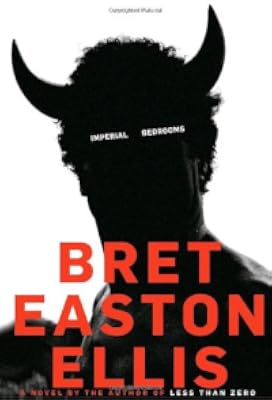
Despite Chip Kidd’s cover art, which features a traffic-stopping Satanic image and Mr. Ellis’s name in the book-jacket equivalent of big red neon letters, “Imperial Bedrooms” is without shock value. It’s a work of limited imagination that all too deftly simulates the effects of having no imagination at all.
added by Shortride
Lists


Author Information

26+ Works 38,023 Members
Bret Easton Ellis was born in Los Angeles, California on March 7, 1964. He attended Bennington College. In 1985, at the age of 23, his first novel, Less Than Zero, was published. His other works include The Rules of Attraction (1987), The Informers (1994), Glamorama (1998), Lunar Park (2005), and Imperial Bedrooms (2010). His most controversial show more book was American Psycho, a book for which he received an advance in the amount of $300,000 from Simon and Schuster, who then refused to publish the book while under attack from women's groups in regards to the content of the book. It was later made into a feature film. (Bowker Author Biography) show less
Awards and Honors
Distinctions
Series

Belongs to Publisher Series
Work Relationships
Common Knowledge
- Canonical title
- Imperial Bedrooms
- Original title
- Imperial Bedrooms
- Original publication date
- 2010
- People/Characters
- Clay; Blair Burroughs; Trent Burroughs; Julian Wells; Rip Millar; Rain Turner
- Important places
- Los Angeles, California, USA
- Related movies
- Less Than Zero (1987 | IMDb)
- Epigraph*
- « L'histoire répète les vielles poses, les réponses désinvoltes, les mêmes défaites... »
Elvis Costello, « Beyond Belief »
« Pas de piège plus mortel que celui qu'on tend à soi-même »
Raymond Chan... (show all)dler, The Long Goodbye - Dedication
- FOR R.T.
- First words
- They had made a movie about us.
- Quotations
- "Because you're just a writer."156
There were pictures of the boy as well, head-shots of him blond and tan and flexing-he had wanted to be an actor - and there was the fake smile, the pleading eyes, the mirage of it all. 159 - Last words
- (Click to show. Warning: May contain spoilers.)The fades, the dissolves, the rewritten scenes, all the things you wipe away—I now want to explain these things to her but I know I never will, the most important one being: I never liked anyone and I’m afraid of people.
*Some information comes from Common Knowledge in other languages. Click "Edit" for more information.
Classifications
Statistics
- Members
- 1,357
- Popularity
- 17,598
- Reviews
- 44
- Rating
- (2.94)
- Languages
- 12 — Danish, Dutch, English, Finnish, French, German, Hungarian, Italian, Norwegian (Bokmål), Portuguese, Spanish, Swedish
- Media
- Paper, Audiobook, Ebook
- ISBNs
- 38
- ASINs
- 8