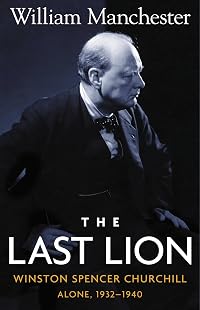
The Last Lion: Winston Spencer Churchill, Volume II: Alone, 1932-1940
by William Manchester
The Last Lion: Winston Spencer Churchill (Volume II)
On This Page
Description
Alone is the second volume in William Manchester's projected three-volume biography of Winston Churchill. In Alone, Manchester challenges the assumption that Churchill's finest hour was as a wartime leader. During the years 1932-1940, he was tested as few men are. Pursued by creditors--at one point he had to put up his home for sale--he remained solvent only by writing an extraordinary number of books and magazine articles. He was disowned by his own party, dismissed by the BBC, Fleet show more Street, and the social and political establishments as a warmonger, and twice nearly lost his seat in Parliament. Churchill stood almost alone against Nazi aggression and the British and French pusillanimous policy of appeasement. Manchester tracks with new insights this complex, fascinating history without ever losing sight of Churchill the man--a man whose vision was global and whose courage was boundless. show lessTags
Recommendations












Member Reviews
Manchester's second volume on the life of Churchill is just as good as the first. The recapitulation of his life at the beginning is a good capsule of the first volume, and the opening chapter on a typical 1930s day for Churchill is a prime and excellent example of the biographer's art and narrative history. And it is illuminating to show Churchill the family man and Churchill at work. The tight focus on eight years of Churchill in "the Wilderness," bravely speaking out against the appeasement of Hitler and for the rearming of Britain is detailed, engaging, and instructive. The final realization that Churchill was right in late 1939 and early 1940 provide a perfect denouement, with Churchill's assumption of the Prime Ministership the show more perfect "cliffhanger" for the remainder of his life, and Manchester's long-delayed third volume. As a historian myself, and an appreciator of Churchill's writings, the long passages on Churchill's writing and researching life were entertaining as well. This is rightly considered one of the best works on Churchill. show less
The fact that Churchill was so witty, and so right about one big thing, is why I read so much about him. He was a great man, and a racist who did terrible things to people he thought didn’t count, which was most of the human race. His concern was for Britain, always. Manchester is also a pleasure to read: “If the man existed with whom Wallis [Simpson] had enjoyed a platonic friendship, his name is lost to history.”
An eloquent voicing crying out in the wilderness a warning of war and dismissed until vindicated when that war begins, the nation and the world towards him as the last shining hope of the war. The Last Lion: Winston Spencer Churchill: Alone, 1932-1940 is the second volume of William Manchester’s biographical trilogy which deals with Churchill’s life during his political “wilderness” years as Europe slid towards war.
From the outset Manchester indicates that a biography is not just about a person, but also the times that individual lived in. It was a subtle hint that the “wilderness” years of Winston Spencer-Churchill’s political life wouldn’t follow one man be an examination about how the 1930s saw the rise of darkness on show more the continent and the willingness of the British upper class to do everything possible to acquiesce with it in the name of never going to war again. With the rise of Adolf Hitler in 1933, Churchill found his nemesis and began signaling the danger to the British Empire and the peace of Europe to an empty House of Commons for years while challenging the government on preparedness of the armed forces in comparison to Germany, only to be lied to in response and knowing it due to his “spy network” amongst the civil servants and military officers that saw the dangers of the Nazi. During these years, Churchill would write columns and articles in various British media and around the world warning the dangers of the Nazis only to be labeled a warmonger until Hitler set his eyes on territorial expansion and many around the continent looked to him to plead for them in front of the British public while the Nazis would always attack him in their propaganda newspapers and complain to the appeaser British ambassador. In 1936 it seemed that Churchill’s call to action had caught the national mood when suddenly his support of Edward VIII as a person if not his decisions made him the scapegoat to the national anger of the constitutional crisis by the King’s desire to marry Wallis Simpson, thus with the public angry at Churchill the national leadership dismissed his calls for action even as Hitler moved his eyes towards Austria and Czechoslovakia. With the rise of Neville Chamberlain as Prime Minister the enabling of Hitler through appeasement and undermining of their alliance with France while discouraging the German military from overthrowing Hitler which would have precluded the start of another war. Once war seemed inevitable as 1939 continued, Churchill’s outsider status for the previous decade and call for preparedness had the public calling for him to in the cabinet something Chamberlain didn’t want to do until he finally had to form a War Cabinet after declaring war. Once again First Lord of the Admiralty, Churchill literally led the British war effort as it was the Royal Navy was instantly was fighting the Germans not the Army or Air Force until the Norway and the invasion of the Low Countries in 1940 at which time the Conservative backbenchers and Labour forced Chamberlain to surrender his office and nominating Churchill to George VI.
Covering eight years of a person’s life would not normally take almost 700 pages, but as Manchester implied at the beginning of this book this is more a history of the times almost as much as it was a biography. Though Churchill is the focus throughout, the lives and actions of Stanley Baldwin, Neville Chamberlain, Adolf Hitler, and many others are covered especially in their reactions to and from Churchill. Manchester’s bias against “the Men of Munich” is overwhelmingly apparent though as an individual who fought in the war—admittedly in the Pacific—it shouldn’t surprise the reader that a veteran would not shine a good light on someone who kowtowed to Hitler’s wishes instead of having a spine. The political drama surrounding Chamberlain’s loss of support in the House and the rise of Churchill even in the shadow of the German invasion of the Low Countries is literally the best part of the book even though the reader knows the outcomes, how the two were both independent of one another though both played off one another.
Alone, 1932-1940 portrays the low ebb of Winston Churchill’s political and real life as all his eloquence falls not on deaf years but those who simply do not care until it is too late. William Manchester not only follows Churchill’s life during these eight years, but also the nation and the world he was living in and those in power that allowed Europe to go to war twenty years after the last one. Today we think it was inevitable that Churchill would rise to become Prime Minister, but to even Churchill during these years it wasn’t and this book explains why. show less
From the outset Manchester indicates that a biography is not just about a person, but also the times that individual lived in. It was a subtle hint that the “wilderness” years of Winston Spencer-Churchill’s political life wouldn’t follow one man be an examination about how the 1930s saw the rise of darkness on show more the continent and the willingness of the British upper class to do everything possible to acquiesce with it in the name of never going to war again. With the rise of Adolf Hitler in 1933, Churchill found his nemesis and began signaling the danger to the British Empire and the peace of Europe to an empty House of Commons for years while challenging the government on preparedness of the armed forces in comparison to Germany, only to be lied to in response and knowing it due to his “spy network” amongst the civil servants and military officers that saw the dangers of the Nazi. During these years, Churchill would write columns and articles in various British media and around the world warning the dangers of the Nazis only to be labeled a warmonger until Hitler set his eyes on territorial expansion and many around the continent looked to him to plead for them in front of the British public while the Nazis would always attack him in their propaganda newspapers and complain to the appeaser British ambassador. In 1936 it seemed that Churchill’s call to action had caught the national mood when suddenly his support of Edward VIII as a person if not his decisions made him the scapegoat to the national anger of the constitutional crisis by the King’s desire to marry Wallis Simpson, thus with the public angry at Churchill the national leadership dismissed his calls for action even as Hitler moved his eyes towards Austria and Czechoslovakia. With the rise of Neville Chamberlain as Prime Minister the enabling of Hitler through appeasement and undermining of their alliance with France while discouraging the German military from overthrowing Hitler which would have precluded the start of another war. Once war seemed inevitable as 1939 continued, Churchill’s outsider status for the previous decade and call for preparedness had the public calling for him to in the cabinet something Chamberlain didn’t want to do until he finally had to form a War Cabinet after declaring war. Once again First Lord of the Admiralty, Churchill literally led the British war effort as it was the Royal Navy was instantly was fighting the Germans not the Army or Air Force until the Norway and the invasion of the Low Countries in 1940 at which time the Conservative backbenchers and Labour forced Chamberlain to surrender his office and nominating Churchill to George VI.
Covering eight years of a person’s life would not normally take almost 700 pages, but as Manchester implied at the beginning of this book this is more a history of the times almost as much as it was a biography. Though Churchill is the focus throughout, the lives and actions of Stanley Baldwin, Neville Chamberlain, Adolf Hitler, and many others are covered especially in their reactions to and from Churchill. Manchester’s bias against “the Men of Munich” is overwhelmingly apparent though as an individual who fought in the war—admittedly in the Pacific—it shouldn’t surprise the reader that a veteran would not shine a good light on someone who kowtowed to Hitler’s wishes instead of having a spine. The political drama surrounding Chamberlain’s loss of support in the House and the rise of Churchill even in the shadow of the German invasion of the Low Countries is literally the best part of the book even though the reader knows the outcomes, how the two were both independent of one another though both played off one another.
Alone, 1932-1940 portrays the low ebb of Winston Churchill’s political and real life as all his eloquence falls not on deaf years but those who simply do not care until it is too late. William Manchester not only follows Churchill’s life during these eight years, but also the nation and the world he was living in and those in power that allowed Europe to go to war twenty years after the last one. Today we think it was inevitable that Churchill would rise to become Prime Minister, but to even Churchill during these years it wasn’t and this book explains why. show less
Dad gave me the whole series for my promotion to Major in October 2021. Brought this volume with me to exercise NATIVE FURY in Saudi Arabia and read almost all of it while out there by getting up early and reading in the COC.
Another very detailed account that paves the way into WWII. Learned a great deal about Churchill, specifically his challenges with being neglected for public office and almost being a political outcast. He remained true to himself and continued to speak out against Hitler, Germany, and Britain's response to his rise. It is painful to see how many times in the 1930s Hitler's power could have been checked, but it was not. Because of these reasons, Churchill became the obvious candidate for Prime Minister once all out show more war was upon them and sets the stage for Volume III where he is finally Prime Minister and will lead Britain through their "Finest Hour." show less
Another very detailed account that paves the way into WWII. Learned a great deal about Churchill, specifically his challenges with being neglected for public office and almost being a political outcast. He remained true to himself and continued to speak out against Hitler, Germany, and Britain's response to his rise. It is painful to see how many times in the 1930s Hitler's power could have been checked, but it was not. Because of these reasons, Churchill became the obvious candidate for Prime Minister once all out show more war was upon them and sets the stage for Volume III where he is finally Prime Minister and will lead Britain through their "Finest Hour." show less
I finished this book with several thoughts.
1. He was less than perfect. 1 affair, issues with racism (though when you compare him to Hitler and Nazi officials he's positively polite*), his bluntness, inability to live simply... they all are part of this very imperfect being.
2. I don't know the details of Manchester's illness(?) and death, but perhaps that accounts for his struggle to tell the story at times. He would get caught up in what Winston did during Baldwin's ministry and follow it for pages... and then insert a couple of pages regarding family issues that happened 2 years prior. If you're going to write a story chronologically, then tell it chronologically.
3. Unless you or I are perfect, we really can't ask that of other show more human beings. And as a recovering perfectionist, I'd really prefer not to project that on to others. But that means being willing to let go and forgive and that's hard. I really liked [b:Talking to Strangers: What We Should Know About the People We Don’t Know|43848929|Talking to Strangers What We Should Know About the People We Don’t Know|Malcolm Gladwell|https://i.gr-assets.com/images/S/compressed.photo.goodreads.com/books/1549393502l/43848929._SX50_.jpg|68174561]'s chapter on Chamberlain's visit to Germany.
4. I crave unity and solidarity... almost like I crave food and sleep. Realizing that helped me to understand why some people can be so set in stone about their loyalties. Perhaps it gives them what I don't have because I read and see too much. I devoured the last couple of pages, and would have done so literally if it would have done something for that quivering mass of despair hidden in the corner of my soul, because it was something that leaders** should do and could do... if they understood. But, currently, they don't.
5.(edit) You can't read this book and reports on Hong Kong arrests without starting to see things. Let hope I'm wrong.
*The joke about Gandhi to Halifax was repulsive.
**of both political persuasions. Let's not play favorites, okay? show less
1. He was less than perfect. 1 affair, issues with racism (though when you compare him to Hitler and Nazi officials he's positively polite*), his bluntness, inability to live simply... they all are part of this very imperfect being.
2. I don't know the details of Manchester's illness(?) and death, but perhaps that accounts for his struggle to tell the story at times. He would get caught up in what Winston did during Baldwin's ministry and follow it for pages... and then insert a couple of pages regarding family issues that happened 2 years prior. If you're going to write a story chronologically, then tell it chronologically.
3. Unless you or I are perfect, we really can't ask that of other show more human beings. And as a recovering perfectionist, I'd really prefer not to project that on to others. But that means being willing to let go and forgive and that's hard. I really liked [b:Talking to Strangers: What We Should Know About the People We Don’t Know|43848929|Talking to Strangers What We Should Know About the People We Don’t Know|Malcolm Gladwell|https://i.gr-assets.com/images/S/compressed.photo.goodreads.com/books/1549393502l/43848929._SX50_.jpg|68174561]'s chapter on Chamberlain's visit to Germany.
4. I crave unity and solidarity... almost like I crave food and sleep. Realizing that helped me to understand why some people can be so set in stone about their loyalties. Perhaps it gives them what I don't have because I read and see too much. I devoured the last couple of pages, and would have done so literally if it would have done something for that quivering mass of despair hidden in the corner of my soul, because it was something that leaders** should do and could do... if they understood. But, currently, they don't.
5.(edit) You can't read this book and reports on Hong Kong arrests without starting to see things. Let hope I'm wrong.
*The joke about Gandhi to Halifax was repulsive.
**of both political persuasions. Let's not play favorites, okay? show less
This second volume wasn't quite as entertaining as the first, no boarding school adventures or prison escapes. A very large portion of this book was Winston Churchill repeatedly telling everyone Voldemort was back, and the Ministry of Magic being in denial and smearing his good name. Which was very frustrating to read with hindsight, but at the same time it is easy to imagine that after the horrors of WWI, with 100's of thousands of dead, in muddy trenches where neither army gains a foot of territory for months and years, it would be incomprehensible that any world leader would want to instigate a repeat of that war, and maintaining peace would be so desirable. It was interesting to read, and think about the role of propaganda, Hitler show more with his, but also the need for pro-war propaganda by the allies to gain support to confront the threat of Hitler.
I listened to the Audible version of this book, and thought the narrator's Churchill impression wasn't as good as the narrator of the first volume, but about halfway through I got used to it
The ending was quite rousing and gave me goosebumps.
Another reviewer posted this article that I thought was interesting. https://www.nytimes.com/2012/11/04/magazine/the-fan-who-finished-william-manches... show less
I listened to the Audible version of this book, and thought the narrator's Churchill impression wasn't as good as the narrator of the first volume, but about halfway through I got used to it
The ending was quite rousing and gave me goosebumps.
Another reviewer posted this article that I thought was interesting. https://www.nytimes.com/2012/11/04/magazine/the-fan-who-finished-william-manches... show less
This book, second in the trilogy of Winston Churchill s life, could stand alone as a history of the 1930s leading up to WWII. Manchester's pacing is intense, the drama building and building until the German invade France and Churchill finally becomes prime minister. I couldn't put this book down--it's an amazing work of literature as well as of history and biography.
Members
- Recently Added By
Lists

Top Five Books of 2013
1,562 works; 721 members

Top Five Books of 2014
1,064 works; 398 members

Books bought at library sales
98 works; 4 members

The Art of Manliness' 100+ Books Every Man Should Read
108 works; 2 members

The Complete Rory Gilmore Reading List
506 works; 5 members
Awards and Honors
Distinctions
Series

Work Relationships
Common Knowledge
- Canonical title
- The Last Lion: Winston Spencer Churchill, Volume II: Alone, 1932-1940
- Original publication date
- 1988
- People/Characters
- Phelps Adams; Vyvyan Adams; Max Aitken, Lord Beaverbrook; Albert I, King of the Belgians; A. V. Alexander; Eric Ambler (show all 170); Leo Amery; Sir John Anderson; Sherwood Anderson; Torr Anderson (Commander); Michael Arlen; Maurice Ashley; Frank Ashton-Gwatkin; H. H. Asquith; Margot Asquith; Violet Bonham Carter (Violet Asquith); Adele Astaire; Fred Astaire; Georgi Astakhov; Waldorf Astor, 2nd Viscount Astor; Nancy Astor; William Astor, 3rd Viscount Astor; Clement Attlee; W. H. Auden; Lew Ayres; Walter Bagehot; Sir Abe Bailey; Josephine Baker; Oliver Baldwin; Stanley Baldwin; Lucy Baldwin, Countess Baldwin of Bewdley (Lady Baldwin); Arthur Balfour; Harold Balfour; Consuelo Balsan; Henri Barbusse; Robert Barrington-Ward; Richard Barthelmess; Joseph Barthélemy; Vernon Bartlett; Bernard Baruch; Louis Battenberg (Admiral); Paul Baudouin; Beverley Baxter; David Beatty, 1st Earl Beatty; André de Beufre (General); Józef Beck (Colonel); Ludwig Beck (General); Hilaire Belloc; Edvard Beneš (as Eduard Beneš); Henri Béraud; Anita Berber; Isaiah Berlin; Aneurin Bevan; William Beveridge; Ernest Bevin; Georges Bidault; F. E. Smith, 1st Earl of Birkenhead; G. D. Birla; Otto von Bismarck (Prince); Werner von Blomberg; Léon Blum; Edmund Blunden; Alfred Blunt (Right Reverend); Fedor von Bock (General); Thomas Bodkin; Georges Bonnet; Robert Boothby; William Borah; Jacques-Bénigne; Lennox Boyd; Lucienne Boyer; Brendan Bracken; Omar N. Bradley (General); Walther von Brauchitsch (Field Marshal); Crane Brinton; Ronald Nall-Cain, 2nd Baron Brocket; Alan Brooke, 1st Viscount Alanbrooke; Rupert Brooke; Collin Brooks; Lady Vera Broughton; W. J. Brown; Heinrich Brüning; William Bullitt; Alan Bullock; Karl Burckhardt; Guy Burgess; Leslie Burgin; Edmund Burke; Sir Richard Francis Burton; R. A. 'Rab' Butler; Alexander Cadogan; Erskine Caldwell; Roger Cambon; Henry Campbell-Bannerman; William Berry, 1st Viscount Camrose; Frank Capon; Frank Capra; Thomas Carlyle; Vittore Carpaccio; Robert Stewart, 2nd Marquess of Londonderry (Lord Castlereagh); Victor Cazalet; Lord Hugh Cecil; Lord Robert Cecil; Austen Chamberlain; Ida Chamberlain; Lady Ivy Chamberlain (Mrs. Austen Chamberlain); Joseph Chamberlain; Neville Chamberlain; Anne Vere Chamberlain (Mrs. Neville Chamberlain); Lord Chandos; Gabrielle Chanel; Henry Channon; Charlie Chaplin; Charles I, King of England, Scotland, and Ireland; Charles II, King of England, Scotland, and Ireland; Sir Evan Charteris; Ernle Chatfield, 1st Baron Chatfield; William Pitt the Elder; Camille Chautemps; Maurice Chevalier; Arthur Christiansen; Malcolm Grahame Christie (Colonel); Clementine Hozier (Churchill, wife); Diana Churchill (daughter); Lady Gwendeline Churchill (sister-in-law); Jennie Churchill; John Churchill, 1st Duke of Marlborough; John George Churchill (nephew); Mary Churchill (Lady Soames); Lord Randolph Churchill; Randolph Churchill (son); Sarah Churchill Oliver; Winston Churchill (Churchill, Winston Leonard Spencer); Frantisek Chvalkovsky; Galeazzo Ciano (Count); Sir Walter Citrine; Sir George Clark; Karl von Clausewitz; Georges Clemenceau; C. B. Cochran; Jean Cocteau; Michael Collins, Irish rebel and politician; Ronald Coleman; Sir John Colville (Jock); Ian Colvin; T. Philip Conwell-Evans; Calvin Coolidge; Duff Cooper; Lady Diana Cooper; Colin Coote; André-Georges Corap (General); Charles Corbin; William Boyle, 12th Earl of Cork and Orrery (as Lord Cork and Orrery); John Cornford; Pierre Cot; Robert Coulondre; Noël Coward; Virginia Cowles; Michael Creswell; Stafford Cripps; Oliver Cromwell; Colin Cross; Anthony Crossley; Richard Crossman; Philip Cunliffe-Lister, 1st Earl of Swinton; Sir Andrew Cunningham; Birger Dahlerus; Edouard Daladier; Hugh Dalton; H. G. Daniels
- Important places
- Africa; Angola; Australia; Austria; Austro-Hungarian Empire; Balkan Peninsula (show all 16); Baltic Sea; Belgium; Berlin, Germany; Bohemia; British Empire; British West Indies; Buckingham Palace, London, England, UK; Bulgaria; Byelorussia; Czechoslovakia
- Important events
- World War II (1939 | 1945)
- Original language
- English
- Disambiguation notice
- This volume aka The Caged Lion
Classifications
- Genres
- Biography & Memoir, History, Nonfiction, General Nonfiction
- DDC/MDS
- 941.0840924 — History & geography History of Europe British Isles Historical periods of British Isles 1837- Period of Victoria and House of Windsor 1936-1945
- LCC
- DA566.9 .C5 .M26 — History of Europe, Asia, Africa and Oceania Great Britain History of Great Britain England History By period Modern, 1485- 20th century
- BISAC
Statistics
- Members
- 2,263
- Popularity
- 8,863
- Reviews
- 22
- Rating
- (4.49)
- Languages
- English, German
- Media
- Paper, Audiobook, Ebook
- ISBNs
- 18
- ASINs
- 18
