On This Page
Description
When the untimely disappearance of Master of the Mill Joshua Braithwaite disrupts the peaceful town of Bridgestead, Kate Shackleton is tapped to discover the missing man's fate, only to stumble on dangerous secrets.Tags
Recommendations



Member Reviews
Like so many other Englishwomen in the 1920s, 31-year-old Kate Shackleton is a war widow. She is living on her own and has had some success in tracking down missing men for friends - sometimes the men died in the War, sometimes they just left their former life to start anew. She is excited, if nervous, to take her first paying case - a fellow Voluntary Aid Detachment woman, Tabitha, asks her to see if she can locate her father, who went missing in 1916, so that he can walk her down the aisle at her upcoming wedding. The family owns a wool mill and is very prominent in their region, but the general consensus is that the man, distraught over the death of his son, killed himself; Kate, however, soon finds that nothing is quite as it show more appears and that the gap of six years since his disappearance has only served to further muddy the waters…. This is the first novel in a series, and it’s got all the things I like in a cozy: interesting historical period, characters who leap off the page as fully-realized people, a complicated plot and settings that come to life in the author’s hands. I’ve read some cozies in which it’s painfully obvious that the author did minimal research, if any, but that is not the case at all here - I now know more about the manufacturing of wool than I ever will need to know (and I mean that in a good way). I’m looking forward to spending more time with Kate and with Mr. Sykes (Jim, not Bill), her sort-of sidekick, and am pleased to see that there are a dozen more books to read; recommended! show less
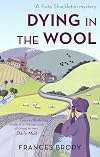
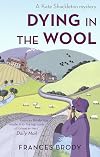
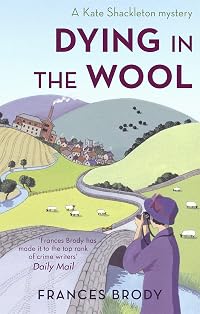
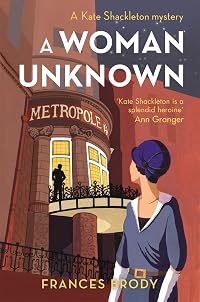
Excellent 1920s murder mystery, set in my neck of the woods. Guilty of judging the book by its cover, I was tempted to read this while processing a reference copy ('local author') for the library where I work. The quaint illustration by Helen Chapman really says it all - mill town, rural setting, figure in a cloche hat snapping a picture - and the story itself does not disappoint.
The year is 1922, and Kate Shackleton is one of the 'surplus women' widowed by the Great War, an all too common heartache for a generation of lonely women left behind when their loved ones were killed on the battlefield. Of course, this also means that Kate is now an independent woman living comfortably by herself, although she hasn't quite given up the ghost show more of her surgeon husband, who has the intelligence and initiative to put her spare time to use helping others. After a couple of 'amateur' investigations helping to trace missing people for friends, Kate receives her first paying case - find the father of a wartime acquaintance. Joshua Braitwaite, wealthy mill owner from 'Worstedopolis' (the area around Bradford and Leeds), disappeared from home in 1916, after apparently attempting to commit suicide. Now his daughter wants answers - is he still alive, and if so, why did he leave? Or did he suceed in taking his own life, broken over the death of his son in France? Kate sets to work, finding skeletons in the Braithwaite closet.
I really enjoyed this mystery, not least the local history, and can't wait to read Brody's next Kate Shackleton novel. Kate has all the markings of a famous literary detective - connections, curiosity and a sidekick - but she is also a winsome and amusing narrator, at times vulnerable and motivated by her own loss, but always honest and determined. The era is also perfect, allowing a measure of independence for women emboldened by war work and forced to survive on their wits, yet still unwelcome in a man's world of crime investigation. Kate even has her own car, which is shocking in itself! Frances Brody gets the time and place just right, flavouring a neat mystery with historical detail and Yorkshire humour. show less
The year is 1922, and Kate Shackleton is one of the 'surplus women' widowed by the Great War, an all too common heartache for a generation of lonely women left behind when their loved ones were killed on the battlefield. Of course, this also means that Kate is now an independent woman living comfortably by herself, although she hasn't quite given up the ghost show more of her surgeon husband, who has the intelligence and initiative to put her spare time to use helping others. After a couple of 'amateur' investigations helping to trace missing people for friends, Kate receives her first paying case - find the father of a wartime acquaintance. Joshua Braitwaite, wealthy mill owner from 'Worstedopolis' (the area around Bradford and Leeds), disappeared from home in 1916, after apparently attempting to commit suicide. Now his daughter wants answers - is he still alive, and if so, why did he leave? Or did he suceed in taking his own life, broken over the death of his son in France? Kate sets to work, finding skeletons in the Braithwaite closet.
I really enjoyed this mystery, not least the local history, and can't wait to read Brody's next Kate Shackleton novel. Kate has all the markings of a famous literary detective - connections, curiosity and a sidekick - but she is also a winsome and amusing narrator, at times vulnerable and motivated by her own loss, but always honest and determined. The era is also perfect, allowing a measure of independence for women emboldened by war work and forced to survive on their wits, yet still unwelcome in a man's world of crime investigation. Kate even has her own car, which is shocking in itself! Frances Brody gets the time and place just right, flavouring a neat mystery with historical detail and Yorkshire humour. show less
First Line: My name's Kate Shackleton.
Normally a peaceful Yorkshire mill town, the only exceptional thing to have happened in Bridgestead is when mill owner Joshua Braithwaite went missing and was never heard from again. Now Braithwaite's daughter Tabitha is getting married, and she wants to try one last time to find her father.
She turns to Kate Shackleton, a friend since their Voluntary Aid Detachment days during World War I. Kate's husband was listed as missing in action/ presumed dead during the war, and since the Armistice, she has been having a bit of success finding missing husbands for local women. But once Kate turns her skill to the puzzle of the missing mill owner, she discovers that someone is willing to kill to keep the show more secret.
This first book in the Kate Shackleton series takes place during the 1920s in the Bradford and Leeds area of Yorkshire. This area was the heart of the cloth trade in England, and I loved the fact that each chapter began with a textile term. I had no idea that so many words and phrases from the manufacture of cloth had made their way into everyday speech.
Kate Shackleton is young and independent, thinks nothing of driving herself anywhere she wants to go, and asking questions wherever she thinks they should be asked. Being advised that she needs help with some of her investigative work, Kate hires former policeman Jim Sykes, and it's fun to watch the two of them get used to working with each other; Kate not being used to having an employee, and Jim not used to such a Modern Woman. The person suggesting that Kate get help was wise because this case developed into a very complicated one that kept me guessing at every twist and turn.
I really liked the time period, the setting, and the plot of Dying in the Wool, but the characters didn't quite come to life as I'd hoped they would. Kate, Jim and Tabitha seemed to have extra measures of British reserve that kept me at a distance the entire time I was reading. Even so, this is a good, solid mystery, and I will be visiting Kate Shackleton again to see if she's warmed up to visitors. show less
Normally a peaceful Yorkshire mill town, the only exceptional thing to have happened in Bridgestead is when mill owner Joshua Braithwaite went missing and was never heard from again. Now Braithwaite's daughter Tabitha is getting married, and she wants to try one last time to find her father.
She turns to Kate Shackleton, a friend since their Voluntary Aid Detachment days during World War I. Kate's husband was listed as missing in action/ presumed dead during the war, and since the Armistice, she has been having a bit of success finding missing husbands for local women. But once Kate turns her skill to the puzzle of the missing mill owner, she discovers that someone is willing to kill to keep the show more secret.
This first book in the Kate Shackleton series takes place during the 1920s in the Bradford and Leeds area of Yorkshire. This area was the heart of the cloth trade in England, and I loved the fact that each chapter began with a textile term. I had no idea that so many words and phrases from the manufacture of cloth had made their way into everyday speech.
Kate Shackleton is young and independent, thinks nothing of driving herself anywhere she wants to go, and asking questions wherever she thinks they should be asked. Being advised that she needs help with some of her investigative work, Kate hires former policeman Jim Sykes, and it's fun to watch the two of them get used to working with each other; Kate not being used to having an employee, and Jim not used to such a Modern Woman. The person suggesting that Kate get help was wise because this case developed into a very complicated one that kept me guessing at every twist and turn.
I really liked the time period, the setting, and the plot of Dying in the Wool, but the characters didn't quite come to life as I'd hoped they would. Kate, Jim and Tabitha seemed to have extra measures of British reserve that kept me at a distance the entire time I was reading. Even so, this is a good, solid mystery, and I will be visiting Kate Shackleton again to see if she's warmed up to visitors. show less
I picked this up not expecting too much, so I was quite surprised. 1920s British mysteries with feisty young female heroines seems to be quite a popular genre lately and I've enjoyed a few. Brody, however, manages to stand out from the crowd with more sophisticated narrative technique (sections viewed through various characters' viewpoints), keeping the "period details" to a minimum and constructing a plausible and interesting mystery. Definitely the best of the type that I've read so far.
A very good cozy mystery and well-researched story. The widowed heroine, is bright, clever and talented and just entering her thirties. It's 1922 but the war years still loom large over the lives of the survivors. But before some can move on, unanswered questions must be resolved. It is up to Kate Shackleton, our heroine, to assist others in providing that forward-moving nudge.
Kate Shackleton is asked by Tabitha Brathwaite, a friend from her VAD days, to find her father who has been missing since the days of the war. He owned a textile mill but had been accused of attempting suicide. He made an escape from the hospital where he was being held until his court date. Tabitha's mother appeared to be waiting for his death declaration after a seven year absence. Tabitha wanted her father present at her wedding. Kate investigates. Some reviewers liken this series to Jacqueline Winspear's Maisie Dobbs series. The main similarity is both series feature female British protagonists involved in nursing during World War I who become detectives. I felt the main character was underdeveloped, and I never connected with any show more of the characters. Kate's assistant Sykes,recommended to her by her father, may be the most interesting character, but the author marginalized him. I found myself wishing Sykes were the detective for the series. His background seems to be more suitable to detecting. I doubt I'll continue the series. show less
Dying in the Wool
3.5 Stars
In the aftermath of the Great War, Kate Shackleton is coping with the loss of her own husband by helping those whose loved ones have disappeared during the conflict. When an acquaintance for her days in the VAD (Voluntary Aid Detachment) asks for help in locating her missing father, a successful mill owner, Kate takes on the case. But not everyone is as eager for Kate to dig into the lives and secrets of the small Yorkshire village of Bridgestead, and she might just have bitten off more than she can chew.
An interesting cozy mystery with a likeable heroine, and the author captures the nuances of the changing social norms following WWI very well.
Kate is an appealing heroine mainly due to the fact that she show more epitomizes the type of woman who was no longer willing to stay home and play hostess once the war ended. She is independent, self-sufficient and determined to make a place for herself in the world.
The twists and turns in the investigation into Joshua Braithwaite's disappearance are intriguing, but the pacing is rather slow and Kate often seems to be running around in circles.
Nicola Barber's narration of the audiobook is engaging. She has an excellent range of accents and is skilled at both the male and female voices.
Overall, a solid historical mystery with well-developed characters. However, as someone who prefers a bit of romance with her suspense, the lack of a love interest for Kate is disappointing and it is unlikely that I will continue with the series. show less
3.5 Stars
In the aftermath of the Great War, Kate Shackleton is coping with the loss of her own husband by helping those whose loved ones have disappeared during the conflict. When an acquaintance for her days in the VAD (Voluntary Aid Detachment) asks for help in locating her missing father, a successful mill owner, Kate takes on the case. But not everyone is as eager for Kate to dig into the lives and secrets of the small Yorkshire village of Bridgestead, and she might just have bitten off more than she can chew.
An interesting cozy mystery with a likeable heroine, and the author captures the nuances of the changing social norms following WWI very well.
Kate is an appealing heroine mainly due to the fact that she show more epitomizes the type of woman who was no longer willing to stay home and play hostess once the war ended. She is independent, self-sufficient and determined to make a place for herself in the world.
The twists and turns in the investigation into Joshua Braithwaite's disappearance are intriguing, but the pacing is rather slow and Kate often seems to be running around in circles.
Nicola Barber's narration of the audiobook is engaging. She has an excellent range of accents and is skilled at both the male and female voices.
Overall, a solid historical mystery with well-developed characters. However, as someone who prefers a bit of romance with her suspense, the lack of a love interest for Kate is disappointing and it is unlikely that I will continue with the series. show less
Members
- Recently Added By
Lists

...read all, pay nowt (Books set in Yorkshire)
86 works; 14 members

British Mystery
469 works; 13 members

In and About the 1920s
181 works; 31 members

Next in Series
85 works; 1 member

Cozy Mystery List
26 works; 2 members
Author Information

21+ Works 2,755 Members

Frances Brody is a LibraryThing Author, an author who lists their personal library on LibraryThing.
Series

Common Knowledge
- Canonical title
- Dying in the Wool
- Original publication date
- 2009-10-01
- People/Characters
- Kate Shackleton; Joshua Braithwaite; Jim Sykes; Mrs. Sugden; Tabitha Braithwaite; Lizzie Kellett (show all 7); Paul Kellett
- Important places
- Bradford, Yorkshire, England, UK; Bridgestead, Yorkshire, England, UK (fictional)
- Important events
- Low Moor Explosion (1916-08-21)
- Dedication
- In memory of Peter
- First words
- My name is Kate Shackleton.
- Last words
- (Click to show. Warning: May contain spoilers.)I called my photograph "Muck Shovelling".
Classifications
Statistics
- Members
- 520
- Popularity
- 57,623
- Reviews
- 27
- Rating
- (3.47)
- Languages
- English, German
- Media
- Paper, Audiobook, Ebook
- ISBNs
- 17
- ASINs
- 11