
Here I Stand: A Life of Martin Luther
by Roland Bainton
On This Page
Description
"I cannot and will not recant!...Here I stand." This authoritative and inspiring story paints a vivid portrait of the crusader who spearheaded the Reformation. Considered one of the most readable biographies of Martin Luther, this volume looks at the German religious reformer and his influence on Western civilization. Martin Luther entered a monastery as a youth and as a man shattered the structure of the medieval church, speaking out against the corrupt religious practices of the time. His show more demand that the authority for doctrine and practice be scriptures, rather than popes or councils, echoed around the world and ignited the great Reformation. Accused of heresy and threatened with excommunication and death, Luther maintained his bold stand and refused to recant. In his crusade to eliminate religious abuses, he did more than any other man to establish the Protestant faith. With sound historical scholarship and penetrating insight, Roland Bainton examines Luther's widespread influence. He re-creates the spiritual setting of the sixteenth century, showing Luther's place within it and influence upon it. Here I Stand dramatically brings to life Martin Luther, the great reformer. show lessTags
Recommendations




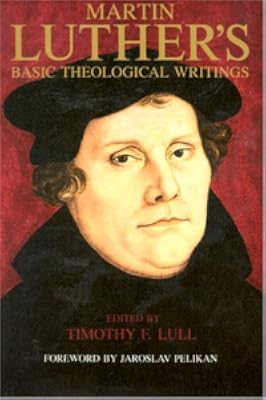

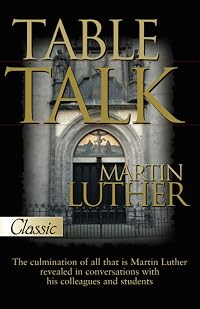
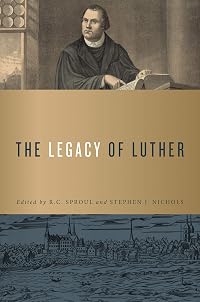
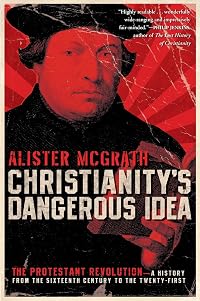
Member Recommendations
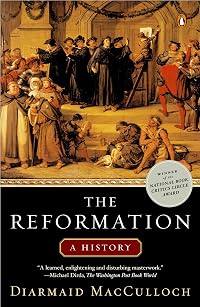
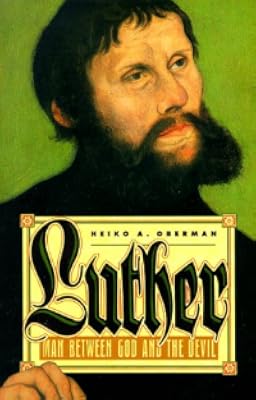
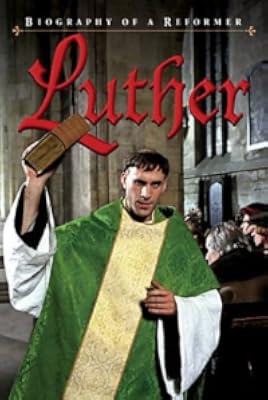
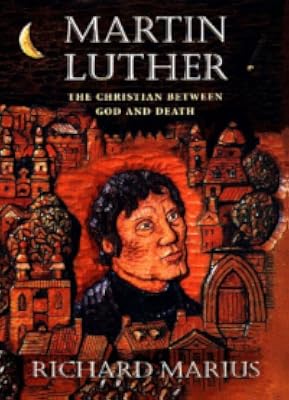
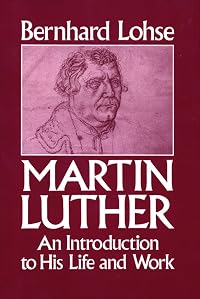
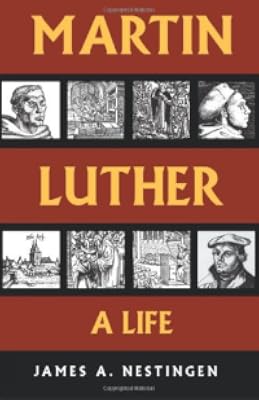
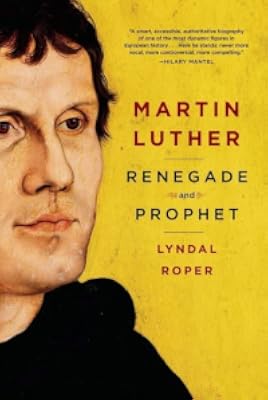
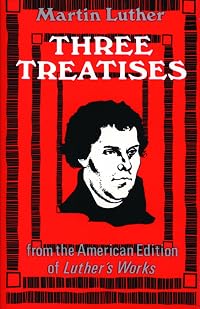
Evan_Edlund Both books are Martin Luther biographies
Member Reviews
In a thoroughly engaging biography of Luther, Bainton plants the reformer firmly in his own political and theological landscape: the final decades of the medieval age, and the age of the Renaissance and of nationalism. He traces Luther's thought by way of the man's own writings and those of his allies, his observers, and his enemies. Ample discussion of the personal and theological contemporaries supplements without distracting too much from Luther himself. The picture is complex; the man is variously polemic and deferential, sometimes unreservedly jocular, so much that occasional glimpses at his tenderness are startling. It is one of a titan of church history: a passionate theologian and a pastor, a musician and a prolific scholar, a show more father; above all, an intensely and painfully devotional Christian. show less
Martin Luther was one of the most influential men in Western Civilization over the past half-millennium. Most people today do not know enough history to understand someone like Luther, who was really a medieval theologian. Bainton does a wonderful job of placing Luther in his own time, educating the reader on the religious and political landscape of the time. Without this context, Luther no doubt would appear bizarre to the modern reader. Bainton praises Luther for his bravery in standing for what he believed to be true, and for his long-held hope that the Pope would change course if only he knew about the abuses in the church. Bainton takes Luther to task for his indefensible positions regarding persecution of Jews and Anabaptists, but show more makes sure the reader understands Luther's full position, which was not as simple as hatred and prejudice. The modern person who believes that a straight line can be drawn from Luther to the Holocaust is most misinformed. The most moving portions of the book are certainly the earlier chapters which detail Luther's personal spiritual struggle, which will find resonance in any Christian's heart. show less
Martin Luther is one of the key figures in history. His stature as the leader of the Reformation has almost elevated him above the practical concerns of ordinary men. Bainton has done excellent work in revealing Luther as a man. Luther was a firmly medieval man with all of the struggles and doubts of others of his age. Luther's contribution was his dogged determination to be rightly related to God. This led him to study the Bible, particularly Psalms and Romans, which taught him that famous refrain "the just shall live by faith." Here Luther understood that the work of Christ alone brought salvation and faith was the only fit response to appropriate that work. It led him to eventually reject so many of the pillars of the Catholic Church show more and gave him the confidence to continue on the path the can be summed up by the Five Solas. Those who followed Luther sometimes went farther than he did in his changes (sometimes for the good, sometimes for the bad). To the best of his ability, Luther pondered all of the many questions concerning the sacraments, the church, the state, the family, etc. according to the guidance of God found in His word. As he aged, he gained a family, he struggled through depression and disease, and he watched as Germany changed. In the end, he took his stand upon the revealed truth of God's word.
Bainton has balanced Luther the man and Luther the theologian well. His book is absorbing and insightful and well worth the read. show less
Bainton has balanced Luther the man and Luther the theologian well. His book is absorbing and insightful and well worth the read. show less
Martin Luther was one of the titans of the Protestant Reformation. It was Luther, along with John Calvin and Huldrych Zwingli, who gave the Reformation its defining and enduring shape, influencing it in ways that continue today. This biography by Bainton is perhaps not exhaustive, but it is comprehensive, as it considers Luther’s life and times. We look into his life and see how Luther’s overriding passion, i.e. the love of God above all else and the consequent desire to reform the church, according to God’s self-revelation in the Bible played out on the stage of 16th century Europe.
Luther didn’t plan to reform the church. Following his father’s wishes he was studying to become a lawyer. But he had an experience that set him show more on a different path, one which began benignly as he fulfilled a vow to become a monk. And to use a modern phrase, one thing led to another, and Christianity has never been the same.
Bainton honestly explores the different phases of Luther’s life, pointing out both the highs and the lows. I was a little familiar with both aspects of Luther’s life previous to reading this book and found that there was much more to learn about Luther and the way he intersected with his time and its culture. An example would be from some of the polemical material of Luther’s late career, where Bainton highlights the nuances that we don’t easily appreciate 500 years later.
Bainton has painted a rich portrait of a complex man, a man who above all served a sovereign, gracious and holy God. It is a biography written over 60 years ago but which has held up well for good reason. I highly commend it. show less
Luther didn’t plan to reform the church. Following his father’s wishes he was studying to become a lawyer. But he had an experience that set him show more on a different path, one which began benignly as he fulfilled a vow to become a monk. And to use a modern phrase, one thing led to another, and Christianity has never been the same.
Bainton honestly explores the different phases of Luther’s life, pointing out both the highs and the lows. I was a little familiar with both aspects of Luther’s life previous to reading this book and found that there was much more to learn about Luther and the way he intersected with his time and its culture. An example would be from some of the polemical material of Luther’s late career, where Bainton highlights the nuances that we don’t easily appreciate 500 years later.
Bainton has painted a rich portrait of a complex man, a man who above all served a sovereign, gracious and holy God. It is a biography written over 60 years ago but which has held up well for good reason. I highly commend it. show less
Great!
This was a great book. It brought Martin Luther’s life.... to life. I have always loved reading about Luther but this really helped synthesize all of the history that I have read about him. The book was well written and I found it easy to read.
This was a great book. It brought Martin Luther’s life.... to life. I have always loved reading about Luther but this really helped synthesize all of the history that I have read about him. The book was well written and I found it easy to read.
It has been said by others that Martin Luther was the first 'celebrity' - his fame of his breach with the Roman Catholic Church spread across the whole or Europe. Yet as this book shows, it was not something he wanted; he preferred reform of the church. He certainly did not agree at all with the radical derivations of German revolt against external oppression, like Munster.
Luther would have been exciting to be around. He loved a beer, enjoyed company, singing and music. Yet he also suffered from depression, and ill health. Bainton wonders whether this is related to his struggle with God, but it appears his depression may have been clinical.
The book is thorough in its discussion and analysis of Luther's interaction with the Roman show more Catholic Church, the local princes, and with Erasmus, his Bible translation and how he changed life in Germany. It covers his efforts to maintain peace (he was against the violence of Munster and others), but little is said of his influence on further reformers; for example, John Calvin is not mentioned.
The author concludes the book by briefly covering the latter years of his life; very briefly regarding his death which gets one sentence. He does cover the less pleasant aspects of Luther - his anti-Semitic writings (which he has is religious, not racial) and his coarseness (not uncommon in those days). It is these things that opponents of Luther grasp to discredit him and his legacy. show less
Luther would have been exciting to be around. He loved a beer, enjoyed company, singing and music. Yet he also suffered from depression, and ill health. Bainton wonders whether this is related to his struggle with God, but it appears his depression may have been clinical.
The book is thorough in its discussion and analysis of Luther's interaction with the Roman show more Catholic Church, the local princes, and with Erasmus, his Bible translation and how he changed life in Germany. It covers his efforts to maintain peace (he was against the violence of Munster and others), but little is said of his influence on further reformers; for example, John Calvin is not mentioned.
The author concludes the book by briefly covering the latter years of his life; very briefly regarding his death which gets one sentence. He does cover the less pleasant aspects of Luther - his anti-Semitic writings (which he has is religious, not racial) and his coarseness (not uncommon in those days). It is these things that opponents of Luther grasp to discredit him and his legacy. show less
An excellent, detailed and yet understandable biography of the champion of the Reformation. Semper Reformanda!
Members
- Recently Added By
Lists

Christianity Books You've Read
179 works; 19 members
Develop Your Personal Christian Library
101 works; 15 members

Ten books that most shaped your view of history
91 works; 12 members

How to Read a Christian Book Three-Year Plan
36 works; 2 members

CCE 1000 Good Books List
1,033 works; 12 members

Ten Great Christian Biographies
11 works; 1 member

Books You Read For University
184 works; 3 members
Author Information

73+ Works 9,188 Members
Roland Bainton (1894-1984) was for forty-two years a professor of ecclesiastical history at Yale University. He was also the author of more than thirty books on Christianity. (Bowker Author Biography)
Some Editions
Awards and Honors
Distinctions
Notable Lists
Series
Belongs to Publisher Series
Work Relationships
Has as a student's study guide
Common Knowledge
- Canonical title*
- Hier stehe ich: Das Leben Martin Luthers
- Original title
- Here I stand. A Life of Martin Luther; Here I stand : a life of Martin Luther
- Alternate titles
- Here I stand : Martin Luther; 改教先導馬丁路德傳記
- Original publication date
- 1950
- People/Characters
- Albert of Mainz; Charles V, Holy Roman Emperor; Johann Eck (Johann Maier von Eck, 1486-1543); Desiderius Erasmus (c.1469-1536); Ferdinand of Austria; Frederick III the Wise, Elector of Saxony (show all 16); Jacob Fugger; George, Duke of Saxony; Jan Hus (Johann or John Huss : c. 1372-1415); Ulrich von Hutten; John of Saxony; Maximilian I von Habsburg, Emperor; Philip I, Landgrave of Hesse (1504&ndash | 1567); John Tetzel; John Wycliffe; Gabriel Zwilling
- Important places
- Wittenberg, Saxony-Anhalt, Germany
- Important events
- Protestant Reformation
- Dedication
- To
My Partner
in the
"School for Character" - First words
- On a sultry day in July of the year 1505 a lonely traveler was trudging over a parched road on the outskirts of the Saxon village of Stotternheim.
- Last words
- (Click to show. Warning: May contain spoilers.)This was what enabled him to utter such words as these: "Here I stand. I cannot do otherwise. God help me. Amen."
- Original language
- Inglese
*Some information comes from Common Knowledge in other languages. Click "Edit" for more information.
Classifications
- Genres
- Religion & Spirituality, Nonfiction, Biography & Memoir, History, General Nonfiction
- DDC/MDS
- 284.1092 — Religion Christian denominations Protestant denominations of Continental origin and related bodies Lutheran Reformed Biography And History Biography
- LCC
- BR325 .B26 — Philosophy, Psychology and Religion Christianity Christianity History By period Modern period Luther, Martin
- BISAC
Statistics
- Members
- 4,178
- Popularity
- 3,687
- Reviews
- 23
- Rating
- (4.20)
- Languages
- 9 — Chinese, English, Finnish, German, Italian, Portuguese, Slovak, Spanish, Swedish
- Media
- Paper, Audiobook, Ebook
- ISBNs
- 59
- UPCs
- 4
- ASINs
- 52