The Dutch version, Een jonge man naar Gods hart
It was a pretty nice read I must say. A clear distinction between a paradox and an antinomy was made. Briefly showing God's sovereignty and man's responsibility. Then talking about God's sovereignty in evangelism and how that should affect us.
Great book on the aweful and terrible holiness of the great I AM! I really enjoyed it. I also enjoyed much of the history provided, stuff about Augustine, Luther, Edwards. Some of the biblical encounters with God in the case of Moses, Isaiah, Job. A really good book.
Great book teaching on the Biblical truth of presuppositional Apologetics, but I though it was pushing too much on a literal young earth, while treating other Christian views just like the seculars, although I'm a young Earther I though that was annoying.
Yaay! Finished this book in 2 days! I loved it. A really clear presentation of the glorious Doctrines of Grace. Loved every bit. I understand free will better now and I loved the references to Edwards and Augustine concerning the free will. Learned a great deal. I liked it better than "What is Reformed Theology?"
The Sovereign Grace of God: A Biblical Study of the Doctrines of Calvinism (Reformation Press Edition) by James R. White
Loved it. Good job brother White! Loved the Appendix on Isaiah, he's my favorite OT prophet and the first evangelist!
EBook.
Read it from PDF and listened to a bit too. Nice.
Read it from PDF and listened to a bit too. Nice.
A very nice introduction to Reformed Baptist theology, I like Sam Waldorn :)
Listened to the audiobook (converted from the ebook)
John MacArthur is certainly one of my heroes of the faith. He's also an inspiration of a man of God who goes to the texts and wants to understand and explain the text. I've been deeply influenced by his ministry.
This book is in many ways very good attack against the Charismatics and their unbiblical practices.
I was a somewhat "closet Cessationist" as he call the Reformed Continuationists, I believed the vast majority of healings, tongues and prophecy done nowadays, that we are able to read about or watch on YouTube were false and not from God, but I have left the possibility of God sometimes granting true prophecy, tongues or healing.
I must admit that I have somewhat changed my views.
I think that JMac in chapter 6 did a wonderful job of dealing with the Charismatic (and Wayne Grudem) claim that there is a possibility of fallible prophecies. That is something that I've always wondered about, I mean I knew of Deuteronomy 13 and 18 and knew of no fallible prophecy/prophet in the Bible. The idea that people can receive revelation from God (or they think that it is from God) didn't stick with me. I had always been critical of that.
The chapter on the gift of tongues (chapter 7) was particularly helpful for me since I had some misunderstandings of certain texts in 1 Corinthians 12-14 which were cleared away. I think that he did a tremendous job to demonstrate that the gibberish Charismatics spit out is not the biblical gift of tongues which is the ability to speak foreign show more languages which you have not studied.
The argument from Ephesians about the apostles I found strong.
Overall it was a good book, but I wish there was more interaction with the Reformed Continuationists, like DA Carson and Wayne Grudem. It is easy to discredit and show the unbiblicalness of the practices of the mainstream Charismatics, and Dr MacArthur did a wonderful job and it is necessary to be aware of that, but I wish that there was more interaction with the Evangelical Continuationists and their arguments and exegesis.
I wish that there was more emphasis on the fact that Cessationists do believe that God heals people, but not by faith healers, but providentially.
I could now call myself a Cessationist or a closet Cessationist, but I want to study this subject more fully. show less
This book is in many ways very good attack against the Charismatics and their unbiblical practices.
I was a somewhat "closet Cessationist" as he call the Reformed Continuationists, I believed the vast majority of healings, tongues and prophecy done nowadays, that we are able to read about or watch on YouTube were false and not from God, but I have left the possibility of God sometimes granting true prophecy, tongues or healing.
I must admit that I have somewhat changed my views.
I think that JMac in chapter 6 did a wonderful job of dealing with the Charismatic (and Wayne Grudem) claim that there is a possibility of fallible prophecies. That is something that I've always wondered about, I mean I knew of Deuteronomy 13 and 18 and knew of no fallible prophecy/prophet in the Bible. The idea that people can receive revelation from God (or they think that it is from God) didn't stick with me. I had always been critical of that.
The chapter on the gift of tongues (chapter 7) was particularly helpful for me since I had some misunderstandings of certain texts in 1 Corinthians 12-14 which were cleared away. I think that he did a tremendous job to demonstrate that the gibberish Charismatics spit out is not the biblical gift of tongues which is the ability to speak foreign show more languages which you have not studied.
The argument from Ephesians about the apostles I found strong.
Overall it was a good book, but I wish there was more interaction with the Reformed Continuationists, like DA Carson and Wayne Grudem. It is easy to discredit and show the unbiblicalness of the practices of the mainstream Charismatics, and Dr MacArthur did a wonderful job and it is necessary to be aware of that, but I wish that there was more interaction with the Evangelical Continuationists and their arguments and exegesis.
I wish that there was more emphasis on the fact that Cessationists do believe that God heals people, but not by faith healers, but providentially.
I could now call myself a Cessationist or a closet Cessationist, but I want to study this subject more fully. show less
The King James Only Controversy: Can You Trust Modern Translations? (A Guide to Bible Versions and Handbook on Biblical Interpretation) by James R. White
For some time already I've been fascinated and interested in the study of the New Testament language and the study of manuscripts. It just seems to interesting to me, to know how God has worked in history to preserve His Words for us.
I should admit that I'm blessed that living in Holland I have not encountered KJV Onlyist, man...I just can't understand the logic. People can truly be very obedient slaves to their traditions...
The first work on Textual Criticism I read was Timothy Paul Jones's Misquoting Truth, it was a short read and I liked it. I've been following Dr James White's ministry for some time now and I have watched many of his debates /discussions on Textual Criticism. I must say that this inspired me to get back to learning Greek.
James was very respectful, although the KJV Onlyists are/were anything but respectful to the other side. He dealt with the issues honestly and documented his assertions and the reasons why he or the scholars think so regarding a specific passage.
I look forward by the grace of God to continue my learning of Greek and deepen my study in Textual Criticism and Koine Greek.
I should admit that I'm blessed that living in Holland I have not encountered KJV Onlyist, man...I just can't understand the logic. People can truly be very obedient slaves to their traditions...
The first work on Textual Criticism I read was Timothy Paul Jones's Misquoting Truth, it was a short read and I liked it. I've been following Dr James White's ministry for some time now and I have watched many of his debates /discussions on Textual Criticism. I must say that this inspired me to get back to learning Greek.
James was very respectful, although the KJV Onlyists are/were anything but respectful to the other side. He dealt with the issues honestly and documented his assertions and the reasons why he or the scholars think so regarding a specific passage.
I look forward by the grace of God to continue my learning of Greek and deepen my study in Textual Criticism and Koine Greek.
Love, Freedom, and Evil: Does Authentic Love Require Free Will? (Currents of Encounter, 41) by Thaddeus John Williams
Clear, respectful, forceful and biblical.
This work reminds me of Jonathan Edwards' Freedom of the Will, yet this is much easier to understand.
I have always been fascinated by the mystery of Divine Sovereignty and love it.
The Biblical evidence for Divine Sovereignty over everything including love and evil is too strong for me to ignore, the same also for humans being held responsible while God is sovereign.
This work offers a clear critique of libertarian free will and offers a more biblical free will, that is, a compabilistic free will. A free will that is free to do anything within it's nature's power.
I really am impressed by the work of Dr Williams, with his knowledge and research on this topic and how greatly and reverently he handles the text of Scripture. I was afraid that this was gonna be based more on philosophical argumentation than Scripture, but I was wrong.
The exegesis of Acts 4:28 is phenomenal, so is that of verses in John 6.
This is a great work, praise God for raising up men as Thaddeus to shed some light on what His Word says about His working in the hearts of men.
This work reminds me of Jonathan Edwards' Freedom of the Will, yet this is much easier to understand.
I have always been fascinated by the mystery of Divine Sovereignty and love it.
The Biblical evidence for Divine Sovereignty over everything including love and evil is too strong for me to ignore, the same also for humans being held responsible while God is sovereign.
This work offers a clear critique of libertarian free will and offers a more biblical free will, that is, a compabilistic free will. A free will that is free to do anything within it's nature's power.
I really am impressed by the work of Dr Williams, with his knowledge and research on this topic and how greatly and reverently he handles the text of Scripture. I was afraid that this was gonna be based more on philosophical argumentation than Scripture, but I was wrong.
The exegesis of Acts 4:28 is phenomenal, so is that of verses in John 6.
This is a great work, praise God for raising up men as Thaddeus to shed some light on what His Word says about His working in the hearts of men.
Spectaculaire zonden: en hun wereldwijde betekenis voor de verheerlijking van Christus (Dutch Edition) by John Piper
Geweldige book door een geweldige schrijver. Duidelijk en Bijbels! Eerst in het Engels gelezen en nu in het Nederlands.
Although I mostly listened to the book, and selectively read some portions, I kinda knew what I would be getting. I listened to certain chapters more than once. Good stuff.
This from the fact that when I first got interested in studying eschatology I was influenced by
Voddie Baucham's series on Revelation and then tried to find more series explaining the Amillennial outlook
on things. I came across Kim Riddlebarger's Amillennialism 101 teaching series which helped me a lot.
This is a solid work with serious history and exegesis within.
Agreed with most of the stuff he said except a few (small) things, like the interpretation of Matthew 24:29-31, which I think refers (still continuing with the previous verses) to the Destruction of Jerusalem.
Overall, a good work! 5/5
This from the fact that when I first got interested in studying eschatology I was influenced by
Voddie Baucham's series on Revelation and then tried to find more series explaining the Amillennial outlook
on things. I came across Kim Riddlebarger's Amillennialism 101 teaching series which helped me a lot.
This is a solid work with serious history and exegesis within.
Agreed with most of the stuff he said except a few (small) things, like the interpretation of Matthew 24:29-31, which I think refers (still continuing with the previous verses) to the Destruction of Jerusalem.
Overall, a good work! 5/5
****AUDIOBOOK****
I love RC Sproul. He is definitely one of my top five favorite preachers. I've watched a lot of his teaching series and sermons and know that this is a solid work.
I love the way he explains complex things, especially the explanation of words.
I agree almost with everything except, the things that separate 1689 Baptists (me) and Westminster Presbyterians (RC).
Was thankful that this audiobook was available for free on www.christianaudio.com
I love RC Sproul. He is definitely one of my top five favorite preachers. I've watched a lot of his teaching series and sermons and know that this is a solid work.
I love the way he explains complex things, especially the explanation of words.
I agree almost with everything except, the things that separate 1689 Baptists (me) and Westminster Presbyterians (RC).
Was thankful that this audiobook was available for free on www.christianaudio.com
I was hoping to see a good case for Postmillennialism, but Boettner's chapter was not what I expected.
The premillennial position did also make an interesting case, but mostly using Old Testament Scripture and demanding eternal blessings to be actualized on this earth rather the new Earth.
I am kinda biased, because I found Hoekema's position the strongest, as I had previously read his case for Amillennialism in The Bible and the Future. I was convinced of Amillennialism by Sam Storms' Kingdom Come.
I found it an interesting read, though I think I would have not mind if it was some longer.
---------------
Read the ebook.
The premillennial position did also make an interesting case, but mostly using Old Testament Scripture and demanding eternal blessings to be actualized on this earth rather the new Earth.
I am kinda biased, because I found Hoekema's position the strongest, as I had previously read his case for Amillennialism in The Bible and the Future. I was convinced of Amillennialism by Sam Storms' Kingdom Come.
I found it an interesting read, though I think I would have not mind if it was some longer.
---------------
Read the ebook.
Read the electronic version.
Great refutation of Dispensationalism.
Great refutation of Dispensationalism.
Best book I've read after the Bible.
So clear, so biblical about the Sovereignty of God that everyone can understand it. After reading many books, it is still my favorite!
So clear, so biblical about the Sovereignty of God that everyone can understand it. After reading many books, it is still my favorite!
It was definitely a very hard read for me. I've heard that Edwards is verbose and I think that it is right.
Besides the Bible there is not a book that I so carefully tried to understand, but yet not completely understand. But I'm thankful for Sam Storm's essay on Edwards titled "Free Will: Fettered Yet Free", helped me a lot to understand Edwards' concept of the Freedom of the Will. It was also hard because it was very highly philosophical, I'm used to reading books that have a lot of Scripture in them to support their positions, but it was not so much with this book, although the conclusion of this book is Scriptural I think.
Daniel P. Fuller's digest was also helpful to understand the book better.
I listened instead of read part IV.
Besides the Bible there is not a book that I so carefully tried to understand, but yet not completely understand. But I'm thankful for Sam Storm's essay on Edwards titled "Free Will: Fettered Yet Free", helped me a lot to understand Edwards' concept of the Freedom of the Will. It was also hard because it was very highly philosophical, I'm used to reading books that have a lot of Scripture in them to support their positions, but it was not so much with this book, although the conclusion of this book is Scriptural I think.
Daniel P. Fuller's digest was also helpful to understand the book better.
I listened instead of read part IV.
The Potter's Freedom: A Defense of the Reformation and the Rebuttal of Norman Geisler's Chosen But Free by James R. White
What an amazing book. Firmly biblically with good exegesis, perfect!
The only bad thing is the poor presentations of Dr Geisler, his eisegesis and his ability to find free will even in passages like John 6:44 and Romans 9:16.
The only bad thing is the poor presentations of Dr Geisler, his eisegesis and his ability to find free will even in passages like John 6:44 and Romans 9:16.
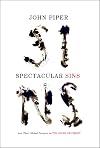
This is a fabulous book! The supremacy of Christ in all things! Glory to the Sovereign!
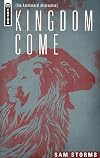
Wow, I thought that Sam did a great job laying the biblical basis for Amillennialism. Definitely learned a lot of things from brother Sam and I will need to revisit few things.
Eschatology for a long time wasn't something I was interested in mainly because of the sense of people (prophecy geeks?) trying to tie current events with biblical prophecy and end times, so for a long time I stayed away from it. Until some 2 months ago when I came across a video on YouTube titled "Amillennialism: the kingdom of heaven is at hand!" I though that this Eschatological system was pretty interesting and seemed convincing and after that I happened to find Voddie Bauchum's (and a couple others) sermons on the book of Revelation which got me more interested in Eschatology and also that I realized that there was a lot of Eschatology in the Bible and if it's in the Bible, then God wants me to know it!
I truly loved the depth that Dr Storms went in the chapters. Especially against (Dispensational) Premillennialism, exposing it's shaky foundations and proving that Premillennialism doesn't mean Pro-Millennialism.
The discussion on Daniel's 70 weeks, the kingdoms in Daniel, other prophecies in Daniel, were just a "Wow" to me to the depth of those prophecies and also the Christ and not Israel centered hermeneutic.
His insight on Israel and the Church was amazing.
I especially loved the part about the Olivet Discourse and how basically Matthew 24:4-34 was fulfilled in the destruction of Jerusalem. It show more was really an eye opening reading the citations from Josephus and the horrors that the Jews went through in AD 70. An eye opening was also the fact that the imagery of Matthew 24:4-34 does not necessarily point to the "end of the world," but it uses imagery common to the Old Testament as Sam labors to prove.
The only down-side (maybe because I wasn't paying that much attention?) was chapter 16. There he discussed the topic of the Antichrist from Revelation 13 and 17 and I didn't get that much of it especially the last few pages when Sam went on doing some weird (not good at math) stuff with numbers, lol.
Overal, 5/5. Loved every bit and I'll surely revisit it many times to strengthen my position. I've already purchased Anthony Hoekema's The Bible and the Future which Dr Sam cited a few times, and also Kim Riddlebarger's A Case for Amillennialism.
Soli Deo Gloria. Even so, come Lord Jesus, come quickly, Lord. Marana tha. show less
Eschatology for a long time wasn't something I was interested in mainly because of the sense of people (prophecy geeks?) trying to tie current events with biblical prophecy and end times, so for a long time I stayed away from it. Until some 2 months ago when I came across a video on YouTube titled "Amillennialism: the kingdom of heaven is at hand!" I though that this Eschatological system was pretty interesting and seemed convincing and after that I happened to find Voddie Bauchum's (and a couple others) sermons on the book of Revelation which got me more interested in Eschatology and also that I realized that there was a lot of Eschatology in the Bible and if it's in the Bible, then God wants me to know it!
I truly loved the depth that Dr Storms went in the chapters. Especially against (Dispensational) Premillennialism, exposing it's shaky foundations and proving that Premillennialism doesn't mean Pro-Millennialism.
The discussion on Daniel's 70 weeks, the kingdoms in Daniel, other prophecies in Daniel, were just a "Wow" to me to the depth of those prophecies and also the Christ and not Israel centered hermeneutic.
His insight on Israel and the Church was amazing.
I especially loved the part about the Olivet Discourse and how basically Matthew 24:4-34 was fulfilled in the destruction of Jerusalem. It show more was really an eye opening reading the citations from Josephus and the horrors that the Jews went through in AD 70. An eye opening was also the fact that the imagery of Matthew 24:4-34 does not necessarily point to the "end of the world," but it uses imagery common to the Old Testament as Sam labors to prove.
The only down-side (maybe because I wasn't paying that much attention?) was chapter 16. There he discussed the topic of the Antichrist from Revelation 13 and 17 and I didn't get that much of it especially the last few pages when Sam went on doing some weird (not good at math) stuff with numbers, lol.
Overal, 5/5. Loved every bit and I'll surely revisit it many times to strengthen my position. I've already purchased Anthony Hoekema's The Bible and the Future which Dr Sam cited a few times, and also Kim Riddlebarger's A Case for Amillennialism.
Soli Deo Gloria. Even so, come Lord Jesus, come quickly, Lord. Marana tha. show less
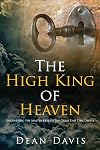

Although read in Dutch I’ve was motivated to get this work by watching RC Sproul’s teaching series on the book called Willing to Believe. It helped understand the issues surround the question of human freedom and sovereignty. I remember that it was not much later than that I was studying Jonathan Edwards’ The Freedom of the Will, which was somewhat difficult.
In this great work this master theologian gives a historical theological study of important theologians throughout the history of the Christian church on the question of human freedom. He goes through some Christian heroes and giants of the faith like Augustine, Edwards, Luther and Calvin. Also some who were non-Christian and anti-Christian in their theology and thinking like Charles Finney and Pelagius. Lastly, theologians who belong more to the in house debate between Arminianism/Semi-Pelagianism and Calvinism, like Jacob Arminius himself.
The Pelegians
Pelagius was a British monk living in the fifth century and he is known to have a huge dispute with Augustine on the nature of man and free will. Pelagius reacted to a seemingly harmless prayer of Augustine which said: Grant what Thou commandest, and command what Thou dost desire. Harmless doesn’t it? Well, that’s not what Pelagius thought. He thought it outrages, because it showed man’s total dependence on God to graciously grant the ability to obey Him. Pelagius believed that commandment presupposes ability. What many nowadays believe. He said that God show more would never command something that man was not able to do. Therefore, everything that God commands man is able to do. So, away with Romans 8:7-8.
He further taught that Adam was in no sense the federal head of the human race. Adam was created mortal and would have died even if he didn’t sin. All men are born in the state that Adam was in. Adam gave man bad influence, not a sinful nature otherwise known as Original Sin.
He taught that the nature of man was basically good and that sinning didn’t effect that basic goodness of man.
Man has a free will to do good or evil and to obey God in all things.
Jesus’ death was not substitionary, but it was as an example for us.
People can live sinless lives, and in fact some have lived sinless lives.
The grace of God is important, but not essential. What I mean is that it would be awesome if one uses the grace of God for obedience, it will make things much easier, but it is even possible to obey without the grace of God.
This among other things are the things that he believed. I think, for any serious Bible student, they must conclude that this places him outside of Christian orthodoxy. Pelagius and his teachings were condemned in 418 and you would think that it will be the last thing heard of Pelagius, but then arises Charles Finney many centuries later in America.
Charles Finney taught things very similar to Pelagius. In fact, he was more Pelagian than Pelagius.
He rejected the doctrine of justification by faith alone, which is the heart of the Gospel message.
He rejected the penal substitionary atonement of Christ in place of the believers. He posed the Governmental and Moral Influence theories of the atonement. He taught that all that was needed for conversion was good argumentation and persuasion. His influence is seen in the decisional evangelism/regeneration of our day, when people are told to make a “choice” for Christ. Or to make to choose Christ to be born again.
It is interesting to observe that this is the vision of the secular culture. That man is able to do anything possible. We think we are not bound by nature to anything. We think that we are the gods of our destinies.
The Semi-Pelegians/Arminians
After Augustine’s sharp critique of Pelagius the church did not stay on the Augustinian position, it’s not surprising seeing that man hates the fact that he’s dependent on God for the good that he does and is unable to do that which he ought to do.
There came a position which was somewhere between Augustinianism and Pelegianism. Which rejected the Pelegian heresy, and out of concern for man’s personal responsibility tried to elevate the freedom of the human will in the matter of salvation. They believed that man was badly wounded by the fall. Death is the punishment of the fall. Man’s dispositions are inclined to evil. But there still is in man the ability to resist the grace of God. Although man is dead in sins and is a slave of sin, yet he is still able to resist the effective grace of God and thereby frustrate the plans of God.
Here RC introduces the difference between mongergism and synergism. Monergism is the teaching that there is One Power which is in work in us when regeneration happens, in that we are passive. Synergism on the other hand teaches that man and God cooperate to bring the salvation of man. Arminians may not like the word synergism, but it describes what they believe. They believe that God does everything that He can to bring men to Himself, and He wants all men to come, but yet some refuse to come. Therefore, the will of man is that which effectuates salvation. The Augustinians disagreed.
Later in the 16th century came Jacob Arminius who studied in Geneva (Calvin’s city) and was a Calvinist, but later came to doubt his Calvinism. He agreed with Calvinism about Total Depravity, but where he differed was the nature of grace. Many of the statements of Arminius about human depravity, could be amen’d by Calvinists, but not those about the nature of grace. Basically, he believed that grace was resistible. It was necessary, but not essential in the sense that for anyone to be saved he needs grace, yet grace alone can’t do it, it must cooperate with man for its effectiveness. Man can resist the grace of God.
He also believed the common belief even of our day that the election of God was based on who would believe or not believe like the Pelegians and Semi-Pelegians.
The Augustinians & the Reformed
This book was written to defend and clarify the Augustinian doctrine of free will, which is the Reformed doctrine of free will. Here I want to survey some of the theologians and their thoughts concerning free will.
Let’s start with Augustine.
Augustine was the ardent opponent of Pelagius. He was the one who answered and challenged Pelagius and it was because of his prayer that Pelagius was outraged. They are so radically different from each other.
Augustine believed and taught the doctrine of Original Sin. The doctrine teaches that because of Adam’s disobedience and because Adam was the representative of the whole human race (the root of the tree), therefore by his disobedience the whole human race was thrown into misery and sin. He stood in the place of those born of men and women. He believed that death (both spiritual and physical) was the punishment of the disobedience of our first parents.
He taught that all men have free will (liberum arbitrium). What they lacked was liberty (libertas). Augustine defined free will as the power to make free choices without any compulsion from the outside. In that sense every person has free will and is free to do as he pleases. What man in the Fall has lost is libertas. Augustine (and RC) understands libertas as the ability do that which is required of us. God commands man to be holy and obey Him, but since the Fall man has not been able to do that because he lost the libertas to will to that which is good. Because as Jonathan Edwards later would clearly say is that man choses according to his pleasure and desires, the only problem is that the Scriptures everywhere describe our desires as sinful. Man is free do all that he desires (liberum arbitrium), but in the Fall he has lost his desire to do good (libertas).
At this point RC introduces some helpful Latin phrases (I love the fact that he many times explains what words mean):
Posse non peccare is the possibility not to sin. This is what Adam and Eve had when they were originally created by God.
Posse peccare is the possibility to sin. This obviously Adam and Eve did.
Non posse non peccare is the impossibility not to sin. These all the descendants of Adam until freed by Christ have.
Non posse peccare is the impossibility to sin. This is what those in Christ will have in the eternal state.
Augustine like all Calvinists rejected Pelagius’ foreknowledge view of election and taught that God predestined according to His good pleasure without “looking into the future.” He predestined not because men believed, but He predestined so that men would believe.
Some more than thousand years later there came a dispute between Desiderius Erasmus and Martin Luther. Luther taught the Augustinian view of freedom and predestination and Erasmus was on the Semi-Pelegian side, only he seemed to think that this topic has no much significance for the average Christian. Luther responded by saying that how isn’t it of any significance for people to know if they must do things for salvation or it comes wholly by the grace of God. For Luther, the subject of free will could not be divorced from sola fide and sola gratia and it is therefore important to understand. Luther taught the doctrine of Augustine, who taught the doctrine of Paul, who taught the doctrine of our Lord Jesus Christ.
Luther strengthened the argument of foreknowledge in regards to free will. He said that if God knows all things, then there could be no choice B. Foreknowledge makes certain that our choices will happen. Luther taught that “God foreknows nothing contingently, but that He foresees, purposes, and does all things according to His own immutable, eternal and infallible will.” As RC says about Luther’s view: God wills what he foreknows and foreknows whatever he wills.
Luther taught about the necessity of choices. If God knows all things, doesn’t that make our choices necessary and therefore somehow compulsory? Luther started his discussion of necessity in The Bondage of the Will by saying that “necessity” is a bad word. It gives the idea of compulsion and against one’s will, which it not what Luther means by necessity. What he meant by “necessity” is that the choices are certain to happen because of God’s perfect foreknowledge. He absolutely did not mean that the choices are against man’s will. They’re certain to happen.
One last thing about Luther, he didn’t like the term “free will.” He thought that it gave men a wrong notion of human freedom, what people often think when they say free will is the ability to do both the good and the bad. This Luther rejected. I also think that the term free will, if used it must be used with qualification. Perhaps moral agency or moral responsibility is a better term.
Now we come to the giant himself, whose name is mostly associated in the free will and predestination debate: John Calvin. RC observes that Calvin taught nothing that Luther did not about free will.
Calvin believed that free will meant the ability to freely choose without compulsion. He’s in line with the Augustinians before him. He, like Luther had a distaste for the term “free will” and thought it a too high and lofty title for the reality. Because he believed that the will is determined by the nature of man, as sinful man can only sin because that is all that he desires, therefore to call it free is too high and lofty. Surely man has a desire for the good, but it’s not the good that is defined by God. Everyone wants a happy family, a good house and wants to be helpful to others, but not in the manner that God has prescribed. We want worldly good, but without the Spirit of grace we are unwilling to will spiritual good. We have no desire for God.
Calvin further taught that the Fall had also a huge effect on our intellect, he taught the noetic effects of the Fall. It’s not only that we die and are alienated from God because of the Fall, but that the Fall of Adam had a huge impact on our thinking. To be sure, unbelievers can think correctly and invent great things, but we do not always think correctly or learn easily as that would’ve been had not man fallen. That’s why the revelation of God about Himself is necessary for us.
Calvin taught that we sin freely, yet by necessity. He distinguished between moral and natural necessity as would Jonathan Edwards later clearly did. Moral necessity concerns the nature of the agent, for example God is necessarily good, He cannot be otherwise than good and holy. Man, after the Fall has been taken captive to sin and is a slave of sin and sins because he wills nothing but sin. People are quick to object by saying “that makes people robots and they cannot be held responsible,” but they’re not consistent in not ascribing glory to God. God is by necessity good and holy and we praise Him for that because He is good and cannot be bad or sin. But who would dare say that God is therefore not free? Are choices are determined by our desires. If our desires are evil we will make evil choices, if our desires are good we will make good choices. In Calvin’s words “Therefore, if the free will of God in doing good is not impeded, because he necessarily must do good; if the devil, who can do nothing but evil, nevertheless sins voluntarily; can it be said that man sins less voluntarily because he is under a necessity of sinning? This necessity is uniformly proclaimed by Augustine, who, even when pressed by the invidious cavil of Celestius, hesitated not to assert it in the following terms: “Man through liberty became a sinner, but corruption, ensuing as the penalty, has converted liberty into necessity” (August. lib. de Perf. Justin). Whenever mention is made of the subject, he hesitates not to speak in this way of the necessary bondage of sin (August. de Nature et Gratia, et alibi).” (Institutes 2.3.5)
Calvin, obviously taught the doctrines commonly associated with his name. He believed in Unconditional Election and absolute sovereignty. God did not foresee who would believe, but that He choose merely out of His good pleasure so that they would believe. He taught the doctrine of Irresistible Grace, he said: “The Apostle’s doctrine is not, that the grace of a good will is offered to us if we will accept of it, but that God himself is pleased so to work in us as to guide, turn, and govern our heart by his Spirit, and reign in it as his own possession. Ezekiel promises that a new spirit will be given to the elect, not merely that they may be able to walk in his precepts, but that they may really walk in them (Eze 11:19; Eze 36:27).” (Institutes 2.3.10)
There is not a book besides the Bible that I have tried to deeply study as Jonathan Edwards The Freedom of the Will. I was fascinated by it, it explained a lot to me and I came to a better understanding of free will. The thorough study was caused by the fact that Jonathan Edwards was not very clear, or maybe I couldn’t understand him very good. I have to re-read a lot of paragraphs to understand what he was saying, although I was helped by reading other stuff that was made to make understanding of free will easier.
The discussion on Edwards starts by explaining his view of the doctrine of Original Sin. Our doctrine about man must be biblical for us to come to biblical ideas. When many think that people are basically good, sometimes do some little bad things they will not get the idea that people are in bondage to sin, so they will not come to the conclusion that men are not free to do good, but only to do that which they desire – sin. Yet if they start with a biblical anthropology on man, they would soon realize that the natural man is not free to do good and hates God. I have learned that any discussion on the topic of election or free will must clearly define it’s doctrine of man and original sin, otherwise it would seem unreasonable to people and will have no foundation. Because of the Fall we are born as slaves of sin and born dead in sin. We are sinners by nature and by choice. The doctrine of Original Sin is important to Edwards because thereby he can know what man is said to be able and unable to do.
Edwards taught that freedom mean the power to choose or refuse without compulsion. He didn’t think that this choice just came spontaneously, he was great in mocking the idea of a neutral will or an undetermined will. He taught that the will was determined – determined by one’s desires. He said “BY determining the Will, if the phrase be used with any meaning, must be intended, causing that the act of the Will or choice should be thus, and not otherwise: and the Will is said to be determined, when, in consequence of some action, or influence, its choice is directed to, and fixed upon a particular object. As when we speak of the determination of motion, we mean causing the motion of the body to be in such a direction, rather than another.” (Freedom of the Will part 1 section 2) The determination of the will therefore means that the will follows our desires, it doesn’t choose “indifferently.” It chooses something that we please, something we desire. In the natural state man does not desire God (Rom 3:9-18; 8:7-8; 1Cor 2:14; Gen 6:5). God is outside the range of his desires.
That which determines the will is the motive. “By motive I mean the whole of that which moves, excites, or invites the mind to volition, whether that be one thing singly, or many things conjunctly.” (Freedom 1:2) Not only are our choices determined by our motives, but they are always determined by our strongest motives. This is the teaching of moral necessity. Let’s define our terms.
By moral necessity Edwards means “that Necessity of connexion and consequence, which arises from such moral causes, as the strength of inclination, or motives, and the connexion which there is in many cases between these and such certain volitions and actions.” (Freedom 1:4) What could be more logical than every cause having and effect and every effect having a cause. This the law of causation. The idea that many will get by hearing the word “necessity” is that it is against the will of man, but that is absolutely not so. It is not compulsory, it just shows the connection between our desires and our actions. See above about how Calvin viewed moral necessity.
“By natural necessity, as applied to men, I mean such Necessity as men are under through the force of natural causes;” (Freedom 1:4). When you are commanded and to fly while you obviously have no ability to fly, that’s natural necessity. God doesn’t command us to fly (natural inability), but commands us to love Him (moral inability). We are unable to love God because we do not desire God. God because of His nature and His moral necessity cannot sin. That doesn’t mean that God is not free, it simply means that God’s actions and nature are consistent with each other.
“Moral Inability consists…either in the want of inclination; or the strength of a contrary inclination; or the want of sufficient motives in view, to induce and excite the act of the Will, or the strength of apparent motives to the contrary.” This is not like telling someone to fly who obviously does not the ability to fly or commanding someone to walk when he is strapped to a chair. It’s more like telling someone who hates you to do you a favor. He doesn’t lack any natural ability to love, he lacks motives to love you and do you a favor.
We indeed are free to do anything that we please. The problem alone is with what we please, but thanks be to God who through Jesus Christ has given us a new heart and a new nature. We are a new creation, being made into the likeness of His beloved Son. We are no longer slaves to sin, although we still struggle and are in war with sin, just like Paul was in Romans 7. The difference alone for those who are in Adam and those in Christ is that the one in Adam only wills the sin, the one in Christ is enabled by the Holy Spirit to do that which is pleasing in God’s sight. show less
In this great work this master theologian gives a historical theological study of important theologians throughout the history of the Christian church on the question of human freedom. He goes through some Christian heroes and giants of the faith like Augustine, Edwards, Luther and Calvin. Also some who were non-Christian and anti-Christian in their theology and thinking like Charles Finney and Pelagius. Lastly, theologians who belong more to the in house debate between Arminianism/Semi-Pelagianism and Calvinism, like Jacob Arminius himself.
The Pelegians
Pelagius was a British monk living in the fifth century and he is known to have a huge dispute with Augustine on the nature of man and free will. Pelagius reacted to a seemingly harmless prayer of Augustine which said: Grant what Thou commandest, and command what Thou dost desire. Harmless doesn’t it? Well, that’s not what Pelagius thought. He thought it outrages, because it showed man’s total dependence on God to graciously grant the ability to obey Him. Pelagius believed that commandment presupposes ability. What many nowadays believe. He said that God show more would never command something that man was not able to do. Therefore, everything that God commands man is able to do. So, away with Romans 8:7-8.
He further taught that Adam was in no sense the federal head of the human race. Adam was created mortal and would have died even if he didn’t sin. All men are born in the state that Adam was in. Adam gave man bad influence, not a sinful nature otherwise known as Original Sin.
He taught that the nature of man was basically good and that sinning didn’t effect that basic goodness of man.
Man has a free will to do good or evil and to obey God in all things.
Jesus’ death was not substitionary, but it was as an example for us.
People can live sinless lives, and in fact some have lived sinless lives.
The grace of God is important, but not essential. What I mean is that it would be awesome if one uses the grace of God for obedience, it will make things much easier, but it is even possible to obey without the grace of God.
This among other things are the things that he believed. I think, for any serious Bible student, they must conclude that this places him outside of Christian orthodoxy. Pelagius and his teachings were condemned in 418 and you would think that it will be the last thing heard of Pelagius, but then arises Charles Finney many centuries later in America.
Charles Finney taught things very similar to Pelagius. In fact, he was more Pelagian than Pelagius.
He rejected the doctrine of justification by faith alone, which is the heart of the Gospel message.
He rejected the penal substitionary atonement of Christ in place of the believers. He posed the Governmental and Moral Influence theories of the atonement. He taught that all that was needed for conversion was good argumentation and persuasion. His influence is seen in the decisional evangelism/regeneration of our day, when people are told to make a “choice” for Christ. Or to make to choose Christ to be born again.
It is interesting to observe that this is the vision of the secular culture. That man is able to do anything possible. We think we are not bound by nature to anything. We think that we are the gods of our destinies.
The Semi-Pelegians/Arminians
After Augustine’s sharp critique of Pelagius the church did not stay on the Augustinian position, it’s not surprising seeing that man hates the fact that he’s dependent on God for the good that he does and is unable to do that which he ought to do.
There came a position which was somewhere between Augustinianism and Pelegianism. Which rejected the Pelegian heresy, and out of concern for man’s personal responsibility tried to elevate the freedom of the human will in the matter of salvation. They believed that man was badly wounded by the fall. Death is the punishment of the fall. Man’s dispositions are inclined to evil. But there still is in man the ability to resist the grace of God. Although man is dead in sins and is a slave of sin, yet he is still able to resist the effective grace of God and thereby frustrate the plans of God.
Here RC introduces the difference between mongergism and synergism. Monergism is the teaching that there is One Power which is in work in us when regeneration happens, in that we are passive. Synergism on the other hand teaches that man and God cooperate to bring the salvation of man. Arminians may not like the word synergism, but it describes what they believe. They believe that God does everything that He can to bring men to Himself, and He wants all men to come, but yet some refuse to come. Therefore, the will of man is that which effectuates salvation. The Augustinians disagreed.
Later in the 16th century came Jacob Arminius who studied in Geneva (Calvin’s city) and was a Calvinist, but later came to doubt his Calvinism. He agreed with Calvinism about Total Depravity, but where he differed was the nature of grace. Many of the statements of Arminius about human depravity, could be amen’d by Calvinists, but not those about the nature of grace. Basically, he believed that grace was resistible. It was necessary, but not essential in the sense that for anyone to be saved he needs grace, yet grace alone can’t do it, it must cooperate with man for its effectiveness. Man can resist the grace of God.
He also believed the common belief even of our day that the election of God was based on who would believe or not believe like the Pelegians and Semi-Pelegians.
The Augustinians & the Reformed
This book was written to defend and clarify the Augustinian doctrine of free will, which is the Reformed doctrine of free will. Here I want to survey some of the theologians and their thoughts concerning free will.
Let’s start with Augustine.
Augustine was the ardent opponent of Pelagius. He was the one who answered and challenged Pelagius and it was because of his prayer that Pelagius was outraged. They are so radically different from each other.
Augustine believed and taught the doctrine of Original Sin. The doctrine teaches that because of Adam’s disobedience and because Adam was the representative of the whole human race (the root of the tree), therefore by his disobedience the whole human race was thrown into misery and sin. He stood in the place of those born of men and women. He believed that death (both spiritual and physical) was the punishment of the disobedience of our first parents.
He taught that all men have free will (liberum arbitrium). What they lacked was liberty (libertas). Augustine defined free will as the power to make free choices without any compulsion from the outside. In that sense every person has free will and is free to do as he pleases. What man in the Fall has lost is libertas. Augustine (and RC) understands libertas as the ability do that which is required of us. God commands man to be holy and obey Him, but since the Fall man has not been able to do that because he lost the libertas to will to that which is good. Because as Jonathan Edwards later would clearly say is that man choses according to his pleasure and desires, the only problem is that the Scriptures everywhere describe our desires as sinful. Man is free do all that he desires (liberum arbitrium), but in the Fall he has lost his desire to do good (libertas).
At this point RC introduces some helpful Latin phrases (I love the fact that he many times explains what words mean):
Posse non peccare is the possibility not to sin. This is what Adam and Eve had when they were originally created by God.
Posse peccare is the possibility to sin. This obviously Adam and Eve did.
Non posse non peccare is the impossibility not to sin. These all the descendants of Adam until freed by Christ have.
Non posse peccare is the impossibility to sin. This is what those in Christ will have in the eternal state.
Augustine like all Calvinists rejected Pelagius’ foreknowledge view of election and taught that God predestined according to His good pleasure without “looking into the future.” He predestined not because men believed, but He predestined so that men would believe.
Some more than thousand years later there came a dispute between Desiderius Erasmus and Martin Luther. Luther taught the Augustinian view of freedom and predestination and Erasmus was on the Semi-Pelegian side, only he seemed to think that this topic has no much significance for the average Christian. Luther responded by saying that how isn’t it of any significance for people to know if they must do things for salvation or it comes wholly by the grace of God. For Luther, the subject of free will could not be divorced from sola fide and sola gratia and it is therefore important to understand. Luther taught the doctrine of Augustine, who taught the doctrine of Paul, who taught the doctrine of our Lord Jesus Christ.
Luther strengthened the argument of foreknowledge in regards to free will. He said that if God knows all things, then there could be no choice B. Foreknowledge makes certain that our choices will happen. Luther taught that “God foreknows nothing contingently, but that He foresees, purposes, and does all things according to His own immutable, eternal and infallible will.” As RC says about Luther’s view: God wills what he foreknows and foreknows whatever he wills.
Luther taught about the necessity of choices. If God knows all things, doesn’t that make our choices necessary and therefore somehow compulsory? Luther started his discussion of necessity in The Bondage of the Will by saying that “necessity” is a bad word. It gives the idea of compulsion and against one’s will, which it not what Luther means by necessity. What he meant by “necessity” is that the choices are certain to happen because of God’s perfect foreknowledge. He absolutely did not mean that the choices are against man’s will. They’re certain to happen.
One last thing about Luther, he didn’t like the term “free will.” He thought that it gave men a wrong notion of human freedom, what people often think when they say free will is the ability to do both the good and the bad. This Luther rejected. I also think that the term free will, if used it must be used with qualification. Perhaps moral agency or moral responsibility is a better term.
Now we come to the giant himself, whose name is mostly associated in the free will and predestination debate: John Calvin. RC observes that Calvin taught nothing that Luther did not about free will.
Calvin believed that free will meant the ability to freely choose without compulsion. He’s in line with the Augustinians before him. He, like Luther had a distaste for the term “free will” and thought it a too high and lofty title for the reality. Because he believed that the will is determined by the nature of man, as sinful man can only sin because that is all that he desires, therefore to call it free is too high and lofty. Surely man has a desire for the good, but it’s not the good that is defined by God. Everyone wants a happy family, a good house and wants to be helpful to others, but not in the manner that God has prescribed. We want worldly good, but without the Spirit of grace we are unwilling to will spiritual good. We have no desire for God.
Calvin further taught that the Fall had also a huge effect on our intellect, he taught the noetic effects of the Fall. It’s not only that we die and are alienated from God because of the Fall, but that the Fall of Adam had a huge impact on our thinking. To be sure, unbelievers can think correctly and invent great things, but we do not always think correctly or learn easily as that would’ve been had not man fallen. That’s why the revelation of God about Himself is necessary for us.
Calvin taught that we sin freely, yet by necessity. He distinguished between moral and natural necessity as would Jonathan Edwards later clearly did. Moral necessity concerns the nature of the agent, for example God is necessarily good, He cannot be otherwise than good and holy. Man, after the Fall has been taken captive to sin and is a slave of sin and sins because he wills nothing but sin. People are quick to object by saying “that makes people robots and they cannot be held responsible,” but they’re not consistent in not ascribing glory to God. God is by necessity good and holy and we praise Him for that because He is good and cannot be bad or sin. But who would dare say that God is therefore not free? Are choices are determined by our desires. If our desires are evil we will make evil choices, if our desires are good we will make good choices. In Calvin’s words “Therefore, if the free will of God in doing good is not impeded, because he necessarily must do good; if the devil, who can do nothing but evil, nevertheless sins voluntarily; can it be said that man sins less voluntarily because he is under a necessity of sinning? This necessity is uniformly proclaimed by Augustine, who, even when pressed by the invidious cavil of Celestius, hesitated not to assert it in the following terms: “Man through liberty became a sinner, but corruption, ensuing as the penalty, has converted liberty into necessity” (August. lib. de Perf. Justin). Whenever mention is made of the subject, he hesitates not to speak in this way of the necessary bondage of sin (August. de Nature et Gratia, et alibi).” (Institutes 2.3.5)
Calvin, obviously taught the doctrines commonly associated with his name. He believed in Unconditional Election and absolute sovereignty. God did not foresee who would believe, but that He choose merely out of His good pleasure so that they would believe. He taught the doctrine of Irresistible Grace, he said: “The Apostle’s doctrine is not, that the grace of a good will is offered to us if we will accept of it, but that God himself is pleased so to work in us as to guide, turn, and govern our heart by his Spirit, and reign in it as his own possession. Ezekiel promises that a new spirit will be given to the elect, not merely that they may be able to walk in his precepts, but that they may really walk in them (Eze 11:19; Eze 36:27).” (Institutes 2.3.10)
There is not a book besides the Bible that I have tried to deeply study as Jonathan Edwards The Freedom of the Will. I was fascinated by it, it explained a lot to me and I came to a better understanding of free will. The thorough study was caused by the fact that Jonathan Edwards was not very clear, or maybe I couldn’t understand him very good. I have to re-read a lot of paragraphs to understand what he was saying, although I was helped by reading other stuff that was made to make understanding of free will easier.
The discussion on Edwards starts by explaining his view of the doctrine of Original Sin. Our doctrine about man must be biblical for us to come to biblical ideas. When many think that people are basically good, sometimes do some little bad things they will not get the idea that people are in bondage to sin, so they will not come to the conclusion that men are not free to do good, but only to do that which they desire – sin. Yet if they start with a biblical anthropology on man, they would soon realize that the natural man is not free to do good and hates God. I have learned that any discussion on the topic of election or free will must clearly define it’s doctrine of man and original sin, otherwise it would seem unreasonable to people and will have no foundation. Because of the Fall we are born as slaves of sin and born dead in sin. We are sinners by nature and by choice. The doctrine of Original Sin is important to Edwards because thereby he can know what man is said to be able and unable to do.
Edwards taught that freedom mean the power to choose or refuse without compulsion. He didn’t think that this choice just came spontaneously, he was great in mocking the idea of a neutral will or an undetermined will. He taught that the will was determined – determined by one’s desires. He said “BY determining the Will, if the phrase be used with any meaning, must be intended, causing that the act of the Will or choice should be thus, and not otherwise: and the Will is said to be determined, when, in consequence of some action, or influence, its choice is directed to, and fixed upon a particular object. As when we speak of the determination of motion, we mean causing the motion of the body to be in such a direction, rather than another.” (Freedom of the Will part 1 section 2) The determination of the will therefore means that the will follows our desires, it doesn’t choose “indifferently.” It chooses something that we please, something we desire. In the natural state man does not desire God (Rom 3:9-18; 8:7-8; 1Cor 2:14; Gen 6:5). God is outside the range of his desires.
That which determines the will is the motive. “By motive I mean the whole of that which moves, excites, or invites the mind to volition, whether that be one thing singly, or many things conjunctly.” (Freedom 1:2) Not only are our choices determined by our motives, but they are always determined by our strongest motives. This is the teaching of moral necessity. Let’s define our terms.
By moral necessity Edwards means “that Necessity of connexion and consequence, which arises from such moral causes, as the strength of inclination, or motives, and the connexion which there is in many cases between these and such certain volitions and actions.” (Freedom 1:4) What could be more logical than every cause having and effect and every effect having a cause. This the law of causation. The idea that many will get by hearing the word “necessity” is that it is against the will of man, but that is absolutely not so. It is not compulsory, it just shows the connection between our desires and our actions. See above about how Calvin viewed moral necessity.
“By natural necessity, as applied to men, I mean such Necessity as men are under through the force of natural causes;” (Freedom 1:4). When you are commanded and to fly while you obviously have no ability to fly, that’s natural necessity. God doesn’t command us to fly (natural inability), but commands us to love Him (moral inability). We are unable to love God because we do not desire God. God because of His nature and His moral necessity cannot sin. That doesn’t mean that God is not free, it simply means that God’s actions and nature are consistent with each other.
“Moral Inability consists…either in the want of inclination; or the strength of a contrary inclination; or the want of sufficient motives in view, to induce and excite the act of the Will, or the strength of apparent motives to the contrary.” This is not like telling someone to fly who obviously does not the ability to fly or commanding someone to walk when he is strapped to a chair. It’s more like telling someone who hates you to do you a favor. He doesn’t lack any natural ability to love, he lacks motives to love you and do you a favor.
We indeed are free to do anything that we please. The problem alone is with what we please, but thanks be to God who through Jesus Christ has given us a new heart and a new nature. We are a new creation, being made into the likeness of His beloved Son. We are no longer slaves to sin, although we still struggle and are in war with sin, just like Paul was in Romans 7. The difference alone for those who are in Adam and those in Christ is that the one in Adam only wills the sin, the one in Christ is enabled by the Holy Spirit to do that which is pleasing in God’s sight. show less
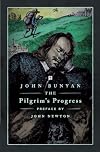
A great allegory of the Christian life. A timeless classic. The most significant and best selling work in English literature.
From conversion to glory, it describes the Christian life. The way that Bunyan wrote it is amazing and astounding.
Indeed, Bunyan was a walking Bible. I loved the abundant biblical references!
From conversion to glory, it describes the Christian life. The way that Bunyan wrote it is amazing and astounding.
Indeed, Bunyan was a walking Bible. I loved the abundant biblical references!
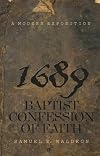
It was a while back that I somehow came into contact (I don't remember how, maybe through James White?) with the 1689 Baptist Confession of Faith and I found myself at home in it. Though I did not study it very deeply. This time I have taken the time to go through it with Sam Waldron which I though he did a very good job.
Before beginning my study of the confession, through a brother I got into the subject of Baptist Covenant Theology, I got the work of Pascal Denault The Distinctiveness of Baptist Covenant Theology and Waldron's A Reformed Baptist Manifesto. Sometime later I got the recent Recovering a Covenantal Heritage volume. I have been more and more interested in this stream of Reformed Theology.
I first became baptistic simply through reading the New Testament and finding no evidence of any infant baptism. I was baptized in the Armenian Church and was attending a Baptist church in Holland and was convinced that my baptism was no baptism, so on 14-06-2013 I was baptist after a profession of faith. At that time I was in the process of studying the Doctrines of Grace. Sometime later, by the grace of God I came to embrace and glory in them.
The first and foremost thing that I love about this Confession is it's high, high, high view of God's sovereign freedom. I love it and that is exactly how I believe that God is, the Sovereign King over every molecule.
I love the fact of the Baptists' deep commitment to the truth and the sole authority of the Bible and their appeal to show more the Bible. I could not really find any disagreements with the Confession, so I feel home in it and I'm not ashamed to identify myself as a Reformed Baptist.
What I loved about Dr Waldron's work is his way of explaining the Confession and going through the biblical evidence (as I have been reading Grudem, I would have loved it if Dr Waldron would cite portions of the passages that he was using as proof, rather most of the time, only references were given).
When I started studying the Confession I didn't realizes that a confession is actually a Systematic Theology! :)
Dr Waldron explained things very well, I especially liked his extensive treatment of chapters 29 (Of Baptism), 31 (of the state of man after death and of the resurrection of the dead) and 32 (Of the last judgment). There he interacted with the other side and provided some answers. With the explanations he went also through more detail.
During my study of the 1689 I left some comments about my thoughts on each paragraph that can be viewed here: http://www.thecalvinist.net/post/1689-Second-Baptist-Confession-Of-Faith-With-Co....
One thing that was frustrating me, was the load of typos there. It's not that I'm a grammar nazi, but the quality of the work is so great that the multitude of the typos, wrong headings above pages (pages 103, 381), no spacing between words, wrong numeration really were the only downside, which could have been prevented. Hopefully, they will update it in the future, otherwise we'll just have to wait for Samuel Renihan's exposition of the 1689 that is in progress! show less
Before beginning my study of the confession, through a brother I got into the subject of Baptist Covenant Theology, I got the work of Pascal Denault The Distinctiveness of Baptist Covenant Theology and Waldron's A Reformed Baptist Manifesto. Sometime later I got the recent Recovering a Covenantal Heritage volume. I have been more and more interested in this stream of Reformed Theology.
I first became baptistic simply through reading the New Testament and finding no evidence of any infant baptism. I was baptized in the Armenian Church and was attending a Baptist church in Holland and was convinced that my baptism was no baptism, so on 14-06-2013 I was baptist after a profession of faith. At that time I was in the process of studying the Doctrines of Grace. Sometime later, by the grace of God I came to embrace and glory in them.
The first and foremost thing that I love about this Confession is it's high, high, high view of God's sovereign freedom. I love it and that is exactly how I believe that God is, the Sovereign King over every molecule.
I love the fact of the Baptists' deep commitment to the truth and the sole authority of the Bible and their appeal to show more the Bible. I could not really find any disagreements with the Confession, so I feel home in it and I'm not ashamed to identify myself as a Reformed Baptist.
What I loved about Dr Waldron's work is his way of explaining the Confession and going through the biblical evidence (as I have been reading Grudem, I would have loved it if Dr Waldron would cite portions of the passages that he was using as proof, rather most of the time, only references were given).
When I started studying the Confession I didn't realizes that a confession is actually a Systematic Theology! :)
Dr Waldron explained things very well, I especially liked his extensive treatment of chapters 29 (Of Baptism), 31 (of the state of man after death and of the resurrection of the dead) and 32 (Of the last judgment). There he interacted with the other side and provided some answers. With the explanations he went also through more detail.
During my study of the 1689 I left some comments about my thoughts on each paragraph that can be viewed here: http://www.thecalvinist.net/post/1689-Second-Baptist-Confession-Of-Faith-With-Co....
One thing that was frustrating me, was the load of typos there. It's not that I'm a grammar nazi, but the quality of the work is so great that the multitude of the typos, wrong headings above pages (pages 103, 381), no spacing between words, wrong numeration really were the only downside, which could have been prevented. Hopefully, they will update it in the future, otherwise we'll just have to wait for Samuel Renihan's exposition of the 1689 that is in progress! show less
Alleen de volgende hoofdstukken gelezen. Op:
- Marcion
- Tertullianus
- Origenes
- Gregorius van Nyssa
- Augustinus
- Anselmus van Canterbury
- Bernardus van Clairvaux
- Thomas van Aquino
- John Wyclif
- Maarten Luther
- Johannes Calvijn
- Marcion
- Tertullianus
- Origenes
- Gregorius van Nyssa
- Augustinus
- Anselmus van Canterbury
- Bernardus van Clairvaux
- Thomas van Aquino
- John Wyclif
- Maarten Luther
- Johannes Calvijn
Read it online.
Good introduction about the interpretations on Genesis 1. The interpretations are given, then the bad ones are dismissed, the more plausible ones are given points of difficulty.
Good introduction about the interpretations on Genesis 1. The interpretations are given, then the bad ones are dismissed, the more plausible ones are given points of difficulty.
The Same Sex Controversy: Defending and Clarifying the Bible's Message About Homosexuality by James R. White
Great book that I could not put down and finished in 2 days.
This book provides a positive exegesis of crucial texts regarding homosexuality and a refutation of failed attempts to obscure these clear texts. The texts discussed were:
1) Genesis 19
2) Leviticus 18:22 and 20:13
3) Romans 1
4) 1 Corinthians 6:9 and 1 Timothy 1:10
Masterful job and an easy to read book.
This book provides a positive exegesis of crucial texts regarding homosexuality and a refutation of failed attempts to obscure these clear texts. The texts discussed were:
1) Genesis 19
2) Leviticus 18:22 and 20:13
3) Romans 1
4) 1 Corinthians 6:9 and 1 Timothy 1:10
Masterful job and an easy to read book.
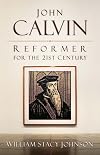
John Calvin is certainly one of my greatest Christian heroes. His theology is robust, strong and most important biblical. This theological biography of Calvin shows that. It was very nice to read, but some caution must be taken. The author doesn't agree with Calvin on some things.
Of most importance is his assertion that Calvin did not believe in inerrancy, knew the Bible contained errors and had no problem correcting the authors. This was done without any citation from him which I found disappointing.
The second issue was the rejection of Calvin's double predestination and clinging to a single predestination in following Karl Barth, and indicating that Calvin did not accept Irresistible Grace and advocated Limited Atonement.
I enjoyed reading this, but again, I say it should be read with caution.
Of most importance is his assertion that Calvin did not believe in inerrancy, knew the Bible contained errors and had no problem correcting the authors. This was done without any citation from him which I found disappointing.
The second issue was the rejection of Calvin's double predestination and clinging to a single predestination in following Karl Barth, and indicating that Calvin did not accept Irresistible Grace and advocated Limited Atonement.
I enjoyed reading this, but again, I say it should be read with caution.