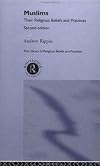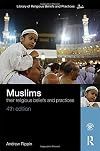
Muslims: Their Religious Beliefs and Practices
by Andrew Rippin
On This Page
Description
Andrew Rippin¿s Muslims is essential reading for students and scholars alike. This new edition has been comprehensively updated and for the first time features a companion website with extensive links to additional reading and resources to help deepen students¿ understanding of the subject. Muslims offers a survey of Islamic history and thought from the formative period of the religion to modern times. It examines the unique elements which have combined to form Islam, in particular the show more Qur¿¿n and the influence of Muhammad, and traces the ways in which these sources have interacted historically to create Muslim theology and law as well as the alternative visions of Islam found in Shi¿ism and Sufi sm. Combining core source materials with coverage of current scholarship and of recent events in the Islamic world, Andrew Rippin introduces this hugely significant religion in a succinct, challenging and refreshing way. The improved and expanded fourth edition contains a new chapter on perceptions of Muslims today as well as a new series of text boxes to stimulate students¿ thinking about essay topics and research projects. Using a distinctive critical approach that promotes engagement with key issues, from fundamentalism and women¿s rights to problems of identity, Islamophobia and modernity, this text is ideal for today¿s students. show lessTags
Recommendations











































Member Recommendations

Member Reviews
This volume is reviewed for an academic source, Choice, and my actual analysis may be found there. Interested parties may find my review on their web site. However, there are notes and observations made below which do not appear in the Choice review.
The Mu'tazila adopted similar positions to the Greek philosophical system. They argued that reason "could be used as a source of reliable knowledge for human beings" (p. 70) as developed by al-Kindi (d. c. 870), al-Farabi (d. 950), and Ibn Sina (d. 1037). I disagree with Rippin's assessment; he seems to imply that the Mu`tazila relied in some way on the Greeks but they did not. Their reasoning was totally based on Islamic reasons and conclusions (Cf. Defenders of Reason In Islam: show more Mu'tazilism and Rational Theology from Medieval School to Modern Symbol by Richard C. Martin, Oneworld (1997): http://www.librarything.com/work/book/80770744).
In contemporary thought, Rippin is unusually sympathetic in the case of Tariq Ramadan (pp. 326-327). He simply views Ramadan as struggling to emphasize the true import of Islam--justice--and allowing Islam time and the indulgence to develop an aversion to the barbarisms of the Koran. What if the world can not wait? It would seem more fruitful for leading Islamist thinkers to point out the limitations of the Koran and Islam and work from within to reform Islam (Cf. The Flight of the Intellectuals: The Controversy Over Islamism and the Press by Paul Berman, Melville House (2010: http://www.librarything.com/work/4897258/60815999). show less
The Mu'tazila adopted similar positions to the Greek philosophical system. They argued that reason "could be used as a source of reliable knowledge for human beings" (p. 70) as developed by al-Kindi (d. c. 870), al-Farabi (d. 950), and Ibn Sina (d. 1037). I disagree with Rippin's assessment; he seems to imply that the Mu`tazila relied in some way on the Greeks but they did not. Their reasoning was totally based on Islamic reasons and conclusions (Cf. Defenders of Reason In Islam: show more Mu'tazilism and Rational Theology from Medieval School to Modern Symbol by Richard C. Martin, Oneworld (1997): http://www.librarything.com/work/book/80770744).
In contemporary thought, Rippin is unusually sympathetic in the case of Tariq Ramadan (pp. 326-327). He simply views Ramadan as struggling to emphasize the true import of Islam--justice--and allowing Islam time and the indulgence to develop an aversion to the barbarisms of the Koran. What if the world can not wait? It would seem more fruitful for leading Islamist thinkers to point out the limitations of the Koran and Islam and work from within to reform Islam (Cf. The Flight of the Intellectuals: The Controversy Over Islamism and the Press by Paul Berman, Melville House (2010: http://www.librarything.com/work/4897258/60815999). show less
Ratings
Members
- Recently Added By
Author Information
17+ Works 381 Members
Andrew Rippin is Professor of History and former Dean of the Faculty of Humanities at the University of Victoria, Canada. He has written and edited several books on Islam and the Qur'an, including Classical Islam: A Sourcebook of Religious Literature and The Islamic World, both published by Routledge.
Series
Belongs to Publisher Series
Common Knowledge
- Canonical title
- Muslims: Their Religious Beliefs and Practices
Classifications
Statistics
- Members
- 142
- Popularity
- 231,411
- Reviews
- 1
- Rating
- (4.17)
- Languages
- English
- Media
- Paper, Ebook
- ISBNs
- 17
- ASINs
- 3