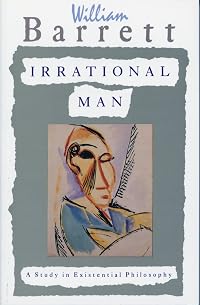
Irrational Man: A Study in Existential Philosophy
by William Barrett
On This Page
Description
Widely recognized as the finest definition of existentialist philosophy ever written, this book introduced existentialism to America in 1958. Barrett speaks eloquently and directly to concerns of the 1990s: a period when the irrational and the absurd are no better integrated than before and when humankind is in even greater danger of destroying its existence without ever understanding the meaning of its existence. Irrational Man begins by discussing the roots of existentialism in the art show more and thinking of Augustine, Aquinas, Pascal, Baudelaire, Blake, Dostoevski, Tolstoy, Hemingway, Picasso, Joyce, and Beckett. The heart of the book explains the views of the foremost existentialists--Kierkegaard, Nietzsche, Heidegger, and Sartre. The result is a marvelously lucid definition of existentialism and a brilliant interpretation of its impact. show lessTags
Recommendations













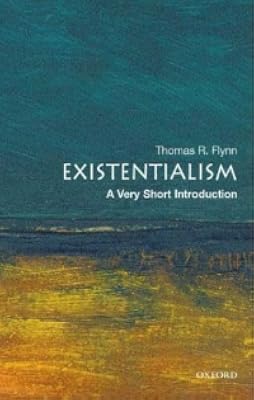
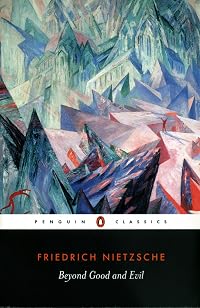
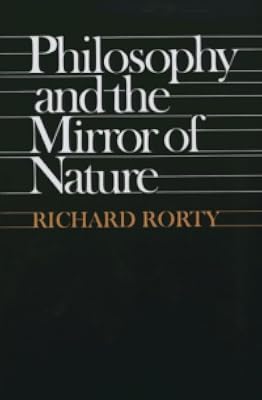

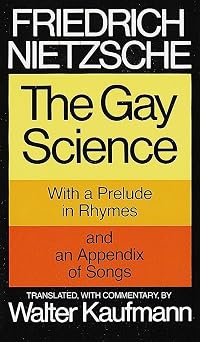




Member Recommendations

Member Reviews
Barrett has given us a colorful and provocative overview of Existential philosophy, and it is so because is it not a dry survey of what Existentialism is, but what it means to us. Barrett, writing in the nineteen sixties, applies this to the man of a nuclear and technological age, an age we are immersed in even more today. We are given a wide overview of the currents of Existential thought, all the way back to the Hebrews and Hellenistic sources, to the present.
This work is more relevant than ever today, as the common folk lose themselves in the distractions of mass media or fill their days with work and deed, and professional philosophers lose themselves in the machinations of privileged academic masturbation, all will eventually have show more to grapple with the big Nothing swirling around in their depths. If not; knowing that the core of their masochistic dinner table fixation on terrorism, warfare, and apocalypse might one day greet them in seriousness; Nothingness will confront them. It'd be best for the mass of humanity to plow their inner depths prior to such a scenario, but there meditations on that very scenario are perhaps hope of an escape from this inevitable confrontation with Self. show less
This work is more relevant than ever today, as the common folk lose themselves in the distractions of mass media or fill their days with work and deed, and professional philosophers lose themselves in the machinations of privileged academic masturbation, all will eventually have show more to grapple with the big Nothing swirling around in their depths. If not; knowing that the core of their masochistic dinner table fixation on terrorism, warfare, and apocalypse might one day greet them in seriousness; Nothingness will confront them. It'd be best for the mass of humanity to plow their inner depths prior to such a scenario, but there meditations on that very scenario are perhaps hope of an escape from this inevitable confrontation with Self. show less
I first read William Barrett's Irrational Man back in college 45 years ago and was inspired to spend the next several years reading Kierkegaard, Nietzsche, Dostoyevsky, Kafka,, Berdyaev and Shestov. Quite a rewarding experience.
Having also participated in the arts and music and the study of aesthetics for many years, I revisited Barrett's book with an eye to what he has to say about existentialism's connection to modern art. Again, a most rewarding experience. So, with this in mind, and also recognizing many others have posted reviews here, I will focus on Chapter 3 - The Testimony of Modern Art, offering three Barrett quotes coupled with my comments.
"The ordinary man is uncomfortable, angry, or derisive before the dislocation of forms show more in modern art, before its bold distortions, or arbitrary manipulations of objects." Barrett is pointing out the heart of the issue with modern art: it doesn't matter if the art is created by Picasso, Mondrian, Pollack, Dali or Rothko - non-realistic, abstract art is anti-middle class mindset, anti-Walt Disney, and counter to a routine, regimented, unexamined, on-the-surface way of living.
"Modern art thus begins, and sometimes ends, as a confession of spiritual poverty. That is its greatness and its triumph, but also the needle it jabs into the Philistine's sore spot, for the last thing he wants to be reminded of is his spiritual poverty." Again, if people in modern mass society today spend their lives in TV stupor, listening to muzak, preoccupied with the size of their houses and their cars and fretting over their pensions, this is spiritual poverty plain and simple. Barrett sees modern art as needle number one and existentialism as needle number two sticking and jabbing and pricking and poking people to wake up to the depths of their own human experience. Recall how Kierkegaard said he wanted to be the Socratic gadfly of Copenhagen.
`This century in art, André Malraux has said, will go down in history not as the period of abstract art but as the period in which all the art of the past, and from every quarter of the glove, became available to the painter and sculptor, and through them became part of our modern taste." This infusion of the world's non-Western traditions continues today. For example, if an American artist tomorrow combines realistic portraiture with Japanese brush strokes, any gallery-goer wouldn't think twice. Our 21st century culture is truly a world-culture; I mean, would you be at all surprised if your new next door neighbors were from India, China or Brazil; or, if another neighbor explores African dance or Kung Fu or Tibetan Buddhist meditation? The point Barrett is highlighting here is that the old, conventional, self-contained, exclusively Western categories that served Western societies for centuries are blown open by global future-shock. Thus, more fertile ground for modern artists, philosophers and writers.
One last comments, this one from the section `The Rational Ordering of Society', where Barrett says, "In a society that requires of man only that he perform competently his own particular social function, man becomes identified with this function, and the rest of his being is allowed to subsist as best it can - usually to be dropped below the surface of consciousness and forgotten." If anything, with the advent of cell-phones, blackberries, I-pads and the internet, people are spending more waking hours fulfilling their role and function within society today then back in 1958 when Barrett wrote these words. No doubt about it - reflecting and living one's life from one's spiritual and artistic depth is a great challenge in our brave new computerized world. Challenging but not impossible. Reading and reflecting on the existential philosophers is a way to reclaim our full humanness. I offer the following recommendations:
For anybody wanting to pursue a study of Existentialism, I would recommend reading the following literary works. All are short and each one can be read in a day:
* Notes from Underground - Dostoyevsky
* Metamorphosis - Kafka
* The Death of Ivan Ilyich - Tolstoy
* The Wall - Sartre
* The Stranger - Camus
For those wishing to study Existentialism more as a philosophy, here are my recommendations (note: none are by Heidegger or Sartre, since their philosophic writing tends to be dense and turgid):
* The Meaning of the Creative Act - Berdyaev
* Slavery and Freedom - Berdyaev
* Attack Upon "Christendom" - Kierkegaard
* Beyond Good and Evil - Nietzsche
* I and Thou - Buber show less
Having also participated in the arts and music and the study of aesthetics for many years, I revisited Barrett's book with an eye to what he has to say about existentialism's connection to modern art. Again, a most rewarding experience. So, with this in mind, and also recognizing many others have posted reviews here, I will focus on Chapter 3 - The Testimony of Modern Art, offering three Barrett quotes coupled with my comments.
"The ordinary man is uncomfortable, angry, or derisive before the dislocation of forms show more in modern art, before its bold distortions, or arbitrary manipulations of objects." Barrett is pointing out the heart of the issue with modern art: it doesn't matter if the art is created by Picasso, Mondrian, Pollack, Dali or Rothko - non-realistic, abstract art is anti-middle class mindset, anti-Walt Disney, and counter to a routine, regimented, unexamined, on-the-surface way of living.
"Modern art thus begins, and sometimes ends, as a confession of spiritual poverty. That is its greatness and its triumph, but also the needle it jabs into the Philistine's sore spot, for the last thing he wants to be reminded of is his spiritual poverty." Again, if people in modern mass society today spend their lives in TV stupor, listening to muzak, preoccupied with the size of their houses and their cars and fretting over their pensions, this is spiritual poverty plain and simple. Barrett sees modern art as needle number one and existentialism as needle number two sticking and jabbing and pricking and poking people to wake up to the depths of their own human experience. Recall how Kierkegaard said he wanted to be the Socratic gadfly of Copenhagen.
`This century in art, André Malraux has said, will go down in history not as the period of abstract art but as the period in which all the art of the past, and from every quarter of the glove, became available to the painter and sculptor, and through them became part of our modern taste." This infusion of the world's non-Western traditions continues today. For example, if an American artist tomorrow combines realistic portraiture with Japanese brush strokes, any gallery-goer wouldn't think twice. Our 21st century culture is truly a world-culture; I mean, would you be at all surprised if your new next door neighbors were from India, China or Brazil; or, if another neighbor explores African dance or Kung Fu or Tibetan Buddhist meditation? The point Barrett is highlighting here is that the old, conventional, self-contained, exclusively Western categories that served Western societies for centuries are blown open by global future-shock. Thus, more fertile ground for modern artists, philosophers and writers.
One last comments, this one from the section `The Rational Ordering of Society', where Barrett says, "In a society that requires of man only that he perform competently his own particular social function, man becomes identified with this function, and the rest of his being is allowed to subsist as best it can - usually to be dropped below the surface of consciousness and forgotten." If anything, with the advent of cell-phones, blackberries, I-pads and the internet, people are spending more waking hours fulfilling their role and function within society today then back in 1958 when Barrett wrote these words. No doubt about it - reflecting and living one's life from one's spiritual and artistic depth is a great challenge in our brave new computerized world. Challenging but not impossible. Reading and reflecting on the existential philosophers is a way to reclaim our full humanness. I offer the following recommendations:
For anybody wanting to pursue a study of Existentialism, I would recommend reading the following literary works. All are short and each one can be read in a day:
* Notes from Underground - Dostoyevsky
* Metamorphosis - Kafka
* The Death of Ivan Ilyich - Tolstoy
* The Wall - Sartre
* The Stranger - Camus
For those wishing to study Existentialism more as a philosophy, here are my recommendations (note: none are by Heidegger or Sartre, since their philosophic writing tends to be dense and turgid):
* The Meaning of the Creative Act - Berdyaev
* Slavery and Freedom - Berdyaev
* Attack Upon "Christendom" - Kierkegaard
* Beyond Good and Evil - Nietzsche
* I and Thou - Buber show less
This book provides an overview of existentialism. Originally written in 1958, Barrett was bringing the tradition of existentialism (leading to Sartre) to the United States. That the book is set in the midst of the Cold War is obvious, and when released again in the 1990s, the book's setting had not yet (albeit imminently) changed. But there were many lessons to be learnt and the book achieved for me what I really needed: an overview of existentialism and the works of Kierkegaard, Nietzsche, Heidegger, and Sartre all in one place. I needed this to make sense of other works I am still engrossed in, and this book fulfilled the role admirably. I will get to the works of these aforementioned existentialists, plus Wittgenstein, but not yet. show more When I read John Stuart Mill in detail I couldn't help but recognise fragments of my education materialising almost as if I had written them when reading On Liberty. Elements of Stoicism remind me of things I had discovered (apparently) independently but more likely acquired through osmosis through my education. Thinking of myself as a frustrated post-modernist who can only really comprehend empiricism and positivism, I welcomed the familiarity of Heidegger's work, again, as if I had heard it before. But what really struck me was the eloquence of Barrett in saying what I was just saying to my students in my lecture today: you have to understand ideology and philosophy to understand politics. Barrett says it thus:
...anyone who wishes to meddle in politics today had better come to some prior conclusions as to what man [sic] is and what, in the end, human life is all about. I say "in the end" deliberately because the neglect of first and of last things does not - as so-called "practical" people hope - go unpunished, but has a disastrous way of coming in the back door and upsetting everything.Barrett also highlights a problem for Americans that any typical group of Australian political science lecturers will tell you could easily still apply to Australians:
The [Australian] insisted that all international problems could all be solved if men [sic] would just get together and be rational; Sartre disagreed and after a while discussion between them became impossible. "I believe in the existence of evil," says Sartre, "and he does not." What the [Australian] has not yet become aware of is the shadow that surrounds all human Enlightenment.The final words indicate the extent of this darkness surrounding the light, and in these words I see my frustration in the background of my positivist and empiricist viewpoint: put simply "he [sic] must first exist in order to logicize". While I doubt I can ever change my habitual viewpoint, particularly this late in the game, I have just purchased a copy of Walter Kaufmann's edited collection,Existentialism: From Dostoevsky to Sartre, which recaps a number of works I have read previously (such as Notes from Underground and Camus' Myth of Sisyphus, but it also includes numerous works by Heidegger, Nietzsche, Jaspers, et al. which are essential reading. It is as if I have just stepped off the MTR at East Tsim Sha Tsui station in Hong Kong. I must walk now to Tsim Sha Tsui station (proper) to get back on the main line, but I know I will have to walk to East TST to venture back into existentialism again sometime soon. The branches of my literary journey do get tangled at times, but at least now the basics are starting to reveal themselves more clearly, even if I am noticing the darkness in the background. show less
This overview or survey of existentialism sufficiently conveyed the core of that subject, even if it failed to speak to me in a very profound way. Originally printed in 1956 and dotted with references to things like the Iron Curtain and the Organization Man, one feels that one might be missing out on themes of more contemporary relevance in relation to existentialist thought. It may be difficult for some to overlook the author's exclusive use of the androcentric "Man" to refer to humans collectively and other linguistic conventions no longer in general favor.
The first section of the book is dedicated to the the intellectual and artistic precursors and parallels to existentialism, and Barrett makes a strong case for their affinity with show more the philosophical movement. The second section (unfortunately, the smaller of the two) is an overview of the existentialisms of Kierkegaard, Nietzsche, Heidegger, and Sartre. He doesn't exactly own up to it, but his brief presentations of each display a definite preference. Barrett cannot be faulted for exposing the shortcomings he sees, and there is significantly more exposed in the sections on Sartre and Nietzsche than the others. He seems to like Heidegger most of all and reserves a special distaste for Sartre.
His narrative about Nietzsche hinges on the suggestion that Nietzsche's own philosophical and psychological shortcomings ultimately resulted in the insanity which afflicted him at the end of his life. Since that theory is pure speculation, and in fact a number of diseases have been suggested as possible causes, the suggestion is defamatory. It seems to be presented simply as a device for a better story, which fits into Barrett's view of Heidegger as the pinnacle of existentialist thought.
Barrett is at his best when he appeals to the survival of human society, which is in imminent danger because the political establishment, he says, "lags so sadly behind the actual condition of man." American society especially is deluded by the "thin, abstract, and therefore dangerous" ideology of Enlightenment Rationality, having faced little significant challenge to its ruthless single-minded 400 year project of Manifest Destiny. Europe in contrast is rooted in thousands of years of history, making its intellectual heritage more complex and possibly more sensitive to the "shadow that surrounds all human Enlightenment."
Overall, the strengths outweigh the weaknesses. show less
The first section of the book is dedicated to the the intellectual and artistic precursors and parallels to existentialism, and Barrett makes a strong case for their affinity with show more the philosophical movement. The second section (unfortunately, the smaller of the two) is an overview of the existentialisms of Kierkegaard, Nietzsche, Heidegger, and Sartre. He doesn't exactly own up to it, but his brief presentations of each display a definite preference. Barrett cannot be faulted for exposing the shortcomings he sees, and there is significantly more exposed in the sections on Sartre and Nietzsche than the others. He seems to like Heidegger most of all and reserves a special distaste for Sartre.
His narrative about Nietzsche hinges on the suggestion that Nietzsche's own philosophical and psychological shortcomings ultimately resulted in the insanity which afflicted him at the end of his life. Since that theory is pure speculation, and in fact a number of diseases have been suggested as possible causes, the suggestion is defamatory. It seems to be presented simply as a device for a better story, which fits into Barrett's view of Heidegger as the pinnacle of existentialist thought.
Barrett is at his best when he appeals to the survival of human society, which is in imminent danger because the political establishment, he says, "lags so sadly behind the actual condition of man." American society especially is deluded by the "thin, abstract, and therefore dangerous" ideology of Enlightenment Rationality, having faced little significant challenge to its ruthless single-minded 400 year project of Manifest Destiny. Europe in contrast is rooted in thousands of years of history, making its intellectual heritage more complex and possibly more sensitive to the "shadow that surrounds all human Enlightenment."
Overall, the strengths outweigh the weaknesses. show less
A comfortable and informative casual tour through existentialism and its history.
A brilliant introduction to and overview of the Existentialist movement and a very accessible summary of the main ideas and works of the four most prominent (albeit reluctant) proponents of the Existential philosophy - Kierkegaard, Nietzsche, Heidegger, and Sartre.
I first read William Barrett's Irrational Man back in college and was inspired to spend the next several years reading Kierkegaard, Nietzsche, Dostoyevsky, Kafka,, Berdyaev and Shestov. Quite a rewarding experience.
Having also participated in the arts and music and the study of aesthetics for many years, I revisited Barrett's book with an eye to what he has to say about existentialism's connection to modern art. Again, a most rewarding experience.
So, with this in mind, and also recognizing many others have posted reviews here, I will focus on The Testimony of Modern Art, offering three Barrett quotes coupled with my comments.
"The ordinary man is uncomfortable, angry, or derisive before the dislocation of forms in modern art, before its show more bold distortions, or arbitrary manipulations of objects." Barrett is pointing out the heart of the issue with modern art: it doesn't matter if the art is created by Picasso, Mondrian, Pollack, Dali or Rothko - non-realistic, abstract art is anti-middle class mindset, anti-Walt Disney, and counter to a routine, regimented, unexamined, on-the-surface way of living.
"Modern art thus begins, and sometimes ends, as a confession of spiritual poverty. That is its greatness and its triumph, but also the needle it jabs into the Philistine's sore spot, for the last thing he wants to be reminded of is his spiritual poverty." Again, if people in modern mass society today spend their lives in TV stupor, listening to muzak, preoccupied with the size of their houses and their cars and fretting over their pensions, this is spiritual poverty plain and simple. Barrett sees modern art as needle number one and existentialism as needle number two sticking and jabbing and pricking and poking people to wake up to the depths of their own human experience. Recall how Kierkegaard said he wanted to be the Socratic gadfly of Copenhagen.
"This century in art, André Malraux has said, will go down in history not as the period of abstract art but as the period in which all the art of the past, and from every quarter of the glove, became available to the painter and sculptor, and through them became part of our modern taste." This infusion of the world's non-Western traditions continues today. For example, if an American artist tomorrow combines realistic portraiture with Japanese brush strokes, any gallery-goer wouldn't think twice. Our modern day culture is truly a world-culture. Would you be at all surprised if your new next door neighbors were from India, China or Brazil; or, if another neighbor explores African dance or Kung Fu or Tibetan Buddhist meditation? The point Barrett is highlighting here is that the old, conventional, self-contained, exclusively Western categories that served Western societies for centuries are blown open by global future-shock. Thus, more fertile ground for modern artists, philosophers and writers.
One last comments, this one from the section The Rational Ordering of Society, where Barrett says, "In a society that requires of man only that he perform competently his own particular social function, man becomes identified with this function, and the rest of his being is allowed to subsist as best it can - usually to be dropped below the surface of consciousness and forgotten." If anything, with the advent of cell-phones, blackberries, I-pads and the internet, people are spending more waking hours fulfilling their role and function within society today then back in 1958 when Barrett wrote these words.
No doubt about it - reflecting and living one's life from one's spiritual and artistic depth is a great challenge in our brave new computerized world. Challenging but not impossible. Reading and reflecting on the existential philosophers is a way to reclaim our full humanness. I offer the following recommendations:
For anybody wanting to pursue a study of Existentialism, I would recommend reading the following literary works. All are short and each one can be read in a day:
Notes from Underground - Dostoyevsky
Metamorphosis - Kafka
The Death of Ivan Ilyich - Tolstoy
The Wall - Sartre
The Stranger - Camus
For those wishing to study Existentialism more as a philosophy, here are my recommendations (note: none are by Heidegger or Sartre, since the philosophic writing of these two authors tends to be dense and turgid):
The Meaning of the Creative Act - Berdyaev
Slavery and Freedom - Berdyaev
Attack Upon "Christendom - Kierkegaard
The Dawn of Day - Nietzsche
I and Thou - Buber
William Barrett, long time philosophy professor at NYC and interpreter of existentialism, 1913-1992 show less
Members
- Recently Added By
Lists

Mind Expanding Books by hackerkid
581 works; 8 members
Author Information

14+ Works 2,202 Members
William Barrett is also the author of The Truants, The Illusion of Technique, and Death of the Soul
Series
Belongs to Publisher Series
Anchor Books (321)
Common Knowledge
- Canonical title
- Irrational Man: A Study in Existential Philosophy
- Original publication date
- 1958
- People/Characters
- Heidegger, Martin, 1889-1976; Søren Kierkegaard; Nietzsche, Friedrich Wilhelm, 1844-1900; Jean-Paul Sartre
- Dedication
- For Jason
whose friendship has meant much
Classifications
- Genres
- Philosophy, Nonfiction, General Nonfiction, History
- DDC/MDS
- 142.78 — Philosophy & psychology Philosophical schools of thought Critical philosophy Existentialism And Phenomenology Existentialism
- LCC
- B819 .B34 — Philosophy, Psychology and Religion Philosophy (General) By period Modern Special topics and schools of philosophy
- BISAC
Statistics
- Members
- 1,410
- Popularity
- 16,848
- Reviews
- 15
- Rating
- (3.78)
- Languages
- Dutch, English
- Media
- Paper, Audiobook, Ebook
- ISBNs
- 7
- UPCs
- 1
- ASINs
- 18