The Devil in the Holy Water, or the Art of Slander from Louis XIV to Napoleon (Material Texts)
by Robert Darnton
Material Texts: University of Pennsylvania Press
On This Page
Description
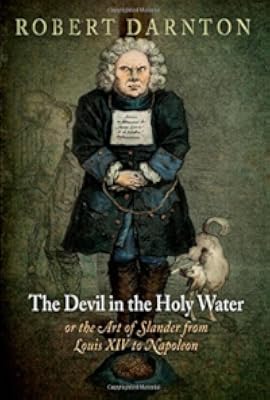
"Slander has always been a nasty business, Robert Darnton notes, but that is no reason to consider it a topic unworthy of inquiry. By destroying reputations, it has often helped to delegitimize regimes and bring down governments. Nowhere has this been more the case than in eighteenth-century France, when a ragtag group of literary libelers flooded the market with works that purported to expose the wicked behavior of the great. Salacious or seditious, outrageous or hilarious, their books and show more pamphlets claimed to reveal the secret doings of kings and their mistresses, the lewd and extravagant activities of an unpopular foreign-born queen, the affairs of aristocrats and men-about-town as they consorted with servants, monks, and dancing masters. These libels often mixed scandal with detailed accounts of contemporary history and current politics. And though they are now largely forgotten, many sold as well as or better than some of the most famous works of the Enlightenment." "Darnton here weaves a tale so full of intrigue that it may seem too extravagant to be true, although all its details can be confirmed in the archives of the French police and diplomatic service. Part detective story, part revolutionary history, The Devil in the Holy Water has much to tell us about the nature of authorship and the book trade, about Grub Street journalism and the shaping of public opinion, and about the important work that scurrilous words have done in many times and places."--Jacket. show lessTags
Recommendations









































Member Recommendations
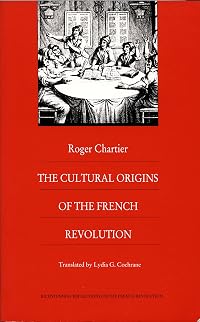
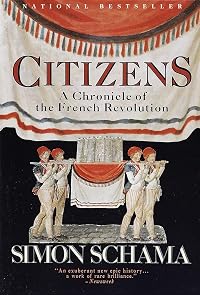
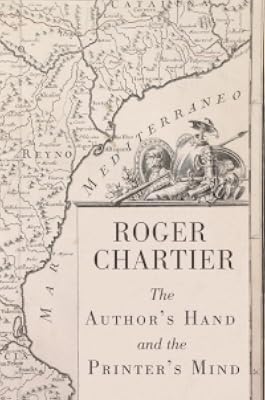
nessreader Both about pre revolutionary paris mentalites; jones claims laughter was primarily about spite and darnton that laughter was a kind of attack
Member Reviews
The Devil in the Holy Water, or the Art of Slander from Louis XIV to Napoleon by Robert Darnton (University of Pennsylvania Press, 2009) is a dense, detailed and utterly captivating history of French libelous publications in the second half of the 18th century. In pre-Revolutionary France, where publishing was tightly controlled (by 1789 the government employed nearly 200 censors, Darnton reports) these anonymous texts (described as "slanderous, tendentious, wicked, indecent, and very good reading", p. 4) were important enough (and sold so well!) to warrant significant attention from those at the highest levels of power in the French government.
Darnton's book, he writes, is designed to "explore this body of literature and the subculture show more that generated it" (p. 5). He adds "The study of slander in eighteenth-century France is particularly revealing because it shows how a literary current eroded authority under an absolute monarchy and became absorbed in a republican political culture ...." (p. 6-7). He begins by offering close visual and textual readings of four interconnected libels, which enable him to trace the trajectory of the genre and provide a useful case study of the cast of characters, conventions used by the authors, &c.
The examples Darnton chooses couldn't have worked better: stretching across the time period under consideration, they offer a wide range of authorial and typographical choices, and allow him to branch out for interrelated expositions at well-paced intervals. This section of the book is accompanied by excellent complementary illustrations, which enhance the text particularly well.
Following the case studies, Darnton reaches more deeply into various components of the story. His examination of the London colony of French libelers and the efforts by the French authorities to put an end to them reads like a thriller novel, complete with undercover agents, (sometimes double and triple agents); bribes; blackmail efforts; attempts to rewrite English law, &c. Darnton's interest in the smuggling industry (which got the printed libels into France) is obvious, and his enthusiasm is infectious.
But Darnton doesn't limit himself to the stories. His strengths as one of the greatest interdisciplinary historians of the book are on full display here: he offers a close bibliographical reading of the ingredients of libels themselves (basically gossip, despotism, and depravity; also, the pages on plagiarism remind me of Lawrence Lessig's "remix" idea), the publishing industry which brought these libels into being, works toward an understanding of how the libels were received by the reading public (strong conclusions are not possible here given the lack of evidence, but he is able to reach some tentative conclusions), and delves deeply into the political and social history of France to point out the important ways in which these texts served to undermine the Ancien Regime. By attacking the personalities of those in power (up to and including the king and queen themselves), and feeding the hunger of the news-starved people for information, the example of these libels, he concludes, help us "understand how authoritarian regimes can be vulnerable to words and how well-placed words can mobilize the mysterious force known as public opinion" (p. 445).
This book also offers various points of focus for future study: Darnton points out Les Bohemiens, the fascinating novel and utterly forgotten Shandyesque novel written by imprisoned libeler the Marquis de Pelleport (anybody up for translating? [update - never mind, Penn's published it - good for them!)], and his contrast between the English reaction to libel and the French is certainly fascinating, among others.
Not a light read, but well worth the effort.
http://philobiblos.blogspot.com/2010/02/book-review-devil-in-holy-water.html show less
Darnton's book, he writes, is designed to "explore this body of literature and the subculture show more that generated it" (p. 5). He adds "The study of slander in eighteenth-century France is particularly revealing because it shows how a literary current eroded authority under an absolute monarchy and became absorbed in a republican political culture ...." (p. 6-7). He begins by offering close visual and textual readings of four interconnected libels, which enable him to trace the trajectory of the genre and provide a useful case study of the cast of characters, conventions used by the authors, &c.
The examples Darnton chooses couldn't have worked better: stretching across the time period under consideration, they offer a wide range of authorial and typographical choices, and allow him to branch out for interrelated expositions at well-paced intervals. This section of the book is accompanied by excellent complementary illustrations, which enhance the text particularly well.
Following the case studies, Darnton reaches more deeply into various components of the story. His examination of the London colony of French libelers and the efforts by the French authorities to put an end to them reads like a thriller novel, complete with undercover agents, (sometimes double and triple agents); bribes; blackmail efforts; attempts to rewrite English law, &c. Darnton's interest in the smuggling industry (which got the printed libels into France) is obvious, and his enthusiasm is infectious.
But Darnton doesn't limit himself to the stories. His strengths as one of the greatest interdisciplinary historians of the book are on full display here: he offers a close bibliographical reading of the ingredients of libels themselves (basically gossip, despotism, and depravity; also, the pages on plagiarism remind me of Lawrence Lessig's "remix" idea), the publishing industry which brought these libels into being, works toward an understanding of how the libels were received by the reading public (strong conclusions are not possible here given the lack of evidence, but he is able to reach some tentative conclusions), and delves deeply into the political and social history of France to point out the important ways in which these texts served to undermine the Ancien Regime. By attacking the personalities of those in power (up to and including the king and queen themselves), and feeding the hunger of the news-starved people for information, the example of these libels, he concludes, help us "understand how authoritarian regimes can be vulnerable to words and how well-placed words can mobilize the mysterious force known as public opinion" (p. 445).
This book also offers various points of focus for future study: Darnton points out Les Bohemiens, the fascinating novel and utterly forgotten Shandyesque novel written by imprisoned libeler the Marquis de Pelleport (anybody up for translating? [update - never mind, Penn's published it - good for them!)], and his contrast between the English reaction to libel and the French is certainly fascinating, among others.
Not a light read, but well worth the effort.
http://philobiblos.blogspot.com/2010/02/book-review-devil-in-holy-water.html show less
Ratings
Members
- Recently Added By
Author Information

46+ Works 4,382 Members
Robert Darnton is Carl H. Pforzheimer University Professor and University Librarian, Emeritus, at Harvard University. His honors include a MacArthur Prize, the National Humanities Medal, the Los Angeles Times Book Prize, and the National Book Critics Circle Award.
Awards and Honors
Awards
Series

Belongs to Publisher Series
Common Knowledge
- Canonical title*
- Le Diable dans un bénitier. L'art de la calomnie en France, 1650-1800
- Important places
- France
- Original language
- English
*Some information comes from Common Knowledge in other languages. Click "Edit" for more information.
Classifications
- Genres
- Literature Studies and Criticism, Fiction and Literature, History
- DDC/MDS
- 840.9 — Literature & rhetoric French Literature French literature and literatures of related Romance languages History, description
- LCC
- PQ265 .D3675 — Language and Literature French, Italian, Spanish and Portuguese literatures French literature Modern
- BISAC
Statistics
- Members
- 80
- Popularity
- 397,195
- Reviews
- 1
- Rating
- (4.21)
- Languages
- English, French, Portuguese, Spanish
- Media
- Paper, Ebook
- ISBNs
- 5
- ASINs
- 2