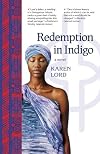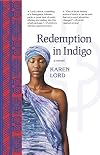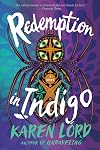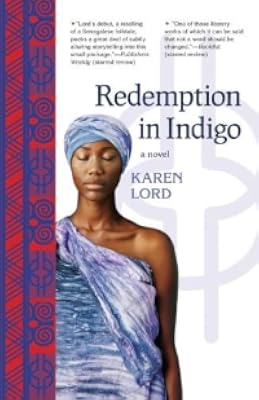
Redemption in Indigo
by Karen Lord 
On This Page
Description
"Paama is a marvelous cook who's had the bad fortune to marry Ansige. He was the least eligible bachelor in his village: self-centered, foolish, and food-obsessed. Paama has had enough of this miserable life with her gluttonous husband, and so leaves him to return to her old life with her family. But Paama does not know that this is the beginning of a remarkable adventure. Because the Undying Ones are watching her. These spirits observe the follies of mortal life . . . and sometimes meddle show more and make mischief. One of these beings presents her with a magical artifact known as the Chaos Stick, which he says is "great for stirring things up." As Paama gets to know the powers of this marvelous gift, she learns that the Chaos Stick was stolen from a rival spirit, who decides to stir up some trouble of his own. But mastering this magical artifact is only the beginning of Paama's quest. Although Paama has been granted great power by the Undying Ones, her real journey is to find the magic that lies within herself" -- show lessTags
Recommendations



Member Recommendations
Member Reviews
The exact moment I fell in love with this book was on p. 15, the paragraph that goes, "I know your complaint already. You are saying, how do two grown men begin to see talking spiders after only three glasses of spice spirit? My answer is twofold. First, you have no idea how strong spice spirit is made in that region..." Entertaining and thoughtful and damn well-written books that don't suffer from TMWP* that are also sf/f (or at least flavored by the Genre) are somewhat hard to find, and I'm getting pickier as I get older. Please, Karen Lord, keep writing, 'cause you're my new favorite. I love you just as much as I love China Mieville and Nnedi Okorafor.
* Too many white people.
* Too many white people.
This is another book that had been on my to-read list for ages, and I had seen it included on so many lists of recommended books on bookstagram and list challenges. I was literally just walking through the speculative fiction section in the library on my way to check out when this book caught my eye on the shelves and I added it to my stack.
I was so charmed from the very first sentence all the way to the last. Tricksters and immortal spirits and humans collide in a story drawing from a variety of influences, including a Senegalese folk tale, in a way that ends up feeling timeless.
Paama has run away from her husband, who is a fool and a glutton. Paama has an extraordinary gift for cooking, and also an extraordinary talent for being able show more to put up with a ridiculous level of nonsense while staying within the constraints of what is expected of her as a wife, a daughter, a woman of her community. It is for the latter gift that she attracts the attention of the undying ones, who give her a gift with extraordinary powers -- the Chaos Stick. Unfortunately, this is not the end of her challenges, but rather just the middle.
The prose is a joy and the characters are fascinating. Paama could easily be the kind of character who is so perfect and self-sacrificing that it is hard to identify with or root for her, but the no nonsense ways she does stick u0 for herself make her more interesting. And the side characters, even the most terrible of them, we gain a little empathy for by the end. and many of them grow and meet their match and turn out to be less silly than they at first seemed.
Such a satisfying tale! show less
I was so charmed from the very first sentence all the way to the last. Tricksters and immortal spirits and humans collide in a story drawing from a variety of influences, including a Senegalese folk tale, in a way that ends up feeling timeless.
Paama has run away from her husband, who is a fool and a glutton. Paama has an extraordinary gift for cooking, and also an extraordinary talent for being able show more to put up with a ridiculous level of nonsense while staying within the constraints of what is expected of her as a wife, a daughter, a woman of her community. It is for the latter gift that she attracts the attention of the undying ones, who give her a gift with extraordinary powers -- the Chaos Stick. Unfortunately, this is not the end of her challenges, but rather just the middle.
The prose is a joy and the characters are fascinating. Paama could easily be the kind of character who is so perfect and self-sacrificing that it is hard to identify with or root for her, but the no nonsense ways she does stick u0 for herself make her more interesting. And the side characters, even the most terrible of them, we gain a little empathy for by the end. and many of them grow and meet their match and turn out to be less silly than they at first seemed.
Such a satisfying tale! show less
Barbadian author Karen Lord takes the Senegalese folk tale "Ansige Karamba the Glutton" and uses it as a way of injecting her main character into her own fable of responsibility and redemption. The story is filled with Anansi tricksters, with personifications of Chance and Patience, and all the other demiurges that make the world work. It is filled with human beings, none perfect, many comical, all of whom recognizable to the reader.
It's also filled with a great deal of sly and gentle humor. Plus, of course, the moral lessons. Some readers may find the story a bit bland in the way that those sort of tales often are, and dread the inevitable Point (with a capital P). Lord knows this; as her narrator says, "There are those who utterly, show more utterly fear the dreaded Moral of the Story...Everything teaches, everyone preaches, all have a gospel to sell! Better the one who is honest and open in declaring an agenda than the one who fools you into believing that they are only spinning a pretty fancy for beauty’s sake."
To be honest, I didn't like her saying that. I prefer my parables to be unapologetic and unconfrontational about what they are: Here is what I wrote; if you like it then I'm glad and, if you didn't, then I guess you won't read my next story. Still, it didn't really diminish my enjoyment of this entertaining and humorous tale that seems surprisingly self-assured for a debut novel. There is something of the feel of oral tradition in this book, of the folk tale rather than magical realism — although darned if I know where to draw the line between those two — that appealed to me.
I hear her subsequent works are different in tone and style. I look forward to seeing what else she can do as I add her to the growing list of Caribbean authors of speculative fiction whom I appreciate. show less
It's also filled with a great deal of sly and gentle humor. Plus, of course, the moral lessons. Some readers may find the story a bit bland in the way that those sort of tales often are, and dread the inevitable Point (with a capital P). Lord knows this; as her narrator says, "There are those who utterly, show more utterly fear the dreaded Moral of the Story...Everything teaches, everyone preaches, all have a gospel to sell! Better the one who is honest and open in declaring an agenda than the one who fools you into believing that they are only spinning a pretty fancy for beauty’s sake."
To be honest, I didn't like her saying that. I prefer my parables to be unapologetic and unconfrontational about what they are: Here is what I wrote; if you like it then I'm glad and, if you didn't, then I guess you won't read my next story. Still, it didn't really diminish my enjoyment of this entertaining and humorous tale that seems surprisingly self-assured for a debut novel. There is something of the feel of oral tradition in this book, of the folk tale rather than magical realism — although darned if I know where to draw the line between those two — that appealed to me.
I hear her subsequent works are different in tone and style. I look forward to seeing what else she can do as I add her to the growing list of Caribbean authors of speculative fiction whom I appreciate. show less
Redemption in Indigo is a short novel inspired by African folklore. Paama has left her foolish and gluttonous husband, Ansige, and refuses to return to him. When he tries to win her back and instead makes a complete fool of himself, the djombi (spirits/gods) are so impressed with the way she handles the situation that they give her a gift of great power. But the djombi that it was taken from, the Indigo Lord wants it back, and badly.
I love the narrative style of this book – it takes the folktale inspiration and runs with it, it’s just like a storyteller was sitting in the room with you and telling you a story. We meander back and forth in time and point of view, and the narrator is quite opinionated at times. Paama is a terrific show more heroine, she’s calm, kind, and intuitively knows that the best thing to do with power is not use it. She’s also pragmatic – when the djombi threatens her family and asks her to give him the stick, she immediately hands it over. Of course, things aren’t that simple, since she actually has to believe that he’s the better person to wield it, and that’s the titular “redemption” of the story.
On the surface this story seems really simple, but there are a lot of layers and side plots – Anansi’s troubles with tricking people (yes, Anansi’s in this book!), Paama’s self-centered sister and her search for an eligible husband, the extremely competent House of Sisters that help Paama out. There’s not a lot of time spent of these, but they’re full of heart and the author’s deft characterization makes the characters seem like people you know pretty well.
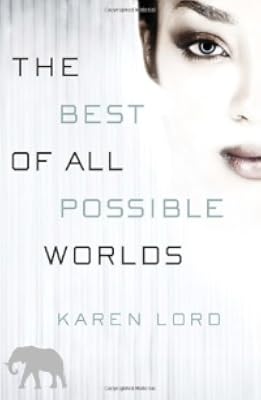
Redemption in Indigo is very different from the other Karen Lord book I’ve read, The Best of All Possible Worlds, but it’s just as warm and well-told.
Comment show less
I love the narrative style of this book – it takes the folktale inspiration and runs with it, it’s just like a storyteller was sitting in the room with you and telling you a story. We meander back and forth in time and point of view, and the narrator is quite opinionated at times. Paama is a terrific show more heroine, she’s calm, kind, and intuitively knows that the best thing to do with power is not use it. She’s also pragmatic – when the djombi threatens her family and asks her to give him the stick, she immediately hands it over. Of course, things aren’t that simple, since she actually has to believe that he’s the better person to wield it, and that’s the titular “redemption” of the story.
On the surface this story seems really simple, but there are a lot of layers and side plots – Anansi’s troubles with tricking people (yes, Anansi’s in this book!), Paama’s self-centered sister and her search for an eligible husband, the extremely competent House of Sisters that help Paama out. There’s not a lot of time spent of these, but they’re full of heart and the author’s deft characterization makes the characters seem like people you know pretty well.
Redemption in Indigo is very different from the other Karen Lord book I’ve read, The Best of All Possible Worlds, but it’s just as warm and well-told.
Comment show less
It's hard to sustain the cadences and colloquialisms of a traditionally told fairy tale for the length of a novel, harder still to make it accessible - indeed comfortable and charming - for the modern reader, and hardest of all if the language and culture from which the story is extracted are foreign to most of its likely audience. And yet, with Redemption in Indigo, Karen Lord has done just that. A Barbadian writer building her story from a Senegalese folk tale, the Caribbean and African rhythms thrum gently from the first page to the last. We can hear them in the amused scolding of children, feel them in the dusty warmth of the breeze, smell them in the mouthwatering odours of her heroine Paama's cooking.
Most writers in English who show more work with myth and legend as their source material are firmly based in northern European and Greek traditions; those few who have taken inspiration from what we used to call the Dark Continent have more often than not betrayed - however innocently and unintentionally - their inherited prejudices and presumptions in the way they have recrafted the material. Lord's authenticity, her delight in her characters and her sure handling of the more ambiguous and nuanced moral terrain of these tales, are a breath of fresh air. The central theme of her story is not the grandiose good vs. evil to which we have become accustomed in our modern retelling of myth; it's not even the only slightly more subtle notion of right or wrong. It is the far more real human conundrum of deciding what is better or worse from a range of less than ideal options. It's about choices and consequences, small sacrifices and self-inflicted damage, the dangers of cynicism and the redemptive power of simply trying to do your best. It's told firmly but gently, with a lot of humour and a bit of heartbreak. It's a lovely tale from a wonderful writer. I'm looking forward to more from her. show less
Most writers in English who show more work with myth and legend as their source material are firmly based in northern European and Greek traditions; those few who have taken inspiration from what we used to call the Dark Continent have more often than not betrayed - however innocently and unintentionally - their inherited prejudices and presumptions in the way they have recrafted the material. Lord's authenticity, her delight in her characters and her sure handling of the more ambiguous and nuanced moral terrain of these tales, are a breath of fresh air. The central theme of her story is not the grandiose good vs. evil to which we have become accustomed in our modern retelling of myth; it's not even the only slightly more subtle notion of right or wrong. It is the far more real human conundrum of deciding what is better or worse from a range of less than ideal options. It's about choices and consequences, small sacrifices and self-inflicted damage, the dangers of cynicism and the redemptive power of simply trying to do your best. It's told firmly but gently, with a lot of humour and a bit of heartbreak. It's a lovely tale from a wonderful writer. I'm looking forward to more from her. show less
I liked this book: a lot. I've been working on expanding the ethnic/cultural/sociological base of my reading, and this book fits in nicely to that scheme. There is something deeply appealing to me about the African-based/flavored/inspired fantasy I've read.
Redemption in Indigo is simply lovely. I didn't buy into the initial "narrator addressing the reader" bit at the beginning, as I tend to doubt novels that lean on the narrator as an additional "character." Often it yields distracting commentary that rubs raw spots in my brain. The narrator works fine in this novel, though, and Lord never lets it get out of control.
The actual story-telling voice is very nice. Easy to read, fun to read... I found myself searching out moments to read show more this little book. The negative part of this is that it's a slim novel, so I was done in a couple short days. Boo! I would have liked more!
And yet: we have grown accustomed to novels that are bloated, fattened, full of authorly self-aggrandizement and a perceived preciousness of language, which, in the end, dilutes the core of a story. Lord doesn't do that. This is story, and moral, and magic and love and loss... it's realization and redemption and all of that in a neat 188 page package. How much I respect a novel that doesn't pretend that bigger is better!
Redemption in Indigo is just right. show less
Redemption in Indigo is simply lovely. I didn't buy into the initial "narrator addressing the reader" bit at the beginning, as I tend to doubt novels that lean on the narrator as an additional "character." Often it yields distracting commentary that rubs raw spots in my brain. The narrator works fine in this novel, though, and Lord never lets it get out of control.
The actual story-telling voice is very nice. Easy to read, fun to read... I found myself searching out moments to read show more this little book. The negative part of this is that it's a slim novel, so I was done in a couple short days. Boo! I would have liked more!
And yet: we have grown accustomed to novels that are bloated, fattened, full of authorly self-aggrandizement and a perceived preciousness of language, which, in the end, dilutes the core of a story. Lord doesn't do that. This is story, and moral, and magic and love and loss... it's realization and redemption and all of that in a neat 188 page package. How much I respect a novel that doesn't pretend that bigger is better!
Redemption in Indigo is just right. show less
"Tales are meant to be an inspiration, not a substitute."
A full-length fairy tale inspired by African - Caribbean myths, specifically the Senegalese folktale, "Ansige Karamba the Glutton." Redemption in Indigo swept me off my feet yet I felt totally grounded each time I read its words. I loved every minute and the pages flew by! The narrator's voice is at times snarky which cracked me up, and I loved the POV. It really felt like I was sitting beside the narrator while they told the story and the events unfolded before my eyes. I look forward to reading this again -- probably next summer.
4 stars
"Leaner days, too, if truth be told, but Kwame had always found liberty more satisfying than comfort."
"Don't be startled at the galloping logic show more in the last thought. The will is usually in a hurry to get to the point of justification."
"Thus several names had come to be attached to these immortal beings as they wrought both mystery and mischief through all countries, cultures, and centuries of humanity. Since the story is about Paama, we will use her country's name for them--the djombi."
"I have mentioned previously the three different categories of undying ones. Never assume that these categories represent boundaries that are never crossed or lines that cannot be redrawn. It is not the known danger that we most fear, the shark that patrols the bay, the lion that rules the savannah. It is the betrayal of what we trust and hold close to our hearts that is our undoing: the captain who staves in the boat, the king who sells his subjects into slavery, the child who murders the parent."
"So, trust him not, but do not believe that all his actions are intended for the ruin of those affected, human or djombi. I, too, shall have to wait until the tale is fully told before I can be sure which way he will turn." (speaking on The Trickster)
"'Some humans find it so. There will be no death, I promise you, but there will be severe embarrassment, which is but a small death of the ego.'"
"'I find that sometimes if you just sit still, things have a way of finding you before you can find them.'"
"'If you don't mind yourself,' she began again deliberately, 'if you don't learn to control yourself, the baccou will steal your skin and behave so badly that even you will be ashamed of yourself.'"
"...'You must never tell people their own stories. They have no interest in them, or they think they can tell them better themselves. Give them a stranger's life, and then they're content.'"
"For others the tale is a way of living vicariously, enjoying the adventures of others without having to go one step beyond their sphere of comfort. To them I say: what's stopping you from getting on a ship and sailing halfway around the world? Tales are meant to be an inspiration, not a substitute." show less
A full-length fairy tale inspired by African - Caribbean myths, specifically the Senegalese folktale, "Ansige Karamba the Glutton." Redemption in Indigo swept me off my feet yet I felt totally grounded each time I read its words. I loved every minute and the pages flew by! The narrator's voice is at times snarky which cracked me up, and I loved the POV. It really felt like I was sitting beside the narrator while they told the story and the events unfolded before my eyes. I look forward to reading this again -- probably next summer.
4 stars
"Leaner days, too, if truth be told, but Kwame had always found liberty more satisfying than comfort."
"Don't be startled at the galloping logic show more in the last thought. The will is usually in a hurry to get to the point of justification."
"Thus several names had come to be attached to these immortal beings as they wrought both mystery and mischief through all countries, cultures, and centuries of humanity. Since the story is about Paama, we will use her country's name for them--the djombi."
"I have mentioned previously the three different categories of undying ones. Never assume that these categories represent boundaries that are never crossed or lines that cannot be redrawn. It is not the known danger that we most fear, the shark that patrols the bay, the lion that rules the savannah. It is the betrayal of what we trust and hold close to our hearts that is our undoing: the captain who staves in the boat, the king who sells his subjects into slavery, the child who murders the parent."
"So, trust him not, but do not believe that all his actions are intended for the ruin of those affected, human or djombi. I, too, shall have to wait until the tale is fully told before I can be sure which way he will turn." (speaking on The Trickster)
"'Some humans find it so. There will be no death, I promise you, but there will be severe embarrassment, which is but a small death of the ego.'"
"'I find that sometimes if you just sit still, things have a way of finding you before you can find them.'"
"'If you don't mind yourself,' she began again deliberately, 'if you don't learn to control yourself, the baccou will steal your skin and behave so badly that even you will be ashamed of yourself.'"
"...'You must never tell people their own stories. They have no interest in them, or they think they can tell them better themselves. Give them a stranger's life, and then they're content.'"
"For others the tale is a way of living vicariously, enjoying the adventures of others without having to go one step beyond their sphere of comfort. To them I say: what's stopping you from getting on a ship and sailing halfway around the world? Tales are meant to be an inspiration, not a substitute." show less
Members
- Recently Added By
Published Reviews
ThingScore 75
Inspired by a Senegalese folktale, Redemption in Indigo is the perfect antidote to the formula fantasies currently flooding the market. When Paama finally leaves her husband Ansige after 10 years of marriage, he follows her in an attempt to win her back. After a series of humorous, often slapstick episodes in which foolish Ansige gets himself into deeper trouble, only to be extricated by show more Paama, the watching djombi spirits give Paama the Chaos Stick which allows her to affect chance and probability. However, the Indigo Lord wants the stick back, kidnaps Paama, takes her on a wondrous tour and attempts to impress her with his magic. Précis fails to do justice to the novel's depth, beauty and elegant simplicity. Written from the point of view of an omniscient storyteller in the style of an oral narrative, this is a subtle, wise and playful meditation on life and fate. show less
added by souloftherose
Lists

Top Five Books of 2020
982 works; 350 members

Top Five Books of 2018
802 works; 265 members

Black Authors
384 works; 32 members

Diversity in Fantasy and Science Fiction
219 works; 33 members

Bookriot's 100 Must-Read Sci-Fi Fantasy Novels By Female Authors
100 works; 9 members

SHOULD Read Books!
354 works; 9 members

LIBROS DE CIENCIA FICCIÓN Y FANTASIA
60 works; 1 member

Modern Fantasy Novels based on Non-Western Mythology or Folklore
24 works; 7 members

Recommended Speculative Fiction by Women and People of Color
298 works; 45 members

KayStJ's to-read list
1,616 works; 11 members

Fantasy by Women Who Broke Away from Europe
144 works; 12 members

Africa
109 works; 8 members

Speculative Fiction from around the World
610 works; 18 members

Best Cozy Fantasy
46 works; 8 members

Favorite Fairy Tales
269 works; 103 members
Author Information

18+ Works 2,284 Members
Karen Lord is a LibraryThing Author, an author who lists their personal library on LibraryThing.
Some Editions
Awards and Honors
Awards
Distinctions
Notable Lists
Common Knowledge
- Canonical title
- Redemption in Indigo
- Original title
- Redemption in Indigo
- Original publication date
- 2010
- People/Characters
- Paama; Ansige; Chance; Trickster; Kwame
- Dedication
- To the memory of my mother, Muriel Haynes Lord
- First words
- A rival of mine once complained that my stories begin awkwardly and end untidily.
- Quotations
- Chaos was a far subtler force than most people realised. It would be so easy to sense if it threw off thunderbolts or sent barely sensed thrummings through the fabric of reality, but it was nothing more than the possible made... (show all) probable.
- Last words
- (Click to show. Warning: May contain spoilers.)He even tried a slice of the end result on Constancy, the family cat, and she too seemed to agree that he might yet have a future in the art of providing humans with sustenance.
- Original language
- English
Classifications
Statistics
- Members
- 715
- Popularity
- 39,777
- Reviews
- 50
- Rating
- (3.93)
- Languages
- English, Spanish
- Media
- Paper, Audiobook, Ebook
- ISBNs
- 15
- ASINs
- 8