On This Page
Description
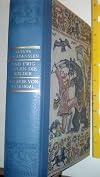
Het geslacht Bjrndal by Trygve E. Gulbranssen (1979)Tags
Recommendations














Member Recommendations
by anonymous user
Member Reviews
In the version I have there's an In Memoriam text at the end of it. It quotes Eugenia Kielland, who apparently wrote something called "Aftenposten", and a translated paragraph of that is quoted:
"Midden in de harde en dertiger jaren, die voorafgingen aan de tweede wereldoorlog, zond hij zijn Bjorndaltrilogie de wereld in, boeken vol romantiek en mystiek, sterk van traditie en schoonheid.
In heel veel opzichten deed dit alles goed in een periode waarin de literatuur voor een aanzienlijk deel in het teken stond van de erotiek zonder meer."
In english, I guess that quote can be summarized as: in the 1930's in which the literature was dominated by eroticism, the author wrote books full of romance, mysticism, tradition and beauty.
And this show more surprized me, on several levels. I may start to check out what kinds of books appeared on the erotica front in the 1920's and earlier to understand what this comment refers to.
Perhaps it was meant to refer to the 'wholesomeness' of this novel. It is wholesome.
I gather, again from the in memoriam, that the author thought the last part in the trilogy was his best work. Certainly the sentiment of what life is all about, described from a christian viewpoint, is most present in this last part.
The trilogy is a slow story. Slow words, Slow sentences. Not slow in a bad way. Slow as in timeless, or rather representative of the time in which a chestnut tree grows and dies, the time it takes a peaking mountain to level off over eons. That kind of slow. The good slow.
The kind of slow, also, of a time period in which there was no television for entertainment. The time when more words is better. Because more words on more pages means more time to savour.
The tale is about strong men, strong women, morose men and women, harsh landscapes, surviving, pride, hard work, strong words, strong emotions, tightlipped silences, silent tensions.
Shallow and deep feelings intermingle. Smart and stupid things to do. Emotional and rational decisions made. Regrets and hopes. Times lost through negligence and times regained through memory.
It seems a tale of a type of people who may not exist anymore, but whose sentiments and attitudes I seem to recognize among the older (long deceased) members of my own family.
But simultaneously it also seems a timeless tale. Regardless of when it was written, and regardless of the time period in which it is set. It speaks of emotions and actions we all have from time to time, the daily struggles of how to live and be a person in the world.
Above all it is a well written tale.
I am glad I finally read it. show less
"Midden in de harde en dertiger jaren, die voorafgingen aan de tweede wereldoorlog, zond hij zijn Bjorndaltrilogie de wereld in, boeken vol romantiek en mystiek, sterk van traditie en schoonheid.
In heel veel opzichten deed dit alles goed in een periode waarin de literatuur voor een aanzienlijk deel in het teken stond van de erotiek zonder meer."
In english, I guess that quote can be summarized as: in the 1930's in which the literature was dominated by eroticism, the author wrote books full of romance, mysticism, tradition and beauty.
And this show more surprized me, on several levels. I may start to check out what kinds of books appeared on the erotica front in the 1920's and earlier to understand what this comment refers to.
Perhaps it was meant to refer to the 'wholesomeness' of this novel. It is wholesome.
I gather, again from the in memoriam, that the author thought the last part in the trilogy was his best work. Certainly the sentiment of what life is all about, described from a christian viewpoint, is most present in this last part.
The trilogy is a slow story. Slow words, Slow sentences. Not slow in a bad way. Slow as in timeless, or rather representative of the time in which a chestnut tree grows and dies, the time it takes a peaking mountain to level off over eons. That kind of slow. The good slow.
The kind of slow, also, of a time period in which there was no television for entertainment. The time when more words is better. Because more words on more pages means more time to savour.
The tale is about strong men, strong women, morose men and women, harsh landscapes, surviving, pride, hard work, strong words, strong emotions, tightlipped silences, silent tensions.
Shallow and deep feelings intermingle. Smart and stupid things to do. Emotional and rational decisions made. Regrets and hopes. Times lost through negligence and times regained through memory.
It seems a tale of a type of people who may not exist anymore, but whose sentiments and attitudes I seem to recognize among the older (long deceased) members of my own family.
But simultaneously it also seems a timeless tale. Regardless of when it was written, and regardless of the time period in which it is set. It speaks of emotions and actions we all have from time to time, the daily struggles of how to live and be a person in the world.
Above all it is a well written tale.
I am glad I finally read it. show less
SAGA FAMILIALE ENTREV1760 ET 1810
Bevat : En eeuwig zingen de bossen
Winden waaien om de rotsen
De weg tot elkander
Winden waaien om de rotsen
De weg tot elkander
Knihu jsem už okomentoval u jednotlivých částí trilogie a tady tedy pouze stručně. Psychologie postav je nevěrohodná, popisované historické reálie místy dosti nesedí, popisy přírody i lidí jsou podivně prázdné a povrchní, celý text je plný "hloubavých" úvah, které jsou ale ve skutečnosti a ve výsledku poměrně jalové a celé se to šíleně táhne... Jen fakt, že běžně knihy dočítám, mi zabránil to odložit. Samozřejmě, ne že by mi to nic nedalo, ale to málo zase není tolik. Pokud hledáte naturalisticky drsnou knihu "ze severu", přečtěte si Bojerovi "Lidé u moře". Tohle je dvakrát tak dlouhé a přitom daleko hůře napsané... Ale co, kdysi jsem "Gulbanssena" zachránil z kontejneru na show more papír, tak teď poputuje do knihobudky... Celkový doje: 65% show less
Jun 2, 2022Czech
De onvergelijkelikle trilogie:
1.EN EEUWIG ZINGEN DE BOSSEN
2.WINDEN WAAIEN OM DE ROTSEN
3.DE WEG TOT ELKANDER
Niet alleen weet de schrijver op onnavolgbare wijze de sfeer
van het ruige Noorse land met zijn diepe fjoren, zijn met
sneeuw bedekte ber-gen en de schier oneindige, donkere
wouden te treffen maar ook plaatste hij tegen deze
majestueuze achtergrond zijn mensen, met hun stoere, vaak
ontoegankelijke karakters, die in hun onstuimigheid aan
het wilde bruisen van de watervallen herinneren. En wellicht
het grootste geheim van zijn kunstenaarschap legde.
Gulbranssen in het machtige spel van de menselijke
gevoelens.
Zo werden de centrale figuren in dit boek - de oude Dag,
hard en trots waar het zijn eer betreft, ongebroken in zijn
tegenslag, maar
ook show more verheven in zijn moeizaam verworven wijsheid, zijn
schoondochter
Adelheid, de jonge vrouw, die met liefde en karakterkracht
zoveel ten
goede weet te keren en ten slotte de jonge Dag, de in
zichzelf ge- keerde, geboren jager, met de eeuwige
zwerflust, in zijn bloed - onvergetelijk voor ons. show less
1.EN EEUWIG ZINGEN DE BOSSEN
2.WINDEN WAAIEN OM DE ROTSEN
3.DE WEG TOT ELKANDER
Niet alleen weet de schrijver op onnavolgbare wijze de sfeer
van het ruige Noorse land met zijn diepe fjoren, zijn met
sneeuw bedekte ber-gen en de schier oneindige, donkere
wouden te treffen maar ook plaatste hij tegen deze
majestueuze achtergrond zijn mensen, met hun stoere, vaak
ontoegankelijke karakters, die in hun onstuimigheid aan
het wilde bruisen van de watervallen herinneren. En wellicht
het grootste geheim van zijn kunstenaarschap legde.
Gulbranssen in het machtige spel van de menselijke
gevoelens.
Zo werden de centrale figuren in dit boek - de oude Dag,
hard en trots waar het zijn eer betreft, ongebroken in zijn
tegenslag, maar
ook show more verheven in zijn moeizaam verworven wijsheid, zijn
schoondochter
Adelheid, de jonge vrouw, die met liefde en karakterkracht
zoveel ten
goede weet te keren en ten slotte de jonge Dag, de in
zichzelf ge- keerde, geboren jager, met de eeuwige
zwerflust, in zijn bloed - onvergetelijk voor ons. show less
Apr 1, 2007Dutch
Dit verhaal gaat over een Noorse herenboer die met ijzeren hand heerst over zijn pachters en gebrouilleerd raakt met zijn rivaal, de overste Von Gall. Pas na de dood van zijn vrouw gaat hij een milder regime over de buurtschap voeren, maar hij komt niet dichter tot zijn zoon, waarmee hij moeilijk contact heeft en die hij niet voor vol aanziet. Deze heeft zijn eigen ideeën hoe je met pachters omgaat en voelt zich na zijn vaders dood vleugellam, maar na een huwelijkscrisis wordt dat opgelost. Na de dood van de jonge Dag besluit zijn weduwe in overleg met haar tante zijn laatste wil uit te voeren.
Sep 7, 2010Dutch
Bjørndal heter gården der hovedpersonene i fortellingen holder til i utkanten av en rik bygd, ikke langt fra fjellet, med jakt og skogsdrift som viktigste næringsvei. Dype konflikter med stormenn i flatbygda nedenfor har ført til stolthet og stivsinn, og særlig er Gammel-Dag utfordret når sønnen Dag kommer hjem med nye impulser.
Oct 26, 2008Norwegian
Members
- Recently Added By
Author Information

Some Editions
Series

Work Relationships
Common Knowledge
- Canonical title
- The Bjorndal Cycle
- Original title
- Og bakom synger skogene ; Det blåser fra Dauingfjell ; Ingen vei går utenom
- Original publication date
- 1933-1935
- Related movies*
- Und ewig singen die Wälder (1959 | IMDb); Das Erbe von Björndal (1960 | IMDb)
- Original language
- Norwegian
*Some information comes from Common Knowledge in other languages. Click "Edit" for more information.
Classifications
Statistics
- Members
- 104
- Popularity
- 311,849
- Reviews
- 8
- Rating
- (4.00)
- Languages
- 6 — Czech, Dutch, English, German, Norwegian (Bokmål), Norwegian
- Media
- Paper, Ebook
- ISBNs
- 9
- ASINs
- 6