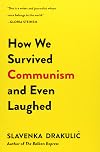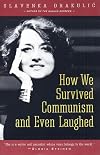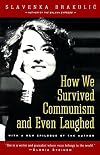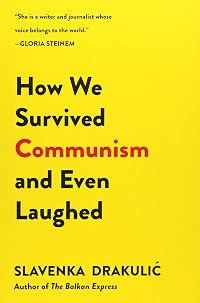
How We Survived Communism and Even Laughed
by Slavenka Drakulic
On This Page
Description
This essay collection from renowned journalist and novelist Slavenka Drakulic, which quickly became a modern (and feminist) classic, draws back the Iron Curtain for a glimpse at the lives of Eastern European women under Communist regimes. Provocative, often witty, and always intensely personal, How We Survived Communism and Even Laughed cracks open a paradoxical world that through its rejection of capitalism and commoditization ends up fetishizing both. Examining the relationship between show more material goods and expressions of happiness and individuality in a society where even bananas were an alien luxury, Drakulic hones in on the eradication of female identity, drawing on her own experiences as well as broader cultural observations. Enforced communal housing that allowed for little privacy, the banishment of many time-saving devices, and a focus on manual labor left no room for such bourgeois affectations as cosmetics or clothes, but Drakulic's remarkable exploration of the reality behind the rhetoric reveals that women still went to desperate lengths to feel "feminine." How We Survived Communism and Even Laughed also chronicles the lingering consequences of such regimes. The Berlin Wall may have fallen, but Drakulic's power pieces testify that ideology cannot be dismantled so quickly; a lifetime lived in fear cannot be so easily forgotten. show lessTags
Recommendations











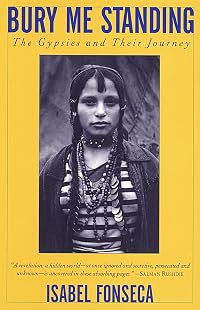
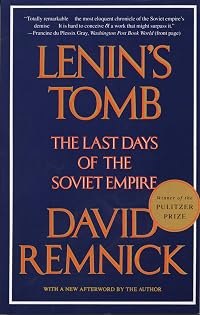
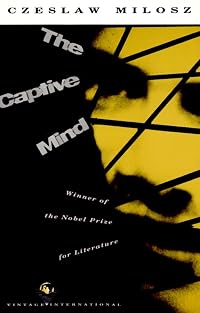

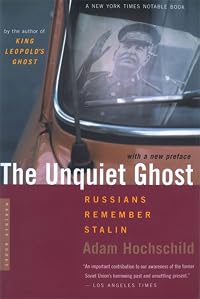







Member Recommendations
Member Reviews
A set of essays written to try to give western readers a sense of what the real experience of life in communist eastern Europe was like. Drakulić likes to build out to political conclusions from banal observations of domestic life — the sociology of communist toilet-paper, the way housing shortages and the inability to move away from your parents makes it more difficult to be a radical, the way the eavesdropping neighbours in the post office queue reflect the phone-tapping operation in the back room, and the way it's difficult to focus on being a feminist in a country that never has feminine hygiene products available in the shops, even when you are living in a culture that supposedly celebrates the equality of men and women.
The show more treatment is engaging, witty and very sharp, but I kept getting the feeling that she had an excessively rosy idea of western consumerism. Maybe the only westerners she knew were rich American professors and journalists: I'm younger than she is, but I can clearly remember times when clothes were washed by hand and wound through a mangle, irons were heated on a coal range, and grandmothers obsessively collected plastic bags, glass jars, and shoeboxes for re-use. And darned stockings on a wooden mushroom. None of that strikes me as particularly communist — it's simply how people lived who had been through the deprivations of World War II.
Of course, the real elephant in the room of this book is the Balkan war that broke out just after Drakulić finished writing it. We have that in the backs of our minds all the time she is going on about celebrating Tito's birthday, applying for a phone line, or voting in the first free elections. Her editor asked her for an afterword for the second edition, but she clearly wasn't in any mood to try to reduce the political and military situation to a neat essay: she responded with a very moving letter in which she meditates on how difficult it is to come to terms with the idea that one is living in the middle of a full-scale war, something she knows intellectually can't possibly happen in post-WWII Europe. But is happening outside her window. show less
The show more treatment is engaging, witty and very sharp, but I kept getting the feeling that she had an excessively rosy idea of western consumerism. Maybe the only westerners she knew were rich American professors and journalists: I'm younger than she is, but I can clearly remember times when clothes were washed by hand and wound through a mangle, irons were heated on a coal range, and grandmothers obsessively collected plastic bags, glass jars, and shoeboxes for re-use. And darned stockings on a wooden mushroom. None of that strikes me as particularly communist — it's simply how people lived who had been through the deprivations of World War II.
Of course, the real elephant in the room of this book is the Balkan war that broke out just after Drakulić finished writing it. We have that in the backs of our minds all the time she is going on about celebrating Tito's birthday, applying for a phone line, or voting in the first free elections. Her editor asked her for an afterword for the second edition, but she clearly wasn't in any mood to try to reduce the political and military situation to a neat essay: she responded with a very moving letter in which she meditates on how difficult it is to come to terms with the idea that one is living in the middle of a full-scale war, something she knows intellectually can't possibly happen in post-WWII Europe. But is happening outside her window. show less
I liked this collection of articles better than Cafe Europa. Here she seems much less whining, most of the vignettes are touching, written with sensitivity and quiet humor. She focuses on the dismal lives of women under the Communist rule, and how the failure of the system to ensure even the basics of "decent" living ultimately led to its failure. The book's flaw, though, is its tendency to oversimplify the explanation behind regime failure, and lack of acknowledgment that there are far more nuances and more complex factors at work.
I don't really recall how this book made its way into my collection. Though given the topic, I suspect my sister, Jessa, may have been involved. This book is a collection of essays about what life was like for women in Eastern Europe under Communist regimes. These stories are mostly about deprivation: sharing small apartments with multiple families, the changing availability of toilet paper, repairing nylons over and over and over again, hoarding food, supplies, even plastic bags, because you never know when they will disappear from the stores. A Western reporter visits, and notes in her article as a sign of their deprivation that women still wash their clothing in tubs of boiling water here, and Drakulić is annoyed, devoting an entire show more essay to laundry.
There is some devoted to the consequences of communism that are already familiar to us -- the censors, the party line, the extensive wire-tapping, the government-controlled media. But precisely because these are the known stories, Drakulić brings them all back to how they affect women. It takes a while to sink in that no matter how many Cold Ware movies we've seen, no matter how many fat Russian novels we've read, these stories are new. Even now, ten years after it was written, this book is still a revelation.
Spoiler: There's not really a whole lot of laughter. show less
There is some devoted to the consequences of communism that are already familiar to us -- the censors, the party line, the extensive wire-tapping, the government-controlled media. But precisely because these are the known stories, Drakulić brings them all back to how they affect women. It takes a while to sink in that no matter how many Cold Ware movies we've seen, no matter how many fat Russian novels we've read, these stories are new. Even now, ten years after it was written, this book is still a revelation.
Spoiler: There's not really a whole lot of laughter. show less
I had heard nothing of this book (printed in 1991), but the title intrigued me. It is, supposedly, a woman's perspective on communist/soviet-style societies. Drakulic is a good writer with a keen eye for detail and a perceptive approach to life and society and the interconnections between the two. She is a Yugosalv, but travelled a lot around eastern Europe and seemed able to travel fairly free to the west as well, and her various stories in the book are basically set in the late 80s, just before the various regimes began to crumble. But the crumbling was not always apparent: the weaknesses of the regimes, and their lies about life and society were always evident, but people could not grasp the possibility that the regimes might not show more last forever.
Drakuic successfully reduces her explications of the nature of the communist systems to the human level, and in doing so, produces an even more damming indictment of the human costs. As she says about a friend, a young woman, who committed suicide:
Her death was wrong, it was useless, and only today can I see the full absurdity of it. Perhaps communism is collapsing, but what is the price? How many more victims like Tanja will it claim--not big heroes, political prisoners, or dissidents, but people who just couldn't stand it anymore?
Drakuic describes well the crushing, not just of individuality, but of hope, of a sense that there could be a different, and better future. She also describes well the disproportionate burden placed on women and their primary symbol of humiliation: after decades of communist rule, the system could still not provide a decent sanitary napkin. She notes the rush to expunge history in the elimination of all previous symbols or signs (a tendency repeated when the communist regimes fell); she describes the effect of the censorship "chill" that led to auto-censorship in order to avoid difficulties. All in all a very human book about life and, often, the triumph of ordinary people in ordering and controlling their lives to the extent that they could. One almost senses a nostalgia (although the author would not go that far) for a period when all were poor, but coped in their best and most ingenious ways, as opposed to the rampant consumerism that characterized the west and was adopted so wholeheartedly by the erstwhile communist states.
There is an epilogue to the book, where Drakuic speaks with great sadness of the disintegration of Yugoslavia and the decent of its peoples into war and barbarism. She most perceptively notes:
This I learned when I realized that I was also reducing my friend from Sarajevo to a category--that of a refugee, and denying her personality and my responsibility altogether. In my reaction to her I recognized that my precious I had become us: us the non-refugees, us the "real" citizens, us the Croats, and so on since once you accept the division of us and them there are endless possibilities. You see war all around you, and recognize the brutality and readiness to kill but you still keep thinking that you are different, that you are somehow better until something banal forces that righteous, knowledgeable, sensitive, intelligent person to turn to her inner self. You do not see the animal [war] that feeds on blood, but you see clearly the seed of division, one single cancer cell from which the war multiplies and grows. Just as the cells in our organism have the ability to change into malign agents that destroy healthy tissue, so, providing that circumstances are right, a certain part of ourselves changes, eats away at our soul. It is an in-built possibility and we are responsible for it, there is nobody else to blame.
This is as good a description of the pernicious and pervasive tendency to "objectify" others, particularly those who are different, and which is the root of intolerance and worse. show less
Drakuic successfully reduces her explications of the nature of the communist systems to the human level, and in doing so, produces an even more damming indictment of the human costs. As she says about a friend, a young woman, who committed suicide:
Her death was wrong, it was useless, and only today can I see the full absurdity of it. Perhaps communism is collapsing, but what is the price? How many more victims like Tanja will it claim--not big heroes, political prisoners, or dissidents, but people who just couldn't stand it anymore?
Drakuic describes well the crushing, not just of individuality, but of hope, of a sense that there could be a different, and better future. She also describes well the disproportionate burden placed on women and their primary symbol of humiliation: after decades of communist rule, the system could still not provide a decent sanitary napkin. She notes the rush to expunge history in the elimination of all previous symbols or signs (a tendency repeated when the communist regimes fell); she describes the effect of the censorship "chill" that led to auto-censorship in order to avoid difficulties. All in all a very human book about life and, often, the triumph of ordinary people in ordering and controlling their lives to the extent that they could. One almost senses a nostalgia (although the author would not go that far) for a period when all were poor, but coped in their best and most ingenious ways, as opposed to the rampant consumerism that characterized the west and was adopted so wholeheartedly by the erstwhile communist states.
There is an epilogue to the book, where Drakuic speaks with great sadness of the disintegration of Yugoslavia and the decent of its peoples into war and barbarism. She most perceptively notes:
This I learned when I realized that I was also reducing my friend from Sarajevo to a category--that of a refugee, and denying her personality and my responsibility altogether. In my reaction to her I recognized that my precious I had become us: us the non-refugees, us the "real" citizens, us the Croats, and so on since once you accept the division of us and them there are endless possibilities. You see war all around you, and recognize the brutality and readiness to kill but you still keep thinking that you are different, that you are somehow better until something banal forces that righteous, knowledgeable, sensitive, intelligent person to turn to her inner self. You do not see the animal [war] that feeds on blood, but you see clearly the seed of division, one single cancer cell from which the war multiplies and grows. Just as the cells in our organism have the ability to change into malign agents that destroy healthy tissue, so, providing that circumstances are right, a certain part of ourselves changes, eats away at our soul. It is an in-built possibility and we are responsible for it, there is nobody else to blame.
This is as good a description of the pernicious and pervasive tendency to "objectify" others, particularly those who are different, and which is the root of intolerance and worse. show less
This book does a really good job on showing what life is like under Communist rule. I like how Slavenka shows the different perspectives of people living in other Communist countries besides the USSR. I do think this book does its job good, but I feel like she could have added more diverse experiences from different time areas, which might be critical on my part. I also like how she focused more on the civilian part rather then the military part like other books do. This book is mainly centered around Yugoslavia but also shows/mentions other post-Communist countries like Romania, Poland, Hungary, etc. The book was written in 1991 so it is somewhat dated, and I would like to see what Slavenka would have written if it was written today, show more especially with what happened after the Yugoslav wars, Ukraine invasion, and other conflicts. Overall this was a good book and I got it from the Russian Art Museum in St. Paul when me and Reid went. 7/10. 4/15/25 show less
Very vivid descriptions and recollections of how day-to-day life in communist Yugoslavia, and other central European cities, actually was for people - and women in particular. Felt very sorry to come to the end as I felt that, thanks to Drakulic's sound writing and intimate style, I'd come to know just a little of a place and a time that now suddenly seems so far off. Will definately seek out other more recent works of hers as i'd like to know more of this impressive writer's take on what has been happening in her life and her part of the world in the years since this was published in the early-1990s.
Forty-five years of communist leadership in eastern European countries failed to produce livable apartments, jobs, food and other basic neccesities for living (toilet paper, soap, sanitary products for women, milk for children, etc.). It was humiliating and frightening.
This author tells the story from many women's point of views with personal empathy, experience and occasional sarcastic humor.
This author tells the story from many women's point of views with personal empathy, experience and occasional sarcastic humor.
Members
- Recently Added By
Lists

500 Great Books by Women
507 works; 60 members

Books about the Balkans
19 works; 2 members
Author Information

28+ Works 2,531 Members
Awards and Honors
Notable Lists
Series
Belongs to Publisher Series
Common Knowledge
- Canonical title
- How We Survived Communism and Even Laughed
- Original publication date
- 1991
- Epigraph
- "Noi siamo i parenti bisognosi, noi siamo gli aborigeni, noi siamo i diseredati: arretrati, ottusi, deformi, squattrinati, scrocconi, parassiti, truffatori, imbroglioni. Sentimentali, all'antica, infantili, disinformati, appr... (show all)ensivi, melodrammatici, tortuosi, imprevedibili, negligenti. Siamo quelli che non rispondono alle lettere, quelli che hanno perso la grande occasione, beoni , chiacchieroni, sfaticati, quelli che non rispettano le scadenze, quelli che non mantengono le promesse, spacconi, immaturi, assurdi, indisciplinati, permalosi, quelli che si insultano l'un l'altro ma non riescono a rompere le amicizie. Noi siamo i disadattati, quelli che si lamentano sempre perché sono intossicati dalle sconfitte.
Siamo irritanti, eccessivi, deprimenti, siamo anche un po' infelici. Si sono abituati a disprezzarci. Siamo forza lavoro a buon mercato, da noi le merci hanno minor prezzo, ci portano in regalo giornali già letti. Le nostre lettere sono battute a macchina in modo sciatto, e sono zeppe di dettagli superflui. Sorridono di noi, con compassione, finché d'un tratto non diventiamo sgradevoli.
Finché non diciamo nulla di strano, di tagliente; finché non tiriamo fuori le unghie e i denti; finché non diventiamo cinici e selvaggi".
(György Konrád, To Cave Explorers from the West,Agli esploratori delle caverne che vengono dall'Occidente) - Dedication
- Forse dovrei però ringraziare soprattutto le donne dei paesi in cui mi sono recata, e che mi hanno offerto a braccia aperte il loro aiuto e il loro tempo, anche se non ci conoscevamo. Ma poiché sarebbe impossibile nominarle... (show all) una per una, dedico questo libro a tutte le donne dell'Europa orientale che hanno reso possibili i cambiamenti avvenuti nel 1989.
- First words
- The title of my book feels wrong, I kept thinking as my plane soared off the runway at Zagreb airport.
I libri vengono al mondo come bambini. Come un seme che ti cresce dentro.
Ringraziamenti
Mi ricordo chiaramente come era cominciato tutto quanto. Poco prima di andare in pensione, a metà settembre del 1989, un mio collega giornalista tornò dal confine austro-ungarico piangendo d'emozione. "I tedeschi dell'Est s... (show all)tanno attraversa do la frontiera a migliaia. Non pensavo che avrei vissuto tanto da vedere una cosa del genere!" Nemmeno io lo pensavo. È così che ti hanno tirato su in quest'angolo del mondo: facendoti credere che il cambiamento non è possibile.
Introduzione
Lei è morta. La sua tomba è coperta d'edera e di minuscoli non-ti-scordar-di-me azzurri. C'è una candela accesa; sua madre dev'essere passata da poco. Io no, non ci sono venuta nemmeno una volta dal giorno in cui è stata ... (show all)sepolta, cinque anni fa. Non che l'abbia dimenticata, è che non riesco a rassegnarmi alla sua morte, all'assurdità del suo gesto. Nell'agosto del 1985, quando si uccise con il gas della stufa nel suo nuovo appartamento, aveva tre trentasei anni. Non so come raccontare la storia di Tanja, e nemmeno perché mi sembri importante.
Non ti puoi bere il caffè da sola - Quotations
- Da un certo punto di vista le cose erano più facili nell'Europa orientale pre-rivoluzionaria. Non dovevamo fare altro che entrare nel tunnel e incolpare di tutto ( di tutte le nostre disgrazie personali nonché pubbliche) il... (show all) Partito. Diciotto mesi fa, quando siamo finalmente usciti dal tunnel, forse abbiamo scoperto che le cose non stavano esattamente come avevamo sognato. In certo qual modo ci siamo lentamente resi conto che dovevamo crearci la terra promessa con le nostre mani, che d'ora in avanti saremmo stati. Oi i responsabili delle nostre vite, e che non ci sarebbero più state scuse a portata di mano con cui tacitare le nostre coscienze inquiete. La democrazia non è come un dono inatteso che giunge senza che si debba muovere un dito. Si deve lottare per ottenerla. È questo che la rende così difficile.
Introduzione - Last words
- (Click to show. Warning: May contain spoilers.)In questo preciso momento, il titolo delmio libro può sembrare inesatto. Siamo davvero sopravvissute al comunismo, ma non ce ne siamo liberate completamente.
Introduzione
(Click to show. Warning: May contain spoilers.)In piedi presso la sua tomba, vorrei semplicemente che per lei ci fosse davvero un'altra vita dopo la morte. Me la immagino seduta là, a prendere un caffè assieme a qualcuno. Deve pur esserci qualcuno, lassù; perché, come diceva lei, non ti puoi bere il caffè da sola.
Non ti puoi bere il caffè da sola
(Click to show. Warning: May contain spoilers.)Mentre i capi accumulavano parole su un luminoso futuro, la gente accumulava zucchero e farina, vasetti, tazzine, collant, pane raffermo, tappi, spago, chiodi, sportine di plastica. Se i politici avessero avuto l'opportunità di dare una sbirciatina dentro le nostre credenze, i nostri armadi, i nostri cassetti, anziché cercare libri proibiti o materiale contro lo Stato, avrebbero visto quale futuro per i loro meravigliosi progetti sul comunismo si andava immagazzinando. Ma non ci hanno guardato.
Come siamo sopravvissute al comunismo - Canonical DDC/MDS
- 949.7024092
- Canonical LCC
- HX365.5.A6
Classifications
- Genres
- Nonfiction, General Nonfiction, Biography & Memoir, History, Politics and Government
- DDC/MDS
- 949.7024092 — History & geography History of Europe Greece, Albania, Yugoslavia, Serbia, Romania, Bulgaria Former Yugoslavia (Bosnia and Herzegovina ∙ Croatia ∙ Kosovo ∙ Montenegro ∙ Macedonia ∙ Serbia ∙ Slovenia) [formerly also Bulgaria]
- LCC
- HX365.5 .A6 — Social sciences Socialism. Communism. Anarchism Socialism. Communism. Anarchism
- BISAC
Statistics
- Members
- 551
- Popularity
- 53,999
- Reviews
- 12
- Rating
- (3.85)
- Languages
- 9 — Dutch, English, German, Italian, Norwegian (Bokmål), Portuguese, Serbian, Croatian, Swedish
- Media
- Paper, Audiobook, Ebook
- ISBNs
- 16
- ASINs
- 6