
Victor Sebestyen
Author of Lenin: The Man, the Dictator, and the Master of Terror
About the Author
Works by Victor Sebestyen
A Revolução Russa 1 copy
Tagged
Common Knowledge
- Birthdate
- 1956
- Gender
- male
- Occupations
- journalist
- Organizations
- Evening Standard
The Times (London)
Daily Mail
New York Times
Newsweek - Agent
- Georgina Capel
- Short biography
- His parents left Hungary after the 1956 uprising and he was raised in England.
- Nationality
- United Kingdom
- Birthplace
- Budapest, Hungary
- Places of residence
- London, England, UK
- Map Location
- United Kingdom
Members
Reviews
This is the first major biography of the Soviet leader to appear in two decades, and comes as the world marks the 100th anniversary of the Bolshevik Revolution. It is a tremendous achievement.
Sebestyen has dug deep into the archives, reading through family correspondence, diaries and more to get a sense of who Lenin really was. He points out, for example, that Lenin was very close to a number of women, including his wife Krupskaya and his mistress, Inessa Armand, as well as his sisters. He show more had few close, long-term male friends.
The book is unsparing in its criticism of Lenin as the leader of Soviet Russia. One story it recounts tells it all:
In October 1919 Lenin asks the leader of his secret police (the Cheka) how many "dangerous counter-revolutionaries are being held in its jails at that moment. He's given a written reply, giving the number of about 1,500. Lenin marks the page with an "X" to indicate that he read it. The Cheka interprets that to mean they are to be killed and hundreds of unarmed, defenceless prisoners are killed that very night in Moscow. Oops.
There are still people on the Left, particularly in Britain, who have a soft spot for Lenin. I urge them to read this book now. show less
Sebestyen has dug deep into the archives, reading through family correspondence, diaries and more to get a sense of who Lenin really was. He points out, for example, that Lenin was very close to a number of women, including his wife Krupskaya and his mistress, Inessa Armand, as well as his sisters. He show more had few close, long-term male friends.
The book is unsparing in its criticism of Lenin as the leader of Soviet Russia. One story it recounts tells it all:
In October 1919 Lenin asks the leader of his secret police (the Cheka) how many "dangerous counter-revolutionaries are being held in its jails at that moment. He's given a written reply, giving the number of about 1,500. Lenin marks the page with an "X" to indicate that he read it. The Cheka interprets that to mean they are to be killed and hundreds of unarmed, defenceless prisoners are killed that very night in Moscow. Oops.
There are still people on the Left, particularly in Britain, who have a soft spot for Lenin. I urge them to read this book now. show less
The title of this book might set a prospective reader up for something of a surprise; for a book with a fairly loaded title like Lenin the Dictator, the portrait within its pages is fairly sympathetic to Lenin the man. Indeed, so sympathetic is it that the author's occasional expressions of disgust at the excesses of the post-Leninist Soviet regime tend to stick out quite openly. In his acknowledgements, the author shows that he has read from the anti-Soviet historical texts now well-known show more to many; but this has not affected his portrait of Lenin.
But neither is it hagiography, although some have accused Sebestyen of relying too much on the biographical writings of Lenin's widow, Nadia Krupskaya. So much has been written about Lenin that some degree of the cult of personality is bound to creep in. After all, some of the stories fall into the category of "too good to check" (though indeed, Sebestyen has checked many of them as far as possible). So we get the story, in a footnote, of the British Museum doorman to the Reading Room who once said, when questioned, that yes, he remembered Mr. Ulyanov, and added "Do you know whatever became of him?"; other anecdotes are less affectionate.
We see the young Ulyanov, growing up in minor nobility, but seeing and being touched by the repression of the Tsarist regime, and setting out to make it his life's work to do away with that regime. That he managed to do that is down to his own single-mindedness, but also to the incompetence of many of his opponents of all political colours and on all sides.
There is much in this book that is valuable; for one thing, Sebestyen finally explained to me what the difference was between Marxism and Marxism-Leninism, which was Lenin's adaptation of Marxism to fit the economic and social circumstances of Russia. That this led to the flavour of Marxism promoted by both the Soviet Union and by Communist parties world-wide as the solution to society's ills explains a lot. And the account of Lenin's final exile in Zürich revealed to me that I have stayed in the hotel above the Café Adler where Lenin often took his morning coffee before going to read and write in the Zürich Central Library, just a few streets away.
Many of the supporting characters in the story of the Russian Revolution are mentioned and discussed. There is a brief guide to biographical stories in the back of the book. These help flesh out people like Nikolai Bukharin, Felix Dzerzhinsky, Maxim Gorky, Lev Kamenev, Alexander Kerensky, Leon Trotsky and Grigory Zinoviev, as well as the women in Lenin's life - his mother, his sister Maria, his wife Nadya and his lover, Inessa Armand amongst others.
Sebestyen paints a clear picture of Lenin's austere personal life, which he never abandoned even after he came to power. He shows us his love of nature, of cats, and the struggles he had with his health, not helped by the factional infighting that the Left has been famous for. But the success of the October revolution put Lenin in a position where he held life-and-death powers over very many people; and he certainly exercised them. It has long been my opinion that Russia is a hard country and breeds hard people: Lenin seems no more possessed of the milk of human kindness than many other Russian leaders before or since. Having come up through a revolutionary structure, his views on democracy show an ongoing distrust of that system; Edmund Wilson, in his study of revolutions, To the Finland Station, pointed out that in a fast-moving, revolutionary situation, there is often no time to engage in democratic processes when decisive actions are called for. This book shows that Lenin hardly ever moved beyond seeing the situation in Russia as being one of perpetual revolution, and thus needing a strong-willed leader. That Lenin's successor, Stalin, may have been too strong-willed even for Lenin is drawn out in the story of Lenin's years of declining health.
Sebestyen touches on the growth of the cult of Lenin, in particular on his widow's opposition to Lenin's embalming and his establishment as a figure of reverence. It was certainly what the man himself would not have wanted.
So this book is fairly comprehensive and surprisingly non-judgemental, but probably should not be your only source on the subject. And its sympathetic personal portrait may strain your political credulity if you have been brought up to think of all Communists, and Lenin in particular, as embodiments of evil. show less
But neither is it hagiography, although some have accused Sebestyen of relying too much on the biographical writings of Lenin's widow, Nadia Krupskaya. So much has been written about Lenin that some degree of the cult of personality is bound to creep in. After all, some of the stories fall into the category of "too good to check" (though indeed, Sebestyen has checked many of them as far as possible). So we get the story, in a footnote, of the British Museum doorman to the Reading Room who once said, when questioned, that yes, he remembered Mr. Ulyanov, and added "Do you know whatever became of him?"; other anecdotes are less affectionate.
We see the young Ulyanov, growing up in minor nobility, but seeing and being touched by the repression of the Tsarist regime, and setting out to make it his life's work to do away with that regime. That he managed to do that is down to his own single-mindedness, but also to the incompetence of many of his opponents of all political colours and on all sides.
There is much in this book that is valuable; for one thing, Sebestyen finally explained to me what the difference was between Marxism and Marxism-Leninism, which was Lenin's adaptation of Marxism to fit the economic and social circumstances of Russia. That this led to the flavour of Marxism promoted by both the Soviet Union and by Communist parties world-wide as the solution to society's ills explains a lot. And the account of Lenin's final exile in Zürich revealed to me that I have stayed in the hotel above the Café Adler where Lenin often took his morning coffee before going to read and write in the Zürich Central Library, just a few streets away.
Many of the supporting characters in the story of the Russian Revolution are mentioned and discussed. There is a brief guide to biographical stories in the back of the book. These help flesh out people like Nikolai Bukharin, Felix Dzerzhinsky, Maxim Gorky, Lev Kamenev, Alexander Kerensky, Leon Trotsky and Grigory Zinoviev, as well as the women in Lenin's life - his mother, his sister Maria, his wife Nadya and his lover, Inessa Armand amongst others.
Sebestyen paints a clear picture of Lenin's austere personal life, which he never abandoned even after he came to power. He shows us his love of nature, of cats, and the struggles he had with his health, not helped by the factional infighting that the Left has been famous for. But the success of the October revolution put Lenin in a position where he held life-and-death powers over very many people; and he certainly exercised them. It has long been my opinion that Russia is a hard country and breeds hard people: Lenin seems no more possessed of the milk of human kindness than many other Russian leaders before or since. Having come up through a revolutionary structure, his views on democracy show an ongoing distrust of that system; Edmund Wilson, in his study of revolutions, To the Finland Station, pointed out that in a fast-moving, revolutionary situation, there is often no time to engage in democratic processes when decisive actions are called for. This book shows that Lenin hardly ever moved beyond seeing the situation in Russia as being one of perpetual revolution, and thus needing a strong-willed leader. That Lenin's successor, Stalin, may have been too strong-willed even for Lenin is drawn out in the story of Lenin's years of declining health.
Sebestyen touches on the growth of the cult of Lenin, in particular on his widow's opposition to Lenin's embalming and his establishment as a figure of reverence. It was certainly what the man himself would not have wanted.
So this book is fairly comprehensive and surprisingly non-judgemental, but probably should not be your only source on the subject. And its sympathetic personal portrait may strain your political credulity if you have been brought up to think of all Communists, and Lenin in particular, as embodiments of evil. show less
When The Spouse and I visited Russia in 2012 (well before anti-Russian sentiment reached its current peak) we were surprised to see that statues of Lenin were still intact and still in place. And by coincidence, as I was drafting this review, the Twitterfeed of the often hilarious @SovietVisuals offered an example that shows that young people still hold Lenin in regard. Since it goes some way towards explaining this persisting affection for the leader of the Soviet Revolution, this new show more biography, Lenin the Dictator by Victor Sebestyen is timely, and not just because of the 100th anniversary of the revolution. As I said when reviewing Tony Kevin’s Return to Moscow, IMO in our messy interconnected world, it’s now more important than ever to understand countries like Russia.
Lenin the Dictator is also very good reading. From the first chapters about Lenin’s childhood to the story of the revolution itself, this book kept my attention throughout. Just occasionally I had some doubts about the author’s objectivity*, but by and large this biography seems to be a balanced account of the life, achievements and flaws of one of the most significant figures of the twentieth century. Inevitably, the story of Lenin’s life is also the story of the Russian Revolution, and this book is also a clear and lucid explanation of how this remarkable event took place.
Because it was remarkable. The Bolshevik revolution could have faltered at so many different moments in time, but Lenin as its leader was lucky that it happened at all and was then utterly ruthless in maintaining it in its early days. And yet in some ways, revolution of some sort was inevitable: Russia in the early twentieth century was an economic basket case and there had been agitation for reform for decades. Sebestyen makes it clear that the collapse of the Romanov dynasty was brought about by their own stupidity, incompetence, refusal to change and the epic, thoughtless scale of the bacchanal, the drinking and promiscuity, [which] went beyond decadence. One after the other the Tsars had presided over a country that desperately needed political and economic reform, and they maintained their grip on power with ruthless repression that was a model for the Bolsheviks to subsequently follow. Lenin’s own brother was hung at the age of twenty-one for agitating for political reform, and the entire family was one of thousands exiled to keep the activists out of Petrograd (Leningrad/St Petersburg).
To read the rest of my review please visit https://anzlitlovers.com/2017/05/23/lenin-the-dictator-by-victor-sebestyen/ show less
Lenin the Dictator is also very good reading. From the first chapters about Lenin’s childhood to the story of the revolution itself, this book kept my attention throughout. Just occasionally I had some doubts about the author’s objectivity*, but by and large this biography seems to be a balanced account of the life, achievements and flaws of one of the most significant figures of the twentieth century. Inevitably, the story of Lenin’s life is also the story of the Russian Revolution, and this book is also a clear and lucid explanation of how this remarkable event took place.
Because it was remarkable. The Bolshevik revolution could have faltered at so many different moments in time, but Lenin as its leader was lucky that it happened at all and was then utterly ruthless in maintaining it in its early days. And yet in some ways, revolution of some sort was inevitable: Russia in the early twentieth century was an economic basket case and there had been agitation for reform for decades. Sebestyen makes it clear that the collapse of the Romanov dynasty was brought about by their own stupidity, incompetence, refusal to change and the epic, thoughtless scale of the bacchanal, the drinking and promiscuity, [which] went beyond decadence. One after the other the Tsars had presided over a country that desperately needed political and economic reform, and they maintained their grip on power with ruthless repression that was a model for the Bolsheviks to subsequently follow. Lenin’s own brother was hung at the age of twenty-one for agitating for political reform, and the entire family was one of thousands exiled to keep the activists out of Petrograd (Leningrad/St Petersburg).
To read the rest of my review please visit https://anzlitlovers.com/2017/05/23/lenin-the-dictator-by-victor-sebestyen/ show less
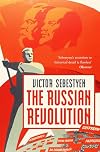
The Russian Revolution by Victor Sebestyen is an excellent look at the causes and events of the revolution as well as some perspectives that are often glossed over if not ignored in other accounts.
The author admits his stance early so the reader can take that into account. There is no such thing as a truly objective history, to think so is nuts. Some historians might try for objectivity but at the very least, by deciding which facts to include, which to leave out, and how they are tied show more together, they are offering an opinion. It happens to be disguised and, more often than not, falls into line with the status quo for that topic. A book of just facts is not a history book since it doesn't present a narrative, so yes, it is weird to prefer lists rather than a narrative history. An author who lets their readers know their approach to the topic is both more honest and has a higher opinion of their readers, since they assume readers can read ideas and then form their own. Not all readers can form their own opinions apparently, but that speaks to our education system more than likely, they want to be spoon-fed "facts" that fit the status quo, then pretend they are deciding for themselves.
Sebestyen, even in a less detailed volume like this, makes a good case for why he supports some views over others. He mentions the others and, again thinking his readers capable, counters with why he disagrees. In historical scholarship that isn't called "dismissing," it is acknowledging the presence of multiple viewpoints and arguing for one in particular. There are a couple of points I want to go back to old notes and readings and see if, with these new perspectives, I agree with him. That said, I didn't find any opinions to be unsupported with most relying on how you understand the culture of the place and time.
This is well-written and can be read either as a straight through overview in a couple sittings or as a slower read where you might want to pause and look some things up. I was somewhere in between on this read since I wanted to finish to write this, but as is my norm I found using it as a springboard into some additional research made it more enjoyable.
Reviewed from a copy made available by the publisher via NetGalley. show less
The author admits his stance early so the reader can take that into account. There is no such thing as a truly objective history, to think so is nuts. Some historians might try for objectivity but at the very least, by deciding which facts to include, which to leave out, and how they are tied show more together, they are offering an opinion. It happens to be disguised and, more often than not, falls into line with the status quo for that topic. A book of just facts is not a history book since it doesn't present a narrative, so yes, it is weird to prefer lists rather than a narrative history. An author who lets their readers know their approach to the topic is both more honest and has a higher opinion of their readers, since they assume readers can read ideas and then form their own. Not all readers can form their own opinions apparently, but that speaks to our education system more than likely, they want to be spoon-fed "facts" that fit the status quo, then pretend they are deciding for themselves.
Sebestyen, even in a less detailed volume like this, makes a good case for why he supports some views over others. He mentions the others and, again thinking his readers capable, counters with why he disagrees. In historical scholarship that isn't called "dismissing," it is acknowledging the presence of multiple viewpoints and arguing for one in particular. There are a couple of points I want to go back to old notes and readings and see if, with these new perspectives, I agree with him. That said, I didn't find any opinions to be unsupported with most relying on how you understand the culture of the place and time.
This is well-written and can be read either as a straight through overview in a couple sittings or as a slower read where you might want to pause and look some things up. I was somewhere in between on this read since I wanted to finish to write this, but as is my norm I found using it as a springboard into some additional research made it more enjoyable.
Reviewed from a copy made available by the publisher via NetGalley. show less
Lists
Awards


You May Also Like


Associated Authors
Statistics
- Works
- 14
- Members
- 1,288
- Popularity
- #19,903
- Rating
- 4.1
- Reviews
- 25
- ISBNs
- 73
- Languages
- 11
- Favorited
- 1