
Catherine Merridale
Author of Ivan's War: Life and Death in the Red Army, 1939-1945
About the Author
Catherine Merridale is a Senior Lecturer in history at the University of Bristol. She holds degrees from Cambridge & Birmingham. This book was supported by grants from the MacArthur Foundation, the British Academy, & the Russian Academy of Science. She is the author of two academic books on Russia show more & has written for the prestigious History Workshop Journal. She lives in Bristol, England. (Bowker Author Biography) show less
Image credit: photo © Jochen Braun
Works by Catherine Merridale
Associated Works
Tagged
Common Knowledge
- Canonical name
- Merridale, Catherine
- Birthdate
- 1959-10-12
- Gender
- female
- Occupations
- historian
professor (Contemporary History) - Organizations
- University of London (Queen Mary)
- Short biography
- Catherine Merridale is an award-winning writer and historian. Her most recent book, Red Fortress: The Secret Heart of Russia’s History, is published by Allen Lane. She is the author of four other books on Russian history, including Night of Stone, which won the 2001 Heinemann Prize for Literature and was shortlisted for the Samuel Johnson Prize, and Ivan’s War, a history of the experience of Red Army soldiers in the Second World War. Her books, which have won international acclaim, have been translated into fifteen languages. Catherine Merridale also writes and broadcasts about Russian politics, culture and current affairs, and she is a regular visitor to Moscow and St Petersburg. She is Professor of Contemporary History at Queen Mary University of London.
http://catherinemerridale.com/ - Nationality
- UK
- Associated Place (for map)
- UK
Members
Reviews
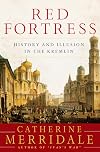
"Red Fortress" offers the reader a concise history of Russia with pointed emphasis on the architectural, cultural, and geographical significance of the Kremlin. What began as a remote small town with a white fort and limestone cathedral in the 1300’s, evolved into 68 acres of stately political buildings, cathedrals, parks, mansions, and a palace... A truly monumental symbol of political power and intrigue for the Russian nation. But it didn’t really stand the test of time. When the show more Kremlin wasn’t being nearly burned to the ground (several times), it was being destroyed by foreign tyrants like the Mongols and Napoleon, or desecrated by fellow Russian citizens in civil wars.
In the final chapter of "Red Fortress", Catherine Merridale summarizes by stating, “The Kremlin’s history is a tale of survival, and it is certainly an epic, but there is nothing inevitable about any of it. Today’s glorification of the Russian state, like that of previous regimes, is a deliberate and calculated choice and real people can certainly be made to answer for it.” (Pg. 394)
After the revolution, the communists destroyed everything that reminded them of the opulent pageantry of the royal life of the Tsar including monuments to former heros and the Orthodox cathedrals. They assassinated all royalty, dissenters, and at least 9000 priests. They had to “create a new canon of saints and fallen heros, communist style” (Pg. 291). And after Stalin’s death, the new leadership once again did everything they could to erase the memory of Russia’s latest history... downplaying Stalin’s association with the communist party and falling back on Lenin’s utopian ideology. They created new pageantry and traditions, constructed new monuments, and gave their ancient neglected buildings a superficial, inexpensive, but modern restoration.
And all the while you are reading about the Kremlin and it’s state of grandeur, destruction, repair, and neglect, you will learn obscure facts about Russia’s most notable leaders: Ivan the Terrible, Peter the Great, Catherine the Great, Nicholas II and Alexandria, Lenin, Stalin, and more current leaders likeYeltsin, Gorbachev, and Putin. Red Fortress includes details about politics, the cultural climate, and the socio-economic conditions throughout Russia’s 800 year history.
Personally, I found the first 100 pages difficult to digest. The years between 1200 and 1600 were just out of my range of interest, but the closer the "Red Fortress" got to the onset of the Romanov dynasty, the more fascinating and intriguing it became. And the Stalin years? Merridale schools us with a history lesson everyone should heed.
Catherine Merridale did an enormous amount of research citing 64 pages of references.
Anyone considering a trip to Russia would definitely have a new appreciation for the few rare remaining authentic historical sites. As early as 1947 - during a tour of the Kremlin - Steinbeck is quoted as saying, “Just two hours in this royal palace so depressed us that we couldn’t shake it all day... the Kremlin was the most gloomy place in the world.” (Pg. 334) And today? Well, sadly Red Fortress gives the impression that though at one time the Kremlin had a soul of its own, today it is not much more than an empty shell - a tourist attraction of smoke and mirrors.
If you have an unquenchable curiosity about Russian history, "Red Fortress" offers a unique and haunting perspective. show less
In the final chapter of "Red Fortress", Catherine Merridale summarizes by stating, “The Kremlin’s history is a tale of survival, and it is certainly an epic, but there is nothing inevitable about any of it. Today’s glorification of the Russian state, like that of previous regimes, is a deliberate and calculated choice and real people can certainly be made to answer for it.” (Pg. 394)
After the revolution, the communists destroyed everything that reminded them of the opulent pageantry of the royal life of the Tsar including monuments to former heros and the Orthodox cathedrals. They assassinated all royalty, dissenters, and at least 9000 priests. They had to “create a new canon of saints and fallen heros, communist style” (Pg. 291). And after Stalin’s death, the new leadership once again did everything they could to erase the memory of Russia’s latest history... downplaying Stalin’s association with the communist party and falling back on Lenin’s utopian ideology. They created new pageantry and traditions, constructed new monuments, and gave their ancient neglected buildings a superficial, inexpensive, but modern restoration.
And all the while you are reading about the Kremlin and it’s state of grandeur, destruction, repair, and neglect, you will learn obscure facts about Russia’s most notable leaders: Ivan the Terrible, Peter the Great, Catherine the Great, Nicholas II and Alexandria, Lenin, Stalin, and more current leaders likeYeltsin, Gorbachev, and Putin. Red Fortress includes details about politics, the cultural climate, and the socio-economic conditions throughout Russia’s 800 year history.
Personally, I found the first 100 pages difficult to digest. The years between 1200 and 1600 were just out of my range of interest, but the closer the "Red Fortress" got to the onset of the Romanov dynasty, the more fascinating and intriguing it became. And the Stalin years? Merridale schools us with a history lesson everyone should heed.
Catherine Merridale did an enormous amount of research citing 64 pages of references.
Anyone considering a trip to Russia would definitely have a new appreciation for the few rare remaining authentic historical sites. As early as 1947 - during a tour of the Kremlin - Steinbeck is quoted as saying, “Just two hours in this royal palace so depressed us that we couldn’t shake it all day... the Kremlin was the most gloomy place in the world.” (Pg. 334) And today? Well, sadly Red Fortress gives the impression that though at one time the Kremlin had a soul of its own, today it is not much more than an empty shell - a tourist attraction of smoke and mirrors.
If you have an unquenchable curiosity about Russian history, "Red Fortress" offers a unique and haunting perspective. show less
 This review was written for LibraryThing Early Reviewers.
What a devastating book. It seems so trite to point it out, but a history of the Red Army during the Second World War makes incredibly depressing reading. ‘Ivan’s War’ covers a litany of disasters, cruelties, and mistakes inflicted on the Red Army, some by their commanders and some by their enemies. As well as documentary evidence, the book includes interviews with the rare surviving veterans. These interviews seem to demonstrate that carrying on after such extreme, traumatic show more experience requires some denial. Those who served on the Eastern Front after the initial chaos of 1941 had grown up in Soviet Russia and knew only Stalin’s rule. Even sixty years later, they recall the propaganda version of the war. Whilst this has an element of truth, it ignores many horrors. The book describes conditions for Red Army front line soldiers - perpetually under-supplied, watched for the slightest sedition by 'politruks', shadowed by the NKVD, and not allowed any leave whatsoever.
Most importantly, this book conveys the sheer reckless disregard that the entire Soviet war machine, from Stalin downwards, had for human life. It is impossible to wrap your head around the scale of Soviet losses during the Second World War. The estimated totals have margins of error in the multi-millions! Even after the tide had turned and the Red Army was pursuing German forces into Western Europe, losses continued to be far greater on the Soviet side. An entire generation of young men was nearly wiped out; whole areas were depopulated as they became war zones. Whilst reading about this, I had to wonder - was this what it took to defeat the evil of Nazism? Was it the willingness to send soldiers upon soldiers to their deaths that turned the tide? This book certainly argues that initial losses were high during the German invasion due to disorganisation and incompetence in the Red Army, as well as denial in senior political circles. What is frightening to contemplate, though, is whether only a regime like Stalin’s could defeat the Nazi armies. (We have no way to know, obviously.)
One of the reasons that this book is so chilling to read is the hollowness of the eventual victory. Not only because of the cost in lives, but due to the horrors that attended it. Merridale discusses the Red Army’s use of rape and violence as weapons of revenge against the German population, as well as noting that one of the Nazi concentration camps was immediately re-purposed by the Soviet regime as a gulag. The front line soldiers of the Red Army returned to shattered homes, hard labour, shortages, and a paranoid and vicious political regime. It isn’t difficult to see why veterans would prefer that simple, heroic Soviet war narrative, which celebrated their victory to a point but also saw the war as mostly best forgotten. As Merridale says, ‘the path to survival lay in stoical acceptance, a focus on the job in hand’. The message I really took from this book, though, was how this clash of cruel ideologies led to such massive loss of life that no-one can really comprehend it. Trying to do so is an unpleasant yet important experience. Nazism was thankfully defeated, but we should not forget at what cost. I need to read something uplifting next, this book really got me down. show less
Most importantly, this book conveys the sheer reckless disregard that the entire Soviet war machine, from Stalin downwards, had for human life. It is impossible to wrap your head around the scale of Soviet losses during the Second World War. The estimated totals have margins of error in the multi-millions! Even after the tide had turned and the Red Army was pursuing German forces into Western Europe, losses continued to be far greater on the Soviet side. An entire generation of young men was nearly wiped out; whole areas were depopulated as they became war zones. Whilst reading about this, I had to wonder - was this what it took to defeat the evil of Nazism? Was it the willingness to send soldiers upon soldiers to their deaths that turned the tide? This book certainly argues that initial losses were high during the German invasion due to disorganisation and incompetence in the Red Army, as well as denial in senior political circles. What is frightening to contemplate, though, is whether only a regime like Stalin’s could defeat the Nazi armies. (We have no way to know, obviously.)
One of the reasons that this book is so chilling to read is the hollowness of the eventual victory. Not only because of the cost in lives, but due to the horrors that attended it. Merridale discusses the Red Army’s use of rape and violence as weapons of revenge against the German population, as well as noting that one of the Nazi concentration camps was immediately re-purposed by the Soviet regime as a gulag. The front line soldiers of the Red Army returned to shattered homes, hard labour, shortages, and a paranoid and vicious political regime. It isn’t difficult to see why veterans would prefer that simple, heroic Soviet war narrative, which celebrated their victory to a point but also saw the war as mostly best forgotten. As Merridale says, ‘the path to survival lay in stoical acceptance, a focus on the job in hand’. The message I really took from this book, though, was how this clash of cruel ideologies led to such massive loss of life that no-one can really comprehend it. Trying to do so is an unpleasant yet important experience. Nazism was thankfully defeated, but we should not forget at what cost. I need to read something uplifting next, this book really got me down. show less
Be warned; this is a hard book to read. The author started off intending to emphasize what role Russian Orthodoxy played in Soviet history but part way through the book decided to include the stories of the survivors of the Civil War, dekulakization, famine, collectivization, show trials, WWII, Stalinization, the gulags, repatriation, the Afghan War, glasnost, and the cult of Putin. Is it possible to tease out the connectivity between Russia’s triumvirate culture of suspicion of strangers, show more orthodoxy, and autocracy without descending to cultural generalization and racism? From the thousands of interviews the author held with citizens, former soldiers, pensioners, gulag survivors, and others; a single commonality of historical events emerges; murder dissenters, suppress informers, and deny loss. Solzhenitsyn, the great Russian author, stated, “Suffering for the Russian soul is the crucible of redemption.” In other words; to be a Russian, you must suffer and so you shall. Nationalist writer Victor Astafev wrote of, “… the soullessness and obstructiveness of our own immoral and criminal leadership” while a pensioner of the Red Army freely admitted, ““We like to think we have lessons to teach the world, but the only thing we can really teach you is how not to do it.” Will Russia and Russians every change? No, for it is in their nature to eat themselves. show less
Catherine Merridale's Lenin on the Train helped fill a void in my comprehension of 1917/1918 Russia and the political maelstrom that both led up to and followed the overthrow of Czar Nicholas II. I enjoyed making the acquaintance, as it were, of many of the key players in this drama, whose outcome was, of course, unknown at the time.
An absolutely fascinating bit of history, of which I was quite ignorant heretofore, is that, as the Russian political scene began to unravel, Lenin himself was show more in exile in Switzerland, far from the action in Petrograd and with a warring Germany blocking his way back to Russia. Eventually, even as Russia (and France and England and later the United States) fought against the Kaiser, Lenin and several companions made his way by special train across Germany with the apparent cooperation of its government. How could this happen? That Germany viewed Lenin's extreme pacifism and his focus on a worldwide workers' revolution as a destabilizing influence on Russia's willingness to continue the war was surely a factor behind German support of Lenin's trip.
Merridale also describes to some extent the spy networks and the illicit trading that continued during the war despite official sanctions and interdictions. War is never a simple black and white affair, and this history certainly reveals at least some of the obscure and complicated relationships that continued despite overt hostilities.
My greatest frustration with Lenin on the Train is that it ends too soon with Lenin escaping foes in Russia by fleeing to Finland. The book's focus, as its title indicates, is primarily on Lenin's return to Russia from his exile and on the political insecurities and competing factions following removal of the czar. I rather wish that Merridale had continued her history at least to the rise of Stalin. Her narrative, especially in the latter pages of her book, is captivating. I am inspired to seek out her other published titles in the hope of learning more of the transformation of Russia from a czarist to a soviet state while at the same time enjoying Merridale's narrative style. show less
An absolutely fascinating bit of history, of which I was quite ignorant heretofore, is that, as the Russian political scene began to unravel, Lenin himself was show more in exile in Switzerland, far from the action in Petrograd and with a warring Germany blocking his way back to Russia. Eventually, even as Russia (and France and England and later the United States) fought against the Kaiser, Lenin and several companions made his way by special train across Germany with the apparent cooperation of its government. How could this happen? That Germany viewed Lenin's extreme pacifism and his focus on a worldwide workers' revolution as a destabilizing influence on Russia's willingness to continue the war was surely a factor behind German support of Lenin's trip.
Merridale also describes to some extent the spy networks and the illicit trading that continued during the war despite official sanctions and interdictions. War is never a simple black and white affair, and this history certainly reveals at least some of the obscure and complicated relationships that continued despite overt hostilities.
My greatest frustration with Lenin on the Train is that it ends too soon with Lenin escaping foes in Russia by fleeing to Finland. The book's focus, as its title indicates, is primarily on Lenin's return to Russia from his exile and on the political insecurities and competing factions following removal of the czar. I rather wish that Merridale had continued her history at least to the rise of Stalin. Her narrative, especially in the latter pages of her book, is captivating. I am inspired to seek out her other published titles in the hope of learning more of the transformation of Russia from a czarist to a soviet state while at the same time enjoying Merridale's narrative style. show less
Lists
Awards


You May Also Like


Associated Authors
Statistics
- Works
- 8
- Also by
- 2
- Members
- 1,842
- Popularity
- #13,975
- Rating
- 3.9
- Reviews
- 69
- ISBNs
- 88
- Languages
- 14
- Favorited
- 1


