
Robert Service (1) (1947–)
Author of Lenin: A Biography
For other authors named Robert Service, see the disambiguation page.
About the Author
Robert Service was born on October 29, 1947. He received an MA in modern languages from the University of Cambridge and an MA and a PhD in government from the University of Essex. He is a Russian historian and political commentator. He has written numerous books including Comrades: A World History show more of Communism; Stalin: A Biography, Lenin: A Biography, and Spies and Commissars. He received the 2009 Duff Cooper Prize for Trotsky: A Biography. (Bowker Author Biography) show less
Image credit: Robert Service performing in Tallinn University by Ave Maria Mõistlik
Series
Works by Robert Service
A History of Modern Russia: From Nicholas II to Vladimir Putin, Revised Edition (2003) 325 copies, 5 reviews
Russia and Its Islamic World: From the Mongol Conquest to The Syrian Military Intervention (2017) 8 copies
Leninas 2 copies
Associated Works
Tagged
Common Knowledge
- Canonical name
- Service, Robert
- Legal name
- Service, Robert John
- Birthdate
- 1947-10-29
- Gender
- male
- Education
- University of Cambridge
University of Essex
Leningrad University - Short biography
- Robert Service arrived in Oxford in 1998 and became Professor of Russian History. His Cambridge undergraduate degree was in Russian and ancient Greek; he switched to politics at Essex for his graduate studies before opting for research in history. He went on an exchange scholarship to Leningrad before appointments at Keele University and the London School of Slavonic and East European Studies.
His books and articles, dealing mainly with twentieth-century Russian history, cover economic, social and cultural as well as political aspects. He connects this work with the analysis of contemporary Russia. He broadcasts and writes for the press. He is a frequent visitor to Russia. He likes hill-walking, singing and strumming. His latest book is an account of Russia and the West in the early years of the October Revolution. Continuing an interest in international relations, he is completing an account of the end of the Cold War.
Main publications: The Bolshevik Party in Revolution: A Study in Organisational Change (1979), Lenin: A Political Life (in three volumes: 1986, 1991 and 1995), The Russian Revolution, 1900-1927 (1986; third, revised edition, 1999), A History of Twentieth Century Russia (1997; second, expanded edition appears as A History of Modern Russia, 2001), Lenin: A Biography (2000), Russia: Experiment with a People, From 1991 to the Present (2002), Stalin: A Biography (2004), Comrades. Communism: A World History (2007), Trotsky: A Biography (2009) and Spies and Commissars (2011).
http://www.sant.ox.ac.uk/people/servi... - Nationality
- UK
- Associated Place (for map)
- UK
Members
Reviews
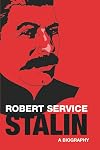
Alexander Solzhenitsyn commented that Nazism was worse than Communism, but Stalin was worse than Hitler (it could have been the other way around; I don’t have a copy of The Gulag Archipelago handy to look it up). It doesn’t really matter which way the comparison goes; the fact that a Russian WWII veteran even brought it up is significant of itself.
Robert Service introduces his biography of Stalin with an apology; that writing about a monster serves to “humanize” it. His rationale is show more that unless we accept the fact that Stalin was a human, we won’t be prepared for the next one to come along. Throughout the book he sometimes seems compelled to keep reminding readers of both facets; every time a little fact about Stalin might appear to make him more normal, Service drops in a little parenthetical note like “But of course he was a monster”. Service goes out of his way to keep attention focused on Stalin’s personality rather than Stalin’s crimes; for example we get a detailed political discussion of the institution of collective farms with only a passing reference to the resulting starvation of millions.
These are the only things remotely approaching flaws in this excellent book. I was reluctant to read it – for the same reason I’m reluctant to watch horror movies – but now I’m glad I did. I found the beginning and end of Stalin’s career the most interesting; the middle, through no fault of the author’s, tends to become a mind-numbing litany of death and destruction.
Everybody knows that the young Yoseb Dzhughashvili studied for the Orthodox priesthood; what surprised me was how well he did at it. Despite starting later than the rest of the students, (because he father wanted him to go to work), Stalin got the highest marks (5 out of 5) in Holy Scripture, Russian Literature, Secular History, Mathematics, Georgian Language (although he read and wrote Russian fluently, he always spoke with a Georgian accent), Old Church Slavonic singing, and Georgian-Imeretian Singing. He only managed a 4 out of 5 in Greek; the thought of Stalin whiling away his evenings reading Plato in the original while having his compatriots shot is disconcerting. On another unimagined note, he had a part-time job at the Tiflis Physical Observatory, where he recorded weather observations. Alas, the details of exactly why Stalin ceased to be a religious meteorologist and became a bank-robbing Bolshevik are unclear; Stalin wasn’t especially fond of having his past recalled – he had his mother-in-law sentenced to 10 years in the Gulag for commenting that she had know him when he was Dzhughashvili.
The period of takeover of the Communist Party is also unclear – it seems like one day Stalin was just one of many vying for Lenin’s position, and the next he was in a position to have all his competitors shot (which he promptly did). The subsequent years go by in a sort of blur – drop Lenin’s New Economic Policy, shoot anybody who objects, collectivize agriculture, shoot anybody who objects, institute The Great Terror, shoot anybody who objects (and a whole lot of people whether they objected or not – there were quotas for executions, which some local officials filled by picking people more or less at random); get in bed with Hitler, shoot anybody who objects; get out of bed with Hitler, shoot anybody who does an inadequate job of objecting to Hitler; and build a USSR bomb (Stalin, a believer in Leninist materialism, thought modern physics was a “bourgeois myth”; Beria had to plead with him to allow the nuclear physicists to actually do physics. Stalin finally yielded, telling Beria “Leave them in peace. We can always shoot them later”.)
It’s hard to convey the weirdness of the Great Terror. The upper echelons of the Communist Party all basically went nuts; in fear that each day would be their last, they turned to vodka and women (sometimes men) in abundance. Stalin himself was fairly restrained; although there are rumors about various romantic – if spending time with him can be called “romantic” – dalliances, but nothing solid. He enjoyed throwing lavish stag parties, where he drank tea out of a wine glass, while everybody else was served vodka in theirs. Numerous toasts were made, and Stalin got to see if anybody made incriminating comments while drunk.
The end of the Vozhd (leader) was finally something of a comeuppance. Although his dacha was guarded by patrols, Stalin was always alone inside – in a different bedroom each night. He then normally called some guards in for breakfast when he awoke. One day he didn’t – the guards were too intimidated to do anything, waiting until 22:00, when a package arrived, to finally enter the dacha. They found Stalin semiconscious on the floor, drenched in his own urine. Nobody called a doctor – instead they called various Party officials. Khrushchev, Malenkov and Beria eventually showed up and finally got some doctors. Unfortunately for Stalin, he’d just purged most of the USSR’s doctors, and the most qualified were languishing in the Lubyanka. This lead to a surreal episode; guards awoke the prisoners in the middle of the night, described the symptoms of a “hypothetical” patient, and asked what treatment they recommended. The doctors must have thought this was some new perverse form of interrogation and racked their brains for the correct Marxist-Leninist answer. Eventually they concluded that things didn’t look good for the subject. And they were right. Among Stalin’s papers were three notes he’d carefully saved – one from Lenin criticizing him, one from Bukharin asking why his death was necessary, and one from Tito recommending that Stalin stop sending assassins to Belgrade, else he’d start sending them to Moscow.
There’s one disturbing question that Service skirts. Suppose there was no Stalin – the Tsar remains or the Kerensky government doesn’t fall or somebody else becomes General Secretary. Would the USSR/Russia have been able to survive Hitler? And if Hitler had conquered the Stalin-less Russia, would he have had enough additional resources to preserve the Third Reich? I hate to think of Stalin as a necessary evil, but there is something to this argument. show less
Robert Service introduces his biography of Stalin with an apology; that writing about a monster serves to “humanize” it. His rationale is show more that unless we accept the fact that Stalin was a human, we won’t be prepared for the next one to come along. Throughout the book he sometimes seems compelled to keep reminding readers of both facets; every time a little fact about Stalin might appear to make him more normal, Service drops in a little parenthetical note like “But of course he was a monster”. Service goes out of his way to keep attention focused on Stalin’s personality rather than Stalin’s crimes; for example we get a detailed political discussion of the institution of collective farms with only a passing reference to the resulting starvation of millions.
These are the only things remotely approaching flaws in this excellent book. I was reluctant to read it – for the same reason I’m reluctant to watch horror movies – but now I’m glad I did. I found the beginning and end of Stalin’s career the most interesting; the middle, through no fault of the author’s, tends to become a mind-numbing litany of death and destruction.
Everybody knows that the young Yoseb Dzhughashvili studied for the Orthodox priesthood; what surprised me was how well he did at it. Despite starting later than the rest of the students, (because he father wanted him to go to work), Stalin got the highest marks (5 out of 5) in Holy Scripture, Russian Literature, Secular History, Mathematics, Georgian Language (although he read and wrote Russian fluently, he always spoke with a Georgian accent), Old Church Slavonic singing, and Georgian-Imeretian Singing. He only managed a 4 out of 5 in Greek; the thought of Stalin whiling away his evenings reading Plato in the original while having his compatriots shot is disconcerting. On another unimagined note, he had a part-time job at the Tiflis Physical Observatory, where he recorded weather observations. Alas, the details of exactly why Stalin ceased to be a religious meteorologist and became a bank-robbing Bolshevik are unclear; Stalin wasn’t especially fond of having his past recalled – he had his mother-in-law sentenced to 10 years in the Gulag for commenting that she had know him when he was Dzhughashvili.
The period of takeover of the Communist Party is also unclear – it seems like one day Stalin was just one of many vying for Lenin’s position, and the next he was in a position to have all his competitors shot (which he promptly did). The subsequent years go by in a sort of blur – drop Lenin’s New Economic Policy, shoot anybody who objects, collectivize agriculture, shoot anybody who objects, institute The Great Terror, shoot anybody who objects (and a whole lot of people whether they objected or not – there were quotas for executions, which some local officials filled by picking people more or less at random); get in bed with Hitler, shoot anybody who objects; get out of bed with Hitler, shoot anybody who does an inadequate job of objecting to Hitler; and build a USSR bomb (Stalin, a believer in Leninist materialism, thought modern physics was a “bourgeois myth”; Beria had to plead with him to allow the nuclear physicists to actually do physics. Stalin finally yielded, telling Beria “Leave them in peace. We can always shoot them later”.)
It’s hard to convey the weirdness of the Great Terror. The upper echelons of the Communist Party all basically went nuts; in fear that each day would be their last, they turned to vodka and women (sometimes men) in abundance. Stalin himself was fairly restrained; although there are rumors about various romantic – if spending time with him can be called “romantic” – dalliances, but nothing solid. He enjoyed throwing lavish stag parties, where he drank tea out of a wine glass, while everybody else was served vodka in theirs. Numerous toasts were made, and Stalin got to see if anybody made incriminating comments while drunk.
The end of the Vozhd (leader) was finally something of a comeuppance. Although his dacha was guarded by patrols, Stalin was always alone inside – in a different bedroom each night. He then normally called some guards in for breakfast when he awoke. One day he didn’t – the guards were too intimidated to do anything, waiting until 22:00, when a package arrived, to finally enter the dacha. They found Stalin semiconscious on the floor, drenched in his own urine. Nobody called a doctor – instead they called various Party officials. Khrushchev, Malenkov and Beria eventually showed up and finally got some doctors. Unfortunately for Stalin, he’d just purged most of the USSR’s doctors, and the most qualified were languishing in the Lubyanka. This lead to a surreal episode; guards awoke the prisoners in the middle of the night, described the symptoms of a “hypothetical” patient, and asked what treatment they recommended. The doctors must have thought this was some new perverse form of interrogation and racked their brains for the correct Marxist-Leninist answer. Eventually they concluded that things didn’t look good for the subject. And they were right. Among Stalin’s papers were three notes he’d carefully saved – one from Lenin criticizing him, one from Bukharin asking why his death was necessary, and one from Tito recommending that Stalin stop sending assassins to Belgrade, else he’d start sending them to Moscow.
There’s one disturbing question that Service skirts. Suppose there was no Stalin – the Tsar remains or the Kerensky government doesn’t fall or somebody else becomes General Secretary. Would the USSR/Russia have been able to survive Hitler? And if Hitler had conquered the Stalin-less Russia, would he have had enough additional resources to preserve the Third Reich? I hate to think of Stalin as a necessary evil, but there is something to this argument. show less
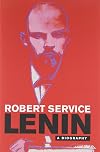
Az alcím világosan fogalmaz: ez egy életrajz. Csak annyit közöl Lenin ideológiai építményéből, ami az életút megértéséhez feltétlenül szükséges, inkább a befutott pályával, mint annak filozófiai hordalékával foglalkozik. Csak említés szintjén jelennek meg benne olyan dolgok, amelyeket én talán fontosabbnak gondolnék (elsősorban az orosz polgárháború), de mivel a főhős életéhez nem szorosan kapcsolódnak, félhomályban maradnak. Ugyanakkor ad valamit, show more amire csak titkon számítottam, amiben csak csendben reménykedtem: megélhetően felvázolja azt a szellemi forrongást, ami a Romanovok utolsó évtizedeit jellemezte. Ebben az időszakban ugyanis a szinte agyalágyulásig merev cárizmus mint fedő kísérelte meg a lábosban tartani a számos nyugatról beszivárgott gondolatot – köztük a marxizmus eszméjét. De ezek a gondolatok annyira izgalmasak voltak, és olyan evidens gyógyírt kínáltak az orosz valóság véres sebeire, hogy teljesen érthetően ragadták meg minden valamirevaló értelmiségi fantáziáját – akik aztán a maguk módján értelmezve a tanokat, a terroristától a mérsékelt demokratáig szóródtak szét a spektrumon. (Izgalmas lehetett akkoriban az orosz illegalitás.) És messze nem a radikális Lenin és a bolsevikok voltak e szekták közül a legszámottevőbbek – ami azt illeti, ha nem jön közbe a háború, meglehet, a kommunista panteon csillagai egy békés, eseménytelen öregkor végén hunytak volna el ágyban, párnák közt az emigrációban (esetleg Szibériában), helyettük pedig talán valami puhább reformmozgalom alakította volna át Oroszországot lassan, fokozatosan. (Vagy nem.)
De a háború kitört, és hozta magával a kis tatyójában azt, amit szokott: a néptömegek radikalizálódását, meg a társadalmi rend felbomlását, amit aztán a Romanovok nem is éltek túl. És ez volt az a történelmi pillanat, amiben Lenin megtalálta a maga küldetését. Némi német segédlettel egyszer csak ott termett Péterváron, kihasználta a tömeges elégedetlenséget, és megalkotta azt a Szovjetuniót, ami aztán jó 70 évig mumusa lett a világ összes demokráciájának. De ha ez így leírva egyszerűnek is tűnik, valójában minden esetleges és kaotikus volt, amit Service szintén remekül ábrázol: az átalakulás káoszában ugyanis gyakran csak hajszálon múlt, hogy Lenin nem tűnik el a süllyesztőben*, és helyette nem valaki más (jobb? rosszabb? ugyanolyan?) ragadja meg a kormánykereket.
De hát miért pont Lenin? Mit tudott ez a kopasz csávó a fura sapkájával, amit más nem tudott? Az biztos, hogy óriási hibákat vétett, és finoman szólva sem volt tévedhetetlen – sem a világháborút, sem a polgárháborút nem látta előre. Az is valószínű, hogy ha nem segítették volna időnként ellenfelei**, el sem jutott volna a hatalom megragadásának lehetőségéig. Beteges volt. Ronda egy vitapartner, és a ronda vitapartnerek közül is a legrosszabb fajta: az, aki addig képes vitatkozni veled, amíg kínodban már inkább egyetértesz vele. Igaz, sokat olvasott, de megdöbbentően szelektíven értelmezte olvasmányait, valahogy mindig azt találta meg a szövegekben, ami őt támasztotta alá. Súlyozni sem tudta a problémákat – a polgárháború csúcspontján például, amikor Trockij a Vörös Hadsereggel bíbelődött, ő azzal foglalta el magát, hogy vitairatot szerkesszen a német szocialista, Kautsky ellen. De mégis, csak tudott valamit. Munkabírása egyszerűen páratlan volt: csak a politika foglalkoztatta, és hát baromi nehéz ám olyasvalakivel harcolni ezen a páston, aki a politikával kel és fekszik, másra gondolni sem tud. Vérbeli pragmatikusként arra is képes volt, hogy bármikor felfüggessze az erkölcsöt és az elveket, ha ettől sikert remélhetett***, és nyoma sem volt benne a részvétnek, ami szintén nem árt, ha valaki a hatalom csúcsán akar berendezkedni. Ez utóbbi talán nem független attól, hogy azok közé az értelmiségiek közé tartozott, akik egyszerűen semmiféle ismerettel nem rendelkeztek azzal a néppel kapcsolatban, amiért elméletileg küzdeni akartak – számukra az olyan szavak, mint „paraszt”, „munkás”, „polgár” csak absztrakciók voltak, amelyeknek ugyan van értelme, ha matematikai egyenletbe helyezzük őket, de ha arcot rendelnénk hozzájuk, az csak összezavarná a kristálytiszta logikát. Mert így működik a diktátorok algebrája: ha egy paraszti közösség áll 90% szegényparasztból és 10% kulákból, akkor elég kivonni a 10% kulákot, és kapunk 100% vegytiszta hasznos parasztot. Csak hát az emberek nem olyan egzakt elemek, mint a nátrium vagy a stroncium, úgyhogy a valóságban ez az algebra nem működik – de ez a diktátort nem akadályozza meg abban, hogy addig-addig ismételgesse a fenti matematikai műveletet, amíg senki sem marad. Vagy amíg el nem viszi az ördög.
* Megesett például, hogy egyetlen moszkvai kocsikázás alkalmával Leninre kétszer is rálőttek, egyszer pedig fegyveres suhancok tartóztatták fel, akik nem hitték el neki, hogy ő a Szovjetunió első embere, és a legközelebbi rendőrőrsre szállították. És mindez egy diktátorral esett meg. El lehet képzelni, mennyire lehetett biztonságban egy átlagos mezei állampolgár.
** És nem csak a németek, akik aktívan segítettek neki abban, hogy Pétervárra jusson, és valószínűleg komoly összegekkel is támogatták a bolsevik célokat. A háború előtt Lenin – bár nem tudott róla – sokat köszönhetett a cári titkosrendőröknek is, akik a háttérben megtisztították neki a terepet, bebörtönözték riválisait, míg közvetlen munkatársait békén hagyták, mert benne látták azt a figurát, aki szét fogja zülleszteni a szocialista mozgalmat. Kicsit túlkombinálták az urak a konspirációt, azt hiszem.
*** Se szeri, se száma azoknak a helyzeteknek, amikor Lenin egyszerűen figyelmen kívül hagyta saját elveit egy nagyobb cél érdekében, de a legkülönösebb talán az volt, amikor a német kommunistákat arra utasította, hogy szövetkezzenek a szélsőjobboldali Freikorps egységeivel a német kormány megdöntése érdekében. show less
De a háború kitört, és hozta magával a kis tatyójában azt, amit szokott: a néptömegek radikalizálódását, meg a társadalmi rend felbomlását, amit aztán a Romanovok nem is éltek túl. És ez volt az a történelmi pillanat, amiben Lenin megtalálta a maga küldetését. Némi német segédlettel egyszer csak ott termett Péterváron, kihasználta a tömeges elégedetlenséget, és megalkotta azt a Szovjetuniót, ami aztán jó 70 évig mumusa lett a világ összes demokráciájának. De ha ez így leírva egyszerűnek is tűnik, valójában minden esetleges és kaotikus volt, amit Service szintén remekül ábrázol: az átalakulás káoszában ugyanis gyakran csak hajszálon múlt, hogy Lenin nem tűnik el a süllyesztőben*, és helyette nem valaki más (jobb? rosszabb? ugyanolyan?) ragadja meg a kormánykereket.
De hát miért pont Lenin? Mit tudott ez a kopasz csávó a fura sapkájával, amit más nem tudott? Az biztos, hogy óriási hibákat vétett, és finoman szólva sem volt tévedhetetlen – sem a világháborút, sem a polgárháborút nem látta előre. Az is valószínű, hogy ha nem segítették volna időnként ellenfelei**, el sem jutott volna a hatalom megragadásának lehetőségéig. Beteges volt. Ronda egy vitapartner, és a ronda vitapartnerek közül is a legrosszabb fajta: az, aki addig képes vitatkozni veled, amíg kínodban már inkább egyetértesz vele. Igaz, sokat olvasott, de megdöbbentően szelektíven értelmezte olvasmányait, valahogy mindig azt találta meg a szövegekben, ami őt támasztotta alá. Súlyozni sem tudta a problémákat – a polgárháború csúcspontján például, amikor Trockij a Vörös Hadsereggel bíbelődött, ő azzal foglalta el magát, hogy vitairatot szerkesszen a német szocialista, Kautsky ellen. De mégis, csak tudott valamit. Munkabírása egyszerűen páratlan volt: csak a politika foglalkoztatta, és hát baromi nehéz ám olyasvalakivel harcolni ezen a páston, aki a politikával kel és fekszik, másra gondolni sem tud. Vérbeli pragmatikusként arra is képes volt, hogy bármikor felfüggessze az erkölcsöt és az elveket, ha ettől sikert remélhetett***, és nyoma sem volt benne a részvétnek, ami szintén nem árt, ha valaki a hatalom csúcsán akar berendezkedni. Ez utóbbi talán nem független attól, hogy azok közé az értelmiségiek közé tartozott, akik egyszerűen semmiféle ismerettel nem rendelkeztek azzal a néppel kapcsolatban, amiért elméletileg küzdeni akartak – számukra az olyan szavak, mint „paraszt”, „munkás”, „polgár” csak absztrakciók voltak, amelyeknek ugyan van értelme, ha matematikai egyenletbe helyezzük őket, de ha arcot rendelnénk hozzájuk, az csak összezavarná a kristálytiszta logikát. Mert így működik a diktátorok algebrája: ha egy paraszti közösség áll 90% szegényparasztból és 10% kulákból, akkor elég kivonni a 10% kulákot, és kapunk 100% vegytiszta hasznos parasztot. Csak hát az emberek nem olyan egzakt elemek, mint a nátrium vagy a stroncium, úgyhogy a valóságban ez az algebra nem működik – de ez a diktátort nem akadályozza meg abban, hogy addig-addig ismételgesse a fenti matematikai műveletet, amíg senki sem marad. Vagy amíg el nem viszi az ördög.
* Megesett például, hogy egyetlen moszkvai kocsikázás alkalmával Leninre kétszer is rálőttek, egyszer pedig fegyveres suhancok tartóztatták fel, akik nem hitték el neki, hogy ő a Szovjetunió első embere, és a legközelebbi rendőrőrsre szállították. És mindez egy diktátorral esett meg. El lehet képzelni, mennyire lehetett biztonságban egy átlagos mezei állampolgár.
** És nem csak a németek, akik aktívan segítettek neki abban, hogy Pétervárra jusson, és valószínűleg komoly összegekkel is támogatták a bolsevik célokat. A háború előtt Lenin – bár nem tudott róla – sokat köszönhetett a cári titkosrendőröknek is, akik a háttérben megtisztították neki a terepet, bebörtönözték riválisait, míg közvetlen munkatársait békén hagyták, mert benne látták azt a figurát, aki szét fogja zülleszteni a szocialista mozgalmat. Kicsit túlkombinálták az urak a konspirációt, azt hiszem.
*** Se szeri, se száma azoknak a helyzeteknek, amikor Lenin egyszerűen figyelmen kívül hagyta saját elveit egy nagyobb cél érdekében, de a legkülönösebb talán az volt, amikor a német kommunistákat arra utasította, hogy szövetkezzenek a szélsőjobboldali Freikorps egységeivel a német kormány megdöntése érdekében. show less
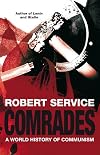
This is a sound one volume narrative history of communism, written from a fairly predictable liberal democratic perspective.
Marxism is philosophically unsound. Leninism was astute at the process of seizing power but unable to manage the possession of power.
The result was (and Robert Service is persuasive in this), inevitable brutality, oppression, bureaucratism and sclerosis with failure inbuilt into the system.
However, the book is, like the liberal democratic strategy for dealing with show more communism after the Second World War, largely a work of containment.
Like all liberals, Service is fair-minded – up to a point – but the narrative has its gaps. Those gaps ultimately diminish the value of the book as anything more than a rough-hewn historical narrative.
There is no depth of understanding here. Service pays lip service to the conditions from which Communism emerged but it is merely that – lip service.
A revolutionary vanguard emerges because all other methods failed to deal with abuses.
These latter may seem small-scale for comfortable middle class people when compared to the later horrors of communism but they were far from so to the vast mass of the population in underdeveloped societies.
It is easy to be moralistic on a full stomach.
Lenin’s exiles experienced the Tsarist brutalities that preceded and accompanied the terror tactics of the desperate and failed Narodniks with no change for the better in peasant or worker conditions.
The confused and often stupid tactics of Mao arose from a world in which their opponents included a Kuomintang that permitted perhaps a million peasants to be murdered when dams were deliberately broken.
This is not to justify but merely to observe, since communism’s success and failure must be seen as the last desperate throw of the dice by radical intellectuals.
They had (in their own eyes) to seize power against systems of exploitation under conditions where no one had been trained to exercise power once it was seized.
The blame for the excesses of communism lies in the ineluctable human condition - the real idiocy of communism is its theory of our species.
It also lies in the conduct of preceding elites that created an educated class that had no function as much as with the faults of the ideology itself.
Create an educated class and then fail to listen to it or to feed it with sinecures (a lesson the Communists learned to the point of sclerosis when in power).
Do this and you will inevitably create explosive frustration. Some of this elite will go on to become obsessive Lenins or Breiviks.
The West now is in a similar state - an underemployed graduate class promotes liberal internationalism on the back of the general taxation of everyone else just as the base for that largesse is collapsing.
Capitalists and property-owners have listened to progressive intellectuals, created an alliance of sorts, but this has merely ended up in costly failed foreign interventions to extend markets.
This is what is meant by the ‘trahison des clercs’. Now the money is running out.
It is the conservative populist right that may seem to have better answers than a Left which engaged in its own ‘trahison’ in complicity with a system that, as communists, it had once affected to despise.
At the time of its arrival, Communism was often the only answer left to mass exploitation within underdeveloped territories and to the phenomenon of imperial exploitation.
It is no accident that communism failed where workers were benefiting from exploitation of the wider world (in other words, where capital accumulation permitted mass participation in social democracy).
Communists have had a continuing problem in that their preferred progressive forces will always have more in common with exploiters of the vast mass of humanity.
Social democracy as a negotiated solution has thus worked for much of the period in which communism ruled as an alternative. It was a necessity for elites in facing off an alternative model.
Social liberals have been struggling ever since communism collapsed to preserve what had only existed because this enemy also existed.
When communism disappeared as a rival, elites started to claw back their power, a process that started in the crisis of the late-1970s.
The complicity of the centre-left with a weird combination of free markets and authoritarian liberalism has now left it with no resources with which to reclaim leadership in the current time of troubles.
This resistance gap is being filled with petit-bourgeois populisms like the Tea Party, violent anarchism, anomie, the black economy, libertarian hacktivism – anything but a discredited Marxism.
Communism certainly succeeded in acquiring power and then became increasingly brutal to the degree that ideologues had massively ignorant but desperate populations to deal with.
Desperation simply created urgent demands for short term results under external military pressures that could only be enforced through the most brutal means.
Despite Eagleton’s claims (elsewhere) that brutality is no necessary result of communist control, the evidence is demonstrably against him.
Pol Pot was a logical culmination of the constant outward flow to the margins of ‘empire’ of this ideology of desperation.
Communism was always strongest where it was anti-imperialist and weakest where it was imposed by its own perverted imperialism (as in Eastern Europe).
There is a lesson in this – Communism is always the last ditch ideological card for desperate poker players.
Marxism, of course, may transmute (as it has done in Europe) into a devious bureaucratic corporatism but this very subterfuge indicates that it still requires a serious breakdown to come out into the open.
Service occasionally mentions the benefits of communism in promoting egalitarian welfarism – if not always delivered in practice, always a definite intent.
This intent was held back by lack of resources because of Communism’s own intrinsic economic incompetence.
This, in turn, was based on its true weakness, its failure to comprehend ‘human nature’ in terms of the persistence of human desire for ‘things’, individualist rationality and lack of shared ‘belief’.
True believers are always a minority in any religion. Sclerosis, corruption and a police state were inevitable results.
The majority simply accept the nostrums while a further minority either work the system to their own benefit or insist on the value of some ‘better’ system.
Service is very persuasive that Communism was intrinsically unreformable despite the hopes of reform Communists because reformers are, in the end, not really electable as Communists.
What he does not do is delve very far into the psychology of Communist failure.
By not going deeper into this top-down intent to improve the lot of the general population without its actual consent, the phenomenon ultimately remains unexplained.
Pol Pot, Hoxha, Mengistu and Ceaucescu are the leaders that we are supposed to be horrified by. We are all supposed to be impressed by that rank example of political incompetence, Mikhail Gorbachev.
But this is absurd. Even Service falls for a moment into the ‘good’ Communist trap. Gorbachev brought down communism as an idealist communist.
This is not an example of goodness or nobility but merely of stupidity. The same might be said of Dubcek. Only Havel saw things clearly.
We are certainly right to be horrified by the Pol Pots but we should equally be stunned that ‘democratic centralism’ should turn up such a light weight and dreamer as Gorbachev.
If a system can only produce thugs, sclerotics and dreamers, then it is patently not working.Communism fails fundamentally as a political ideology because it simply is incapable of managing complex societies.
Democratic centralism is flawed because bureaucracies and revolutionary struggles thrust inadequates into power by the nature of the process.
Nevertheless, liberal democrats are not wise to strut over the ‘end of history’ or the inevitability of free markets and liberal institutionalism.
The anti-Communists have operated as vilely as the Communists on many occasions but with much less excuse except defensive greed.
If the West had stood back and permitted the Revolution of 1917 space in return for a policy of non-interference elsewhere, then Bukharinism might have created a social-fascist state.
Such a state need not have been a threat or quite so murderous. But that is a big argument and we shall never know.
The Oslo bombing indicates that resentment exists against the self-satisfaction of progressive liberalism. Self-serving elites govern on behalf of the people in name but for themselves in practice.
When all the customary expressions of horror have passed, it behoves to ask what the conditions are that trigger such actions. It is not enough to simply refer to such ‘extremists’ as mad or evil.
The history of democratic centralism (communism) may yet offer us some lessons on dealing with this sort of ‘ressentiment’ and this is a recommended basic text in that process.
Something will always emerge that may offer cause to the propertied to be fearful whenever a new generation of radical intellectuals see the state of the exploited and oppressed, culturally and economically.
If there are not enough jobs for high school graduates and if they can create cadres capable of sufficient organisational competence, liberal democracy and capitalism have a problem.
This book is valuable, therefore, for two entirely different reasons. It is a well argued case study about a movement of resistance that collapsed under the weight of its own ‘internal contradictions'.
It is also valuable for what it fails to talk about – for the gaps in the narrative. What is now needed is to supplement this narrative with a look at those gaps.
This means the conditions that permitted communism to emerge and the precise effect of the fear and loathing of imperial elites (internal and external and not forgetting the US) on its trajectory.
We should also be honest about the short term positive changes communism effected through often brutal means for majorities against minorities.
And about those internal contradictions and inherent flaws we have referred to (on which Service tells us most but not all of the story).
From there we can start to consider what, to be fair, Service, does address though almost in passing – could ‘communism’ arise again?
The answer is probably ‘yes’ but not in that name, nor in that particular Marxist-Leninist form nor in any way that is recognisably communist as we now understand the term.
In the end, Communism was just Nietzsche’s priestly Christianity but with bureaucratic and military teeth, a religion for the masses. But it did give some voice to the weakest.
Instead of operating alongside the State, it became the State. For priests read apparatchiks and bureaucrats.
As with Christianity, the weak were represented but their interests perverted by special interests - and yet they did get some benefits.
The refusal to accept this 'good' in communism is to be blind to the possibility of its return as some form of authoritarian national welfarism that might easily have a rightist cultural cloak.
While the Soviet Union collapsed surprisingly quickly under the weight of its own contradictions, we now seem to be blind to the potential for collapse in our remaining two large imperial systems.
We now get the cultural panic without the analysis or the remedial action.
The Chinese are now wholly dependent for growth on grabbing overseas resources with all the verve of British imperial pirates, while the US represents a financial system with crumbling machinery.
That debt-ridden machinery depends for its short term survival on Chinese desperation to keep it and European capitalism in operation.
We are back in an age of unstable competing empires and of terrorism, exactly where we were in the late nineteenth century.
Marx loved irony – that the whole capitalist thing is being held together by an exploitative communist peasant state will have him grimly smiling in his grave.
Perhaps the local revolutionary struggles of the Zapatistas on the ground, of Anonymous in the ether and of national and religious fundamentalists give us clues to the future.
Today, only one of these trends owes anything to Marxism – and then only indirectly. One might come to say one day, without irony: “Communism is dead. Long live revolutionary national welfarism.” show less
Marxism is philosophically unsound. Leninism was astute at the process of seizing power but unable to manage the possession of power.
The result was (and Robert Service is persuasive in this), inevitable brutality, oppression, bureaucratism and sclerosis with failure inbuilt into the system.
However, the book is, like the liberal democratic strategy for dealing with show more communism after the Second World War, largely a work of containment.
Like all liberals, Service is fair-minded – up to a point – but the narrative has its gaps. Those gaps ultimately diminish the value of the book as anything more than a rough-hewn historical narrative.
There is no depth of understanding here. Service pays lip service to the conditions from which Communism emerged but it is merely that – lip service.
A revolutionary vanguard emerges because all other methods failed to deal with abuses.
These latter may seem small-scale for comfortable middle class people when compared to the later horrors of communism but they were far from so to the vast mass of the population in underdeveloped societies.
It is easy to be moralistic on a full stomach.
Lenin’s exiles experienced the Tsarist brutalities that preceded and accompanied the terror tactics of the desperate and failed Narodniks with no change for the better in peasant or worker conditions.
The confused and often stupid tactics of Mao arose from a world in which their opponents included a Kuomintang that permitted perhaps a million peasants to be murdered when dams were deliberately broken.
This is not to justify but merely to observe, since communism’s success and failure must be seen as the last desperate throw of the dice by radical intellectuals.
They had (in their own eyes) to seize power against systems of exploitation under conditions where no one had been trained to exercise power once it was seized.
The blame for the excesses of communism lies in the ineluctable human condition - the real idiocy of communism is its theory of our species.
It also lies in the conduct of preceding elites that created an educated class that had no function as much as with the faults of the ideology itself.
Create an educated class and then fail to listen to it or to feed it with sinecures (a lesson the Communists learned to the point of sclerosis when in power).
Do this and you will inevitably create explosive frustration. Some of this elite will go on to become obsessive Lenins or Breiviks.
The West now is in a similar state - an underemployed graduate class promotes liberal internationalism on the back of the general taxation of everyone else just as the base for that largesse is collapsing.
Capitalists and property-owners have listened to progressive intellectuals, created an alliance of sorts, but this has merely ended up in costly failed foreign interventions to extend markets.
This is what is meant by the ‘trahison des clercs’. Now the money is running out.
It is the conservative populist right that may seem to have better answers than a Left which engaged in its own ‘trahison’ in complicity with a system that, as communists, it had once affected to despise.
At the time of its arrival, Communism was often the only answer left to mass exploitation within underdeveloped territories and to the phenomenon of imperial exploitation.
It is no accident that communism failed where workers were benefiting from exploitation of the wider world (in other words, where capital accumulation permitted mass participation in social democracy).
Communists have had a continuing problem in that their preferred progressive forces will always have more in common with exploiters of the vast mass of humanity.
Social democracy as a negotiated solution has thus worked for much of the period in which communism ruled as an alternative. It was a necessity for elites in facing off an alternative model.
Social liberals have been struggling ever since communism collapsed to preserve what had only existed because this enemy also existed.
When communism disappeared as a rival, elites started to claw back their power, a process that started in the crisis of the late-1970s.
The complicity of the centre-left with a weird combination of free markets and authoritarian liberalism has now left it with no resources with which to reclaim leadership in the current time of troubles.
This resistance gap is being filled with petit-bourgeois populisms like the Tea Party, violent anarchism, anomie, the black economy, libertarian hacktivism – anything but a discredited Marxism.
Communism certainly succeeded in acquiring power and then became increasingly brutal to the degree that ideologues had massively ignorant but desperate populations to deal with.
Desperation simply created urgent demands for short term results under external military pressures that could only be enforced through the most brutal means.
Despite Eagleton’s claims (elsewhere) that brutality is no necessary result of communist control, the evidence is demonstrably against him.
Pol Pot was a logical culmination of the constant outward flow to the margins of ‘empire’ of this ideology of desperation.
Communism was always strongest where it was anti-imperialist and weakest where it was imposed by its own perverted imperialism (as in Eastern Europe).
There is a lesson in this – Communism is always the last ditch ideological card for desperate poker players.
Marxism, of course, may transmute (as it has done in Europe) into a devious bureaucratic corporatism but this very subterfuge indicates that it still requires a serious breakdown to come out into the open.
Service occasionally mentions the benefits of communism in promoting egalitarian welfarism – if not always delivered in practice, always a definite intent.
This intent was held back by lack of resources because of Communism’s own intrinsic economic incompetence.
This, in turn, was based on its true weakness, its failure to comprehend ‘human nature’ in terms of the persistence of human desire for ‘things’, individualist rationality and lack of shared ‘belief’.
True believers are always a minority in any religion. Sclerosis, corruption and a police state were inevitable results.
The majority simply accept the nostrums while a further minority either work the system to their own benefit or insist on the value of some ‘better’ system.
Service is very persuasive that Communism was intrinsically unreformable despite the hopes of reform Communists because reformers are, in the end, not really electable as Communists.
What he does not do is delve very far into the psychology of Communist failure.
By not going deeper into this top-down intent to improve the lot of the general population without its actual consent, the phenomenon ultimately remains unexplained.
Pol Pot, Hoxha, Mengistu and Ceaucescu are the leaders that we are supposed to be horrified by. We are all supposed to be impressed by that rank example of political incompetence, Mikhail Gorbachev.
But this is absurd. Even Service falls for a moment into the ‘good’ Communist trap. Gorbachev brought down communism as an idealist communist.
This is not an example of goodness or nobility but merely of stupidity. The same might be said of Dubcek. Only Havel saw things clearly.
We are certainly right to be horrified by the Pol Pots but we should equally be stunned that ‘democratic centralism’ should turn up such a light weight and dreamer as Gorbachev.
If a system can only produce thugs, sclerotics and dreamers, then it is patently not working.Communism fails fundamentally as a political ideology because it simply is incapable of managing complex societies.
Democratic centralism is flawed because bureaucracies and revolutionary struggles thrust inadequates into power by the nature of the process.
Nevertheless, liberal democrats are not wise to strut over the ‘end of history’ or the inevitability of free markets and liberal institutionalism.
The anti-Communists have operated as vilely as the Communists on many occasions but with much less excuse except defensive greed.
If the West had stood back and permitted the Revolution of 1917 space in return for a policy of non-interference elsewhere, then Bukharinism might have created a social-fascist state.
Such a state need not have been a threat or quite so murderous. But that is a big argument and we shall never know.
The Oslo bombing indicates that resentment exists against the self-satisfaction of progressive liberalism. Self-serving elites govern on behalf of the people in name but for themselves in practice.
When all the customary expressions of horror have passed, it behoves to ask what the conditions are that trigger such actions. It is not enough to simply refer to such ‘extremists’ as mad or evil.
The history of democratic centralism (communism) may yet offer us some lessons on dealing with this sort of ‘ressentiment’ and this is a recommended basic text in that process.
Something will always emerge that may offer cause to the propertied to be fearful whenever a new generation of radical intellectuals see the state of the exploited and oppressed, culturally and economically.
If there are not enough jobs for high school graduates and if they can create cadres capable of sufficient organisational competence, liberal democracy and capitalism have a problem.
This book is valuable, therefore, for two entirely different reasons. It is a well argued case study about a movement of resistance that collapsed under the weight of its own ‘internal contradictions'.
It is also valuable for what it fails to talk about – for the gaps in the narrative. What is now needed is to supplement this narrative with a look at those gaps.
This means the conditions that permitted communism to emerge and the precise effect of the fear and loathing of imperial elites (internal and external and not forgetting the US) on its trajectory.
We should also be honest about the short term positive changes communism effected through often brutal means for majorities against minorities.
And about those internal contradictions and inherent flaws we have referred to (on which Service tells us most but not all of the story).
From there we can start to consider what, to be fair, Service, does address though almost in passing – could ‘communism’ arise again?
The answer is probably ‘yes’ but not in that name, nor in that particular Marxist-Leninist form nor in any way that is recognisably communist as we now understand the term.
In the end, Communism was just Nietzsche’s priestly Christianity but with bureaucratic and military teeth, a religion for the masses. But it did give some voice to the weakest.
Instead of operating alongside the State, it became the State. For priests read apparatchiks and bureaucrats.
As with Christianity, the weak were represented but their interests perverted by special interests - and yet they did get some benefits.
The refusal to accept this 'good' in communism is to be blind to the possibility of its return as some form of authoritarian national welfarism that might easily have a rightist cultural cloak.
While the Soviet Union collapsed surprisingly quickly under the weight of its own contradictions, we now seem to be blind to the potential for collapse in our remaining two large imperial systems.
We now get the cultural panic without the analysis or the remedial action.
The Chinese are now wholly dependent for growth on grabbing overseas resources with all the verve of British imperial pirates, while the US represents a financial system with crumbling machinery.
That debt-ridden machinery depends for its short term survival on Chinese desperation to keep it and European capitalism in operation.
We are back in an age of unstable competing empires and of terrorism, exactly where we were in the late nineteenth century.
Marx loved irony – that the whole capitalist thing is being held together by an exploitative communist peasant state will have him grimly smiling in his grave.
Perhaps the local revolutionary struggles of the Zapatistas on the ground, of Anonymous in the ether and of national and religious fundamentalists give us clues to the future.
Today, only one of these trends owes anything to Marxism – and then only indirectly. One might come to say one day, without irony: “Communism is dead. Long live revolutionary national welfarism.” show less
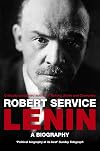
What to say about this quite extraordinary man whose actions had such profound effects on the history of the 20th century? As Service says at the end of this excellent biography: “To a considerable extent the history of inter-war Europe was a struggle over the consequences of 25 October 1917. The situation did not disappear after the Second World War.” And the success of the Russian revolution that led to the creation of the USSR was very much the success of Valdimir Ilich Ulyanov. show more Without his single-minded focus and energy and drive and instincts and capacities, the seizure of power would not have occurred, nor would the Bolsheviks have held onto power in the turmoil post-revolution stretching into the civil war and beyond.
One of the strengths of this biography is that Service draws upon previously secret personal memoirs and reports of Party and government discussions and decisions to produce a more complete picture of Lenin, not just as the revolutionary leader, but as a man, as a person. Service describes Lenin as, “…this short, intolerant, bookish, neat, valetudinarian, intelligent, confident politician…The brilliant student who became a gawky Marxist activist and factional leader made the most of what History pushed his way.”
On the human side, Service describes well the influences of Lenin’s family and its history, and his not well-documented but undoubted affair with Inessa Armand and the impact of that on his marriage with Nadezhda Krupskaya, a marriage that grew into support and caring but was at the beginning, and always, sacrificed to the demands of Lenin’s political life and travels. It is surprising to be reminded how much Lenin travelled and lived outside of Russia before the Revolution during what Service calls the “carousel of European emigration”, 1900-1917. Lenin was very familiar with London, Geneva, Munich, Paris, Zurich, Bern. He came from a family of minor-nobility and although he qualified as a lawyer, his only work was his total and all consuming dedication to politics and revolution in Russia. He was supported by his mother, by income from writing and translating, by sympathizers, and later, by the Party as it evolved.
A noticeable feature of Lenin’s life was the continuous factionalism that characterized his political life from the very beginning, and how this was almost always a result of his own intransigence and intolerance of any difference from his interpretations of Marxism and the best ways forward in Russia. His life was littered with people whom he once revered (Plekhanov) or with whom he worked closely (Martov), but if any failed to embrace unquestionably Lenin’s sense of direction or actions required or his interpretations of theory and historical developments, they were not just ostracized but vilified. And it wasn’t always easy to keep up with Lenin because, despite the theoretical framework of (his) Marxism, his single focus was on seizing power and in he would often shift positions (with no inconsistencies in his mind) if it served to further that objective. This of course also played out in the internecine struggles amongst socialists of all stripes individually and through numerous congresses and conferences, decades prior to, and after, the October revolution on how best to move to ‘socialism’ in Russia and more broadly in Europe. Even after the Revolution it is striking how much Lenin had to deal with factions to get support for his views and tactics; it was not until the final consolidation under Stalin that control of any and all utterances and actions was total.
Over the years, some have argued that had Lenin lived longer, the Soviet regime would not have evolved into the despotism and terror that it did under Stalin. Service shows, with many references, that this is simply not true. From a very early stage, Lenin argued for mass terror and once in power he was ruthless, dogmatic, unforgiving, and cruel in his unrelenting demands for it; utterances and writings that were kept secret for decades in the USSR. During the civil war, Lenin called for public hangings with, as Service describes it, “a vicious relish…He reverted the practices of twentieth-century European war to the Middle Ages. No moral threshold was sacred.” Nor was his animus directed only at the “expected” enemies of the Revolution; he had no patience with a summertime feast day of St.Nicholas and demanded, “We must get all the Chekas up on their feet and shoot people who don’t turn up for work because of the ‘Nicola’ festival.” This was not just inflammatory rhetoric. For Lenin, terror was integral to state policy. During the civil war Lenin demanded that, “The speed and force of the repressions” should be intensified. He stated, “The greater the number of the representatives of reactionary clergy and reactionary bourgeoisie we succeed in shooting on this premise [i.e. show trials], the better. It is precisely now that we ought to deliver a lesson to this public so that they won’t dare even think about resistance for several decades.” Stalin didn’t invent anything in terms of terror and repression, he simply expanded and deepened its application to the point of executing several of Lenin’s oldest Bolshevik comrades.
Lenin liked children and often played well and boisterously with some in his extended family. But on the political side, there was nothing soft, nothing forgiving, nothing empathetic about him, and he was a man with a long memory who held grudges.
Historical circumstances provided the opportunity for the October Revolution, but it was by no means a foregone conclusion in either its immediate success or in the more prolonged struggle to consolidate power through the aftermath of WWI, the civil war, foreign intervention, famine, industrial turmoil, economic devastation, peasant and worker unrest, and political opposition within and outside the Party. Lenin’s iron will was the driving force that held the success of the Revolution together through all these trials. In so doing, he founded a despotism that helped to define international and national politics throughout the 20th century and around the world. show less
One of the strengths of this biography is that Service draws upon previously secret personal memoirs and reports of Party and government discussions and decisions to produce a more complete picture of Lenin, not just as the revolutionary leader, but as a man, as a person. Service describes Lenin as, “…this short, intolerant, bookish, neat, valetudinarian, intelligent, confident politician…The brilliant student who became a gawky Marxist activist and factional leader made the most of what History pushed his way.”
On the human side, Service describes well the influences of Lenin’s family and its history, and his not well-documented but undoubted affair with Inessa Armand and the impact of that on his marriage with Nadezhda Krupskaya, a marriage that grew into support and caring but was at the beginning, and always, sacrificed to the demands of Lenin’s political life and travels. It is surprising to be reminded how much Lenin travelled and lived outside of Russia before the Revolution during what Service calls the “carousel of European emigration”, 1900-1917. Lenin was very familiar with London, Geneva, Munich, Paris, Zurich, Bern. He came from a family of minor-nobility and although he qualified as a lawyer, his only work was his total and all consuming dedication to politics and revolution in Russia. He was supported by his mother, by income from writing and translating, by sympathizers, and later, by the Party as it evolved.
A noticeable feature of Lenin’s life was the continuous factionalism that characterized his political life from the very beginning, and how this was almost always a result of his own intransigence and intolerance of any difference from his interpretations of Marxism and the best ways forward in Russia. His life was littered with people whom he once revered (Plekhanov) or with whom he worked closely (Martov), but if any failed to embrace unquestionably Lenin’s sense of direction or actions required or his interpretations of theory and historical developments, they were not just ostracized but vilified. And it wasn’t always easy to keep up with Lenin because, despite the theoretical framework of (his) Marxism, his single focus was on seizing power and in he would often shift positions (with no inconsistencies in his mind) if it served to further that objective. This of course also played out in the internecine struggles amongst socialists of all stripes individually and through numerous congresses and conferences, decades prior to, and after, the October revolution on how best to move to ‘socialism’ in Russia and more broadly in Europe. Even after the Revolution it is striking how much Lenin had to deal with factions to get support for his views and tactics; it was not until the final consolidation under Stalin that control of any and all utterances and actions was total.
Over the years, some have argued that had Lenin lived longer, the Soviet regime would not have evolved into the despotism and terror that it did under Stalin. Service shows, with many references, that this is simply not true. From a very early stage, Lenin argued for mass terror and once in power he was ruthless, dogmatic, unforgiving, and cruel in his unrelenting demands for it; utterances and writings that were kept secret for decades in the USSR. During the civil war, Lenin called for public hangings with, as Service describes it, “a vicious relish…He reverted the practices of twentieth-century European war to the Middle Ages. No moral threshold was sacred.” Nor was his animus directed only at the “expected” enemies of the Revolution; he had no patience with a summertime feast day of St.Nicholas and demanded, “We must get all the Chekas up on their feet and shoot people who don’t turn up for work because of the ‘Nicola’ festival.” This was not just inflammatory rhetoric. For Lenin, terror was integral to state policy. During the civil war Lenin demanded that, “The speed and force of the repressions” should be intensified. He stated, “The greater the number of the representatives of reactionary clergy and reactionary bourgeoisie we succeed in shooting on this premise [i.e. show trials], the better. It is precisely now that we ought to deliver a lesson to this public so that they won’t dare even think about resistance for several decades.” Stalin didn’t invent anything in terms of terror and repression, he simply expanded and deepened its application to the point of executing several of Lenin’s oldest Bolshevik comrades.
Lenin liked children and often played well and boisterously with some in his extended family. But on the political side, there was nothing soft, nothing forgiving, nothing empathetic about him, and he was a man with a long memory who held grudges.
Historical circumstances provided the opportunity for the October Revolution, but it was by no means a foregone conclusion in either its immediate success or in the more prolonged struggle to consolidate power through the aftermath of WWI, the civil war, foreign intervention, famine, industrial turmoil, economic devastation, peasant and worker unrest, and political opposition within and outside the Party. Lenin’s iron will was the driving force that held the success of the Revolution together through all these trials. In so doing, he founded a despotism that helped to define international and national politics throughout the 20th century and around the world. show less
Lists
Awards


You May Also Like


Associated Authors
Statistics
- Works
- 20
- Also by
- 1
- Members
- 3,109
- Popularity
- #8,223
- Rating
- 3.8
- Reviews
- 42
- ISBNs
- 243
- Languages
- 16
- Favorited
- 9