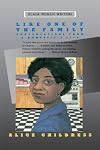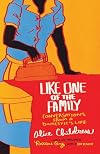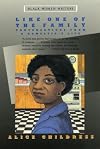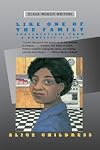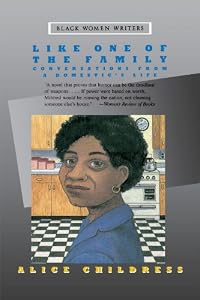
Like One of the Family: Conversations from a Domestic's Life
by Alice Childress
On This Page
Description
"A new edition of Alice Childress's classic novel about African American domestic workers, featuring a foreword by Roxane Gay First published in Paul Robeson's newspaper, Freedom, and composed of a series of conversations between Mildred, a black domestic, and her friend Marge, Like One of the Family is a wry, incisive portrait of working women in Harlem in the 1950's. Rippling with satire and humor, Mildred's outspoken accounts vividly capture her white employers' complacency and show more condescension--and their startled reactions to a maid who speaks her mind and refuses to exchange dignity for pay. Upon publication the book sparked a critique of working conditions, laying the groundwork for the contemporary domestic worker movement. Although she was critically praised, Childress's uncompromising politics and unflinching depictions of racism, classism, and sexism relegated her to the fringe of American literature. Like One of the Family has been long overlooked, but this new edition, featuring a foreword by best-selling author Roxane Gay, will introduce Childress to a new generation"-- show lessTags
Recommendations





















Member Reviews
I received a copy of this book from LibraryThing Early Reviewers in exchange for an honest review. "Like One of the Family" was written some 60 years ago, and its short chapters were serialized in Paul Robeson's newspaper, "Freedom." The author was a playwright, as well as a writer, and the pieces themselves feel like a one-woman play -- as they are set up as one side of conversations between two women. Both are young, black, and work as day laborers in the houses of white families in New York City. The protagonist, and voice, is Mildred, a woman of some considerable strength and dignity.
My impression is that the collection is best read in a serialized manner, rather than straight through as a novel. Not for any lack in the writing, but show more just that otherwise the collection starts to feel a bit unrelenting. The author is both sharp and witty, and each installment seems to take as a given that a spoonful of sugar will help the medicine go down. The medicine is the message that the status quo must change -- that black citizens are due the same rights and respect as any other. And Mildred is rightfully frustrated to the point of anger that it just isn't so. The spoonful of sugar is the humor Childress employs throughout. Although she gets her point across cleverly, in doing so whites are often characterized as either mean or condescending, or merely tentative -- largely clueless about how to address or acknowledge a black domestic worker as a fellow human being. To her credit, Childress' vision is that everyone must be part of the solution (if you're quiet, you're part of the mob, whether you agree with it or not). The timelessness of this message is actually a sad reminder that we apparently still need to be told as much. How is it that we have not successfully learned this lesson and fixed the system by now? I think that were Childress still alive, she would be disappointed to learn that her vision is still just that, and not our current reality. show less
My impression is that the collection is best read in a serialized manner, rather than straight through as a novel. Not for any lack in the writing, but show more just that otherwise the collection starts to feel a bit unrelenting. The author is both sharp and witty, and each installment seems to take as a given that a spoonful of sugar will help the medicine go down. The medicine is the message that the status quo must change -- that black citizens are due the same rights and respect as any other. And Mildred is rightfully frustrated to the point of anger that it just isn't so. The spoonful of sugar is the humor Childress employs throughout. Although she gets her point across cleverly, in doing so whites are often characterized as either mean or condescending, or merely tentative -- largely clueless about how to address or acknowledge a black domestic worker as a fellow human being. To her credit, Childress' vision is that everyone must be part of the solution (if you're quiet, you're part of the mob, whether you agree with it or not). The timelessness of this message is actually a sad reminder that we apparently still need to be told as much. How is it that we have not successfully learned this lesson and fixed the system by now? I think that were Childress still alive, she would be disappointed to learn that her vision is still just that, and not our current reality. show less
 This review was written for LibraryThing Early Reviewers.
Childress's Mildred is a young black woman who works in other people's homes doing cleaning, laundry, and preparations for entertainment. In a series of very short (two to five pages) one-sided conversations, Mildred addresses her friend Marge and tells her about her experiences as a domestic worker. Childress shows us how employers tried various ways of getting extra work out of Mildred, and how she stood up for her rights, her working conditions, and for respect as a woman. When one employer mentions that she's forgotten Mildred to produce her health card, Mildred responds that she's glad she brought it up, because she had forgotten to ask the employer for health cards for herself and her family, "since I'll be handling the laundry show more and everything." The employer quickly backs down.
Mildred's stories range beyond her employment situations. For example, she describes going to meetings about Africa, and she talks with her sister about her nephew's activism, coming down squarely in favor of the young man's activities. Mildred is not simply a font of folksy homespun wisdom; she is a sharp critical thinker who has quite a bit to say about race, poverty, civil rights, and treating people with respect. I would love to have a chance to meet Mildred. show less
Mildred's stories range beyond her employment situations. For example, she describes going to meetings about Africa, and she talks with her sister about her nephew's activism, coming down squarely in favor of the young man's activities. Mildred is not simply a font of folksy homespun wisdom; she is a sharp critical thinker who has quite a bit to say about race, poverty, civil rights, and treating people with respect. I would love to have a chance to meet Mildred. show less
This review was written for LibraryThing Early Reviewers.Perfect. and it makes me cry that it's still so perfect and relevant. Length is key, cause Mildred hands us out some hard truths, and the format lets us take a breath between them. Everything is rooted in a real love of peace and wanting everyone to be part of it - but without falling into the trap of trying to be nice to everyone. She is the model of "I liked you enough to tell you the truth." It is glorious and heartbreaking and I want everyone to read it.
This review was written for LibraryThing Early Reviewers.I had read some of these very short stories in anthologies in school, and although I don't love the particular style - they're all one-sided conversations with another person who seems to have a strong personality of her own but isn't really a participant - it is striking how relevant many of the issues raised in this book from 1965 continue to be in 2017. Mildred could be dismissed as "just a housekeeper" and she presents her ideas as straightforward and simple, but they're actually deep and complex and they offer a window into a heartbreaking America that has not gone away, however much (or little) it has improved. I think this is an essential read for the modern age, even if it may not be the most enjoyable.
This review was written for LibraryThing Early Reviewers.Light-hearted, feisty essays, by an African American woman, describing her work in the homes of others and commenting on events around her.
Alice Childress (1916-1994) was an actress, playwright, and novelist who broke barriers for black women in the American theater. In her writing she focused attention on those traditionally ignored by mainstream America. This book is a collection of short pieces originally written in the 1950s for distribution to African American newspapers about the only employment available to many black women.
The narrator of Like One of the Family is Mildred, a spunky African American woman ready to talk back to those who challenge her dignity. She is single, lives in an apartment house, and regularly stops off in show more the apartment of her friend, Marge, to relax and talk. She often describes herself as acting with bravery and wit, confronting whites in ways that most black women didn’t dare to do.
The title and first piece in the collection highlight the words of those who employed black domestic servants claiming to treat them “like one of the family.” (This is a response I still get online when I review a book critical of slavery and the treatment of domestic servants.) When an employer makes this claim, Mildred forcefully responds.
In the first place, you do not love me; you may be fond of me, but that is all. . . In the second place, I am not just like one of the family at all! The family eats in the dining room and I eat in the kitchen. Your mama borrows your lace tablecloth for her company and your son entertains his friends in the parlor, your daughter takes her afternoon nap on the living room couch, and her puppy sleeps on your satin spread. . . and whenever your husband gets tired of something you are talking about he says ‘For Pete’s sake, forget it.’
Mildred frequently snaps back at those who do not treat her with dignity. She also writes about an ideal employer and urges domestic servants to unionize. When whites were discussing whether or not Africans were “fit for freedom,” she responded “if educated folk can’t do anything but jail, whip, starve and abuse, what in the devil makes you think they are anything but unfit to rule"? Other comments relate to events she attends in and outside of the African American community.
I recommend this enjoyable book to readers interested in the views of working-class black women before they gained access to a greater range of jobs. It is simply fun to read. show less
Alice Childress (1916-1994) was an actress, playwright, and novelist who broke barriers for black women in the American theater. In her writing she focused attention on those traditionally ignored by mainstream America. This book is a collection of short pieces originally written in the 1950s for distribution to African American newspapers about the only employment available to many black women.
The narrator of Like One of the Family is Mildred, a spunky African American woman ready to talk back to those who challenge her dignity. She is single, lives in an apartment house, and regularly stops off in show more the apartment of her friend, Marge, to relax and talk. She often describes herself as acting with bravery and wit, confronting whites in ways that most black women didn’t dare to do.
The title and first piece in the collection highlight the words of those who employed black domestic servants claiming to treat them “like one of the family.” (This is a response I still get online when I review a book critical of slavery and the treatment of domestic servants.) When an employer makes this claim, Mildred forcefully responds.
In the first place, you do not love me; you may be fond of me, but that is all. . . In the second place, I am not just like one of the family at all! The family eats in the dining room and I eat in the kitchen. Your mama borrows your lace tablecloth for her company and your son entertains his friends in the parlor, your daughter takes her afternoon nap on the living room couch, and her puppy sleeps on your satin spread. . . and whenever your husband gets tired of something you are talking about he says ‘For Pete’s sake, forget it.’
Mildred frequently snaps back at those who do not treat her with dignity. She also writes about an ideal employer and urges domestic servants to unionize. When whites were discussing whether or not Africans were “fit for freedom,” she responded “if educated folk can’t do anything but jail, whip, starve and abuse, what in the devil makes you think they are anything but unfit to rule"? Other comments relate to events she attends in and outside of the African American community.
I recommend this enjoyable book to readers interested in the views of working-class black women before they gained access to a greater range of jobs. It is simply fun to read. show less
According to the back of the book it says this book was written more than six decades ago. I found this book still fresh, interesting, funny, made me think and quite easy to read since it is written in short chapters. You can read a few chapters or put the book down and go back to it later. But I found myself saying "just one more chapter" and I kept on reading. I like Mildred and I wanted to "hear" (read) what her next thoughts or topic she would share with me.
In my mind while reading this book I was seeing a one woman show on Broadway. A Black woman talking about her views on life being a domestic worker. Maybe not looking at "us" in the audience but talking on the phone to her friend Marge. Each short chapter sharing her day or week show more with her friend while we eavesdrop in on her mostly one sided conversation. She talks about everything from the people she works for to her family members or people on the street or riding the bus, shopping, just everyday events in her life and giving her opinions and speaking her mind. She's smart, witty and someone I would like to know.
I enjoyed getting to know Mildred and even though I have finished the book, I find myself still thinking about her. show less
In my mind while reading this book I was seeing a one woman show on Broadway. A Black woman talking about her views on life being a domestic worker. Maybe not looking at "us" in the audience but talking on the phone to her friend Marge. Each short chapter sharing her day or week show more with her friend while we eavesdrop in on her mostly one sided conversation. She talks about everything from the people she works for to her family members or people on the street or riding the bus, shopping, just everyday events in her life and giving her opinions and speaking her mind. She's smart, witty and someone I would like to know.
I enjoyed getting to know Mildred and even though I have finished the book, I find myself still thinking about her. show less
This review was written for LibraryThing Early Reviewers.Paul Robeson, born in 1989, was an African American man who became a highly successful and well-known actor and singer. Living most of his adult life in the Bronx, New York, he was a part of a vital and active African American community. His performance of OTHELLO was, at the time, the longest-running play on Broadway. He was invited to visit the Soviet Union in 1934 and, upon his return to the USA, he became more politically aware and politicized. He felt that, in the USSR, he was treated not as a Negro but as a human being with dignity and respect. He was a deeply involved and vocal supporter of the Civil Rights Movement in America from then on. In 1950, he began publication of a civil rights-themed newspaper, called FREEDOM. Included show more in these newspapers were brief fictional stories written by Alice Childress - conversations between a domestic worker named Mildred and her friend Marge. FREEDOM was discontinued in 1955, and in 1956 Childress' vignettes were first collected and published as LIKE ONE OF THE FAMILY. It was republished in 1986 and then most recently in January of 2017.
In the book's 221 pages, there are 62 individual stories, each only a few pages long. In each and every one of them, Mildred is telling Marge about an experience she had working in a white person's household. In most of the stories, the employer has specific expectations for their relationship for the duration of Mildred's employment. This includes what days/hours she will be expected to work, what she will wear while working, how she and her employer will interact, and other expectations for her work. In all of these scenarios, the employer expects Mildred to bend to those wishes and demands without demur. What they find, however, is a woman willing and able to stand up for herself and insist on being treated fairly and with respect. She refuses to be viewed as anything other than a paid worker. Even when she encounters a housewife who wants to only pay her two times a month (so as to get a free week of work every few months) and give her half-days off, Mildred rebukes the woman and sets her straight with what HER requirements are. She is not a woman to be treated as anything close to a slave.
What the author does brilliantly in these stories is to not only to shine a light on the situations that may plague domestic workers, but to use these vignettes as vehicles to justify the many progressive aims of the Civil Rights Movement. In the story, "Ridin' the Bus", Mildred and Marge are riding a city bus, taking seats in the very back of the bus. This inspires Mildred to talk about how different it is to ride a bus in New York than it was anywhere in the South, because people can sit wherever they want and nobody pays any attention. What was important was, "...that when we took this seat it simply showed which one we had picked out and not which one was picked for us" (pg. 13). Mildred also notes that the segregated bus-riding laws restrict white people as much as black. "Some people still think we want to sit with white people when they hear us talkin' about that Jim Crow ridin' and what they seem to forget is that there was never nothin' EQUAL about those SEPARATE seats even though they were all on the same bus" (pg. 15). Through this story, Childress is demonstrating that the Jim Crow laws of segregation, and any that restrict the freedoms one group, restrict the freedoms of all. By granting full civil rights and citizenship to all peoples, regardless of the color of their skin, the entire population will be happier and more liberated.
LIKE ONE OF THE FAMILY is a remarkable collection of brief vignettes about domestic work in particular and the Civil Rights Movement aims in general. While the topics may be controversial, the writing is completely approachable. It would be readable for people of all levels of education. I believe that it was republished at a very appropriate time, because there are real political issues at play that may move this country back toward the era when these stories were written. Perhaps this book will inspire a new generation of readers to take action and work for equality. show less
In the book's 221 pages, there are 62 individual stories, each only a few pages long. In each and every one of them, Mildred is telling Marge about an experience she had working in a white person's household. In most of the stories, the employer has specific expectations for their relationship for the duration of Mildred's employment. This includes what days/hours she will be expected to work, what she will wear while working, how she and her employer will interact, and other expectations for her work. In all of these scenarios, the employer expects Mildred to bend to those wishes and demands without demur. What they find, however, is a woman willing and able to stand up for herself and insist on being treated fairly and with respect. She refuses to be viewed as anything other than a paid worker. Even when she encounters a housewife who wants to only pay her two times a month (so as to get a free week of work every few months) and give her half-days off, Mildred rebukes the woman and sets her straight with what HER requirements are. She is not a woman to be treated as anything close to a slave.
What the author does brilliantly in these stories is to not only to shine a light on the situations that may plague domestic workers, but to use these vignettes as vehicles to justify the many progressive aims of the Civil Rights Movement. In the story, "Ridin' the Bus", Mildred and Marge are riding a city bus, taking seats in the very back of the bus. This inspires Mildred to talk about how different it is to ride a bus in New York than it was anywhere in the South, because people can sit wherever they want and nobody pays any attention. What was important was, "...that when we took this seat it simply showed which one we had picked out and not which one was picked for us" (pg. 13). Mildred also notes that the segregated bus-riding laws restrict white people as much as black. "Some people still think we want to sit with white people when they hear us talkin' about that Jim Crow ridin' and what they seem to forget is that there was never nothin' EQUAL about those SEPARATE seats even though they were all on the same bus" (pg. 15). Through this story, Childress is demonstrating that the Jim Crow laws of segregation, and any that restrict the freedoms one group, restrict the freedoms of all. By granting full civil rights and citizenship to all peoples, regardless of the color of their skin, the entire population will be happier and more liberated.
LIKE ONE OF THE FAMILY is a remarkable collection of brief vignettes about domestic work in particular and the Civil Rights Movement aims in general. While the topics may be controversial, the writing is completely approachable. It would be readable for people of all levels of education. I believe that it was republished at a very appropriate time, because there are real political issues at play that may move this country back toward the era when these stories were written. Perhaps this book will inspire a new generation of readers to take action and work for equality. show less
This review was written for LibraryThing Early Reviewers.Members
- Recently Added By
Lists

500 Great Books by Women
507 works; 60 members
Author Information

Awards and Honors
Notable Lists
Series
Belongs to Publisher Series
Work Relationships
Common Knowledge
- Canonical title
- Like One of the Family: Conversations from a Domestic's Life
- Original title
- Like One of the Family
- Original publication date
- 1956
Classifications
Statistics
- Members
- 149
- Popularity
- 219,013
- Reviews
- 13
- Rating
- (4.35)
- Languages
- English
- Media
- Paper, Ebook
- ISBNs
- 5
- UPCs
- 1
- ASINs
- 3